
Silicone Roof Coatings
A silicone coating can detach from residue on an existing roof while the coating itself remains intact. The separated film leaves a water route that another field coat may conceal rather than correct. Silicone roof coatings in Sugar Land, TX begin with the retained substrate and the conditions affecting its bond. We investigate moisture, repair suitable defects and document preparation before application.
Some silicone roof coating products provide published resistance to ponded water. That characteristic can be useful in a suitable assembly, but it does not establish drainage capacity or structural adequacy. Product limits and the roof's condition still need review. The owner receives a scope explaining what the coating will protect and which defects require separate correction.
An acrylic coating proposal needs its own curing and water-exposure review. If the option includes spray foam construction, the protective finish belongs to a larger new system. Identify what each scope retains or adds before comparing its application and future care.
The Surface Available for Adhesion
Existing coatings, oxidation and equipment residue can each change the surface that the new product must bond to. We identify those conditions and select cleaning or removal suited to the retained roof. Washing must not open weak laps or force water into an assembly. Preparation is checked before the surface is accepted for the proposed primer or coating.
Representative adhesion tests help evaluate the selected preparation and product combination. A passing patch is local evidence under its test conditions, not proof of every area. Restoration planning records where tests were placed and whether additional preparation was needed. The proposal preserves that work rather than treating a generic allowance for cleaning as equivalent to verified compatibility. Test locations include relevant variations in exposure and earlier treatment, where accessible. If results differ, the preparation scope is revised for those areas. The owner receives the reason for that change before field application conceals the surface available for testing.
Wet Layers and Retention Decisions
Coating does not dry wet insulation or reconnect a loose membrane to its substrate. We inspect the existing roof and investigate suspect concealed moisture before proposing retention. Selected openings establish the layer sequence and condition at the sampled locations. The broader extent is evaluated through suitable methods rather than presumed from one dry result.
An infrared moisture investigation can help locate suspect patterns under appropriate construction and weather conditions. Confirmatory testing distinguishes moisture from other thermal causes. Unsuitable layers are removed within supported boundaries, and broad deterioration can change the value of coating compared with replacement. The report explains those limits before the protective film hides the retained surface.
Ponding and the Water Path
Persistent water can result from outlet restrictions, an unsuitable slope or another change in roof geometry. Published coating resistance to ponding does not identify that cause. We examine the retained-water location and the route toward drains or scuppers. A suspected structural concern goes to the appropriate reviewer rather than being treated as a product selection question.
Ponding repairs and drainage work are defined separately from coating where necessary. An outlet clear at the roof may still have a downstream piping restriction. Changes to slope or drainage capacity need supported design inputs. The owner can compare a suitable coating scope without confusing it with a drainage redesign that has not been evaluated.
Related Roofing Pages
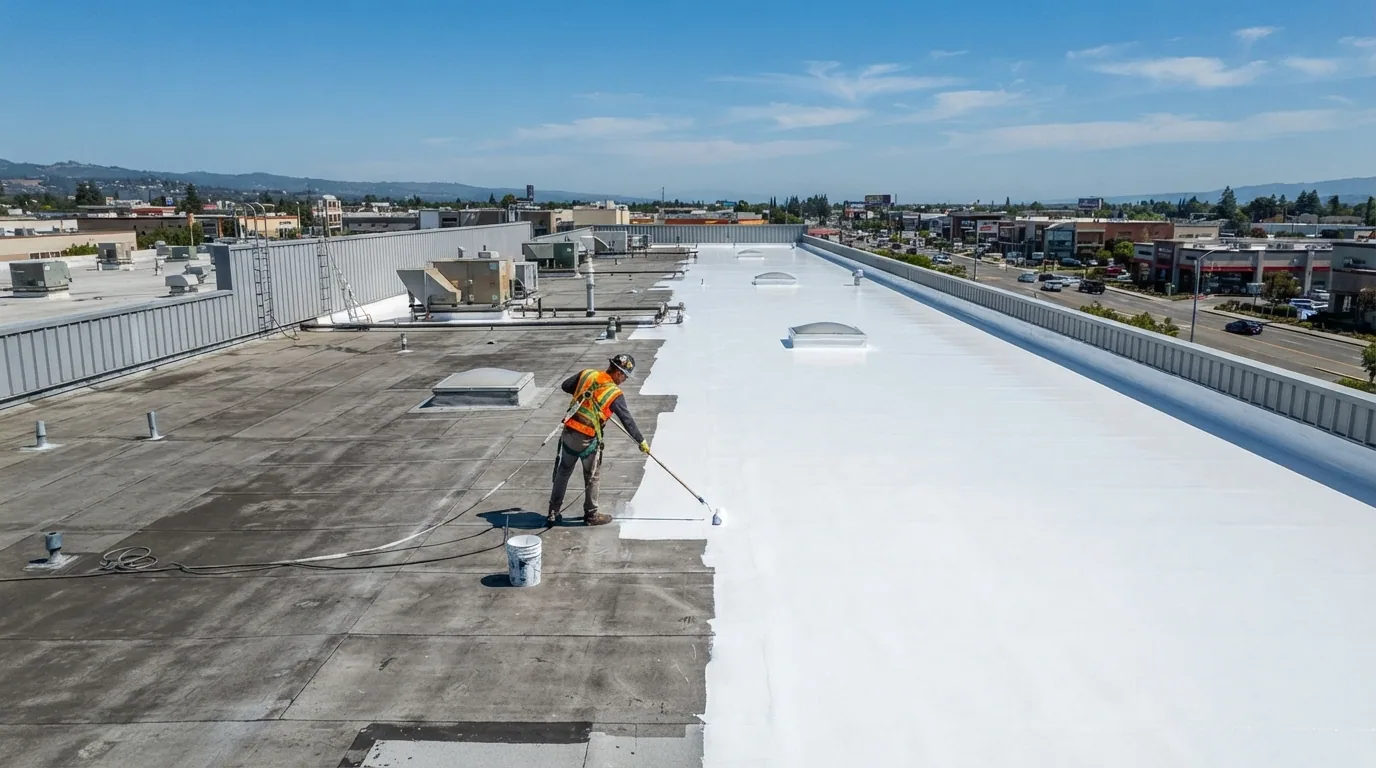
Acrylic Roof Coatings
How the work is scoped, documented and phased on occupied Sugar Land buildings.
Spray Foam Commercial Roofing
What we check on the roof, what we recommend and how the crew keeps the building open.
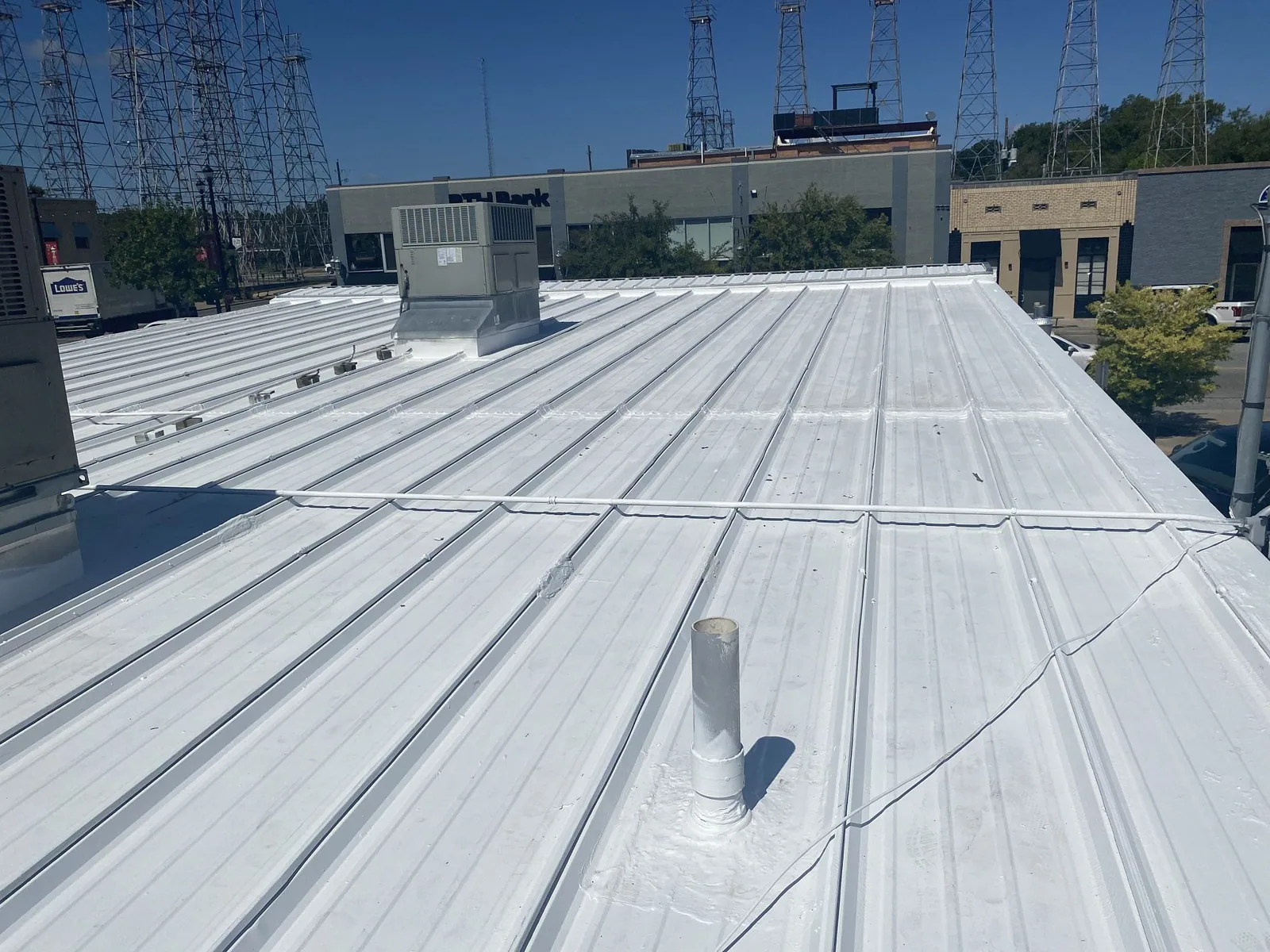
Roof Coating and Restoration
Conditions, options and next steps for commercial buildings in Fort Bend County.
Verify the Roof Beneath the Silicone Finish
Call for a coating assessment. We will explain the adhesion, moisture and drainage findings with photos and identify a suitable restoration scope for the owner.
Call 555-555-5555 or email [email protected].
Commercial Roofing Questions
Straight answers to the questions building owners and managers ask us most often.
Does silicone solve every ponding problem?
Product resistance to retained water does not correct slope or outlet restrictions. We investigate the drainage cause and any structural concern separately. The coating is evaluated within that supported scope.
Can silicone be applied over any existing coating?
Compatibility and preparation need review for the actual products. Adhesion tests help evaluate representative areas. Unsuitable material may require removal before application.
Does humid weather make application automatically suitable?
The substrate and environmental conditions must meet the selected instructions. Surface moisture, temperature and forecast remain relevant. Regional humidity alone does not establish those conditions.
Can another coat repair a moving seam?
The seam and its movement need evaluation first. Compatible reconstruction or support correction may be required. Reinforcement follows a suitable detail rather than replacing that investigation.
What helps with a future recoat?
Keep product names, preparation tests, application measurements and repair photographs. The next product must suit the retained finish. Maintenance observations also help define the preparation needed.
Seams, Flashing and Reinforcement
Open laps and unsuitable terminations receive compatible repairs before the field coating. The selected coating system may specify reinforcement at certain joints, with preparation and application according to its details. Reinforcement does not resolve missing support or excessive movement by itself. A connection that repeatedly opens needs investigation before another flexible layer is placed over it.
Penetration flashing work also distinguishes roof defects from upper equipment or frame leaks. A new coating around a curb does not repair a defective panel above it. The work record assigns those responsibilities and photographs repaired transitions. Where retained material cannot provide a suitable bond, the removal boundary is explained rather than forcing the field coating to serve as the connection.
Humidity, Temperature and Cure
Many silicone roof coatings cure through a moisture-related process, but application limits and recoat intervals are product-specific. Regional humidity is not permission to apply over an unsuitable wet substrate. Roof temperature, dew point, surface condition and the forecast are checked against the selected instructions. The actual roof can differ from the air-temperature report.
Thickness is measured during the work, with material usage and the required cure sequence recorded. Applying excessive liquid in one pass may create problems instead of improving protection. If rain or another interruption affects the application, the area is evaluated before recoating. The manager receives the changed sequence and the relevant evidence rather than a general assertion that silicone can be applied under any Gulf weather conditions.
How a Roof Project Runs
Every roof we take on moves through the same six steps:
01
Roof Walk
We walk the whole roof and photograph the membrane, seams, flashings, drains and equipment.
02
Moisture Check
Readings and core cuts show what is wet below the surface before anyone prices a repair.
03
Written Findings
You get plain-language findings, photos and the options that fit the roof.
04
Scope and Price
One written scope covers the system, the details, drainage changes and the price.
05
Scheduled Work
Crews work around tenants, deliveries and weather, closing the roof every night.
06
Closeout
We walk the finished roof with you and hand over photos and warranty paperwork.
Traffic, Equipment and Occupied Areas
The coating surface needs suitable care around equipment service and access routes. Product instructions guide walkway or protection arrangements, with drainage maintained beneath them. New tools, moved pads or service lines can damage an otherwise suitable finish. We identify those concentrated traffic areas during the assessment so they do not remain an unexplained maintenance problem.
Occupied work planning coordinates spraying or other application with vehicles, adjacent property and ventilation. The facility team approves any operating restriction and controls equipment restoration. A working intake is not covered arbitrarily to make coating convenient. Application proceeds only when the selected method, weather and site controls provide a suitable sequence.
Local Buildings and Future Recoating
First Colony's retail setting and Telfair's University Boulevard area call for delivery and application arrangements at the specific building. The manager identifies active entrances, vehicles and equipment around the proposed work zone. We survey the retained finish and measured areas, then include suitable preparation and material-control measures in the proposal. Application windows are agreed with the facility team and checked against the product conditions. The owner can compare the silicone system with a clear view of the repairs and site coordination it requires.
Ongoing maintenance compares surface wear, adhesion concerns and drainage with the closeout photographs. Future products must be compatible with the retained silicone finish, with preparation tested where appropriate. Warranty terms follow the issued documents. Keeping the original product and application record gives the owner a practical basis for a later recoat rather than selecting a liquid simply because it has the same color.
Silicone is considered only after the existing roof has been checked for moisture, secure attachment, compatibility and drainage. A coating cannot correct a failed deck, loose flashing or an outlet that does not function. We prepare a representative test area, confirm adhesion and document the repairs required before the field application. Detail work around curbs and drains uses the specified reinforcement and thickness. The closeout records the applied scope and the maintenance needed to keep debris or later penetrations from undermining the restored surface.