
KEE Commercial Roofing
A membrane selected for a demanding exposure still needs a suitable seam and substrate. A resistant sheet cannot correct an open termination, wet insulation or an incompatible patch. KEE roofing in Sugar Land, TX evaluates the proposed material as part of the roof assembly. We identify the building's actual conditions and explain why a particular product and detail arrangement belong in the scope.
KEE, or ketone ethylene ester, is used in certain thermoplastic roofing formulations. Products can differ in composition, reinforcement and approved assembly details. The name alone does not establish service life or resistance to every chemical. The manager receives a comparison based on the specified products and observed exposure, with uncertain conditions identified before material selection is finalized.
When TPO is another proposed sheet system, review each product's exposure guidance, connection requirements and complete assembly. The owner needs the reason for choosing the particular membrane and the work enabling its installation. A familiar ingredient or family description cannot replace that comparison.
Formulation and the Product Evidence
The comparison begins with the manufacturer's published product information and any required compatibility review. We identify the membrane designation, thickness and accessories proposed for the project. Broad claims about a material family are separated from the limits of the selected product. A formulation description is useful only when connected to the building's requirements and the assembly in which it will be used.
PVC roofing alternatives can be evaluated alongside KEE-containing systems where suitable. The review considers actual exposure, attachment, detailing and repair needs rather than ranking products from an ingredient name. The owner sees the reason for the proposed choice. That explanation also identifies any unresolved discharge or substrate question that could change the recommendation.
Equipment Exposure and Residue
Process vents, food-service exhaust and maintenance chemicals can create different conditions at the roof surface. We confirm the actual sources through the building team and inspect the affected locations. A nearby business district does not establish what any one rooftop unit discharges. Residue is recorded before cleaning so the repair investigation retains evidence of the observed exposure.
Compatibility questions are resolved through the appropriate product documentation or written review. If an earlier membrane has deteriorated, the repair scope identifies removal to suitable material rather than assuming a new patch can bond to any remaining surface. Roof repairs also address the discharge source with the relevant trade when needed. A chemically suitable sheet is not a substitute for correcting an uncontrolled equipment leak.
Welding and the Retained Surface
Compatible thermoplastic seams use the specified heat-welding method, with preparation and field settings suited to the product. Trial work and seam checks follow the selected instructions. Surface moisture, residue and changing roof temperature can affect the process. We document the relevant checks rather than treating a weld setting as transferable from every other thermoplastic project. The record identifies the work area and any correction made, allowing a later reviewer to connect the installation evidence with the completed seam.
Aged surfaces require their own evaluation before repair. Cleaning or approved preparation may be needed, and deteriorated material may not provide a sound connection. For repeated seam failure, we also examine movement and restraint at the detail. A new connection that experiences the same unresolved strain may repeat the defect even when the welding work itself is suitable.
Related Roofing Pages
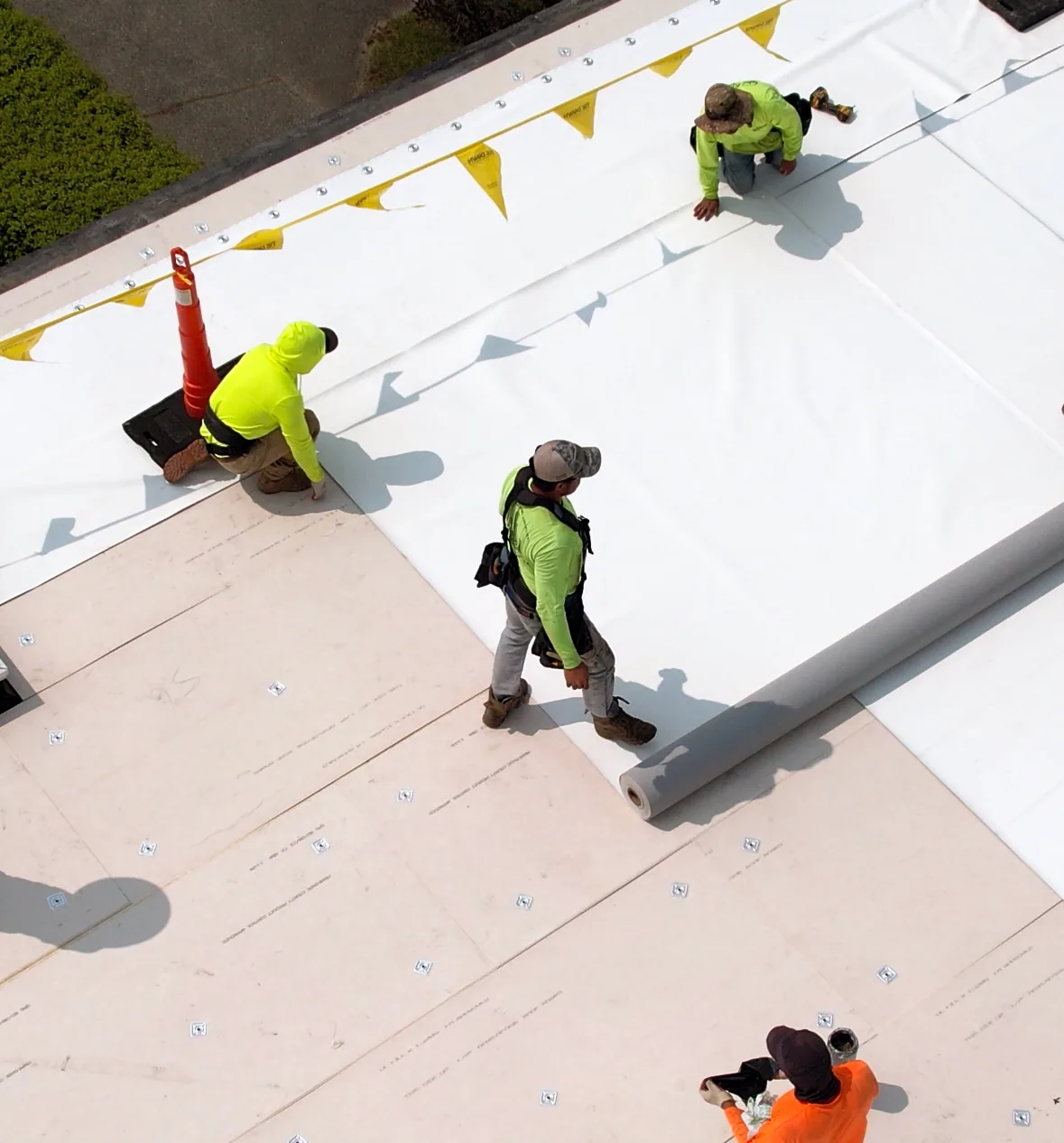
TPO Commercial Roofing
How the work is scoped, documented and phased on occupied Sugar Land buildings.
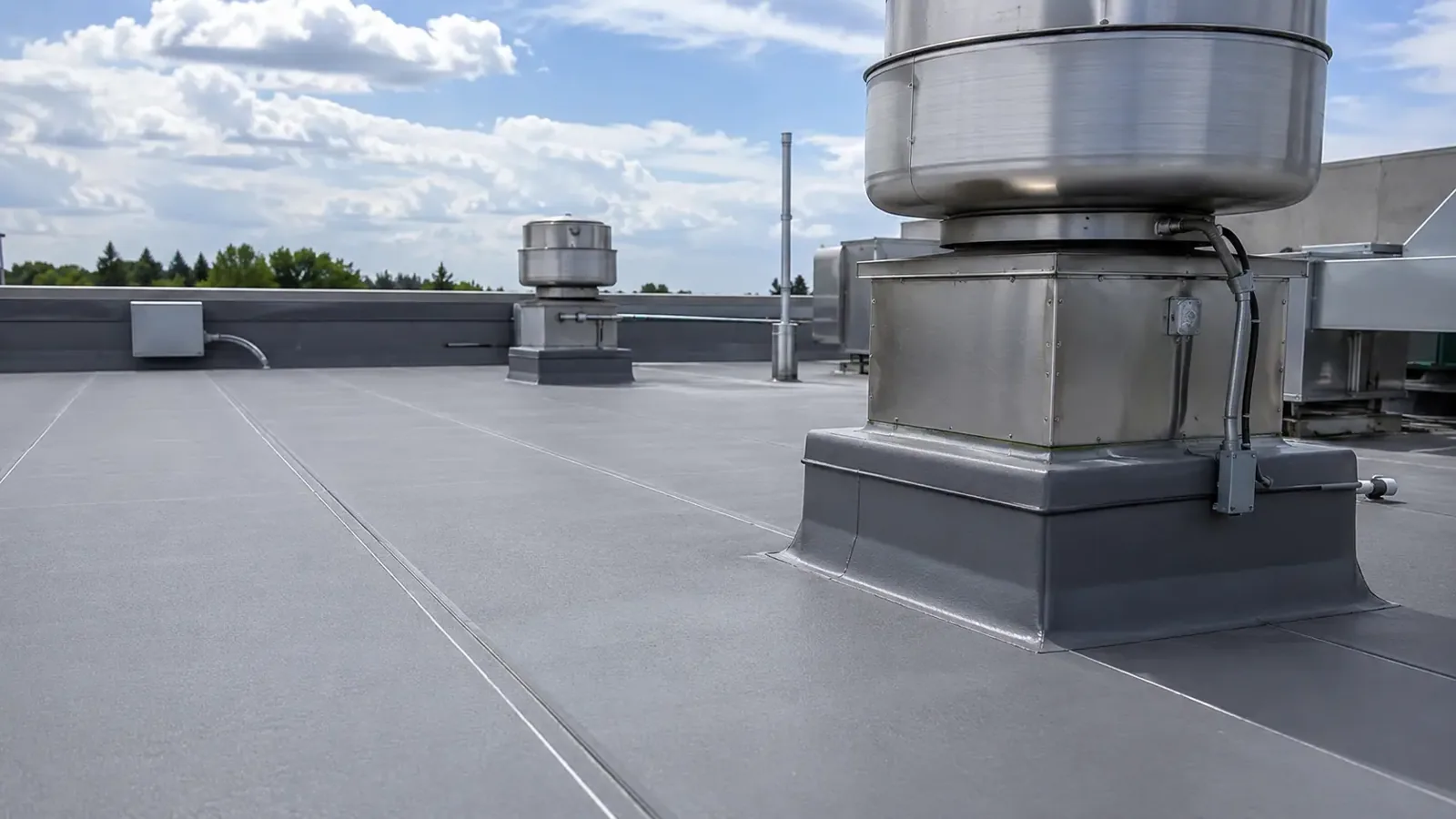
PVC Commercial Roofing
What we check on the roof, what we recommend and how the crew keeps the building open.
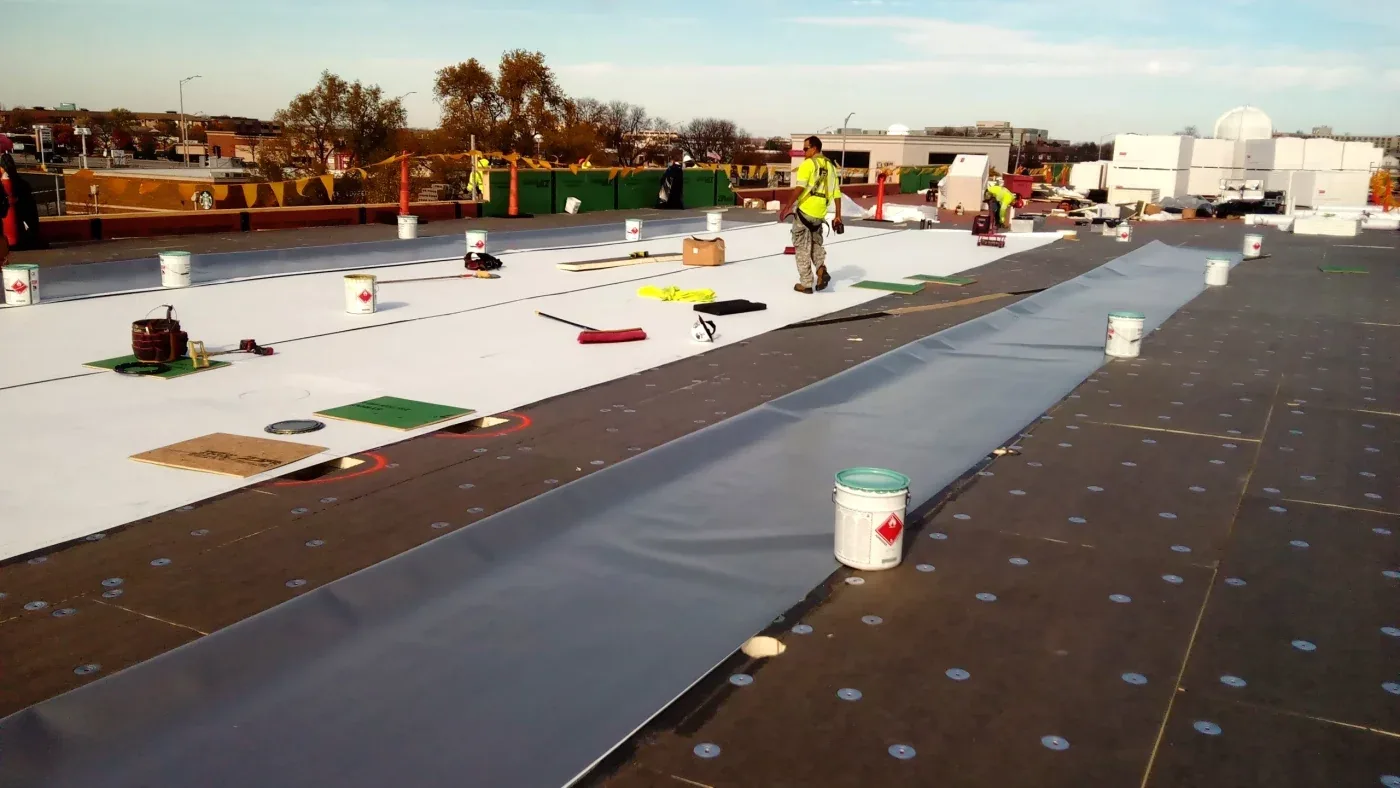
Commercial Roof Repair
Conditions, options and next steps for commercial buildings in Fort Bend County.
Compare the Material Within the Roof Assembly
Call for an assessment. We will explain the exposure, moisture and substrate findings with photos and identify where a suitable KEE roofing system fits the project.
Call 555-555-5555 or email [email protected].
Commercial Roofing Questions
Straight answers to the questions building owners and managers ask us most often.
Does KEE identify one universal roofing formulation?
Products differ in composition and approved use. The specified membrane and its documentation provide the relevant limits. We compare actual products rather than assigning performance from the name alone.
Will KEE roofing solve an equipment discharge problem?
The source and exposure still need evaluation. A suitable membrane may be one part of the response, but uncontrolled discharge requires the appropriate trade. The repair scope identifies both responsibilities.
Can every aged KEE-containing membrane be welded?
Retained condition and the approved repair method need review. Preparation or removal may be required to create a sound connection. The assessment does not assume an aged surface behaves like new sheet.
What makes an existing roof suitable to retain?
Moisture findings, attachment, material condition and applicable requirements are considered together. Samples describe their locations. The broader evidence supports the retention recommendation.
How should an owner compare KEE with another membrane?
Use complete assembly scopes, actual exposure information and relevant product documentation. Detail work and preparation can differ. The comparison should explain those differences alongside the material price.
Concealed Moisture and Retention
We investigate the existing assembly before proposing another membrane over it. Selected openings identify layer sequence and local condition, while suitable moisture methods help examine extent. A sample that is dry at one corner does not establish conditions under the whole roof. Additions or past repairs can introduce differences that the report must preserve.
An infrared investigation can guide selected confirmation where construction and weather support useful contrast. Temperature patterns are interpreted alongside the other evidence. Recover eligibility also depends on retained attachment, material condition and applicable requirements. The selected membrane's chemistry does not make an otherwise unsuitable existing assembly eligible to remain.
Attachment and Transitions
The attachment design connects the new roof through suitable layers to the deck. Product approval, fastener engagement and adhesive preparation are checked within the specified assembly. If the deck condition or supporting information is uncertain, the appropriate evaluation precedes installation. A premium membrane designation does not increase the capacity of a compromised substrate.
Board and insulation details are coordinated with curbs, drains and wall heights. A change in thickness can require reconstruction at those interfaces. Compatible flashing materials and termination arrangements follow the selected system. The plan identifies those changes before work, keeping the owner from comparing a membrane-only price with a complete assembly scope as though they were equivalent.
How a Roof Project Runs
Every roof we take on moves through the same six steps:
01
Roof Walk
We walk the whole roof and photograph the membrane, seams, flashings, drains and equipment.
02
Moisture Check
Readings and core cuts show what is wet below the surface before anyone prices a repair.
03
Written Findings
You get plain-language findings, photos and the options that fit the roof.
04
Scope and Price
One written scope covers the system, the details, drainage changes and the price.
05
Scheduled Work
Crews work around tenants, deliveries and weather, closing the roof every night.
06
Closeout
We walk the finished roof with you and hand over photos and warranty paperwork.
Regional Properties and Operating Requirements
Westchase's office concentration is served by Beltway 8, making the site entrance and unloading route practical planning questions for a roof delivery. The manager identifies the active building entrances and work notices before material arrives. A Stafford property uses its own route and address-based review. We keep measured areas, exposure findings and assembly details with each building's plan. A portfolio owner can then compare suitable KEE proposals while seeing the operating sequence that accompanies the specified materials.
Work near occupied rooms and mechanical intakes follows a coordinated facility plan. Material application conditions and any approved equipment window need to fit the actual sequence. The mechanical team plans any approved equipment isolation and restoration so required airflow is maintained through the work sequence. Weather closure and debris handling are agreed for the work area, with changes communicated when exposure reveals conditions outside the preliminary scope.
Drainage, Traffic and the Longer Record
Membrane exposure limits do not establish drainage capacity. Persistent water needs investigation of slope, outlets and any relevant structural concern. Service supports and walkway protection also need a layout that preserves the water path. The report identifies those conditions instead of treating chemical resistance as proof that every retained-water situation is acceptable.
Maintenance after installation checks drains, seams and areas exposed to equipment service. The closeout retains the specified material, repair preparation information and detail photographs. Warranty duties follow the issued documents. If equipment or discharge changes later, the owner can use that record to obtain a fresh compatibility review rather than relying indefinitely on the exposure assumptions made during installation.
Where a KEE membrane is present, the repair method depends on confirming the sheet and preparing a clean, compatible weld area. We examine the seam, field surface and adjoining flashing for contamination or prior incompatible work. A test weld can help establish working conditions before a larger repair proceeds. New curb or wall transitions are reviewed with the membrane manufacturer's applicable details, while the existing roof remains the evidence for the scope. The record identifies the inspected limits and any unconfirmed layer below.