
Storm Damage Roof Repair
Wind can lift a perimeter detail without leaving a large opening visible from the parking lot. Rain enters behind the loosened flashing, wets insulation and appears inside after the strongest weather has passed. Storm damage roof repair in Sugar Land, TX starts by tracing that change through the assembly. We document observed defects, assess suitable temporary protection and explain the permanent work through photographs the manager can use with the owner.
The date of a storm is part of the history, but it does not establish the cause of every roof defect. An old open seam and a fresh torn sheet can exist on the same roof. Earlier inspection records help distinguish changed conditions from deterioration that was already present. When the evidence is incomplete, the report identifies that limit rather than assigning all damage to one event.
Changed Details After Wind
Edge metal, coping and wall flashing receive attention because wind pressure acts on their attachment and the adjoining membrane. We look for displaced sections, opened joints, fresh creases and material pulled from its fastening. The observation is recorded with a roof-plan location and views of the surrounding detail. A loose piece that looks intact can still need removal or reattachment when its connection is no longer suitable.
Hurricane Beryl affected the Houston region in July 2024, and Hurricane Ike brought damaging regional conditions in September 2008. Those events provide context for an owner's records. Neither regional history proves the wind speed or roof condition at a Sugar Land address. For a specific wind damage repair, we examine the damaged assembly and its attachment rather than selecting a scope from a regional gust report.
Water Beneath the Surface
A tear can admit water well beyond the exposed hole. Insulation joints, the deck profile and earlier layers can move that water before a ceiling stain appears. We compare interior reports with roof observations, identifying the timing, affected rooms and nearby equipment. A wet ceiling tile is evidence of water at that point; it is not a roof map showing where the water entered.
Selected openings and suitable moisture tests help establish the condition of retained materials. An infrared survey with confirmatory testing may help define suspect areas when construction and weather support useful thermal contrast. The patterns guide investigation rather than proving that every warm area contains water. Removal limits follow the combined findings and remain open to adjustment if exposed conditions differ during repair.
Temporary Protection and Access
Access depends on conditions at the property, including power lines, loose debris, roof stability and the route to the work area. We discuss the affected spaces and the building's immediate controls with the manager before choosing a temporary method. Tarping, compatible temporary patches or local weather protection require sound attachment locations and a workable drainage path. A temporary measure has limits that are explained in the record.
The emergency repair sequence separates initial stabilization from a finished repair. A temporary patch over a torn sheet cannot establish that insulation below remains dry. Its performance through later weather depends on the material, attachment and changing conditions. The manager receives the treated location, outstanding investigation and follow-up requirements so temporary work does not become an unexplained permanent condition.
Related Roofing Pages
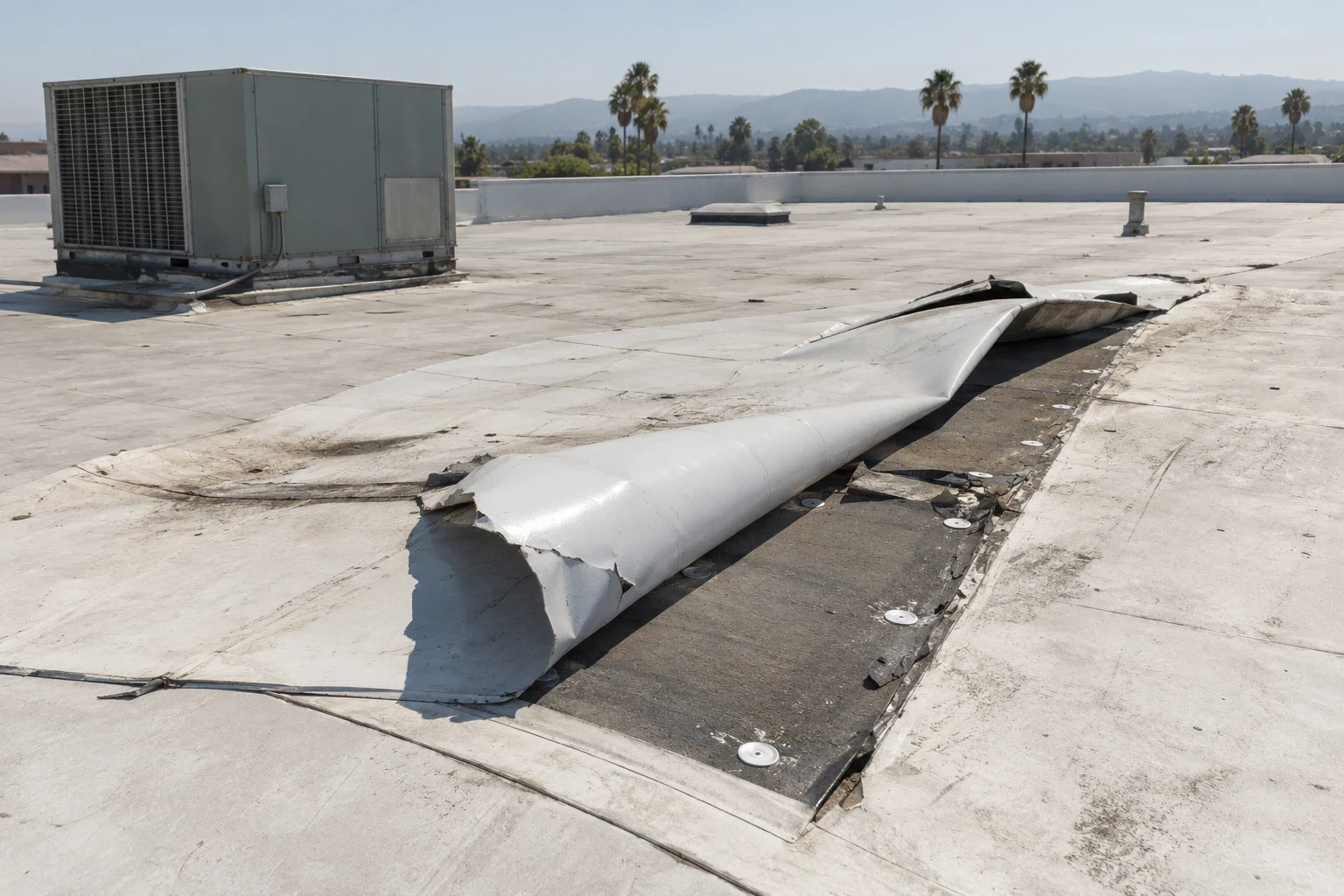
Wind Damage Roof Repair
How the work is scoped, documented and phased on occupied Sugar Land buildings.
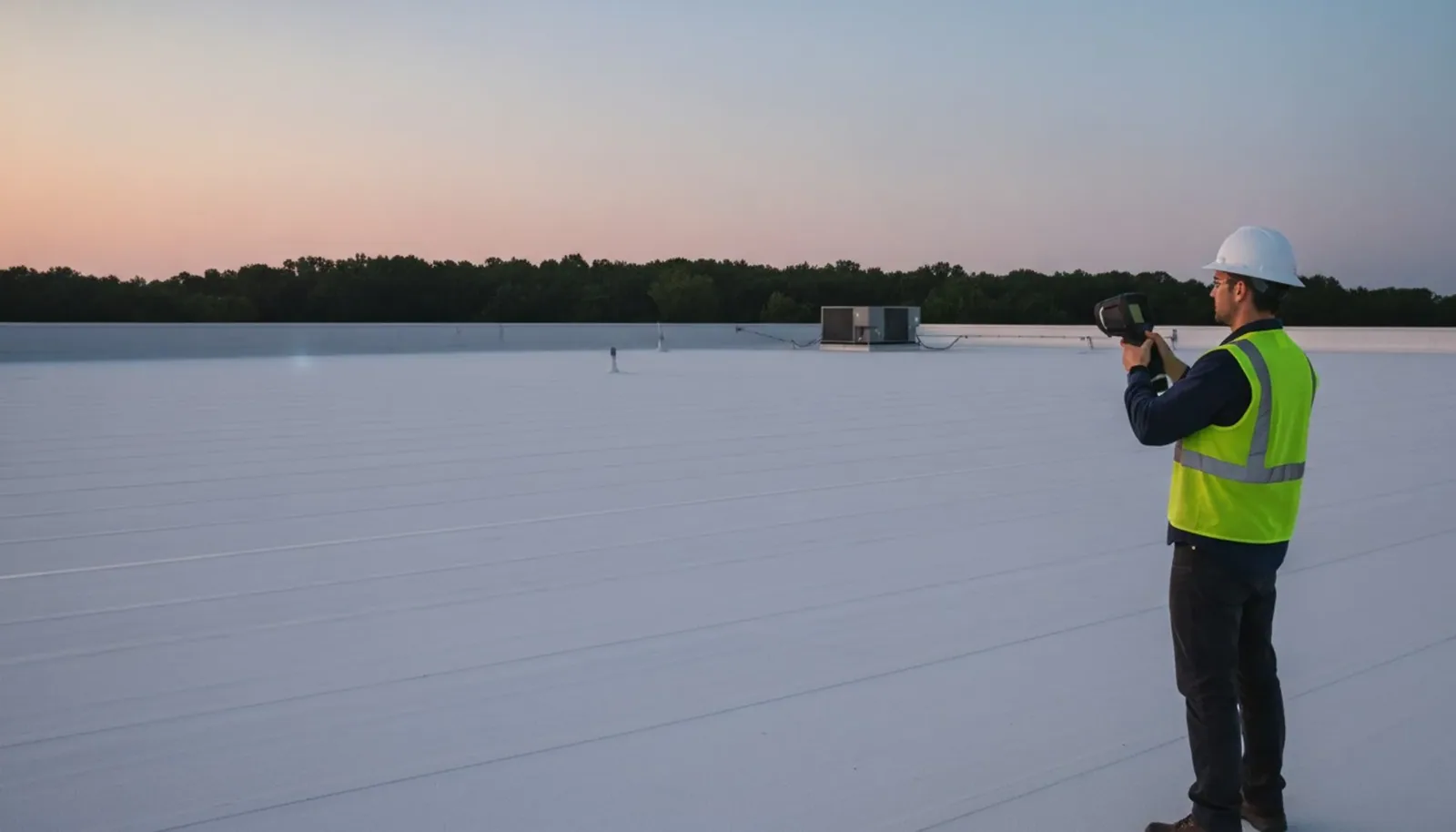
Infrared Roof Moisture Surveys
What we check on the roof, what we recommend and how the crew keeps the building open.
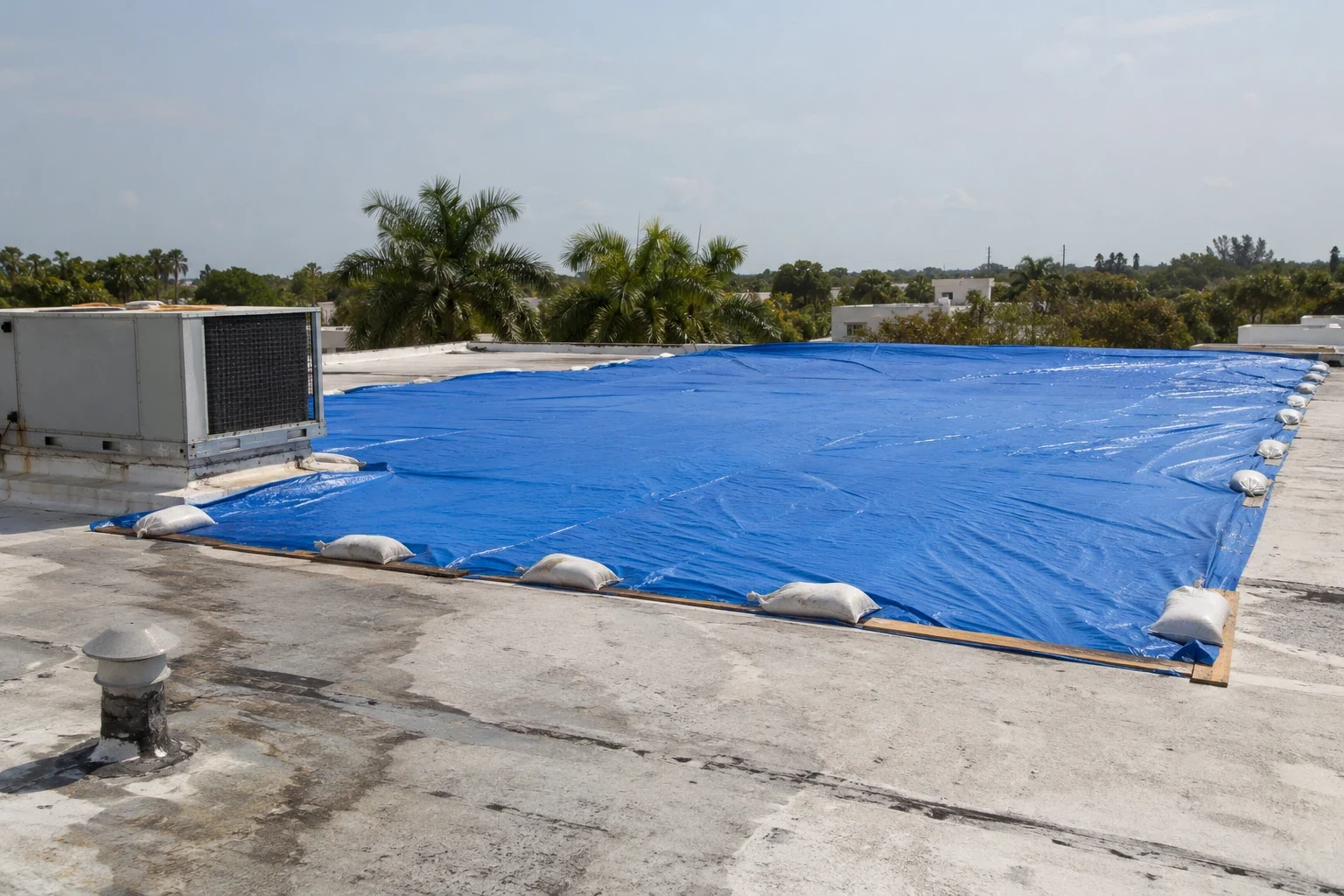
Emergency Roof Repair
Conditions, options and next steps for commercial buildings in Fort Bend County.
Explain the Storm Findings Clearly
Call to discuss the affected areas and arrange an assessment. We will document the observed roof changes with photos and identify the repair decisions requiring owner approval.
Call 555-555-5555 or email [email protected].
Commercial Roofing Questions
Straight answers to the questions building owners and managers ask us most often.
Does a regional storm report prove damage at our building?
A regional report establishes weather context. Property photographs, observed changes and earlier condition records are needed to evaluate the building. We explain where the evidence supports a connection and where it remains uncertain.
Can an emergency patch become the permanent repair?
Some compatible repairs can be permanent after the retained assembly is verified. Temporary protection may require removal or rebuilding. The work record identifies which condition applies and what investigation remains.
Will every dented metal component need replacement?
Dents vary in significance. We examine attachment, coating damage, water shedding and the function of the component. The recommendation identifies functional concerns separately from appearance.
When is concealed moisture testing worthwhile?
Testing is useful when water extent changes the removal scope or the value of retaining the roof. We choose methods for the assembly and confirm suspect findings. A surface photograph alone cannot establish dry insulation.
Who handles a damaged rooftop unit?
The equipment trade evaluates the unit, while roofing work addresses compatible curb and membrane details. Any structural concern goes to the appropriate reviewer. Responsibilities are agreed before the repairs intersect.
Hail Marks and Equipment Clues
Hail can leave dents in metal while a nearby membrane remains unpunctured. Conversely, a small split may be difficult to see until the area is cleaned and examined closely. We inspect the roof material, seams, flashing and exposed accessories using methods appropriate to the assembly. Impact observations are compared with functional defects, and each relevant finding is photographed before repair conceals it.
Damage to rooftop equipment can create a separate water route. A shifted panel, curb opening or changed condensate discharge needs coordination with the equipment trade. We do not treat an equipment leak as a membrane failure simply because it appeared after weather. Equipment curb and support work is assigned a clear boundary between roofing, mechanical service and any required structural review.
Permanent Repair Boundaries
A permanent scope identifies the damaged materials to remove and the sound materials to retain. Replacement insulation, compatible patches, repaired terminations and edge attachment are specified for the actual assembly. When the underlying deck is deteriorated or its condition is uncertain, the work includes the appropriate evaluation before rebuilding the roof above it. Covering the visible tear does not resolve a compromised substrate.
Repeated openings across a large area can make isolated repairs less useful. We compare localized commercial roof repairs with broader restoration or replacement only after evaluating extent and retained condition. The report distinguishes confirmed defects from areas awaiting investigation. An owner can then approve a scope with identifiable limits rather than a promise to repair whatever the storm might have affected.
How a Roof Project Runs
Every roof we take on moves through the same six steps:
01
Roof Walk
We walk the whole roof and photograph the membrane, seams, flashings, drains and equipment.
02
Moisture Check
Readings and core cuts show what is wet below the surface before anyone prices a repair.
03
Written Findings
You get plain-language findings, photos and the options that fit the roof.
04
Scope and Price
One written scope covers the system, the details, drainage changes and the price.
05
Scheduled Work
Crews work around tenants, deliveries and weather, closing the roof every night.
06
Closeout
We walk the finished roof with you and hand over photos and warranty paperwork.
Occupied Property Coordination
The offices, shops and hotel at Sugar Land Town Square illustrate why roof work needs an operating plan beneath it. The manager identifies occupied entrances, tenant schedules and ventilation restrictions, while the repair team identifies debris handling and material staging. Work near an intake follows a coordinated mechanical plan and any approved isolation window. Required airflow is maintained during the agreed sequence.
A building in Stafford requires its own access and jurisdiction review. Regional proximity does not establish the same permit rules, roof system or working hours. Before opening a damaged area, the team agrees on protection below, daily closure and notification if unexpected conditions enlarge the scope. Inspection and repair photos remain linked to the particular building, even when one owner manages several addresses. A South Houston roof needs its own post-event inspection; regional weather alone does not establish damage.
Evidence for the Owner and Insurer
We preserve dated observations, measured repair areas and photographs showing the defect before and after work. Where earlier records exist, the report explains the comparison without overstating causation. The manager can use roof claim documentation to organize those findings alongside the insurer's requests. Policy interpretation and coverage decisions remain separate from the technical repair recommendation.
The closeout identifies completed work and any item still awaiting testing, another trade or owner approval. It also provides maintenance instructions relevant to the repaired detail. A later rain check may reveal a separate source that was not active during the first visit, so the record preserves the reasoning behind the initial repair. This gives the owner a usable condition history instead of treating one visit as proof that every possible water route is resolved.