
Wind Damage Roof Repair
Wind can loosen a roof connection without carrying the entire sheet away. A lifted edge allows rain behind the membrane, and the next interior stain may be the first complaint the manager receives. Wind damage roof repair in Sugar Land, TX examines the changed attachment and the layers affected by water. We document observed defects before suitable stabilization or permanent reconstruction conceals them.
The repair needs to follow the building's actual condition. Regional weather history helps establish the event timeline but cannot prove the wind at one roof or the cause of every opening. Earlier photographs and current inspection findings support that comparison. The owner receives a scope based on the damaged connection, sound retained materials and the appropriate project requirements.
Perimeter Connections and Fresh Movement
Edges, corners and wall terminations receive attention because their geometry and attachment can expose weak connections during wind. We inspect displaced metal, torn flashing and membrane pulled from its restraint. Close views are paired with wider images locating the component on the roof. That orientation helps a reviewer understand what moved and how it connects to the adjoining assembly.
Perimeter metal reconstruction also checks cleats, blocking and accessible fastening below the outer surface. Reattaching a cap to deteriorated support can leave the same failure path. Where concealed attachment needs opening, that investigation is recorded before the final repair detail is set. A new piece of metal alone is not the full scope when the connection beneath it has failed.
Membrane Tears and Attachment Boundaries
A torn sheet can have different repair limits from an area detached across its substrate. We identify the membrane and examine where a sound connection remains available. Adhesive, fastener and seam arrangements depend on the assembly. The repair cannot be selected solely by the visible size of the tear if surrounding attachment is also unsuitable.
Commercial roof repair specifies removal, preparation and compatible reconstruction at those boundaries. If the deck or retained layers are damaged, their correction is included through the appropriate review. Attachment design follows the relevant building and selected assembly requirements. Regional gust numbers are not substituted for the project inputs needed to specify a suitable rebuilt connection.
Rainwater Beneath the Damaged Area
Water entering behind lifted material can travel beyond the opening. Insulation joints, slopes and deck profiles can affect where it moves and appears inside. We compare interior locations and timing with the roof findings. A ceiling stain is evidence of water at that point, not a direct measurement of the wet roof extent above it.
An infrared moisture investigation may help map suspect areas under useful construction and weather conditions. Selected confirmation checks the interpretation before removal limits are assigned. Samples establish local conditions, while surrounding boundaries remain supported by the combined evidence. Exposed findings can revise those limits, with photographs explaining the changed reconstruction rather than leaving the owner an unexplained quantity.
Related Roofing Pages
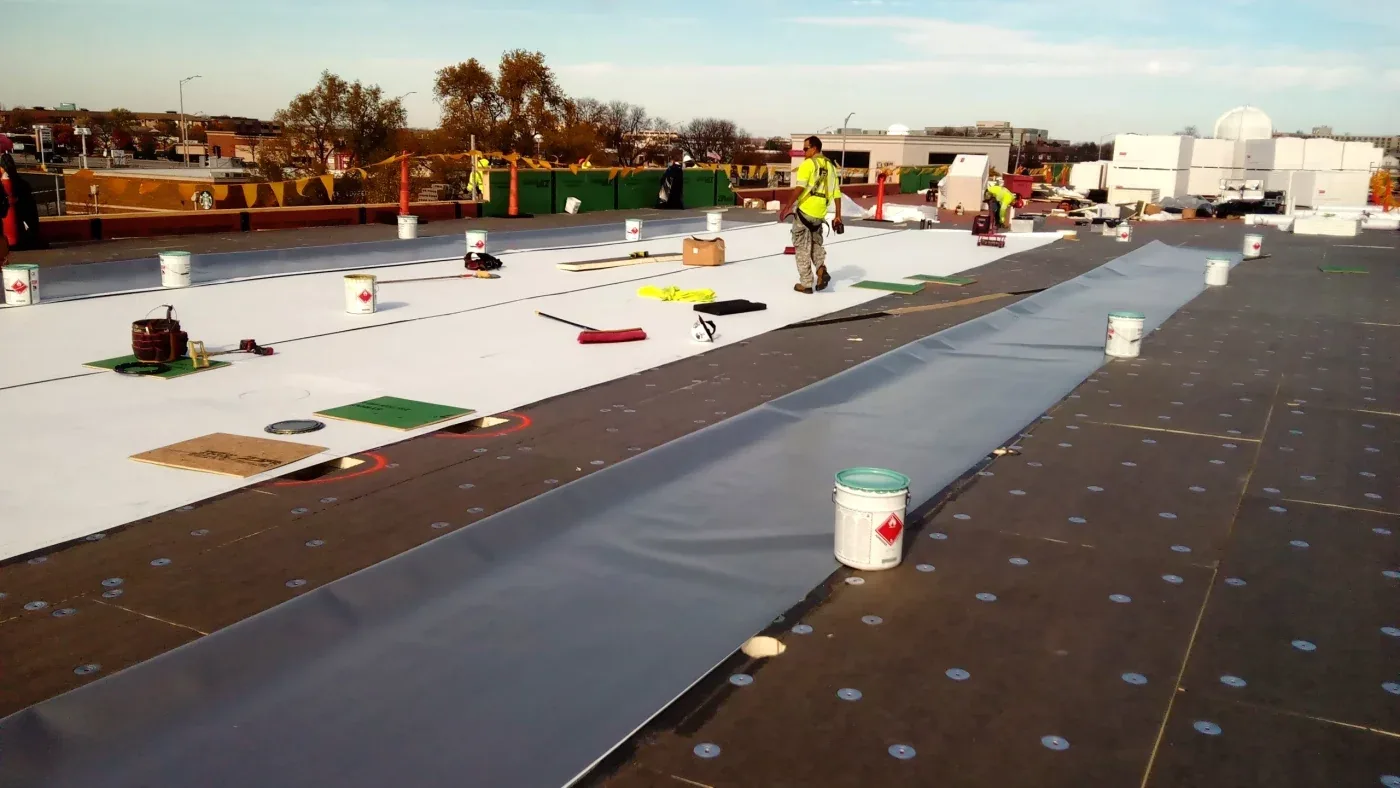
Commercial Roof Repair
How the work is scoped, documented and phased on occupied Sugar Land buildings.
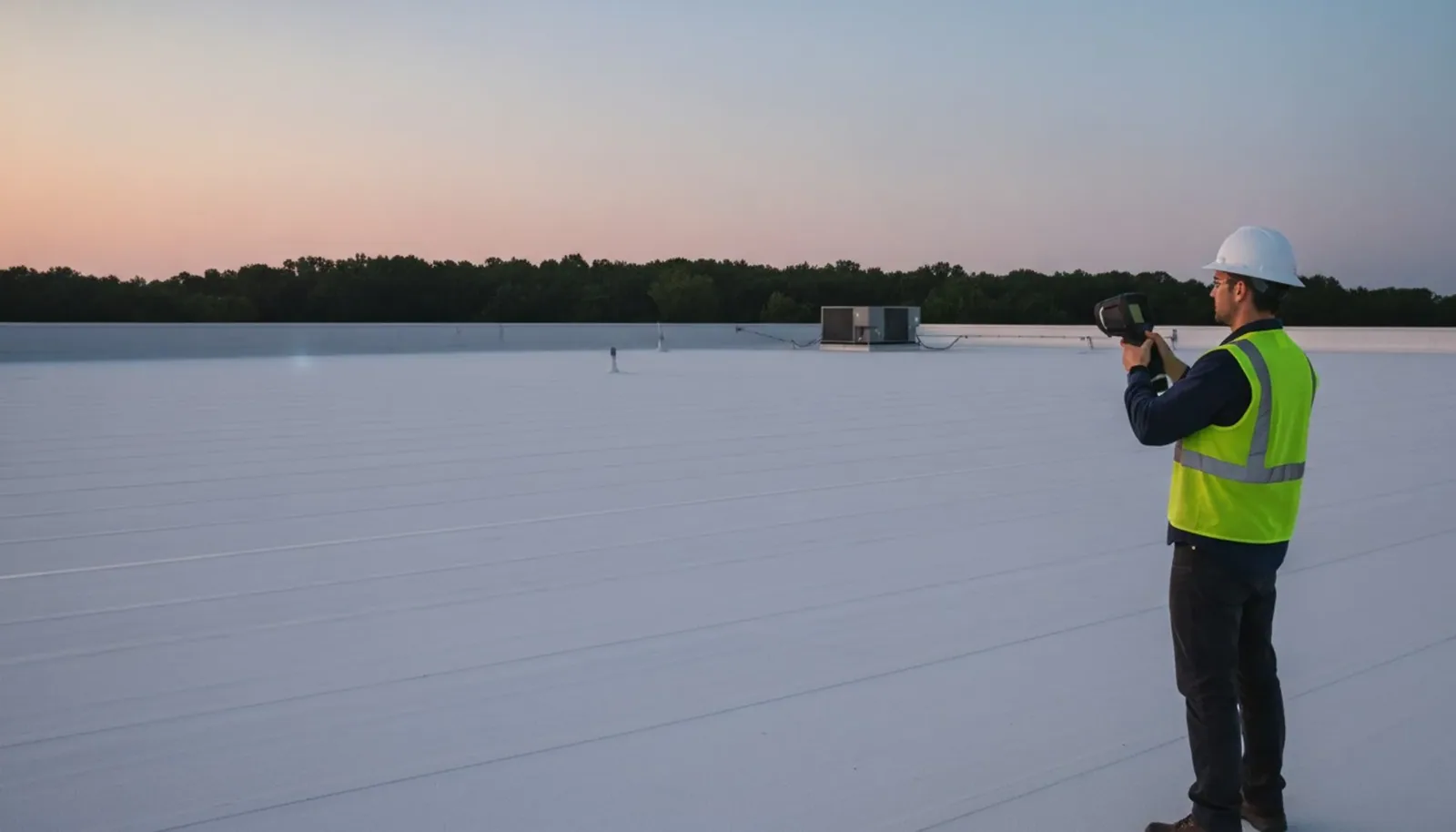
Infrared Roof Moisture Surveys
What we check on the roof, what we recommend and how the crew keeps the building open.
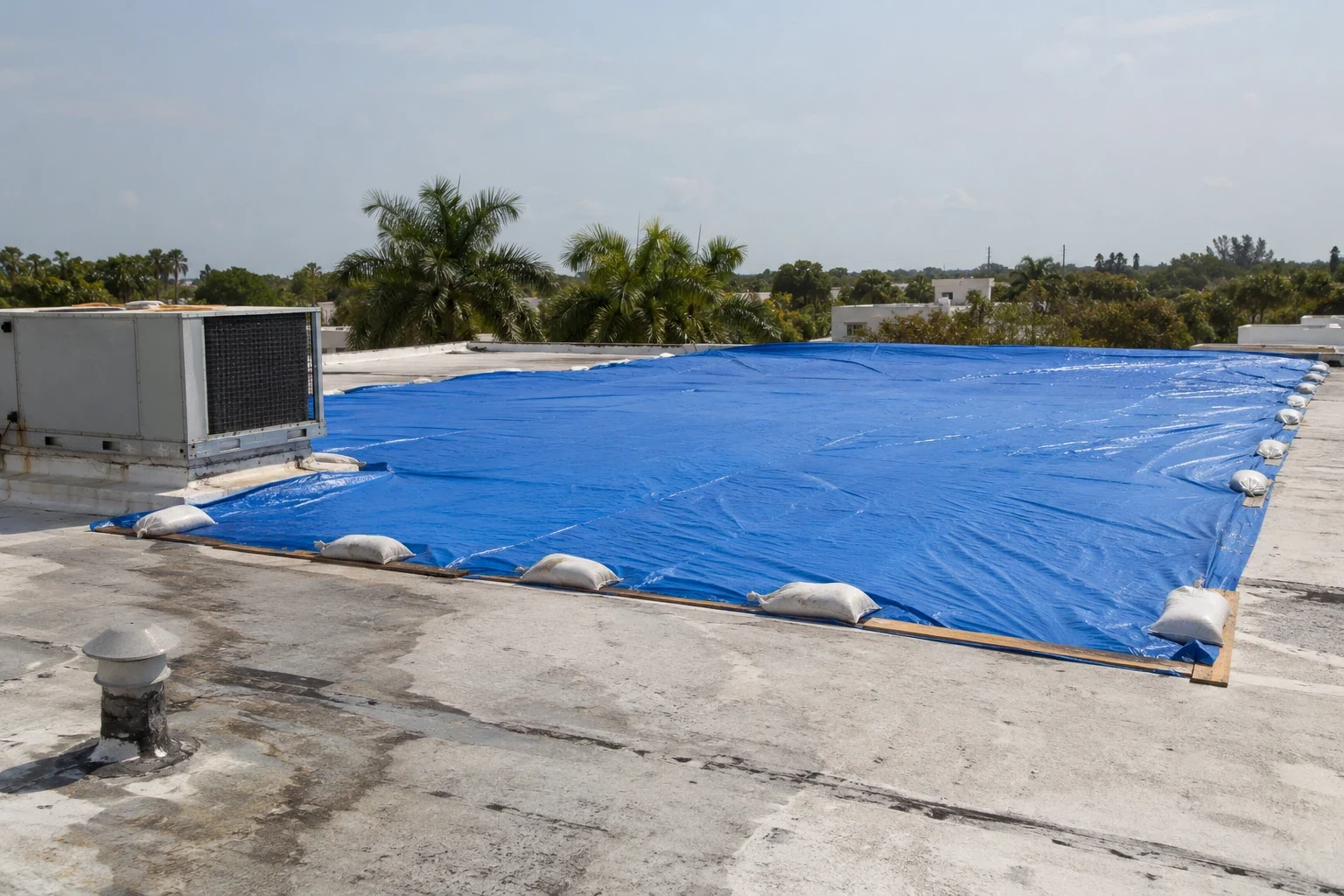
Emergency Roof Repair
Conditions, options and next steps for commercial buildings in Fort Bend County.
Document the Changed Connections Before Rebuilding
Call to discuss the affected roof areas. We will explain wind-related observations, moisture and attachment findings with photos and identify suitable repair decisions for the owner.
Call 555-555-5555 or email [email protected].
Commercial Roofing Questions
Straight answers to the questions building owners and managers ask us most often.
Does a regional gust report establish the wind at our roof?
The report provides event context rather than a site measurement. Property observations and earlier records support the damage assessment. Project design inputs are evaluated separately for reconstruction.
Can loose coping be refastened without opening it?
The concealed support and attachment may need investigation. A sound outer cap does not establish usable blocking or cleat engagement. The scope follows the observed connection.
When can a temporary patch remain as permanent work?
Its materials, detail and retained assembly must support that role. Further moisture or attachment investigation may be required. The work record identifies the actual status and follow-up.
How is wet-area removal defined?
Suitable tests and samples inform the boundary, with interpretation limits stated. Exposed conditions can change the scope. We photograph those findings before affected reconstruction.
What should an owner preserve after wind?
Keep dated photographs, earlier reports and the locations of interior water or displaced materials. Avoid assigning causes not established by the evidence. Those records support the technical review and any insurer discussion.
Access and Initial Protection
Post-storm access requires evaluation of loose debris, power lines, stability and the route to the work area. The manager identifies affected rooms and any immediate operating controls. We choose a workable temporary method only where its attachment and drainage can be made suitable. The visit does not carry an automatic arrival or access promise independent of those conditions.
Initial roof protection is recorded with its role and limitations. A patch or tarp can reduce exposure without proving that concealed materials remain usable. Permanent work may need testing, removal and a rebuilt termination. The record identifies that follow-up so an emergency measure does not become a presumed finished repair simply because the interior stopped dripping during one observation.
Regional Event History and Property Evidence
Hurricane Beryl's July 2024 impact in the Houston region gives owners a dated reference for checking changed conditions. Hurricane Ike's September 2008 history provides an earlier regional comparison. The building report uses those timelines alongside actual roof photographs and maintenance records. It identifies which defects were observed and which causal questions the available evidence cannot settle.
A report of displaced material is compared with the current connection and any earlier image of the same detail. An old patch or open joint may coexist with fresh damage. We keep those conditions distinct when developing the repair scope. The insurer's policy review remains separate from the technical recommendation, and roof claim documentation organizes the evidence without assigning coverage.
How a Roof Project Runs
Every roof we take on moves through the same six steps:
01
Roof Walk
We walk the whole roof and photograph the membrane, seams, flashings, drains and equipment.
02
Moisture Check
Readings and core cuts show what is wet below the surface before anyone prices a repair.
03
Written Findings
You get plain-language findings, photos and the options that fit the roof.
04
Scope and Price
One written scope covers the system, the details, drainage changes and the price.
05
Scheduled Work
Crews work around tenants, deliveries and weather, closing the roof every night.
06
Closeout
We walk the finished roof with you and hand over photos and warranty paperwork.
Town Square and Stafford Work Planning
Sugar Land Town Square's mixture of shops, offices and hotel operations calls for notices tied to the particular building and affected entrance. The manager identifies where repair deliveries can unload and how debris will be handled without crossing an uncontrolled public route. The roof plan identifies the day's damaged section and a suitable closure. Those logistics are part of the proposal before permanent work begins.
For a Stafford property, the team agrees on its own access and jurisdiction review along the regional commercial corridors. A shared owner can receive consistent report categories while keeping separate work windows for each address. Mechanical teams also coordinate any equipment restriction near the repair. An active intake remains under the facility's approved operating controls rather than being covered arbitrarily by the roofing crew.
Permanent Scope and Future Checks
Widespread damaged attachment or concealed moisture can change the value of isolated patches. We compare repair with broader replacement only after evaluating extent and retained condition. The scope identifies measured areas and details rather than relying on published building floor space. It also states any structural or equipment question awaiting another reviewer.
Closeout photographs show reconstructed connections and record the installed materials. Later maintenance checks the repaired perimeter, service routes and outlets against that history. New weather or equipment work is documented as a separate change. The manager can then explain a future complaint from the condition record rather than treating the last storm or repair as the automatic cause of everything found afterward.
Inspect displaced flashing and opened field seams through their receiving construction. For an assignment in Stafford, record the attachment examined and the adjoining support still needing review. Wind context and a visible lifted component should not become an assumed building-wide failure quantity.
Wind-related findings should be mapped by detail, not summarized as a single damaged roof. We photograph loose edge metal, displaced flashings, open laps and affected rooftop equipment supports, then identify which components still hold securely. A temporary closure may reduce exposure while the owner arranges a permanent correction, but it is logged separately with its limits. The final scope ties each repair to observed movement and the condition of the surrounding assembly. Where attachment design or structural response is uncertain, that question goes to the appropriate engineering review.