
PVC Commercial Roofing
Equipment discharge can affect a roof differently from rain. Residue beside a vent or service area may interfere with repairs or expose the membrane to chemicals outside its approved use. PVC roofing in Sugar Land, TX begins by identifying the actual exposure and the complete assembly. We compare suitable products, inspect the supporting roof and explain the detail work needed to keep water out.
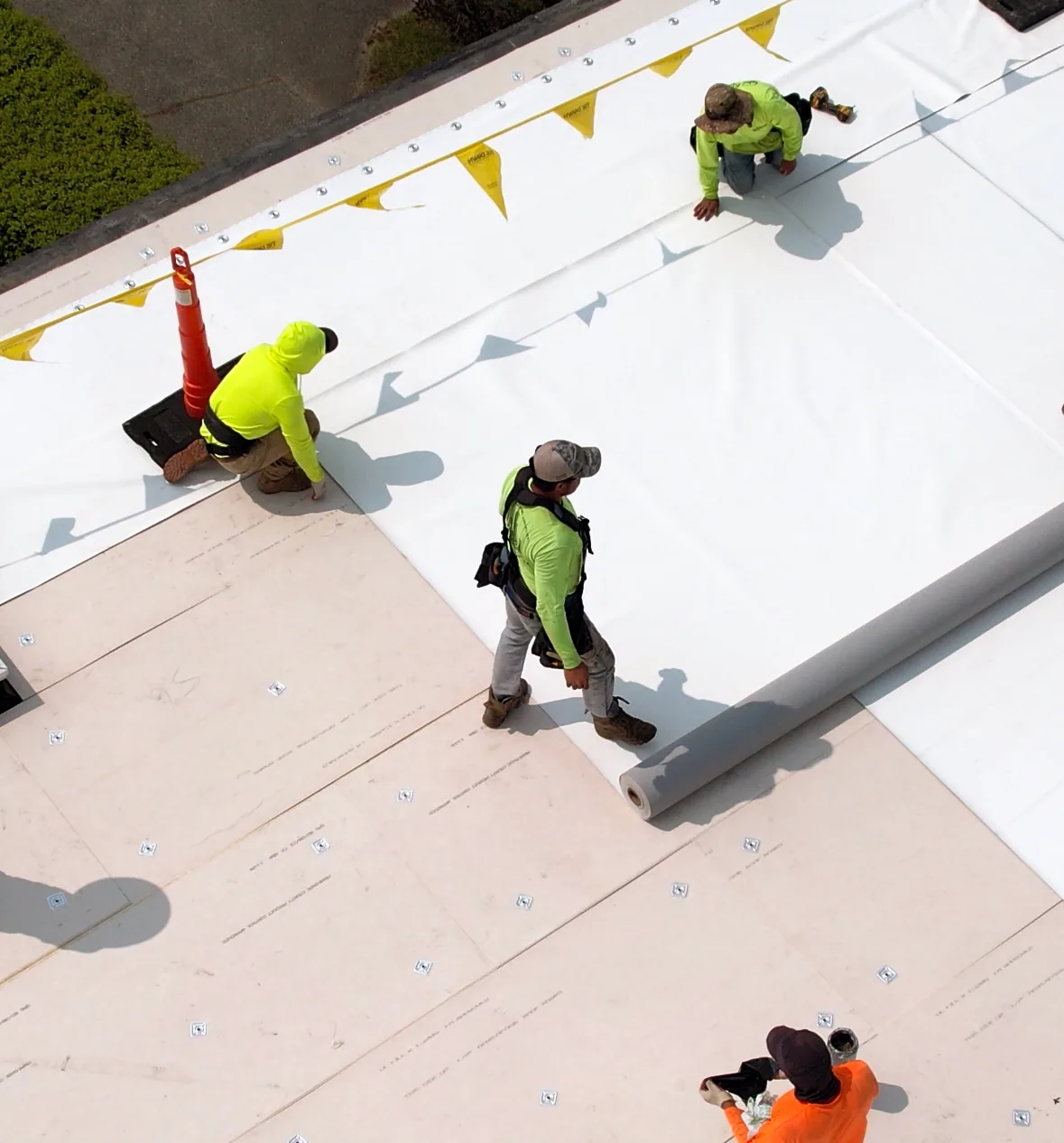
PVC is a thermoplastic roofing material with compatible seams joined through heat welding. Formulations and reinforcement differ among products, so the family name does not establish every exposure limit or repair requirement. We use the selected product's documentation for those questions. The owner receives a material recommendation tied to the building rather than a general claim that PVC tolerates every chemical found near rooftop equipment.
A TPO alternative also needs product-specific exposure and assembly review. Compare the actual sheets and supporting work with the PVC proposal, including preparation at equipment details. Their thermoplastic character does not establish identical chemical limits or make one product's repair material suitable for the other.
Residues and Membrane Chemistry
The inspection identifies discharge sources, accumulated residue and the areas where equipment service contacts the roof. Food-service exhaust, process vents and maintenance activities can create different conditions. We confirm those uses through the building team instead of assigning them from a property category. The proposed product is checked against the identified exposure and any required written compatibility review.
An existing stained membrane needs investigation before a coating or patch is selected. Residue may need removal by a method compatible with the retained sheet, and deterioration can require a larger repair boundary. Commercial roof repair distinguishes preparation from reconstruction of unsuitable material. A surface that has changed cannot automatically be treated as a clean new PVC sheet for welding or bonding purposes.
Plasticizers and Product Differences
PVC formulations use components that provide the required flexibility and performance. Aging and exposure can change the condition of the membrane, but a visual description alone does not establish a specific chemical mechanism. We examine cracking, stiffness, surface treatment and repair history as observed conditions. Product information and appropriate evaluation help explain what can be retained and connected to new material.
KEE-modified roofing provides another thermoplastic option to compare where the project warrants it. The comparison uses the actual products, their approved assemblies and exposure information. It does not assume that an ingredient name by itself establishes longer life at the building. The proposed scope states why the selected system suits the verified conditions and what maintenance those conditions require.
Seams and Detail Verification
Heat-welded connections depend on suitable preparation, compatible sheet and appropriate field settings. Trial welds follow the selected instructions, with checks repeated when changing conditions warrant adjustment. Straight seams and corners present different geometry. Starts, stops and intersections are examined carefully because a small unbonded channel can create a water route without a dramatic surface opening.
After the required cooling interval, seam checks identify areas needing correction before they are concealed by later work. A repair to an aged seam may need special cleaning or another approved method. Seam failure evaluation also asks whether movement or restraint caused the recurring defect. Rewelding a surface does not resolve an unsuitable detail that keeps pulling the connection apart.
Related Roofing Pages
TPO Commercial Roofing
How the work is scoped, documented and phased on occupied Sugar Land buildings.
Commercial Roof Repair
What we check on the roof, what we recommend and how the crew keeps the building open.
KEE Commercial Roofing
Conditions, options and next steps for commercial buildings in Fort Bend County.
Match the Membrane to the Building Exposure
Call for a commercial roof assessment. We will explain the material, substrate and equipment findings with photos and compare suitable PVC roofing options.
Call 555-555-5555 or email [email protected].
Commercial Roofing Questions
Straight answers to the questions building owners and managers ask us most often.
Does PVC resist every rooftop chemical?
Exposure limits are product-specific. The actual residue and service conditions need identification and compatibility review. We do not select the material from a general chemical-resistance claim.
Can an aged PVC sheet always be rewelded?
Surface condition and the selected repair method affect suitability. Cleaning, testing or removal to sound material may be required. The repair follows approved methods for the retained product where identifiable.
How is PVC compared with KEE roofing?
The comparison uses actual formulations, assemblies and exposure information. Building condition and detail needs also matter. An ingredient description alone does not establish the best choice.
Can a new sheet stay over wet insulation?
Unsuitable wet materials need investigation and removal within supported limits. The water source is addressed as part of the scope. A new surface does not dry the retained layers.
What information helps the owner maintain the roof?
Keep product and warranty documents, installation photographs and the equipment exposure record. Report changed residue or service routes. The maintenance plan can then respond to the roof's actual conditions.
Substrate, Attachment and Retention
The roof beneath the new membrane must provide a suitable base and connection. We inspect available deck information, insulation and attachment, using selected openings where authorized and useful. A dry sample identifies conditions at its location; it does not establish broad retention eligibility. Moisture extent and other requirements are evaluated together before an overlay is proposed.
Recover planning can reduce removal on an eligible assembly, with separation and substrate preparation specified as needed for the selected system. If retained material is wet, deteriorated or poorly attached, that limitation changes the proposal. Insulation and cover board work coordinates the surface and thickness with curbs, drains and wall details rather than leaving those heights for an improvised field correction.
Water Routes at Equipment and Walls
A thermoplastic field sheet still needs suitable flashing at every interruption. We inspect the pipe, curb or wall condition that the new detail will connect to. Upper equipment joints and frame openings can admit water independently of the roof. Where another trade must repair them, the proposal preserves that boundary so completed flashing is not presented as resolution of every possible source.
Penetration and skylight details are rebuilt using compatible materials and methods. An equipment shutdown or ventilation isolation follows a coordinated facility plan, with required airflow considered by the responsible team. Roof work does not create authority to cover a working intake. The installation sequence accounts for the approved access and any weather closure needed while the connection is open.
How a Roof Project Runs
Every roof we take on moves through the same six steps:
01
Roof Walk
We walk the whole roof and photograph the membrane, seams, flashings, drains and equipment.
02
Moisture Check
Readings and core cuts show what is wet below the surface before anyone prices a repair.
03
Written Findings
You get plain-language findings, photos and the options that fit the roof.
04
Scope and Price
One written scope covers the system, the details, drainage changes and the price.
05
Scheduled Work
Crews work around tenants, deliveries and weather, closing the roof every night.
06
Closeout
We walk the finished roof with you and hand over photos and warranty paperwork.
Equipment Review and Operating Access
Office properties in Westchase need equipment and service routes considered alongside the membrane choice. Ask building engineering to identify exhaust outlets, any reported residue and planned equipment changes. Inspect the areas around those sources and establish the cleaning or protection the selected material requires. The exposure review then supports a specific product recommendation and maintenance plan.
For an owner also managing a property in Stafford, record the access and operating requirements at that address before coordinating the work. Material deliveries, affected rooms and service routes determine where each phase can begin. Required equipment isolation is agreed with the responsible facility staff. The manager receives the proposed sequence and any interruption conditions, making the membrane scope easier to coordinate with the building operations.
Surface Care and Closeout Evidence
Product-specific instructions guide cleaning and repairs after installation. Required maintenance duties and warranty terms come from the issued documents, not a general assumption about PVC roofing. The closeout records the specified sheet, flashing components and relevant installation checks. Photos locate repaired areas and transitions that later technicians must preserve.
Maintenance inspections examine residue sources, traffic routes, drains and seams. A changed exhaust system or new service line can alter the exposure after the roof is complete. Managers should record those changes with the building history. Future repair preparation then follows both the material and its current condition, helping avoid an unsuitable patch chosen simply because the membrane still looks white.
A PVC repair begins with confirming that the exposed sheet is compatible with the new membrane and can accept a reliable heat weld. We clean the surface, check for degraded or contaminated material and test welding conditions where needed. A seam that looks closed may still require probing or a closer review at corners and penetrations. Different polymer sheets or coatings cannot be assumed to weld together because they share a color or profile. The scope records how tie-ins at drains, curbs and edges will be rebuilt.