
Commercial Roof Leak Repair
A split flashing admits rain, while an unsealed air path can admit humid air that condenses against a cold surface. Those failures need different repairs on a Sugar Land, TX commercial roof. Tracing the moisture through the roof and the equipment above the room gives the property manager a useful answer before a patch is ordered. The inspection follows the evidence from the ceiling to the assembly, including water retained from an earlier storm.
Openings, Condensation and Wet Insulation
Several problems can leave a brown ring on a ceiling tile. An opening lets rain through a seam, flashing or penetration. Condensation forms where moisture reaches a surface below its dew point; indoor temperature, air movement and the roof assembly determine where that can happen. Wet insulation can retain rainwater and release it after the weather clears. An HVAC condensate line or pan belongs on the list of possible causes as well.
The timing helps direct the inspection, but a dry-day drip does not prove condensation. A patch addresses a membrane opening. Correcting a confirmed air leakage or condensation problem may require work on the assembly and mechanical conditions. We document which observations support the proposed repair and which areas need another test before the scope is settled.
How a Leak Gets Traced
Tracing begins inside the building. We ask when the stain appears, how big it grows, whether it follows rain or dry weather and where the closest roof drains, units and walls sit. Then we go to the roof with that picture in mind.
- A visual walk of the membrane, flashings, penetrations and drains, with photographs of every defect found.
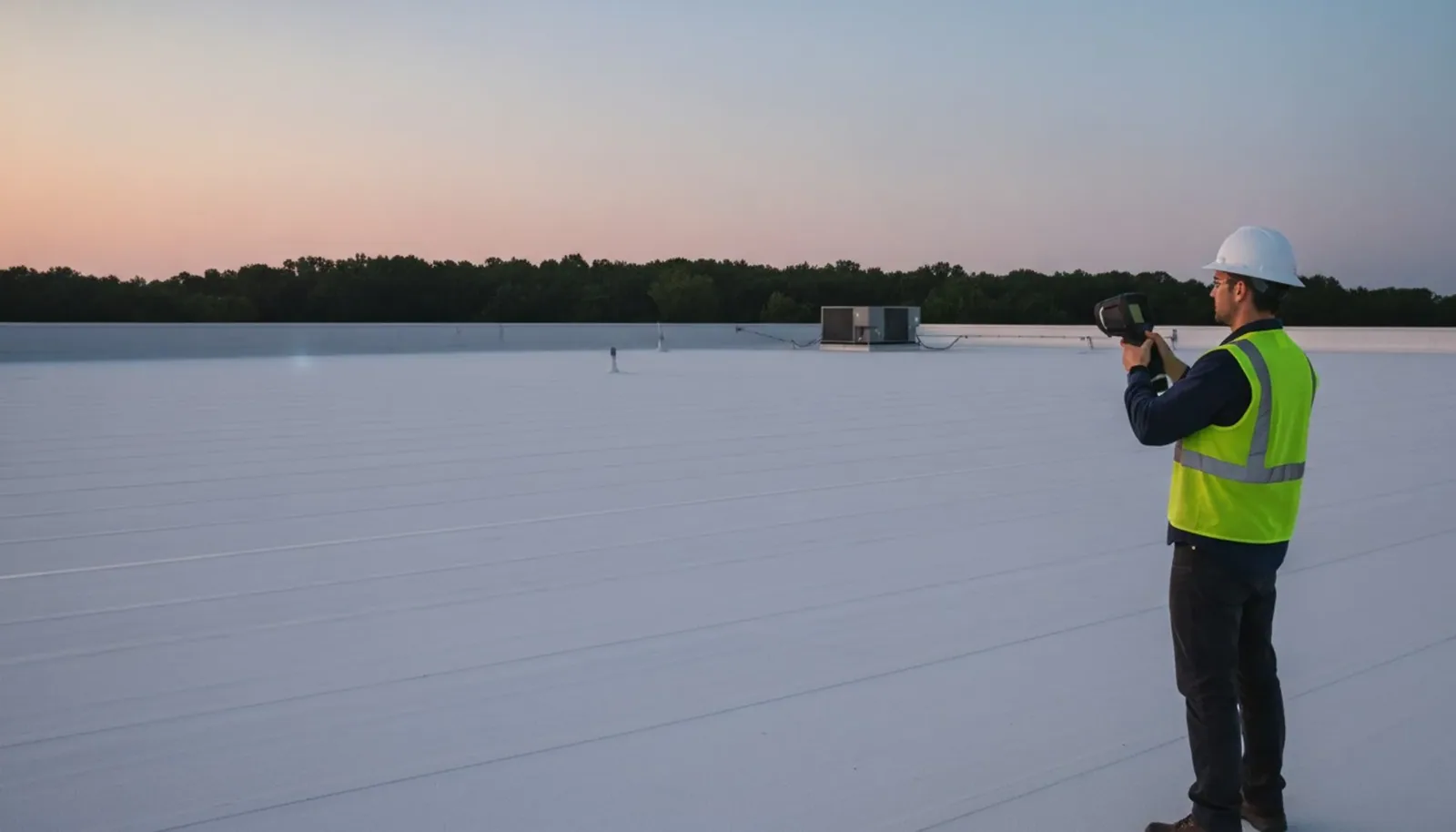
- Infrared observations under suitable weather conditions, or appropriate moisture measurements, to identify areas needing confirmation.
- Selected core samples to examine the layers and confirm moisture at sampled locations.
- Controlled water tests, working from the low point up, when the path is still unclear.
Findings are marked on a roof plan with photos so the property manager can see where each defect is. When the leak turns out to be widespread wet insulation, an appropriately timed moisture survey combines survey results with selected confirmation samples before the repair limits are marked.
Interior evidence is mapped before an opening is made. The room, ceiling grid, wall line and timing of the drip are compared with the roof plan and equipment locations above. Water can travel along a deck or insulation facer before reaching a ceiling, so the closest roof detail is a lead rather than proof. When access permits, we compare multiple observations and state which part of the route has been confirmed and which remains uncertain.
The Usual Places Water Gets In
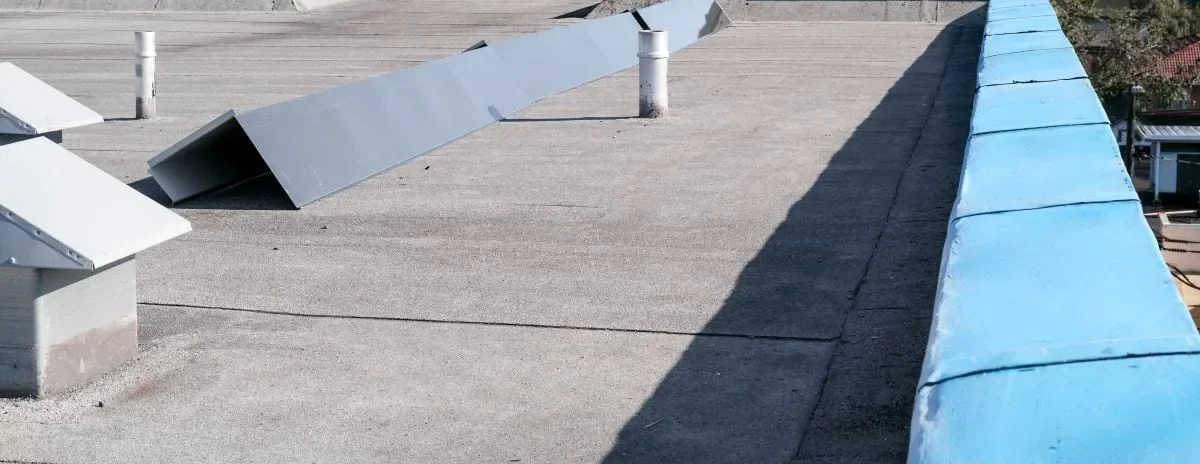
Roof details are common water-entry points, though the open field can also fail. The likely route depends on the installed assembly and observed conditions. Penetration flashings around pipes, conduit and rooftop unit supports can fail when sealants crack in the sun. Wall and curb flashings pull away when the membrane shrinks. Drains can clog with leaves or construction debris, leaving water near laps and seams. Edge metal can loosen in wind and let rain track behind the membrane. At Town Square and along US 59, the inspection records the actual curbs, walls and equipment on each building before assigning a cause.
On metal buildings the story shifts to fasteners backing out, panel laps opening up and sealant failing at ridge caps. At Sugar Land Regional Airport, hangar access and aircraft protection affect the inspection plan. In Sugar Land Business Park, warehouse operations and loading areas need the same advance coordination. Neither location tells us what roof system a particular building has. The walk records the material, seam direction, drainage outlets and damaged details, then compares those findings with the interior water path.
Related Roofing Pages
Infrared Roof Moisture Surveys
How the work is scoped, documented and phased on occupied Sugar Land buildings.
Roof Flashing Failure Repair
What we check on the roof, what we recommend and how the crew keeps the building open.

Sugar Land Business Park
Conditions, options and next steps for commercial buildings in Fort Bend County.
Let Us Explain Where the Water Is Coming From
We will trace the leak, describe what we find in plain terms and send photos, so you can tell the owner and the tenant exactly what is happening above the ceiling.
Call 555-555-5555 or email [email protected].
Commercial Roofing Questions
Straight answers to the questions building owners and managers ask us most often.
How can I tell a roof leak from condensation?
Record the timing, recent weather and equipment operation. Rain-related entry, retained water, condensation and HVAC drainage can produce overlapping symptoms. The inspection checks those possibilities; a thermal image alone does not identify the cause.
Why do leaks show up far from where the water gets in?
Water can follow deck joints, insulation interfaces and supporting members before reaching the ceiling. The route depends on the assembly. Interior observations and roof findings are compared before a suspected entry point is recorded as confirmed.
Will a leak repair need to wait for dry weather?
Permanent repair products have specific surface, temperature and moisture requirements. Temporary protection depends on safe access and a method compatible with those conditions. The property manager receives the limits of the temporary work and the conditions needed to return.
Do repeated leaks mean the roof should be replaced?
They justify a broader condition review. Moisture distribution, membrane condition, deck findings, repair history and the proposed service life all matter. Isolated defects may remain repairable; widespread deterioration may support replacement after the findings are confirmed.
What should a tenant report so the repair goes faster?
Tell the property manager where the water appears, what time it started and whether the ceiling is dripping or only stained. Photos help most. A close view of the stain and a wide view of the room give us a map of the area to check first.
Stopping the Water Now and Later
Some leaks need two visits. The first aims to limit further entry with temporary protection suitable for the material, surface condition and safe access available. The second is the permanent repair, done when surfaces are dry, in the right temperature range and with the correct material. We tell the property manager which stage a given repair is, so nobody mistakes a temporary patch for the finished work.
Where the leak is a symptom of a roof that is wearing out, the permanent fix may be larger than a patch. A series of leaks across one roof is the moment to compare planned repair against replacement plainly. Night and holiday leaks are handled by our emergency response, starts with access conditions and practical protection measures while the permanent repair is planned.
Heavy Rain and Drain Capacity
Houston-area rainfall averages about 50 inches a year, and short, intense downpours make drainage part of a leak investigation. The roof walk checks blocked strainers, outlet elevations, overflow provisions and the marks left by standing water. A recorded storm history helps establish when a symptom began; damage still needs evidence from the building itself. Hurricane Harvey brought severe flooding to Fort Bend County in 2017, so ground-level water entry and roof entry must also be distinguished when reviewing that event.
A roof with recurring ponding needs measured levels and an outlet inspection. Debris removal may restore an obstructed drain. A low area, undersized outlet or missing overflow needs a different scope, sometimes including plumbing or engineering input. Roof drain and scupper work follows those findings so the owner knows which defect is being corrected and what should be checked after the next rain.
How a Roof Project Runs
Every roof we take on moves through the same six steps:
01
Roof Walk
We walk the whole roof and photograph the membrane, seams, flashings, drains and equipment.
02
Moisture Check
Readings and core cuts show what is wet below the surface before anyone prices a repair.
03
Written Findings
You get plain-language findings, photos and the options that fit the roof.
04
Scope and Price
One written scope covers the system, the details, drainage changes and the price.
05
Scheduled Work
Crews work around tenants, deliveries and weather, closing the roof every night.
06
Closeout
We walk the finished roof with you and hand over photos and warranty paperwork.
Records for Owners, Tenants and Carriers
A leak often involves more than the roofer. Tenants want an answer, owners want a cost and insurers want evidence. We write down where water entered, how we proved it and what was done, and we take dated photos of the roof and the damaged interior. If a storm caused the opening, that record supports a claim, and our roof insurance claim assistance uses it to document cause and scope.
Temporary protection and permanent correction belong in separate entries. The first record states how exposure was limited, what weather or access prevented a full repair and when the next visit is needed. The final entry identifies removed layers, installed material and the tested connection. That distinction helps owners, tenants and claim reviewers understand what was completed without treating an emergency measure as the finished repair.