
Infrared Roof Moisture Surveys
Water can remain concealed within a roof assembly even while its surface appears serviceable. In Sugar Land, TX the climate pushes moisture into low-slope roofs from two directions: rain through small openings and humid air reaching a surface below its dew point, where the assembly allows that route. Insulation beneath a sound-looking membrane can retain moisture, and selected testing can investigate suspect areas without a complete tear-off. An infrared survey can guide sample locations; the report distinguishes thermal patterns from confirmed sample conditions and untested areas.
How Moisture Gets Into a Roof Assembly
Moisture takes a few routes. Rain enters at a split seam, a failed flashing or a cracked penetration seal, then spreads sideways through the insulation along the path of least resistance. Air leakage through openings differs from vapor diffusion through materials. Either can contribute moisture where the temperature and humidity profile permits condensation, so the investigation examines the layers and indoor operation before choosing a vapor-control repair. Construction moisture trapped under a membrane at installation can add a third source.
Wet insulation can lose thermal performance and retain water after the entry defect is patched. Retained moisture may also contribute to corrosion where materials and exposure permit it. We investigate its distribution and the underlying condition rather than assigning a duration or energy penalty from one sample. This helps distinguish a suitable surface repair from work that also needs removal of affected layers.
How an Infrared Scan Works
After sufficient solar heating, some wet roof assemblies release stored heat differently from adjoining dry areas. An evening thermal image may then reveal a contrast useful for investigation. That contrast depends on the layers, surface and weather; equipment, shadows or material changes can create another explanation. The operator marks patterns for confirmation instead of declaring moisture from temperature alone.
- The survey window is selected for suitable surface, weather and heating conditions that can produce useful contrast.
- Suspect areas are marked on the roof in the field and photographed in both thermal and visible light.
- Capacitance or impedance meters are used on the same areas to cross-check what the camera shows.
- Features that mimic wetness, such as old patches, ballast variations and shaded areas, are identified and set aside.
The camera can be carried across the roof by hand or flown by drone on larger buildings through our drone roof inspection service, with the final marking done on foot.
Surface condition affects the usefulness of a scan. Standing water, shade, rooftop equipment and changes in membrane material can create temperature contrasts unrelated to retained moisture. We map those influences during the survey and select areas where the pattern can be interpreted with the assembly information. The resulting image marks locations for confirmation, not a final removal boundary. A surface pattern is most useful when it guides a focused check instead of being treated as a measurement of every concealed layer.
Core Cuts That Confirm the Scan
A scan identifies patterns for further investigation. A core reveals the layers and condition at its sample location. We cut small samples through the membrane and insulation at chosen points, inside and outside the suspect areas, then examine and photograph the layers. Wet, damp and dry samples confirm their locations and help estimate the affected area. Unsampled boundaries remain subject to checking during removal. Samples also document the layer count, insulation type and accessible deck condition at each opening.
Each authorized opening receives a compatible repair before the work area is left, with the method and location recorded. Access and weather must permit that closure before sampling begins. Where coring is limited, such as on roofs under warranty, we agree on core locations in advance. The report places confirmed sample findings and interpreted suspect boundaries on a numbered plan, preserving the limits of each type of evidence.
Related Roofing Pages
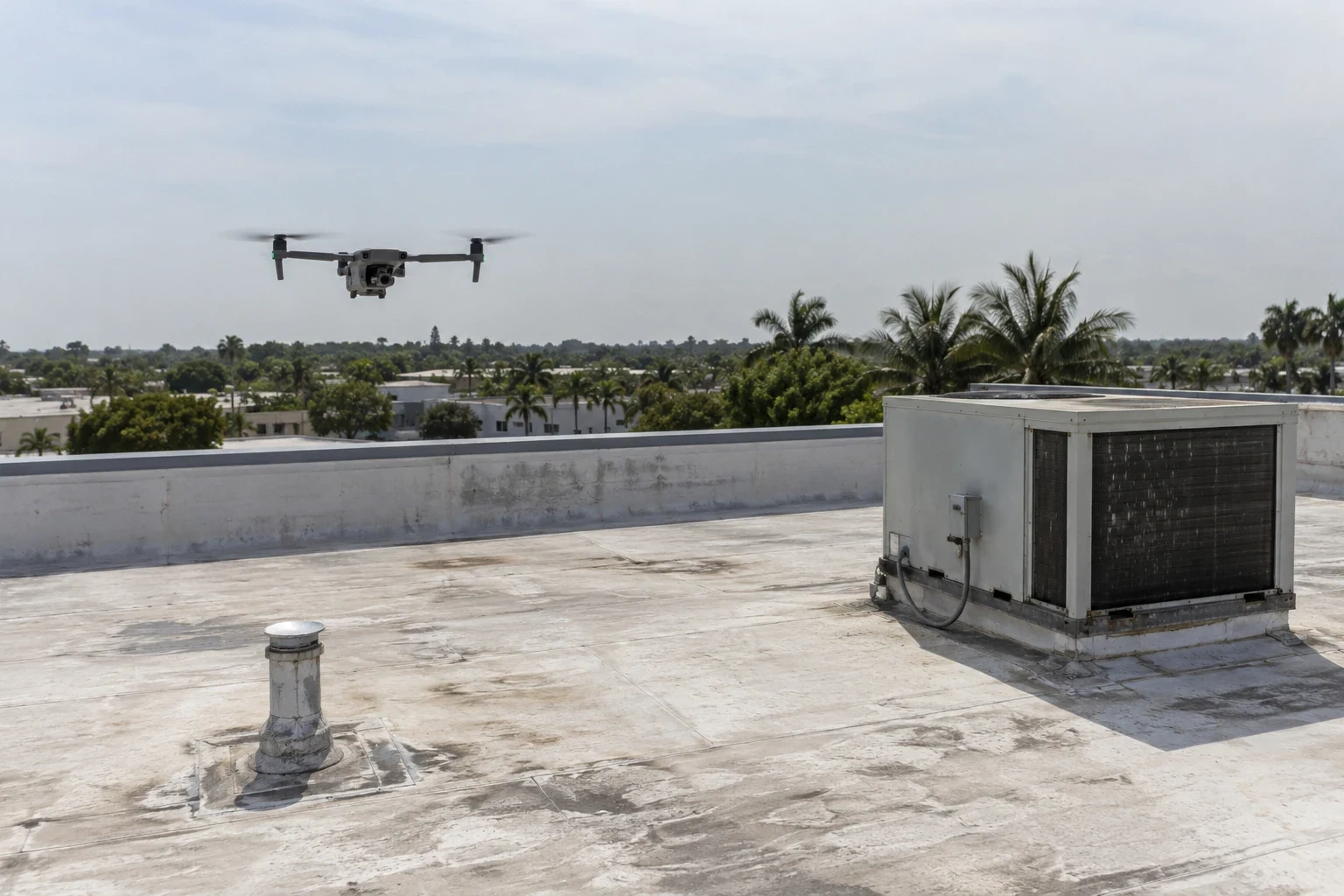
Drone Roof Inspections
How the work is scoped, documented and phased on occupied Sugar Land buildings.
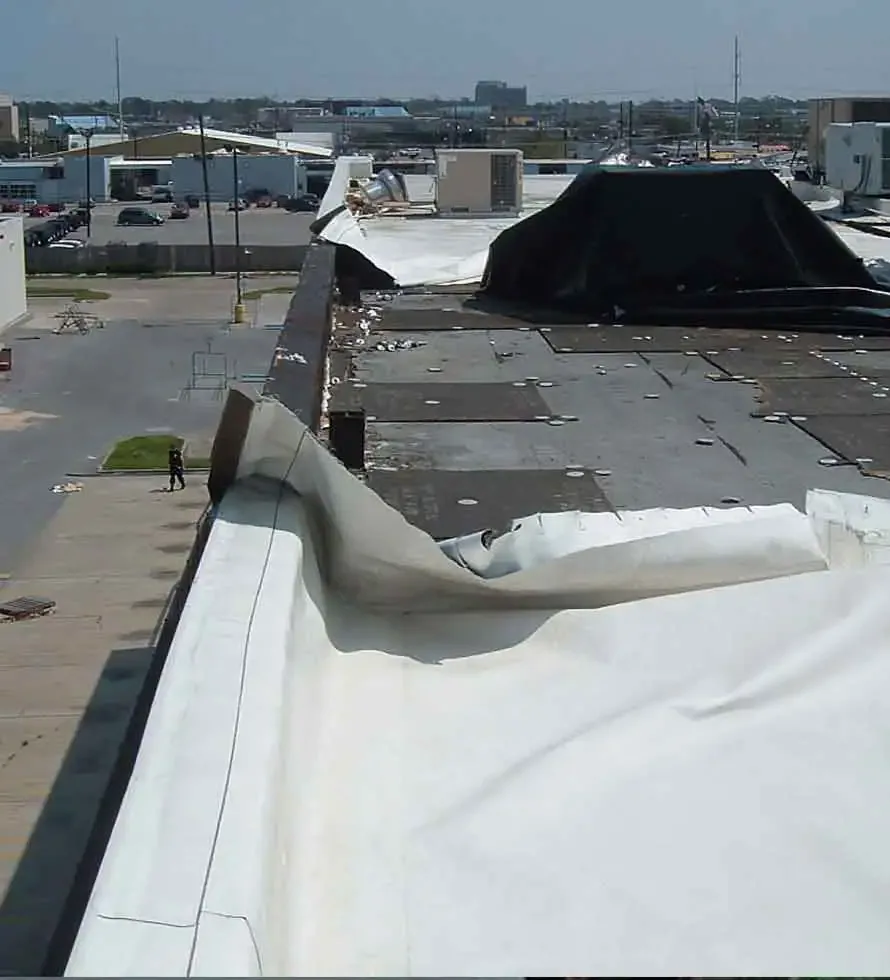
Commercial Roof Replacement
What we check on the roof, what we recommend and how the crew keeps the building open.
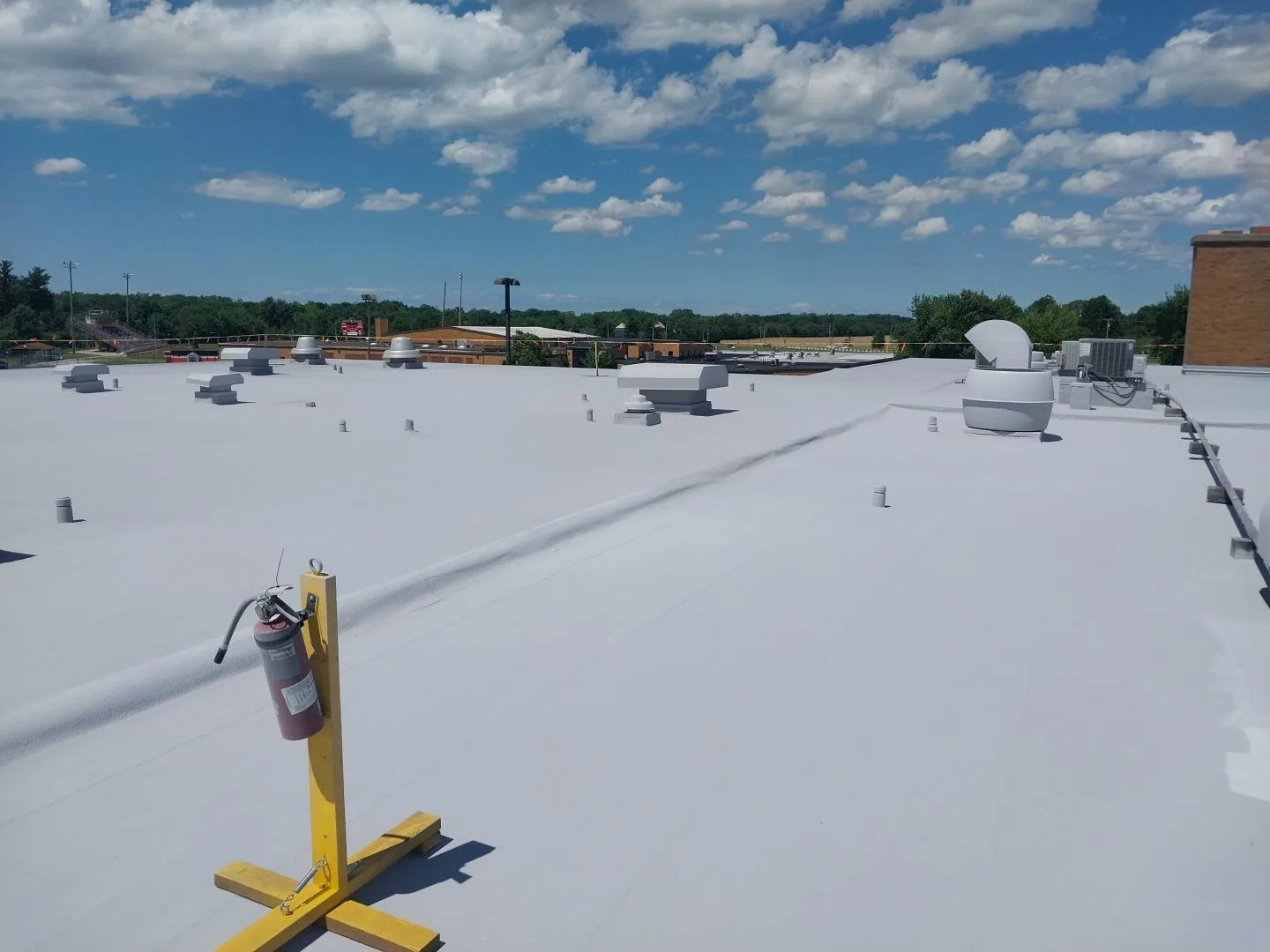
Roof Recover and Overlay
Conditions, options and next steps for commercial buildings in Fort Bend County.
Find Out What Is Inside Your Roof
We will explain the moisture map in plain terms, with photos of the cores, so you can show the owner exactly where the water sits and what it means for the building.
Call 555-555-5555 or email [email protected].
Commercial Roofing Questions
Straight answers to the questions building owners and managers ask us most often.
Can you scan a roof that is covered in ballast or gravel?
Often with limits. Ballast and gravel mask thermal contrast, so a scan can miss areas that a core or a meter would find. On those roofs we lean harder on meters and cores, and we say in the findings how far the scan can be trusted.
Why does the scan have to happen at dusk?
An evening window can reveal differences in stored heat after suitable daytime heating. Roof construction and conditions determine whether useful contrast develops. The survey timing is selected for that assembly rather than assuming every roof produces the same dusk pattern.
Will the roof be damaged by the core samples?
Each core is a small opening that is sealed with matched material before we leave the roof. The repair follows the membrane manufacturer's compatible detail and is recorded by location. We also keep the number of cores to the minimum that answers the question.
What happens if rain is forecast on the day of the survey?
We check whether the forecast and surface conditions support the planned method. If useful readings or suitable sample closure cannot be obtained, the visit is moved or the investigation method changes. The report states any remaining limits.
Does a dry survey mean the roof is in good shape?
It means no moisture was indicated within the survey's coverage and limitations, with dry conditions confirmed at sampled locations. The membrane can still be aged or cracked, and details can still fail. The survey is read with the inspection findings for the complete picture.
What the Moisture Map Decides
The map answers the question owners most want answered. If wet areas are small and isolated, a targeted repair and replacement of the wet sections can restore a roof that otherwise looks tired. If moisture is widespread, a full replacement is usually the sound path. If the insulation is dry and the deck is good, a recover may be an option.
The same survey helps in smaller ways. It identifies suspect areas for further investigation, while direct detail checks help a leak repair address the confirmed defect. It also supplies a baseline for budgeting, with confirmed sample areas and interpreted boundaries identified separately. Owners can compare it with later surveys to see whether a roof is stable or deteriorating. Changes between surveys are assessed against comparable test conditions and maintenance history. A stable outline does not prove closure, and a larger outline does not identify the entry point; either finding can justify additional investigation before a repair scope is selected.
After sampling, the report separates confirmed wet material from nearby areas that were not opened. The owner can compare a localized correction with a wider removal option using the actual sample locations and accessible observations. If the pattern remains ambiguous, additional testing can be scoped before quantities are finalized. This prevents a visual temperature map from creating a blanket replacement recommendation or promising that every untested section is dry.
After Storms and Before Transactions
Storms are a common reason to scan a roof. Hurricane Harvey brought historic flooding to Fort Bend County in August 2017. Hurricane Beryl made landfall near Matagorda in July 2024 and caused roof and structure damage in the Houston area. Those regional records can help place an event in time, while a particular building still needs its own inspection findings. A prompt survey documents current moisture. Earlier comparable findings are needed to identify a change; a new sample alone cannot date the water.
Sales and lease negotiations are the other trigger. A buyer reviewing an industrial building in Sugar Land Business Park, or a retail center near First Colony Mall, wants to know what part of a roof is wet before the price is final. Our due diligence roof surveys use the same method and package the findings for lenders and buyers. Big buildings, such as the two-building warehouse project at Stafford Logistics Park, call for a plan that scans each roof area under the same conditions so the results can be compared.
How a Roof Project Runs
Every roof we take on moves through the same six steps:
01
Roof Walk
We walk the whole roof and photograph the membrane, seams, flashings, drains and equipment.
02
Moisture Check
Readings and core cuts show what is wet below the surface before anyone prices a repair.
03
Written Findings
You get plain-language findings, photos and the options that fit the roof.
04
Scope and Price
One written scope covers the system, the details, drainage changes and the price.
05
Scheduled Work
Crews work around tenants, deliveries and weather, closing the roof every night.
06
Closeout
We walk the finished roof with you and hand over photos and warranty paperwork.