
Make the Roof Decision Explainable
Call for condition evidence and practical scope comparisons. We will explain the photographs so you can brief the owner with clear work priorities.
Call 555-555-5555 or email [email protected].
All Roofing Capabilities
Commercial roof planning in Sugar Land, TX, with condition records, work priorities and assembly decisions explained for owners and property managers.
Roof Asset Management
Roof asset management in Sugar Land links roof condition, maintenance history and future work so property managers can explain priorities to the owner.
Learn moreRoof Capital Planning
Roof capital planning in Sugar Land connects assembly condition, drainage needs and repair options with a clear basis for the owner’s investment decisions.
Learn moreRoof Condition Reports
Roof condition reports in Sugar Land connect photos, moisture findings and repair priorities so property managers can explain the next decision to owners.
Learn moreRoof Warranty Management
Roof warranty management in Sugar Land connects the actual warranty terms, roof findings and repair records so managers know the next step to take.
Learn moreDue Diligence Roof Surveys
Due diligence roof surveys in Sugar Land explain observed condition, concealed-layer findings and investigation limits before a buyer commits to the building.
Learn moreMulti-Site Roof Programs
Multi-site roof programs in Sugar Land compare actual roof findings, coordinate suitable work and keep each property’s scope clear for managers and owners.
Learn moreCondition Locations and Usable Records
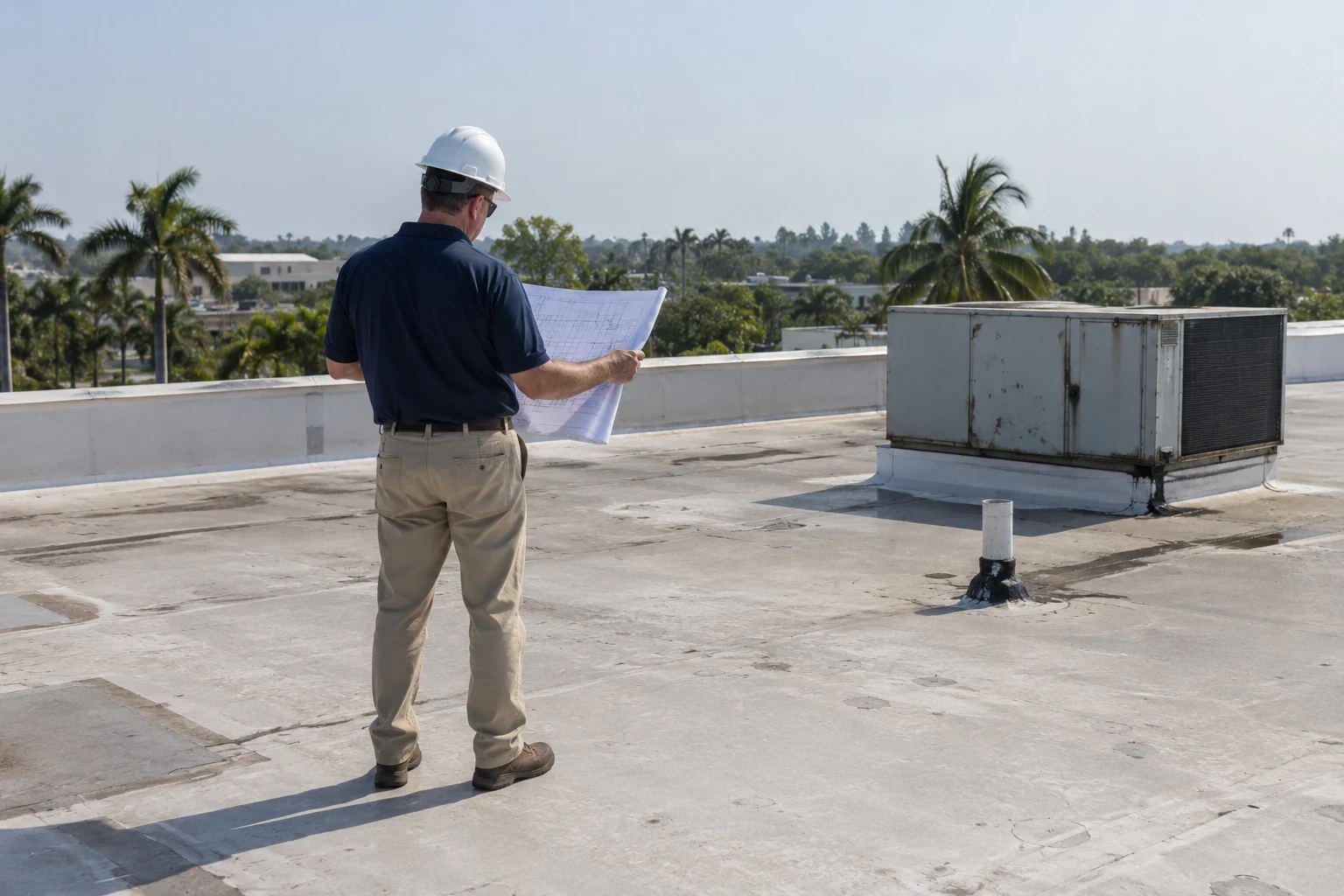
Condition reporting identifies the sheet, details, accessible layers and drainage findings. Roof asset management keeps those observations related to repair and equipment records. A location marked on a plan is more useful than an isolated photograph without context. We retain the extent of accessible examination, the test positions and remaining questions. Subsequent inspections can compare changes without assuming that an earlier observation describes the roof indefinitely.
Work Priorities and Retained Construction
Capital planning compares correction choices against layer condition, attachment and operating constraints. Due diligence examination provides condition evidence for a property decision, with inaccessible construction identified. A recover retains weight and old layers, while replacement changes removal and interior exposure. Those differences affect scope and timing. The explanation identifies what is supported by the roof findings rather than predicting a fixed service life from appearance.
How a Roof Project Runs
Every roof we take on moves through the same six steps:
01
Roof Walk
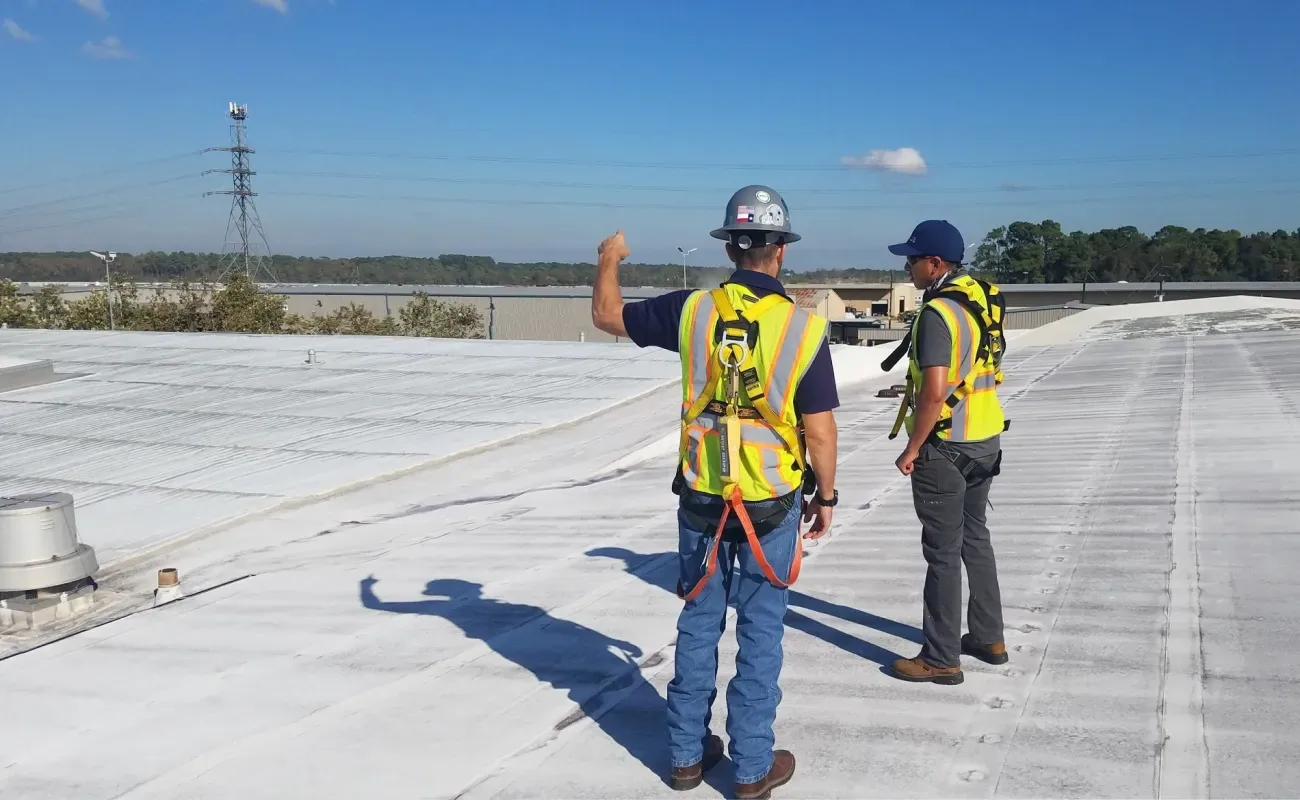
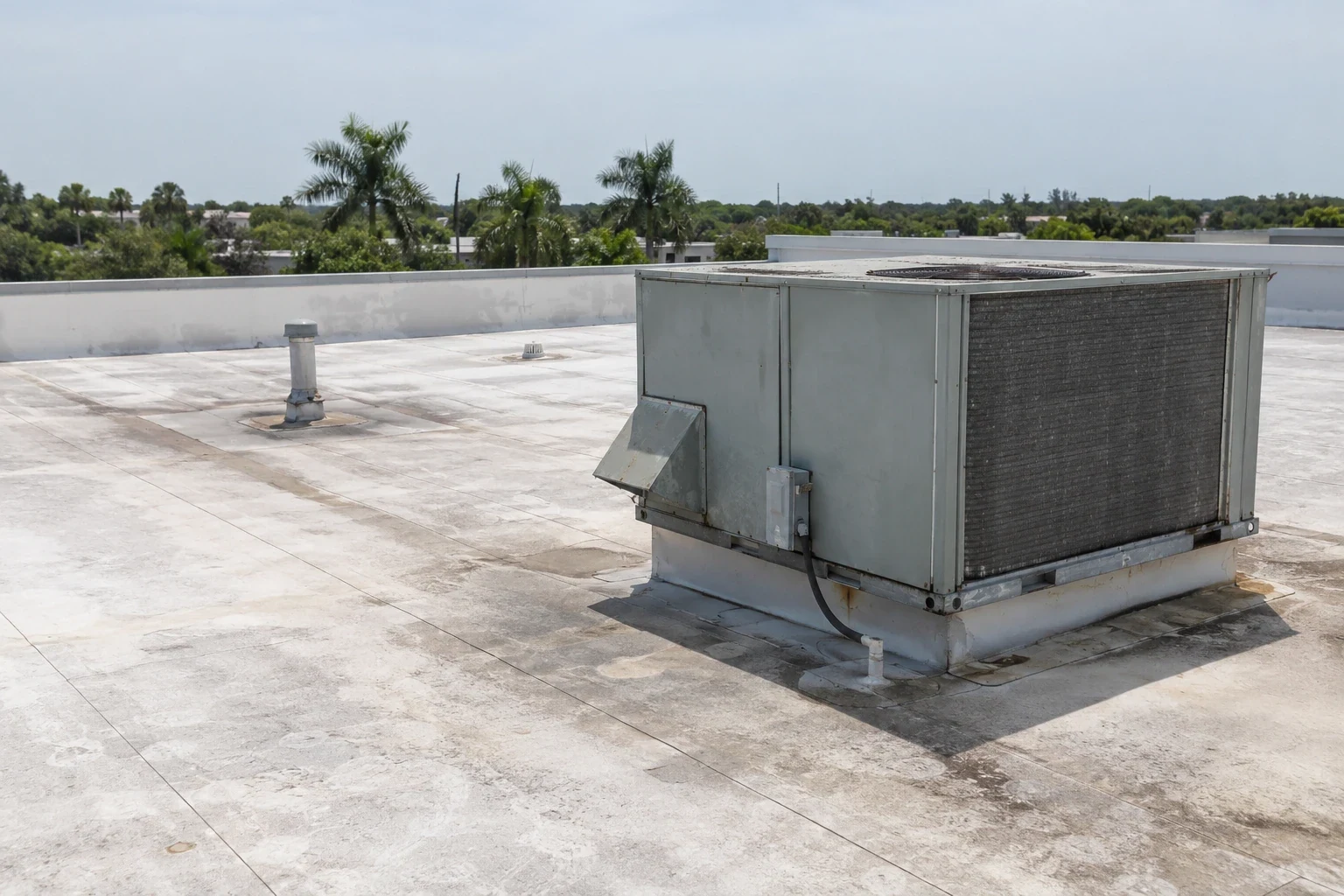
We walk the whole roof and photograph the membrane, seams, flashings, drains and equipment.
02
Moisture Check
Readings and core cuts show what is wet below the surface before anyone prices a repair.
03
Written Findings
You get plain-language findings, photos and the options that fit the roof.
04
Scope and Price
One written scope covers the system, the details, drainage changes and the price.
05
Scheduled Work
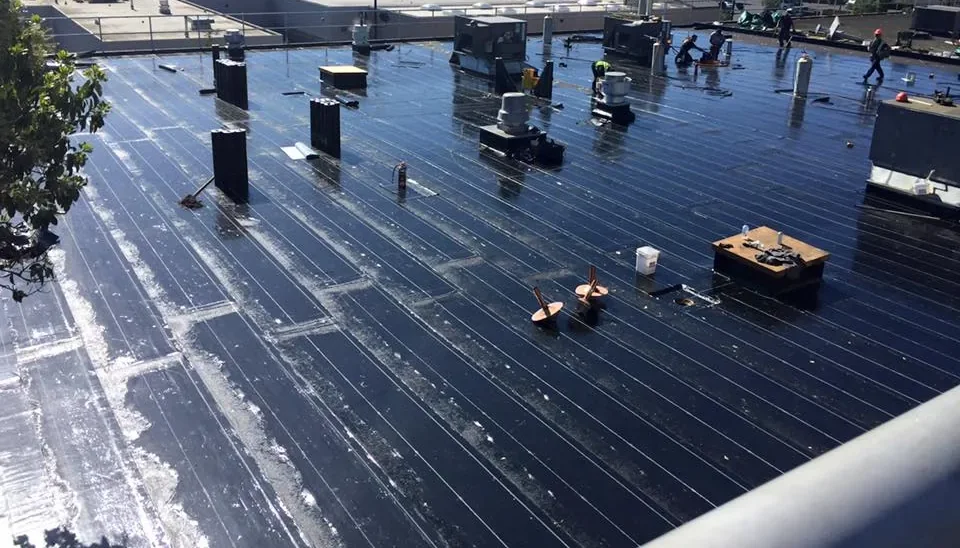
Crews work around tenants, deliveries and weather, closing the roof every night.
06
Closeout
We walk the finished roof with you and hand over photos and warranty paperwork.
Issued Terms and Portfolio Consistency
Warranty management relates known repairs and proposed alterations to the issued terms. Coverage and required notices need review under that document. Multi-site roof programs keep each property's product, condition and work constraints distinct. Consistent records help compare tasks without assuming identical construction across buildings. Completion photographs preserve which detail and material were actually corrected.
Local Operations and Decision Inputs
Town Square's hotel, retail and office activity can limit working periods differently across a commercial property. In Stafford, delivery and industrial operations may control staging and equipment movement. We map the affected rooms and routes before recommending a phase. A hands-on roof examination establishes accessible construction and the locations requiring further checks. The resulting plan relates operating restrictions to the exact work area.
Emergency help can be assessed during nights and holiday closures, with interim protection limited by safe access and current conditions. Permanent correction is identified separately. Cost drivers include damaged support, removal depth, equipment coordination and revised drainage. We explain each through the physical work required. An owner can then compare proposals and priorities using a clear account of both condition and practical execution.
Commercial Roofing Questions
What should remain uncertain in a roof planning report?
Unexamined layers, unresolved causes and inaccessible details remain clearly identified. We state which observations support the recommendation and what further examination would answer the remaining questions.
Can two portfolio buildings use one replacement assumption?
Each needs its own construction and condition review. Product, layers, attachment and operating restrictions may differ. We use comparable records while retaining those building-specific findings.
How do you keep an uncertain finding from becoming a replacement assumption?
We label what was inspected, what remains concealed and what check would resolve the question. The recommendation stays within that evidence.
Which roof should management address first?
The priority follows observed water entry, attachment and damage consequences. We compare those findings with each building’s operation and explain the sequence.