
Roof Warranty Management
A new pipe through a roof changes more than the surface detail. It introduces an opening, a support and a connection that must suit the assembly already on the building. For a Sugar Land, TX property manager, that change also calls for checking the roof warranty documents before the alteration proceeds. Roof warranty management connects the physical detail with the issuer requirements, notices and work records needed to handle it properly.
The Documents That Apply to This Roof
The starting point is the actual warranty documents issued for the building. The file identifies the issuer, covered roof areas, commencement information and applicable terms. Manufacturer and installer documents can describe different responsibilities, so they are kept distinct. A product name or invoice does not establish the full coverage of the installed roof.
At a commercial property in First Colony, that document review stays attached to the specific address and roof plan. A portfolio owner may hold several warranties with different notice and alteration requirements. Roof asset management keeps those documents connected to the correct area, along with installation and repair records. Missing documents are requested before a manager relies on a remembered term or another property's warranty as the basis for a repair decision.
The first review identifies the covered roof area and the party named in the issued document. It also records the effective date, listed materials, stated exclusions and the process for reporting a condition. A document for one building section should not silently be applied to an addition or a neighboring roof. Missing schedules and unclear boundaries are resolved from the available project records before a repair decision is made. That basic identification prevents the wrong document from guiding work on the wrong assembly.
A warranty review does not replace the issued terms or decide coverage by itself. It organizes the documents, condition evidence and communication trail so the owner can follow the stated process. The repair scope is still based on the roof defect found. Any response from the issuer is recorded with its date and requested next step, keeping that correspondence connected to the relevant area.
The Finding and the Possible Cause
A warranty inquiry needs a clear description of what was observed. A leaking curb, separated seam and wet area may require different investigations. Interior timing, equipment operation and recent work help direct the roof inspection. Condensation or an equipment drain can produce water without a membrane opening, so the condition is established before it is described as a roofing defect.
A commercial roof inspection records the location, surrounding details and any limitations on access. Where moisture is suspected below the membrane, the investigation states its method and confirmation results. The report distinguishes a visible defect from an established cause. That evidence lets the issuer review the reported condition and allows the manager to explain what remains unresolved without promising the result of a claim.
Maintenance Evidence Kept With the Roof
Inspection and maintenance requirements come from the applicable documents, not from a universal warranty schedule. The manager identifies the required tasks, notice procedures and record retention information for that roof. Routine entries describe what was checked and what was found. Repairs include their location, materials, method and completion photographs.
Preventive roof maintenance can keep outlets clear and identify deteriorating details while preserving a useful condition history. A completed work order is linked to the evidence of the work. Temporary protection remains identified as temporary, with its limitations and return plan. The record should allow someone reviewing a later problem to see the sequence of findings and responses without reconstructing it from scattered emails.
Related Roofing Pages
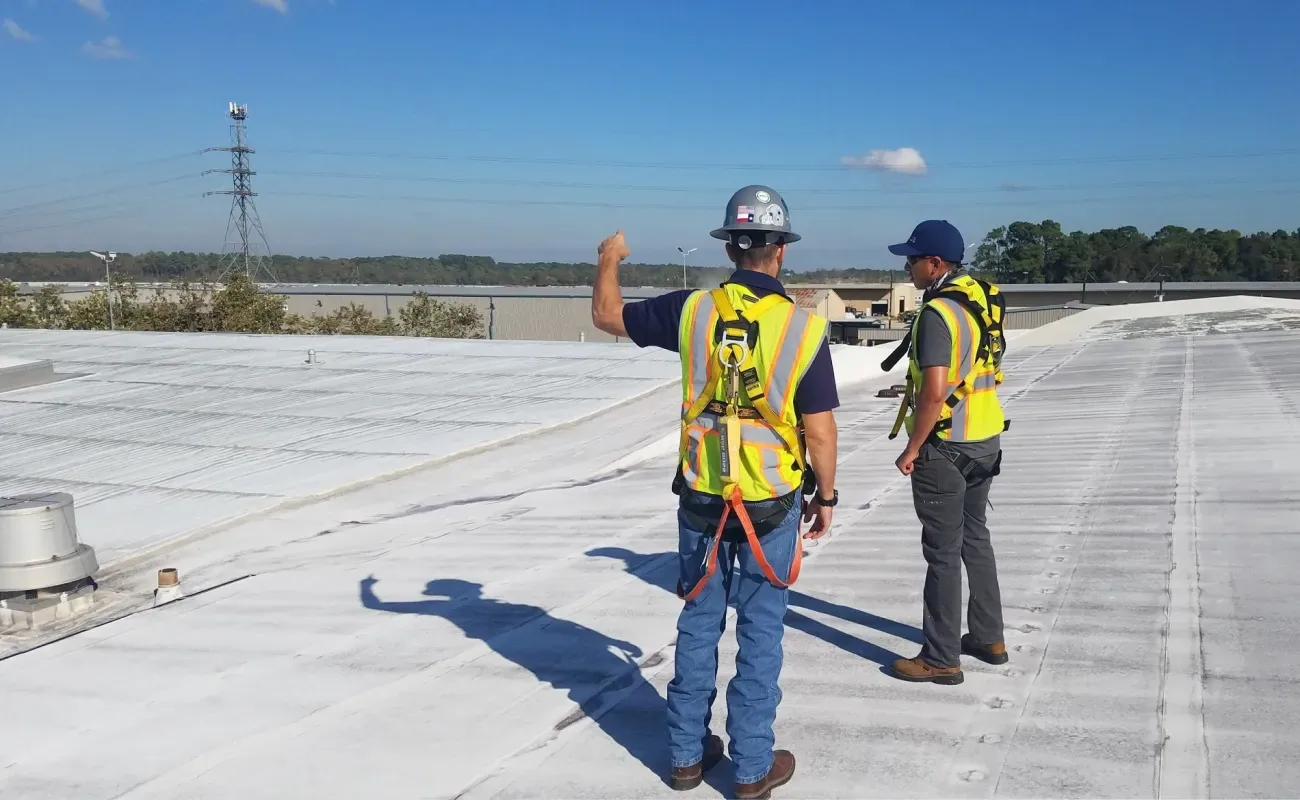
Roof Asset Management
How the work is scoped, documented and phased on occupied Sugar Land buildings.
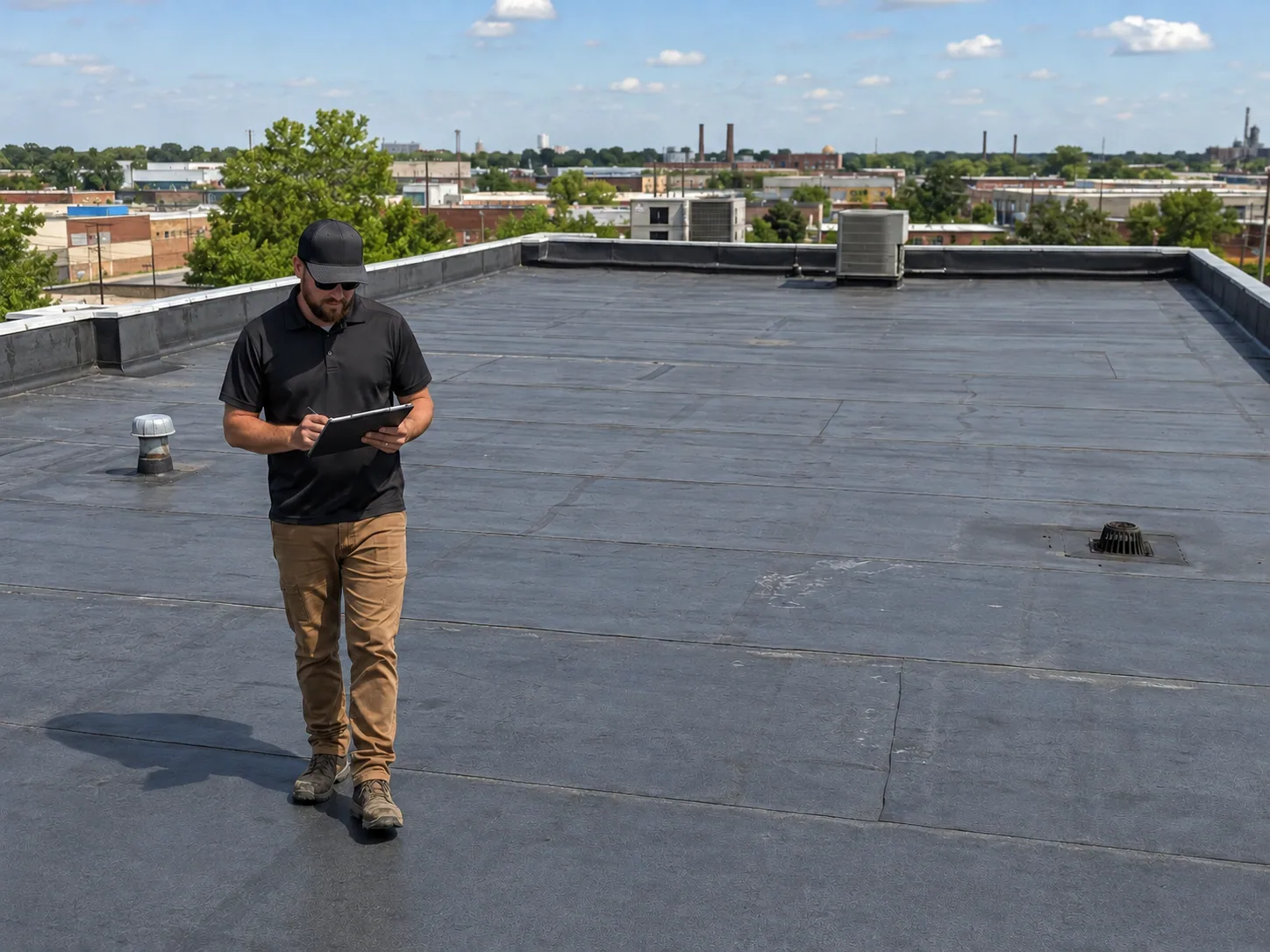
Commercial Roof Inspections
What we check on the roof, what we recommend and how the crew keeps the building open.
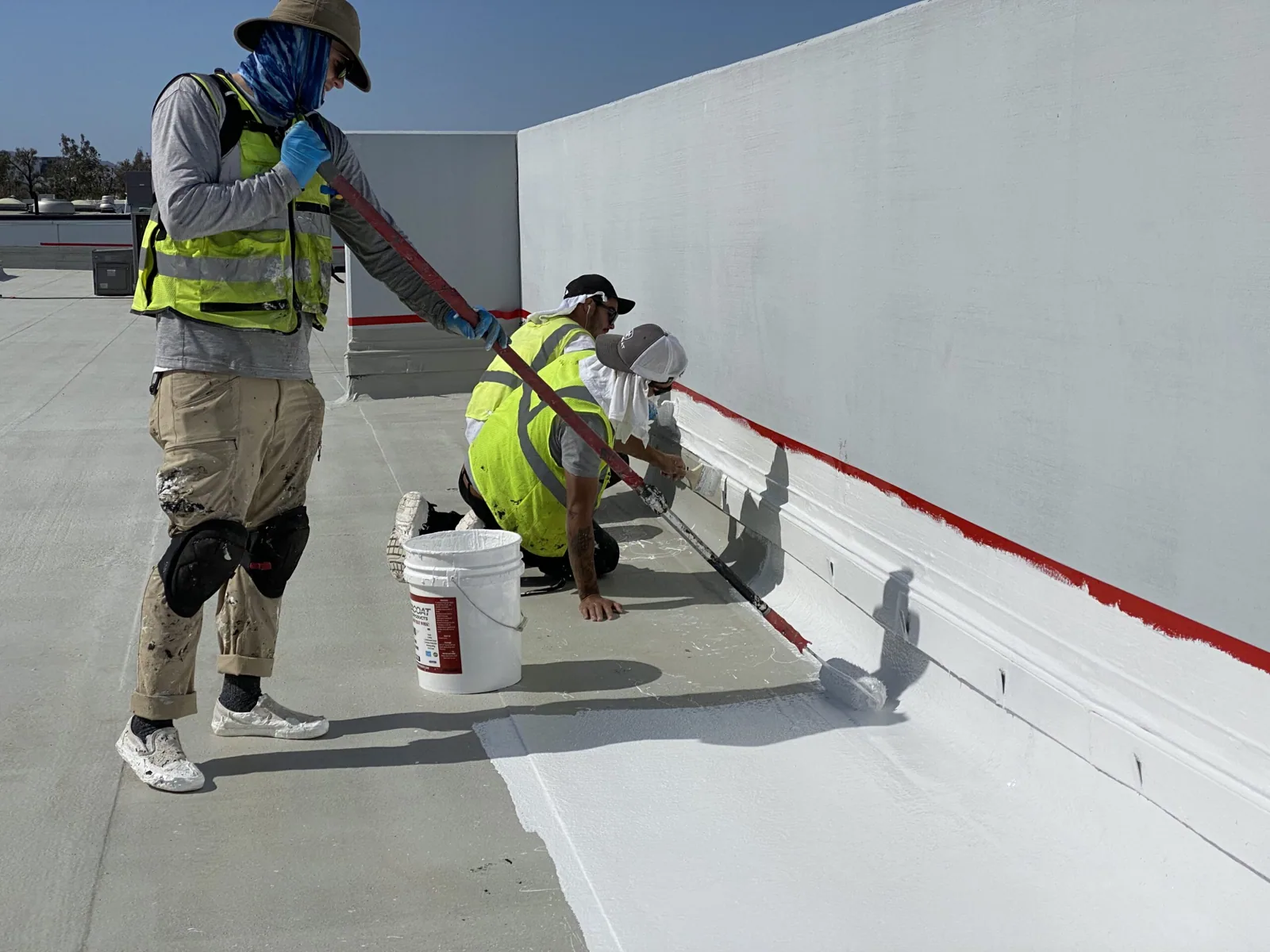
Preventive Roof Maintenance
Conditions, options and next steps for commercial buildings in Fort Bend County.
Make the Warranty File Clear
Request a review of the roof documents and current findings, with location-marked photos and a clear list of notices, repair questions and remaining actions.
Call 555-555-5555 or email [email protected].
Commercial Roofing Questions
Straight answers to the questions building owners and managers ask us most often.
Does the membrane brand establish warranty coverage?
No. The issued document identifies coverage and conditions for the particular roof. Manufacturer and installer responsibilities can differ. Review the actual terms and roof areas before treating a repair as covered.
What should be recorded when another trade adds a penetration?
Keep the proposed detail, required reviews and issuer responses with photographs of the work. Record the materials and tie-in location. Any loading or assembly question is resolved through the appropriate project review before installation.
Can emergency protection proceed while coverage is being reviewed?
Assess safety and practical protection needs promptly, then follow applicable notice and repair procedures. Document the immediate measure and its limits. Permanent work and coverage decisions may require additional review or authorization.
What happens when the cause of water entry is uncertain?
State the observations and the further investigation needed. Rain entry, retained water, condensation and equipment drainage can overlap. The record should preserve uncertainty until testing and assembly findings support a cause.
Is a warranty transfer complete when the buyer receives the file?
Receiving the documents preserves information. Transfer requirements and any issuer confirmation are checked under the actual terms. The record identifies the requested action and the confirmation still needed.
Equipment Work and New Openings
Before another trade adds equipment, the roof connection needs review. The proposed curb, flashing, support and service route are compared with the assembly and applicable manufacturer details. Added loading may need structural review. The warranty file is checked for issuer notice or approval requirements, and the responsible contact is identified before the opening is made.
The same process applies to office and retail properties at Sugar Land Town Square, where the actual operating needs are confirmed with management. Rooftop equipment curb and support work records the new detail and the nearby roof condition. Completion photographs show the tie-in, while unresolved checks stay visible. An equipment vendor's finished installation does not by itself establish that the roofing alteration meets every applicable requirement. If a portfolio includes a South Houston building, its issuer notices and roof records stay specific to that assembly.
Notices and Repair Authorization
When a defect appears, the manager follows the reporting procedure in the actual documents. The notice identifies the building, affected area, observed condition and available photographs. If emergency protection is needed, safe access and practical measures are assessed while issuer requirements are checked. The limits of immediate work and the permanent repair proposal are recorded separately.
For a roof using GAF materials or a Carlisle SynTec assembly, the issued document and project-specific guidance govern the review. Neither brand name establishes coverage by itself. The file records the issuer response and any repair authorization received. A coverage question remains open until the responsible issuer answers it; the roofer's condition report supplies evidence rather than substituting for that decision.
How a Roof Project Runs
Every roof we take on moves through the same six steps:
01
Roof Walk
We walk the whole roof and photograph the membrane, seams, flashings, drains and equipment.
02
Moisture Check
Readings and core cuts show what is wet below the surface before anyone prices a repair.
03
Written Findings
You get plain-language findings, photos and the options that fit the roof.
04
Scope and Price
One written scope covers the system, the details, drainage changes and the price.
05
Scheduled Work
Crews work around tenants, deliveries and weather, closing the roof every night.
06
Closeout
We walk the finished roof with you and hand over photos and warranty paperwork.
The Repair and Its Follow-Up
After the approved repair, the record identifies what was changed and how it was verified. Compatible preparation, closure and detail checks follow the selected method. If concealed damage expands the scope, the manager receives the finding and the additional approval needed before that work proceeds. The completion record should be understandable even when a different person manages the building later.
Roof condition reports preserve those findings by location. A reported leak that returns is investigated against the earlier evidence, including equipment and assembly conditions. If the wider roof condition supports a larger investment, roof capital planning considers that evidence separately from the warranty response. An owner can then decide how to address the roof without assuming that every necessary task is covered.
A File the Next Manager Can Use
The handover includes the applicable documents, contact details, roof-area plan and dated history of notices and work. It lists open issues and the next action for each. A changed property manager should be able to locate a reported defect, find the issuer response and identify any pending inspection without starting over.
When ownership changes, transfer provisions are checked in the actual documents with the responsible parties. The file distinguishes a requested transfer from a completed issuer confirmation. That detail keeps the roof history useful during a sale or management transition. The new contact receives a clear record of the assembly, its work history and the document questions that still require resolution.