
Commercial Roof Inspections
An inspection earns its cost by finding the failure that has not leaked yet. In Sugar Land, TX the damage to a commercial roof builds quietly, because solar heat ages exposed materials while air leakage or vapor movement can introduce moisture, depending on the assembly and indoor conditions. By the time a stain reaches the ceiling, the insulation may already be wet and the owner is deciding between repair and replacement under pressure. A careful walk of the roof moves that decision to a calmer time, with the evidence laid out.
What Heat and Humidity Hide
A dark membrane can become substantially hotter than the outdoor air in direct sun. Houston climate records describe roughly 102 days a year at or above 90 degrees, providing regional heat context rather than a reading for this roof. Repeated heat exposure affects roof materials differently. Some membrane formulations can lose flexibility or show surface aging, while welds, sealants and flashing connections have their own failure patterns. We inspect the actual system before relating a visible sign to the material beneath it. Many concealed moisture conditions are not visible at the surface.
Moisture inside the roof is harder still. Humid air reaching a surface below its dew point can produce condensation. The route may involve air leakage or vapor movement, and the temperature profile depends on the roof layers and indoor operation. Wet insulation may not be apparent from the surface. A hands-on inspection looks for the early signs, including soft spots, blistering, stained fasteners and odd drain patterns, and flags where a scan or a core should confirm what the eye suspects.
What We Check on the Roof
We inspect accessible roof areas and state any limits to the visit. The walk follows the perimeter, field and equipment details, with findings located against a roof plan.
- Membrane surface, seams and laps, looking for chalking, cracking, shrinkage, open welds and blisters.
- Base flashings, counterflashings, parapets and coping, since each junction can create a separate water path.
- Penetrations, pitch pans, boots and the seals around rooftop equipment.
- Drains, scuppers, overflows and gutters, checking for debris and for water that lingers after rain.
- Roof deck and edge condition, including signs of corrosion, deflection or poor attachment.
- Evidence of previous repairs, with a comment on whether they were made with compatible material.
When a building has large areas or hard-to-reach sections, we pair the walk with drone imaging, and where the findings suggest wet insulation we recommend an infrared moisture survey with readings and samples to confirm suspected moisture.
Findings Written for Owners and Managers
A good inspection ends with a report a non-roofer can use. Ours describes each roof in plain terms, shows labeled photos of what we found and ranks the issues by urgency. We separate what needs action now from what can wait for a maintenance cycle, and we describe the likely repair or replacement path in terms of scope and timing.
This record can inform capital planning by showing which roofs need further investigation, repair or a broader replacement comparison. Our roof condition reports follow a consistent format so roofs across a portfolio can be compared directly, and so an owner who inherits a building has a documented starting point. We also include drain observations and a short summary of access hazards, such as unprotected edges and skylights, so the owner can plan subsequent roof access.
Each priority is tied to a condition, consequence and next action. An open flashing with active water entry is separated from surface aging that can be monitored. The report distinguishes direct observations from estimates based on readings or available records, and it lists inaccessible areas rather than assigning them a condition by assumption. This lets an owner approve urgent protection while reserving broader work until the remaining evidence is collected.
Related Roofing Pages
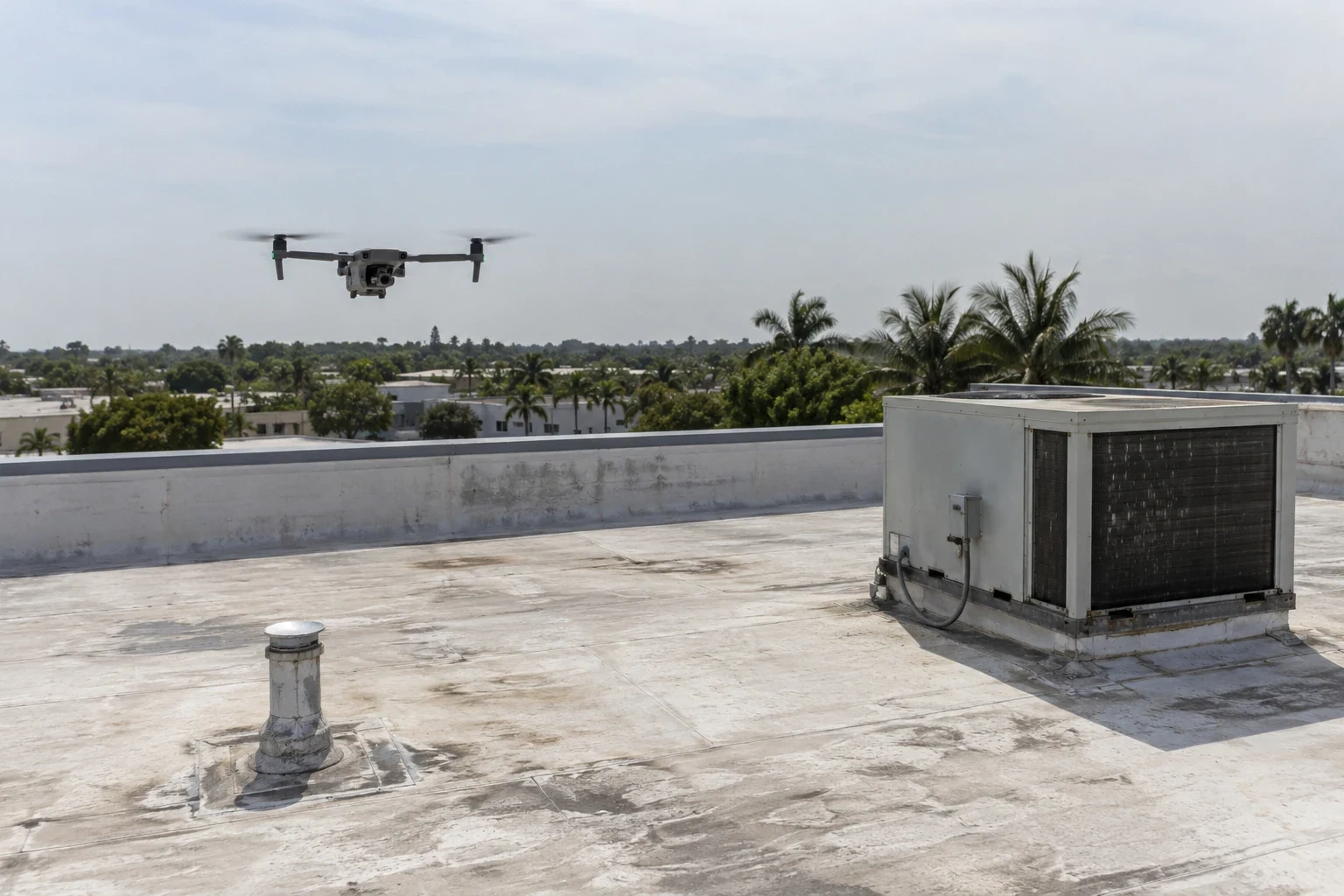
Drone Roof Inspections
How the work is scoped, documented and phased on occupied Sugar Land buildings.
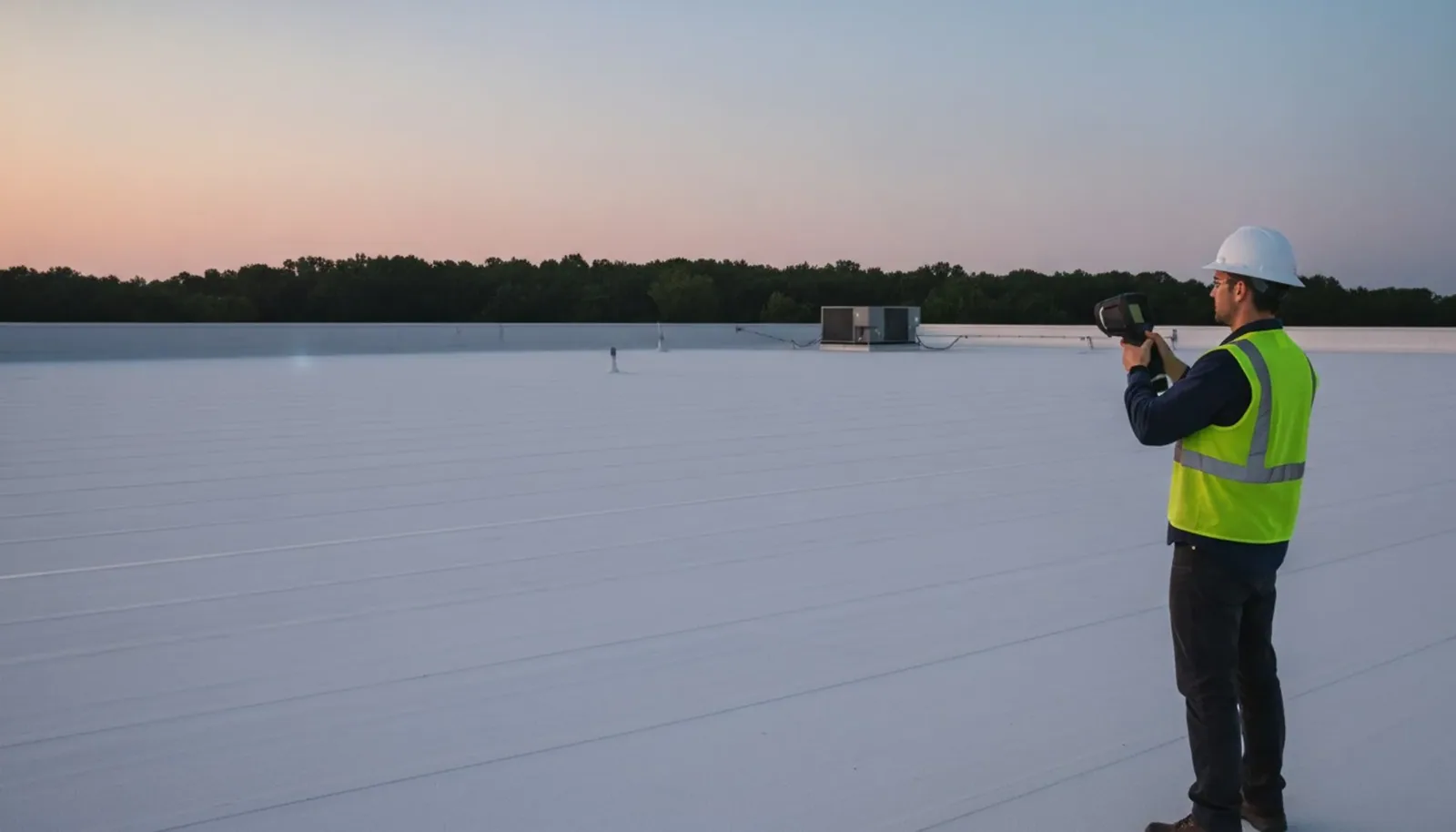
Infrared Roof Moisture Surveys
What we check on the roof, what we recommend and how the crew keeps the building open.
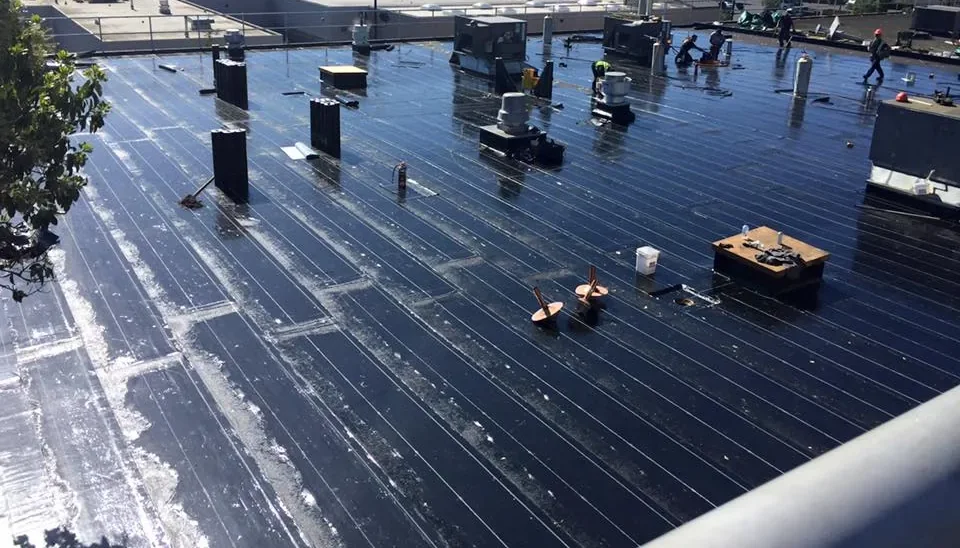
Roof Condition Reports
Conditions, options and next steps for commercial buildings in Fort Bend County.
Schedule a Walk of Your Roof
We will go over the findings in plain terms, with photos of each condition, so you can explain the roof to the owner with confidence.
Call 555-555-5555 or email [email protected].
Commercial Roofing Questions
Straight answers to the questions building owners and managers ask us most often.
Is a drive-by or ground-level look enough for an owner who just wants a quick answer?
Not for many low-slope roofs. A roof visit can reveal accessible soft spots, open seams and clogged drains that are not visible from the ground. We state any areas the inspection could not reach.
What do you do when the roof looks fine but the ceiling is stained?
We look for condensation, drain backups and entry points far from the stain. Dry-day water can also come from retained rainwater or HVAC condensate. We check timing, equipment and the assembly, then use suitable readings or samples to test the possible causes.
Will the inspection tell me how much life the roof has left?
The report describes observed membrane condition, moisture findings, repair history and work that appears timely. It can inform a planning estimate, but cannot promise a service life or predict future damage. We explain the evidence and remaining questions.
Do you walk roofs that are hot or recently rained on?
We schedule around heat and wet surfaces for safety and accuracy. Summer inspections often start early in the morning, and moisture scans work best after a sunny day and a clear evening.
Who gets a copy of the findings?
The owner or property manager who requested the work, and anyone they choose to share it with, including lenders, tenants, insurers and contractors. Large owners often ask for the same report layout on every building so a regional manager can compare roofs side by side. The photos and plan are written to be understood without a roofing background.
Inspection Timing Around Storms
Two useful times to inspect are before hurricane season and after a damaging event. A pre-season review can identify details to correct, while a post-event visit can document observed conditions before permanent work changes them. Hurricane Beryl and Hurricane Harvey are regional context, not evidence about an individual roof. A May 2019 hail event in the Houston area shows why owners may also want a post-storm roof review.
Between those moments, a roof should be checked after any significant rooftop work. Technicians servicing HVAC units, adding antennas or running conduit can puncture membrane or leave debris behind, and an inspection after their visit can identify problems that would otherwise surface in the next downpour.
Buying, Leasing and Claiming
Roof inspections also support transactions. A buyer evaluating a property needs a record of roof condition and likely near-term work before setting reserves; our due diligence roof surveys can provide those inputs. A tenant negotiating a lease wants to understand who is responsible for roof repairs. An owner preparing a claim can provide a dated record of pre-storm observations, while the insurer determines how that evidence applies to its review.
How a Roof Project Runs
Every roof we take on moves through the same six steps:
01
Roof Walk
We walk the whole roof and photograph the membrane, seams, flashings, drains and equipment.
02
Moisture Check
Readings and core cuts show what is wet below the surface before anyone prices a repair.
03
Written Findings
You get plain-language findings, photos and the options that fit the roof.
04
Scope and Price
One written scope covers the system, the details, drainage changes and the price.
05
Scheduled Work
Crews work around tenants, deliveries and weather, closing the roof every night.
06
Closeout
We walk the finished roof with you and hand over photos and warranty paperwork.
Roofs Across Sugar Land's Building Stock
Sugar Land Business Park includes warehouse, distribution and light-industrial buildings, while Town Square brings offices, shops and hotel use into a mixed-use center. An inspection at either setting begins with the building manager's access and equipment information. We survey the roof sections, details and service routes, then locate the findings on a plan. A visit at a medical office building also follows the facility's approved route and room-protection requirements. Along US 59 and SH 6, the property contact identifies the usable entrance and work window before inspection. We record the membrane, layer sequence where investigated and changed details so the next decision follows the actual building evidence. That record also gives staff a clear location for reporting later water or equipment activity.
Where an inspection finds a problem, the next step is often a planned repair, and recurring items feed a preventive maintenance program.