
Due Diligence Roof Surveys
A clean roof surface does not show whether insulation below it contains retained water. That concealed condition can change the work a buyer faces after acquiring a Sugar Land, TX commercial building. A due diligence roof survey examines the accessible assembly and relates selected test findings to the visible roof condition. The report gives the buyer a clear account of observed defects, likely next work and the questions that remain before the transaction proceeds.
Access Before the Closing Deadline
The survey begins with the property address, roof levels and the seller's access arrangements. Tenant operations may limit entry to interior spaces or rooftop equipment areas. The scope identifies the areas to be examined, any sampling permission needed and the available time for suitable survey conditions. A deadline alone does not make an inaccessible layer or an unsuitable thermal scan readable.
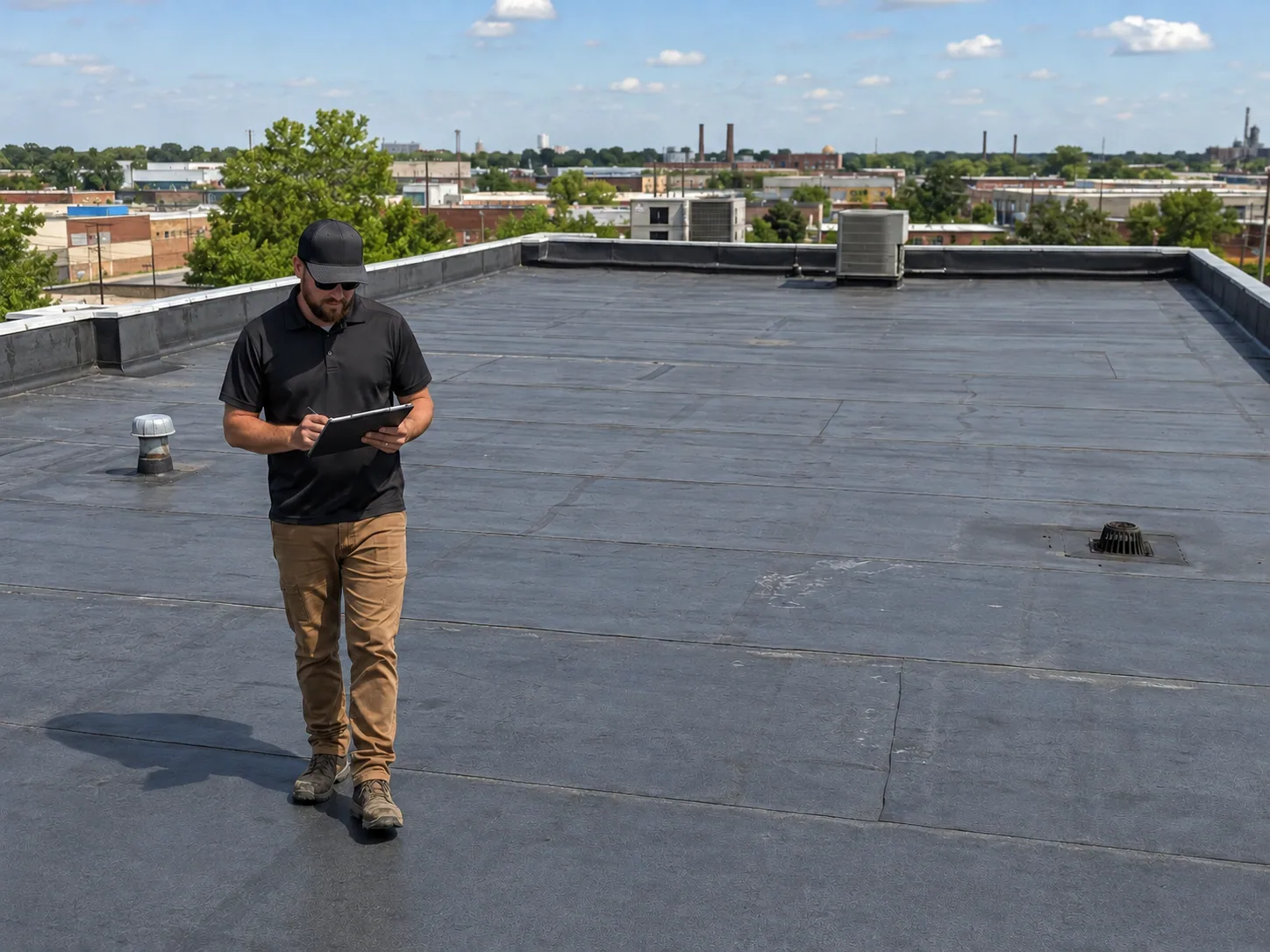
A commercial roof inspection records the accessible surface, details and drainage. Available drawings, repair invoices and installation documents are reviewed alongside the observations. Conflicting information remains identified in the report. The buyer receives a list of access or document gaps early enough to request additional investigation, rather than discovering those limitations only in the final recommendation.
What the Samples Establish
A core can show the material sequence, thickness and condition at its location. Several selected samples help explain a roof with additions or inconsistent records, but they do not establish every concealed condition. Sampling locations follow the roof construction, observed concerns and agreed investigation scope. Each opening needs a compatible closure procedure prepared before testing begins.
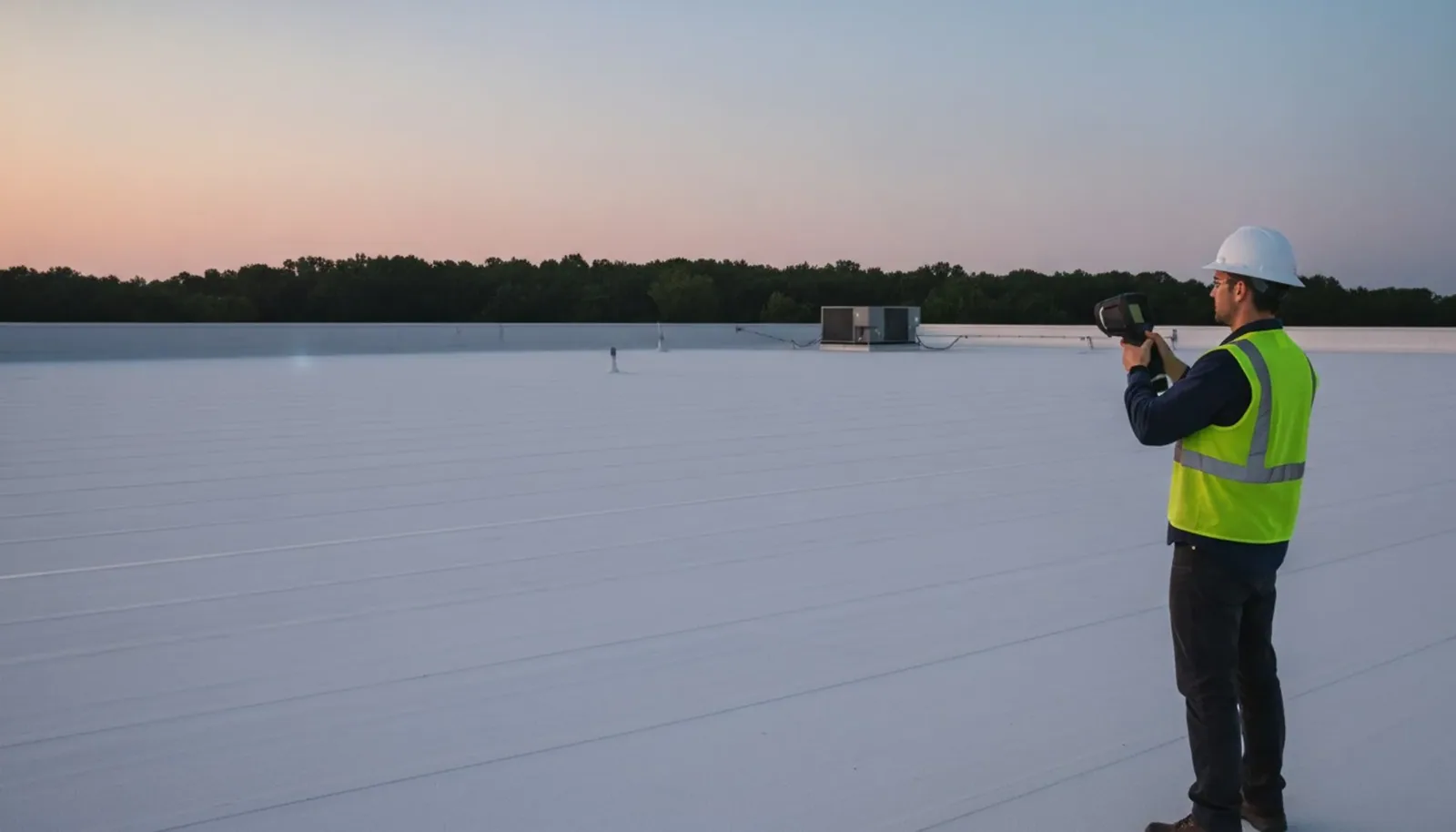
An infrared moisture survey can support the investigation when weather and surface conditions allow useful contrast. Temperature patterns are interpreted with the assembly information and suitable confirmation. The report marks tested locations, suspected areas and the boundaries that remain estimates. Those distinctions give a buyer a sound basis for asking additional questions before accepting a removal quantity or treating the whole roof as dry.
The Meaning of Earlier Repairs
Repairs can explain how a roof has performed, provided their locations and purpose are known. A row of patches may follow an equipment change, hail impact or recurring movement. The inspection compares patch condition with the surrounding membrane and asks whether the reported water entry returned. A patch count by itself does not establish the remaining life of the assembly.
The survey records flashing changes, altered drains and added supports where visible. Roof condition reports help connect those observations with dated maintenance records. If the history is incomplete, the buyer is told which conclusions cannot be supported by it. An explanation of actual findings is more useful than a confident installation date reconstructed from a tenant's memory.
Related Roofing Pages
Commercial Roof Inspections
How the work is scoped, documented and phased on occupied Sugar Land buildings.
Infrared Roof Moisture Surveys
What we check on the roof, what we recommend and how the crew keeps the building open.
Roof Condition Reports
Conditions, options and next steps for commercial buildings in Fort Bend County.
Understand the Roof Before the Purchase
Arrange a survey around the property access and transaction timeline. Receive location-marked findings, photos and a clear explanation of the work and investigation still needed.
Call 555-555-5555 or email [email protected].
Commercial Roofing Questions
Straight answers to the questions building owners and managers ask us most often.
Can a due diligence survey settle every concealed condition?
No. Access, agreed testing and survey conditions set the investigation limits. Samples describe their locations, and wider conclusions need supporting evidence. The report identifies further work needed before a particular decision can be made confidently.
What should a buyer request from the seller before the visit?
Available roof plans, installation and warranty documents, repair records and known leak locations. Confirm access to roof levels and relevant interior areas. The survey compares those records with the observed assembly rather than accepting each description as verified construction.
How should an unresolved moisture indication be handled?
Keep it identified as an indication and specify the appropriate confirmation. Do not convert a temperature pattern directly into a replacement quantity. The buyer can request further testing before using that area in a work allowance.
Does the survey provide an exact remaining roof life?
It supports a condition-based planning discussion. Materials, defects, drainage and future maintenance affect performance, so an exact failure date cannot be promised. The report explains the recommended next actions and the assumptions behind longer-term options.
The Building Use Below the Roof
Industrial properties in Sugar Land Business Park need an assessment tied to the building being considered. Stored contents, loading activity and equipment access can affect the consequences of a defect. The survey records the current use through the property contact and available access. District floor-area figures do not establish the roof area, material or condition of the acquisition.
A warehouse roof may require operating arrangements different from an office roof. Interior access can help identify the supporting construction and relate a reported leak to the room below. For another property in Stafford, the same questions are answered at that address. The buyer receives separate roof-area findings rather than a single condition assumption carried across unrelated buildings.
For a First Colony acquisition with several tenant areas, the plan identifies which roofs fall within the proposed survey scope. Shared access and responsibility questions are confirmed with the seller. The report keeps excluded or inaccessible areas visible so the buyer can request the appropriate follow-up before relying on a building-wide recommendation.
The Work a Buyer May Need to Fund
The findings distinguish immediate protection needs, corrective work and longer-term planning. An active opening receives a defined response, while a wider deterioration pattern may need more investigation before the replacement scope is settled. The report identifies what each proposed task addresses and the evidence supporting it. It also lists specialist questions involving structural capacity, drainage design or mechanical conditions.
Roof capital planning turns the condition findings into options with visible assumptions. Removal quantities, supporting corrections and access provisions can affect an allowance. A proposed roof recover requires its own eligibility review; a dry sample alone cannot approve added materials. The buyer can discuss those items with the transaction team without treating an unconfirmed option as an agreed project.
The estimate should separate work required to stop active water entry from improvements that can be scheduled later. Replacement quantities depend on measured roof boundaries and confirmed removal layers, not the building's listed floor area. The survey records allowances and exclusions beside their assumptions, including how concealed damage would be handled if found after opening. A buyer can then compare competing proposals on matching scope terms and identify which unresolved condition could change the initial budget.
How a Roof Project Runs
Every roof we take on moves through the same six steps:
01
Roof Walk
We walk the whole roof and photograph the membrane, seams, flashings, drains and equipment.
02
Moisture Check
Readings and core cuts show what is wet below the surface before anyone prices a repair.
03
Written Findings
You get plain-language findings, photos and the options that fit the roof.
04
Scope and Price
One written scope covers the system, the details, drainage changes and the price.
05
Scheduled Work
Crews work around tenants, deliveries and weather, closing the roof every night.
06
Closeout
We walk the finished roof with you and hand over photos and warranty paperwork.
Water Entry and Condensation Questions
A stain during a humid period can come from several paths. Rain may have entered earlier and remained in the assembly, or an equipment drainage defect may continue after weather clears. Condensation requires moisture to reach a surface below its dew point, with air movement and assembly conditions affecting where that occurs. The survey records timing and equipment observations before proposing a roof repair as the complete answer.
Where the cause cannot be established during the visit, the report describes the further check needed. A controlled test, appropriate sampling or mechanical review may be more useful than another visual walk. The buyer can request that work or carry the unresolved condition into the transaction discussion. Keeping the cause open until evidence supports it prevents a small repair allowance from concealing a different building problem.
The Report and the Remaining Investigation
The final report gives each finding a roof-plan location and supporting photograph. Test results retain their sample references and investigation limits. Recommendations identify the proposed action, its reason and any dependency on further information. Seller statements and documents are distinguishable from conditions observed during the survey.
The buyer can use that record when discussing repairs, additional investigation or a future work allowance with the parties involved. After acquisition, roof asset management retains the survey as an initial condition record. Newly completed work and later inspections are added against the same roof areas. That continuity makes the pre-purchase findings useful beyond the closing date without presenting them as a promise about future roof performance.