
Roof Condition Reports
A roof can look dry at noon and still contain water beneath the membrane. Surface appearance gives a Sugar Land, TX property manager only part of the condition picture, especially after a leak has stopped dripping. A useful roof condition report connects the visible defects with the assembly, drainage and repair history. It explains what each finding means for the next maintenance or replacement decision, using photos the manager can discuss with the owner.
The Inspection Boundary
The first step is defining which roof areas the report includes. A building with several additions may have different materials, drainage arrangements and installation dates above the same tenant. The roof plan identifies each area, its access point and the information available about its construction. Areas that cannot be reached safely are marked as uninspected, with the reason and a proposed way to resolve the gap.
The inspection records seams, flashings, curbs, equipment supports, edges and drainage outlets. Interior observations add the location and timing of reported water. A commercial roof inspection provides that physical starting point; the report then explains the significance of the observations. Existing drawings and invoices help interpret the assembly, but discrepancies between those records and what is found remain visible in the findings.
The report also separates what was visible from what was inaccessible. A locked roof hatch, unsafe surface, tenant restriction or covered assembly can limit an observation, and each limit changes how confidently a broader conclusion can be made. We identify the area examined, the method used and whether a finding was directly observed or inferred from related evidence. This keeps one photograph from being treated as proof of the condition across an entire roof. The manager can then decide whether targeted access or testing is worth arranging.
A decision-ready report states which action can proceed now and which depends on confirmation. Immediate protection may address exposure while a sample or interior review clarifies the source. The owner can approve those steps separately, with each one tied to an observed condition. That sequence is especially useful when access is limited and a full assembly opening would interrupt occupied space.
Heat Patterns and Confirmed Moisture
Infrared images show differences in surface temperature. Under appropriate conditions, those patterns can help identify areas that warrant moisture investigation. A warm patch on an image is not, by itself, a map of failed insulation. Surface materials, shading, retained heat and recent weather affect the result, so the report records survey conditions and distinguishes suspected areas from confirmed findings.
An infrared moisture survey may be paired with selected samples or other suitable confirmation methods. Each sample location is numbered on the plan, with the layers and condition observed there. Results are described at their actual extent rather than presented as proof of every layer across the roof. If more sampling is needed to set repair limits, the report explains where and why before the owner approves a larger scope.
Water Routes and Low Areas
Water remaining after rain leaves clues: sediment rings, debris at strainers and staining near outlets. Those observations help direct a drainage review, but their cause needs examination. A blocked strainer, a low sump, a raised drain connection and an inadequate overflow arrangement require different corrective work. The report identifies the observed problem and separates maintenance from changes needing plumbing or engineering input.
Ponding water repair starts with that distinction. Measurements may be needed to understand a low area, particularly when the roof plan and actual flow disagree. Gulf Coast rainfall makes dependable discharge important for Sugar Land properties, yet a regional weather description cannot establish the capacity of a particular roof. The report records outlet conditions and the information still needed to assess the drainage design.
Related Roofing Pages
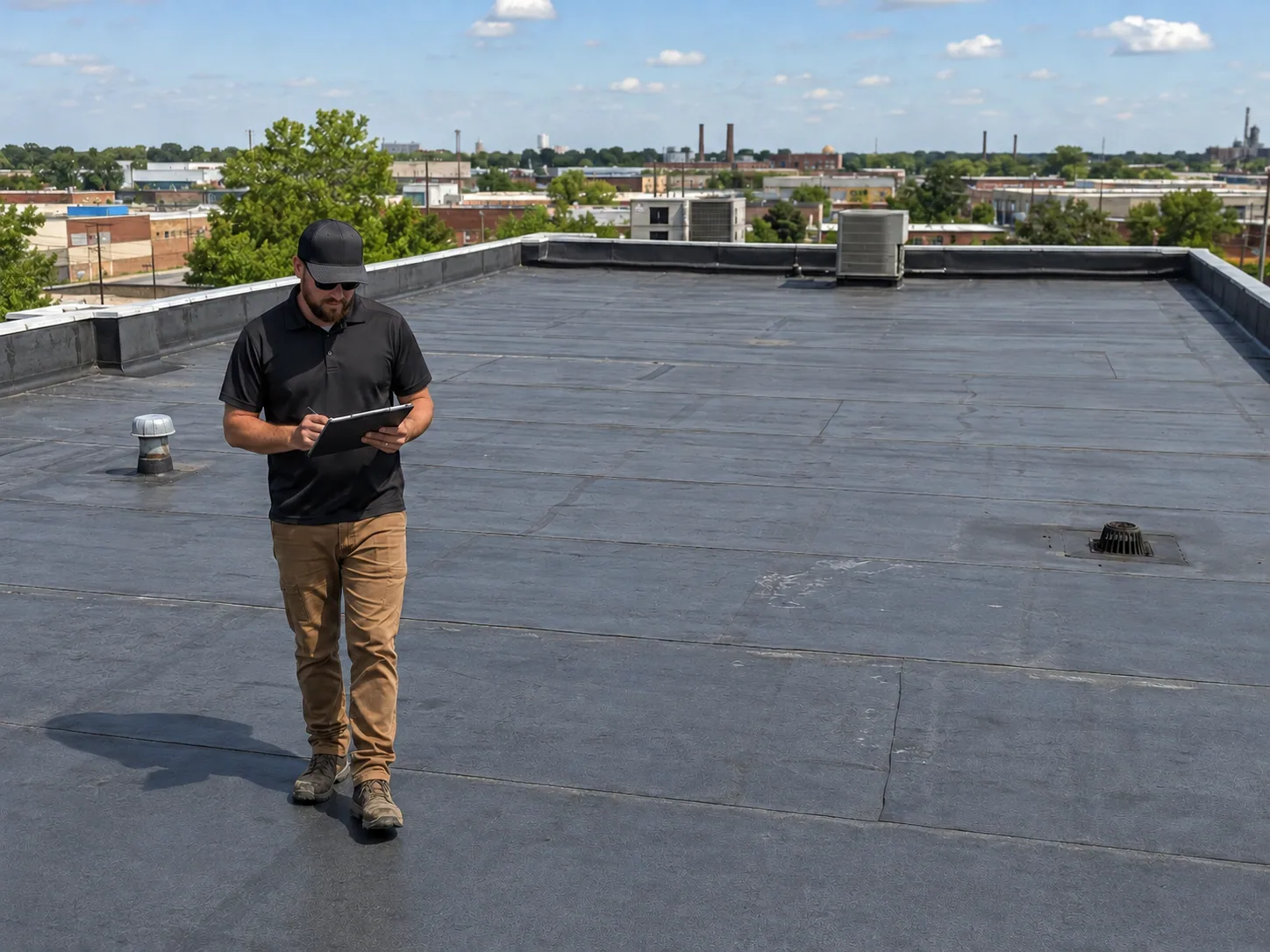
Commercial Roof Inspections
How the work is scoped, documented and phased on occupied Sugar Land buildings.
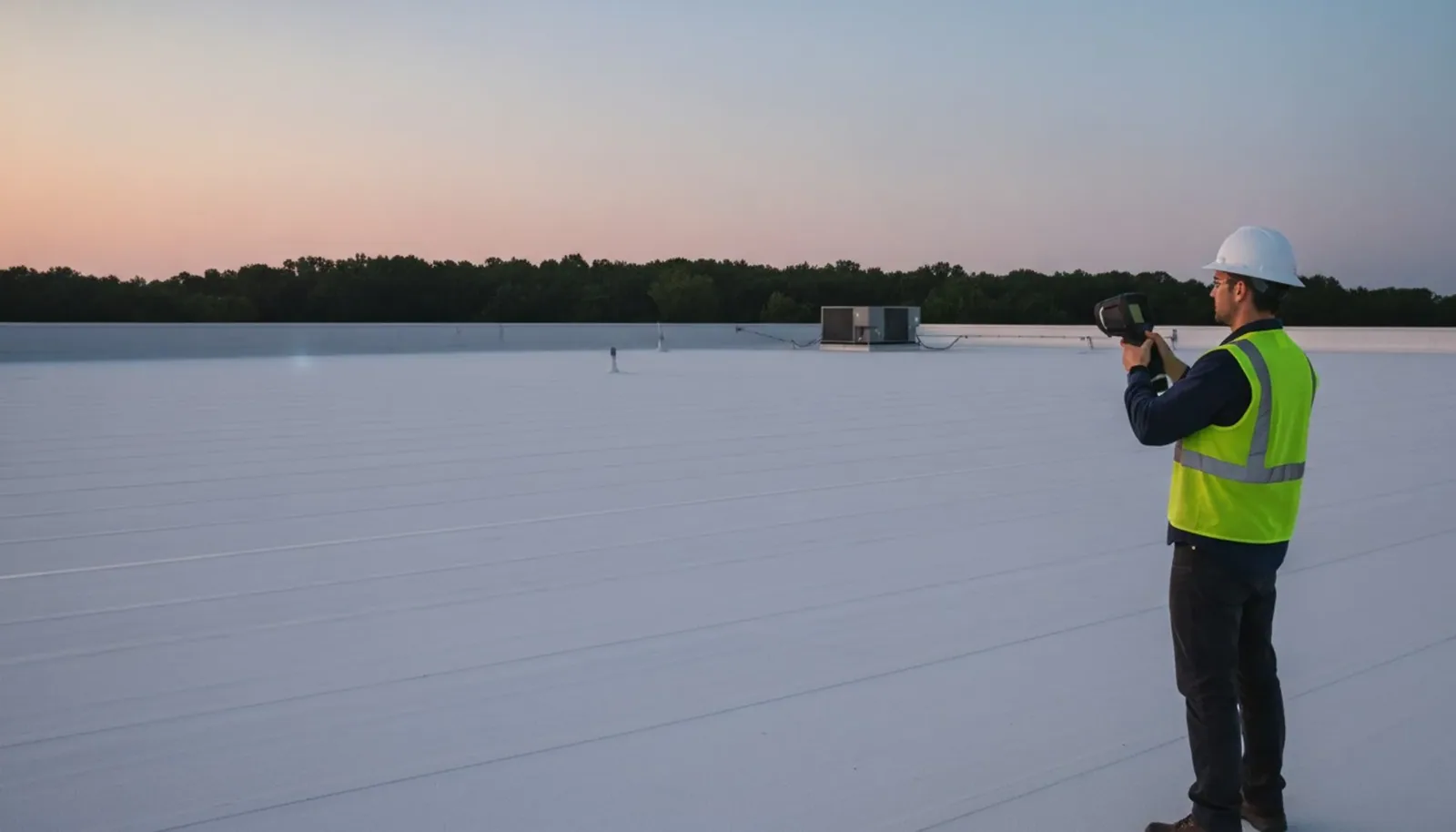
Infrared Roof Moisture Surveys
What we check on the roof, what we recommend and how the crew keeps the building open.
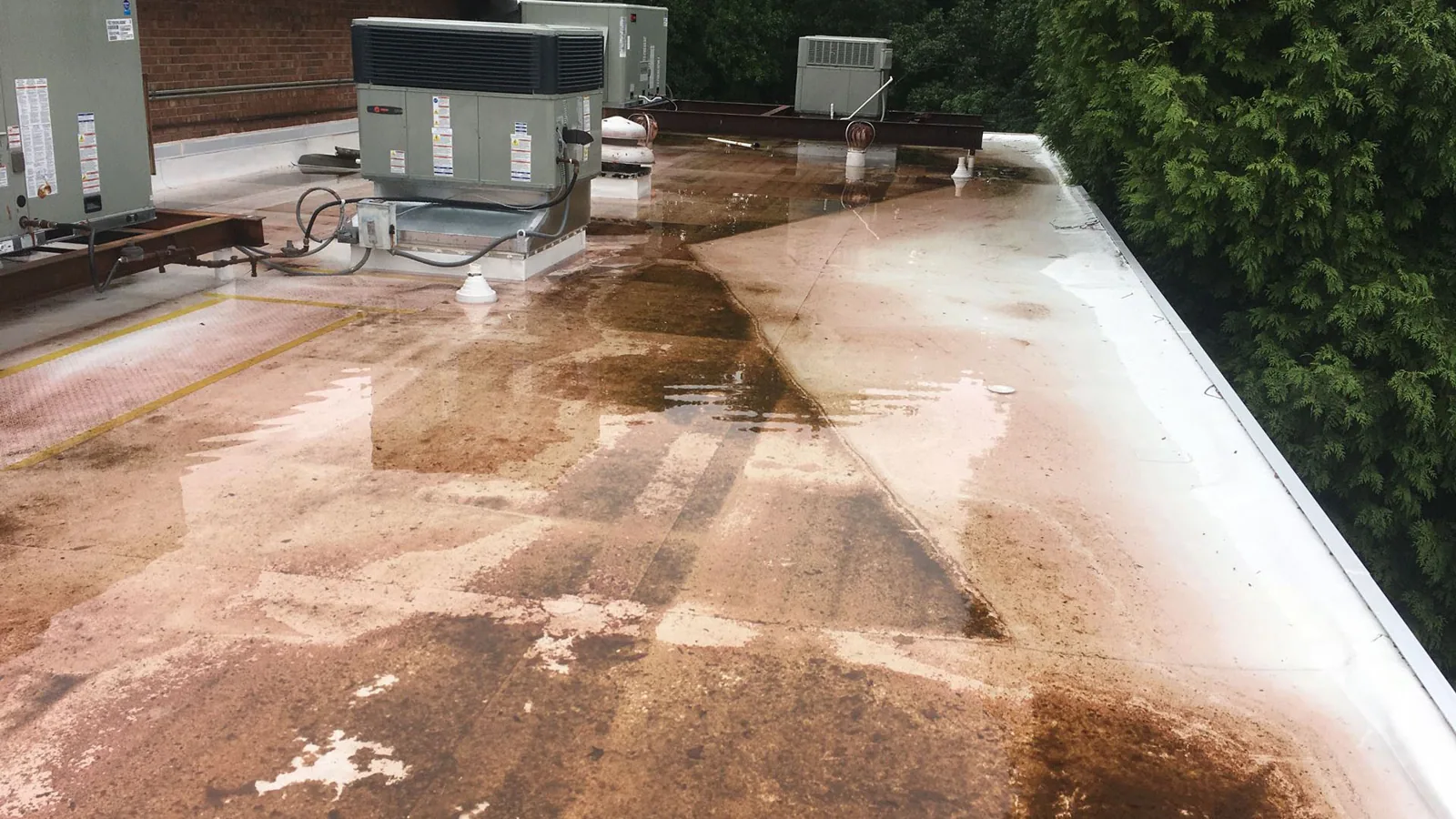
Ponding Water Roof Repair
Conditions, options and next steps for commercial buildings in Fort Bend County.
Explain the Findings to Your Owner
Request a roof condition report with location-marked photos and plain explanations of the findings, so you can discuss the repair priorities and remaining questions with confidence.
Call 555-555-5555 or email [email protected].
Commercial Roofing Questions
Straight answers to the questions building owners and managers ask us most often.
What makes a condition report useful for an owner meeting?
Clear locations, dated photographs and a reason for each recommendation. The owner should see the observed defect, the proposed response, the limits of the inspection and any information needed before approving a larger investment.
Does a moisture image prove that insulation must be removed?
No. A thermal indication needs interpretation and appropriate confirmation. The report distinguishes suspected moisture from sampled findings and explains how those results affect the proposed repair limits.
Can the report state exactly how many years the roof has left?
Condition findings support planning, but they cannot fix an exact failure date. Material condition, drainage, exposure and future maintenance affect performance. Recommendations should explain their assumptions and identify when another review is warranted.
How are urgent defects separated from scheduled maintenance?
The report records the consequence of leaving each condition unresolved. Active water entry, loose material and reported distress may need prompt attention. The finding explains the recommended response rather than relying on a color rating alone.
What should happen after the recommended repair is complete?
Add completion photographs, the work description and any required follow-up checks to the same record. Roof asset management keeps those updates connected to the correct building and roof area.
Findings in the Building Context
At Sugar Land Town Square, office and retail uses may place several decision-makers between a roof finding and an approved repair. The report identifies who manages the affected roof area, who receives tenant notices and what access the proposed work needs. That coordination is established for the specific property rather than assumed from the district address. A repair priority includes the reason for its urgency and any operational constraint that affects the sequence.
The industrial setting of Sugar Land Business Park brings a different set of questions. The manager may need to coordinate loading access, storage below the affected area or equipment service. Those requirements are checked with the building contact and recorded alongside the defect. A technical recommendation becomes more useful when the owner can see both the physical problem and the preparation needed to address it.
For a portfolio extending into Stafford, each report retains the property address and local review requirements. A defect classification can stay consistent across the portfolio while the approval route differs by municipality. That distinction prevents a manager from transferring a repair assumption from one building to another simply because both sit along the same commercial corridor. A separate assessment in South Houston should map photographs to that building's own roof areas.
Repair Limits and Longer-Term Choices
The findings lead to options with defined limits. A separated flashing may support a focused repair when surrounding materials remain suitable. Wider deterioration can justify additional investigation before comparing repair, recover and replacement. A commercial roof repair scope should identify the affected details, the compatible materials and the verification planned afterward.
For a roof approaching a larger investment, roof capital planning uses the report to organize decisions by condition and timing. A proposed roof recover still needs suitability checks beyond surface appearance. The report records supporting information, unresolved questions and any specialist review needed before that option is priced as viable. The owner receives a reasoned comparison rather than an unsupported date for when the roof will fail.
How a Roof Project Runs
Every roof we take on moves through the same six steps:
01
Roof Walk
We walk the whole roof and photograph the membrane, seams, flashings, drains and equipment.
02
Moisture Check
Readings and core cuts show what is wet below the surface before anyone prices a repair.
03
Written Findings
You get plain-language findings, photos and the options that fit the roof.
04
Scope and Price
One written scope covers the system, the details, drainage changes and the price.
05
Scheduled Work
Crews work around tenants, deliveries and weather, closing the roof every night.
06
Closeout
We walk the finished roof with you and hand over photos and warranty paperwork.
A Record That Remains Useful
Each finding receives a location, a dated photo and a plain explanation. Photographs show enough surrounding detail to locate the defect again; close views document the condition itself. The report separates work proposed from work completed and identifies temporary protection explicitly. An open item stays open until the completion evidence or a follow-up inspection supports closing it.
That record can support roof warranty management when the relevant documents require inspection, maintenance or notice. It does not promise coverage or assign a cause the inspection has not established. A manager can use the same location references for later maintenance, creating a sequence of observations that explains what changed. The next reviewer can compare the roof condition with the earlier record without relying on a tenant description or a remembered conversation.