
Sugar Land Business Park
A softened patch beside equipment and a damp insulation sample need different explanations on a Sugar Land Business Park roof. Heat can affect repair materials, while rain entry, equipment drainage or condensation can leave moisture below an apparently intact surface. We inspect and repair commercial roofs in Sugar Land, TX by following those mechanisms to the actual assembly. The owner receives photographs and a proposed task tied to each confirmed finding, rather than a replacement recommendation based only on the first visible symptom.
The business park forms a major industrial concentration in the southwest Houston market. Its roughly 1,000 acres include warehouse, distribution and light-industrial space. For an operating property here, the roof assessment begins with the areas occupied below, equipment access above and the material already installed. That combination tells us where testing is useful and how a repair can be staged without introducing another opening over stored goods or production.
Moisture Beside Equipment and Loading Areas
A manager can help narrow the investigation by recording when water appears. A drip during rainfall suggests one path, while water appearing during dry weather may involve retained rainwater, condensate drainage or moist air contacting a sufficiently cold surface. The location and timing matter together. We compare the interior report with rooftop equipment, penetrations and nearby seams, then select testing that can distinguish those possibilities.
At Sugar Land Crossroads, the two-building warehouse and cross-dock development sits at West Dairy Ashford and Airport Boulevard. A distribution roof inspection on a property with active loading needs an agreed route for interior checks and roof access. The inspection plan identifies rooms that cannot tolerate falling debris or temporary water entry. The work follows the actual roof boundaries and operations, with loading activity kept clear of the testing and material-handling area.
Surface Heat and the Concealed Assembly
Sugar Land recorded a 109 F high in August 2023. A roof surface exposed to sunlight can become hotter than the outdoor air, affecting sealants, patches and membrane movement. We examine cracking, distortion and loss of adhesion where present, then compare the damaged material with the surrounding field. A failing repair may require different preparation or a compatible replacement detail rather than simply another layer of the same compound.
The assembly below also matters. Humid air can reach a colder layer through an opening in an air barrier, and condensation is possible if that layer is below the air's dew point. This requires investigation of air movement and temperature, not a conclusion drawn from outdoor humidity alone. For a manufacturing building, the operator's interior conditions and actual exhaust arrangement help establish the test scope. Correcting a rain opening and correcting an air path are separate tasks even when both produce wet insulation.
Water Remaining Around a Drain
A ring of sediment identifies a place to examine, but it does not establish why water stayed there. We inspect the strainer, inlet elevation, surrounding slope and available overflow arrangement. Cleaning may restore flow through a blocked inlet. Water that remains after cleaning can require elevation measurements, examination of insulation irregularities or review of possible deck deflection. Each observation is located on the roof plan before a drainage alteration is proposed.
Work on drains and scuppers distinguishes maintenance from design changes. Adding an outlet or tapered insulation can affect plumbing, loading and the intended drainage route, so those changes receive the appropriate project review. Sugar Land's approximately 48 inches of annual precipitation makes repeat drainage checks useful, but the average does not establish a design storm or the capacity of a particular inlet. The inspection and the proposed correction must address the property actually being repaired.
Related Roofing Pages
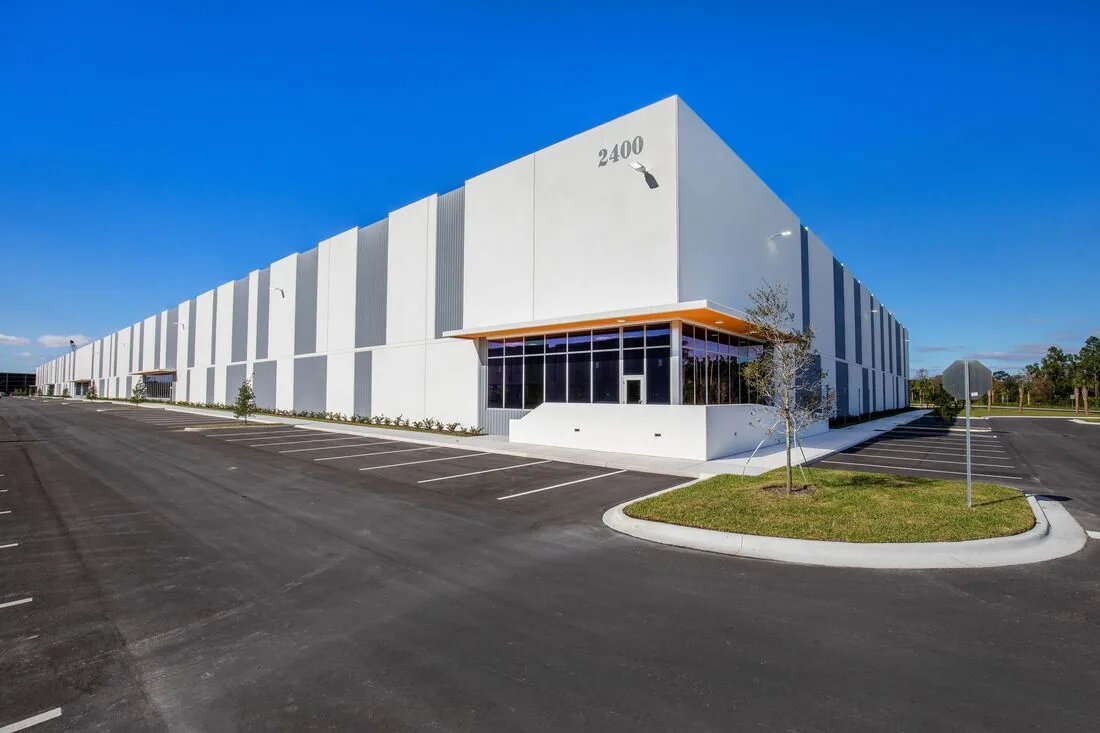
Distribution Center Roofing
How the work is scoped, documented and phased on occupied Sugar Land buildings.
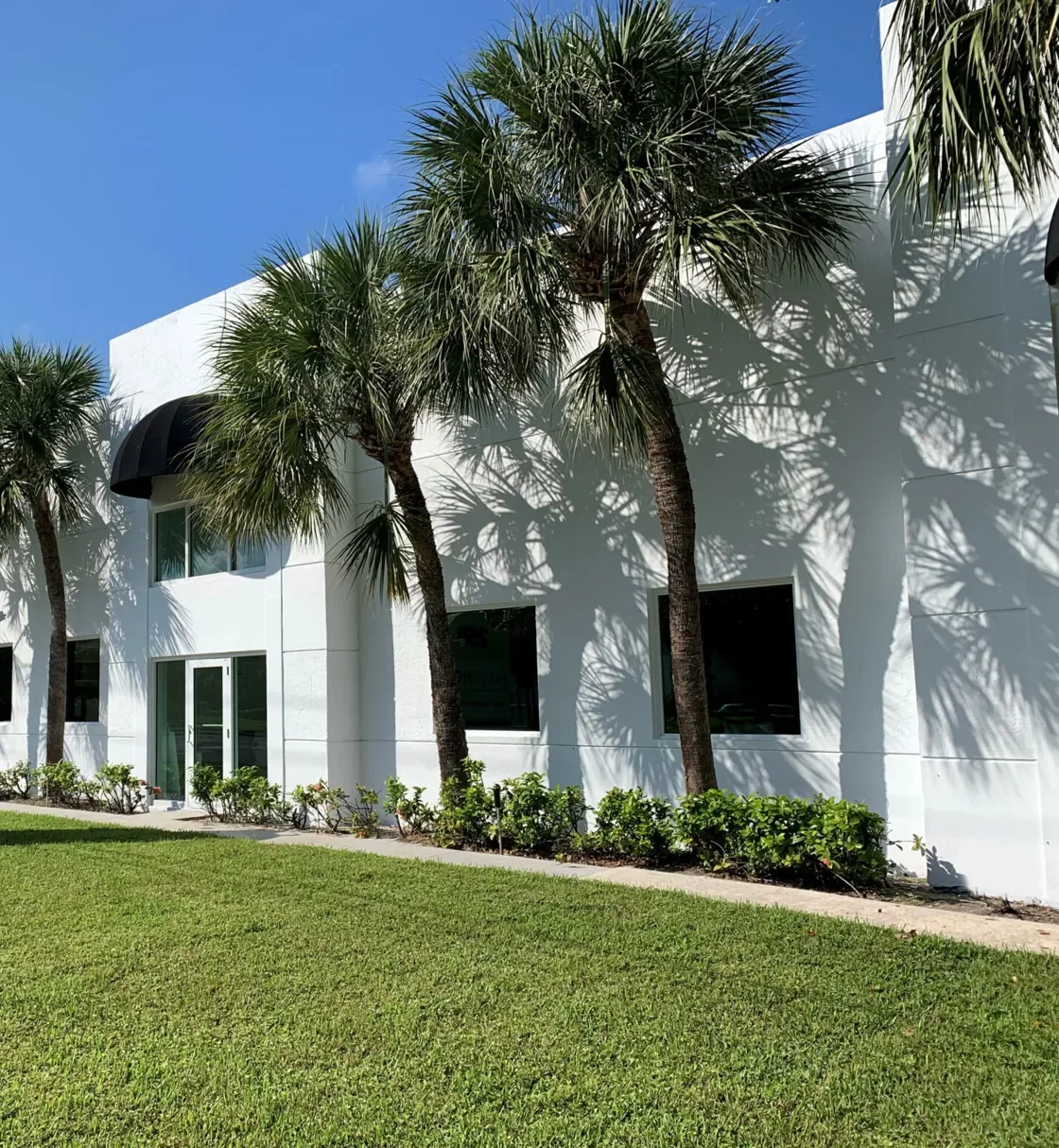
Manufacturing Plant Roofing
What we check on the roof, what we recommend and how the crew keeps the building open.
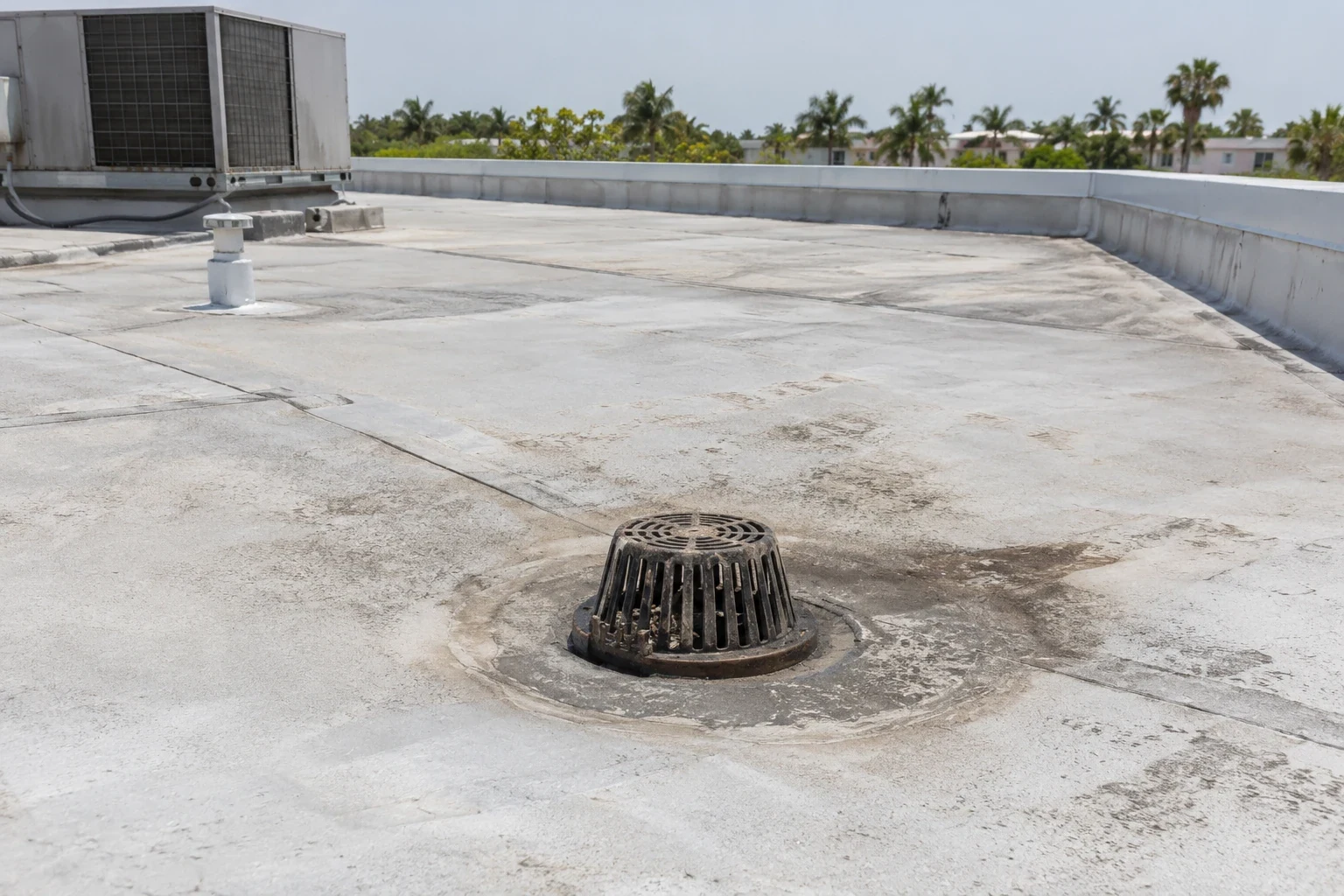
Roof Drains and Scuppers
Conditions, options and next steps for commercial buildings in Fort Bend County.
Understand the Business Park Roof Findings
Arrange an inspection of your Sugar Land Business Park property. We explain the moisture, heat and drainage findings with photos and a practical repair scope.
Call 555-555-5555 or email [email protected].
Commercial Roofing Questions
Straight answers to the questions building owners and managers ask us most often.
What does a damp sample near a rooftop unit establish?
It establishes local moisture at the tested point. We still need to examine the unit drainage, nearby flashings and possible air paths to identify the cause. Wider removal quantities require evidence beyond that single sample.
Can a coating correct heat-damaged patches?
A coating is not a substitute for removing unsuitable repair material. We evaluate adhesion, compatibility and the underlying assembly first. Failed details are corrected before a coating is considered for a suitable surface.
Why measure elevations after a drain has been cleaned?
Clear flow through the inlet does not establish adequate slope around it. Elevation checks help distinguish a local surface irregularity from a wider drainage concern. Proposed outlet or slope changes need the appropriate plumbing and structural review.
How are warehouse operating hours reflected in the repair price?
Access windows, interior protection and material handling affect the sequence and labor. We identify those provisions in the scope, together with the roof quantities. The owner can then compare a phased repair with larger work using the same operating assumptions.
Repair Quantities and a Suitable Retained Roof
A defined opening in an otherwise suitable assembly can support a localized repair. We identify compatible materials, remove unsuitable wet layers within the agreed area and rebuild the detail using the selected system's preparation requirements. The scope states where that repair ends and which adjoining areas remain under investigation. Photographs of the exposed layers and completed closure help the manager explain the work to the owner.
A restoration coating requires a sound, compatible substrate with suitable adhesion, moisture and drainage findings. A recover also needs review of the retained layers, attachment and structural suitability. Where the assembly has widespread deterioration, removal and replacement may provide a more coherent scope than numerous surface treatments. The price separates removal depth, insulation corrections, curb and perimeter work, and access provisions so the owner can compare the options on the same basis.
Preparation includes checking whether earlier patches can accept the selected repair. A clean-looking surface may still have residue or weak bonding that affects adhesion. Where a test area is appropriate, its method and result go with the proposal. This gives the manager a reason for the preparation allowance and a clear distinction between cleaning, removing failed material and rebuilding the damaged assembly.
Warehouse operations influence the repair boundary in practical ways. A leaking seam over a loading bay may call for temporary interior protection before materials are moved, while a defect above a clear staging zone may allow a more direct opening. We map the affected roof area to the use below and set the daily closure limit before removal. If damaged insulation extends beyond the first opening, photographs and measurements support a revised quantity before that area is exposed.
Inspection Access During Industrial Operations
Equipment service routes can concentrate foot traffic around particular seams and curbs. We inspect those routes for scuffing, damaged supports and altered penetrations, and propose compatible protection where recurring access warrants it. A maintenance record identifies both the roofing repair and any equipment issue requiring another trade. The result is a list of practical actions, with responsibility and timing agreed through the property manager.
For an owner also managing a property in Stafford or office and retail space at Sugar Land Town Square, each address needs its own inspection findings. A comparable report format helps prioritize the work without transferring a moisture result between buildings. Here, occupied-building scheduling includes delivery routes, interior protection and the area that can be closed securely before the crew leaves. Emergency requests are accepted overnight and on holidays, with response and temporary measures assessed against safe access, weather and available crews.
Roof equipment changes deserve a separate record from membrane maintenance. A relocated unit can leave an unneeded curb, new piping supports or a former service path that concentrates foot traffic. We identify those changes with the facility contact, inspect the resulting penetrations and note any work that belongs to the mechanical contractor. A clear division of tasks prevents the roof repair from being treated as complete while an uncontrolled opening or unsupported route remains. A second roof portfolio in South Houston gets its own condition and access record.
How a Roof Project Runs
Every roof we take on moves through the same six steps:
01
Roof Walk
We walk the whole roof and photograph the membrane, seams, flashings, drains and equipment.
02
Moisture Check
Readings and core cuts show what is wet below the surface before anyone prices a repair.
03
Written Findings
You get plain-language findings, photos and the options that fit the roof.
04
Scope and Price
One written scope covers the system, the details, drainage changes and the price.
05
Scheduled Work
Crews work around tenants, deliveries and weather, closing the roof every night.
06
Closeout
We walk the finished roof with you and hand over photos and warranty paperwork.