
Property Management Companies
A ceiling complaint can move between tenants while the roof's underlying water route remains unchanged. One repair closes a seam, another treats a curb, and the manager inherits a history of invoices without a clear explanation of what was found. Commercial roofing for Sugar Land property management companies turns those separate events into a building record. We trace verified defects, explain repair boundaries and provide photos that support the next owner decision.
The manager needs information that remains useful after the immediate call. Roof material, affected areas, completed repairs and unresolved questions belong in the same working file. The district or property category cannot establish those conditions. We inspect the building and connect its roof findings to the manager's actual operating requirements.
Complaint Timing and the Water Route
Tenant reports are organized by suite, room and time rather than combined into a general statement that the roof leaks. Water after heavy rain suggests a different investigation sequence from water during equipment operation on a dry afternoon. Neither timing proves the cause. Retained rainwater, equipment condensate and condensation under suitable assembly conditions can produce overlapping symptoms.
Leak investigation compares those reports with roof openings, flashing and drainage. We identify what the inspection verified and what still needs another trade or test. A patched location is not automatically the source of every later stain nearby. The manager can communicate the confirmed finding without converting a tenant's description into an unsupported diagnosis.
A Record That Survives Staff Changes
The roof plan identifies sections, access points and the locations of earlier work. Dated photographs show the defect and its completed repair, with product information retained where it affects future compatibility. Missing roof history remains an uncertainty rather than a guessed installation date. Building age and a neighborhood's development period do not establish the age of the current membrane.
Condition reports distinguish completed items, current defects and questions awaiting investigation. A later manager can see why a repair was selected and which condition it did not address. That history helps avoid repeating incompatible patches at the same connection. It also gives the owner a clearer view of repair recurrence than a list of service dates alone.
Moisture Extent and Scope Approval
A small opening can admit water beyond the immediate patch area. We investigate suspect layers when their condition changes the removal or retention decision. Suitable tests are selected for the roof construction and the question to be answered. A sample establishes its local condition rather than proving that every adjoining layer is dry.
An infrared moisture survey can guide confirmatory testing under suitable weather and assembly conditions. The report separates thermal patterns from verified water. Removal limits follow the combined evidence and can change during exposure. The manager receives the reason for that change before the owner is asked to approve a larger scope, with photographs connecting the quantity to the condition found.
Related Roofing Pages
Roof Condition Reports
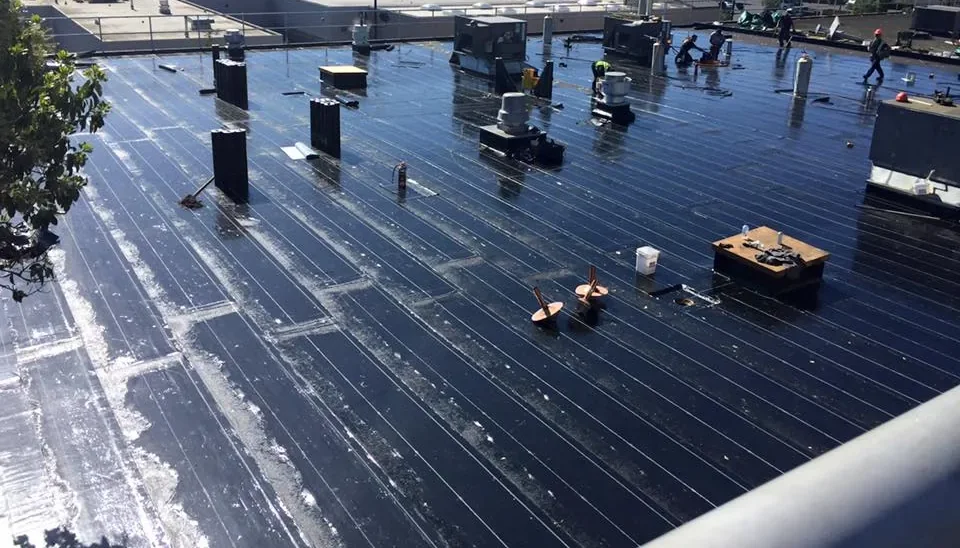
How the work is scoped, documented and phased on occupied Sugar Land buildings.
Infrared Roof Moisture Surveys
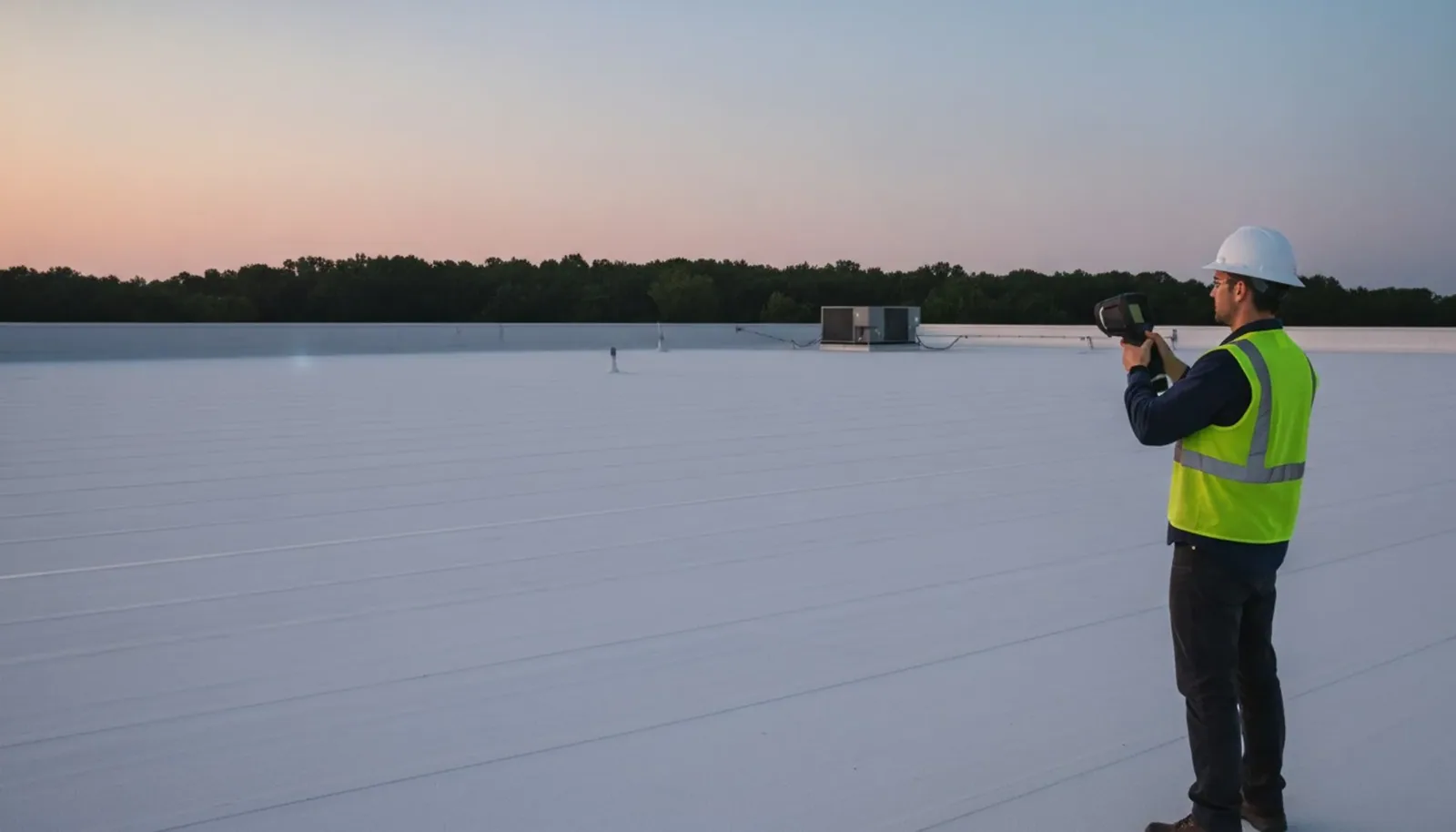
What we check on the roof, what we recommend and how the crew keeps the building open.
Occupied-Building Reroofing
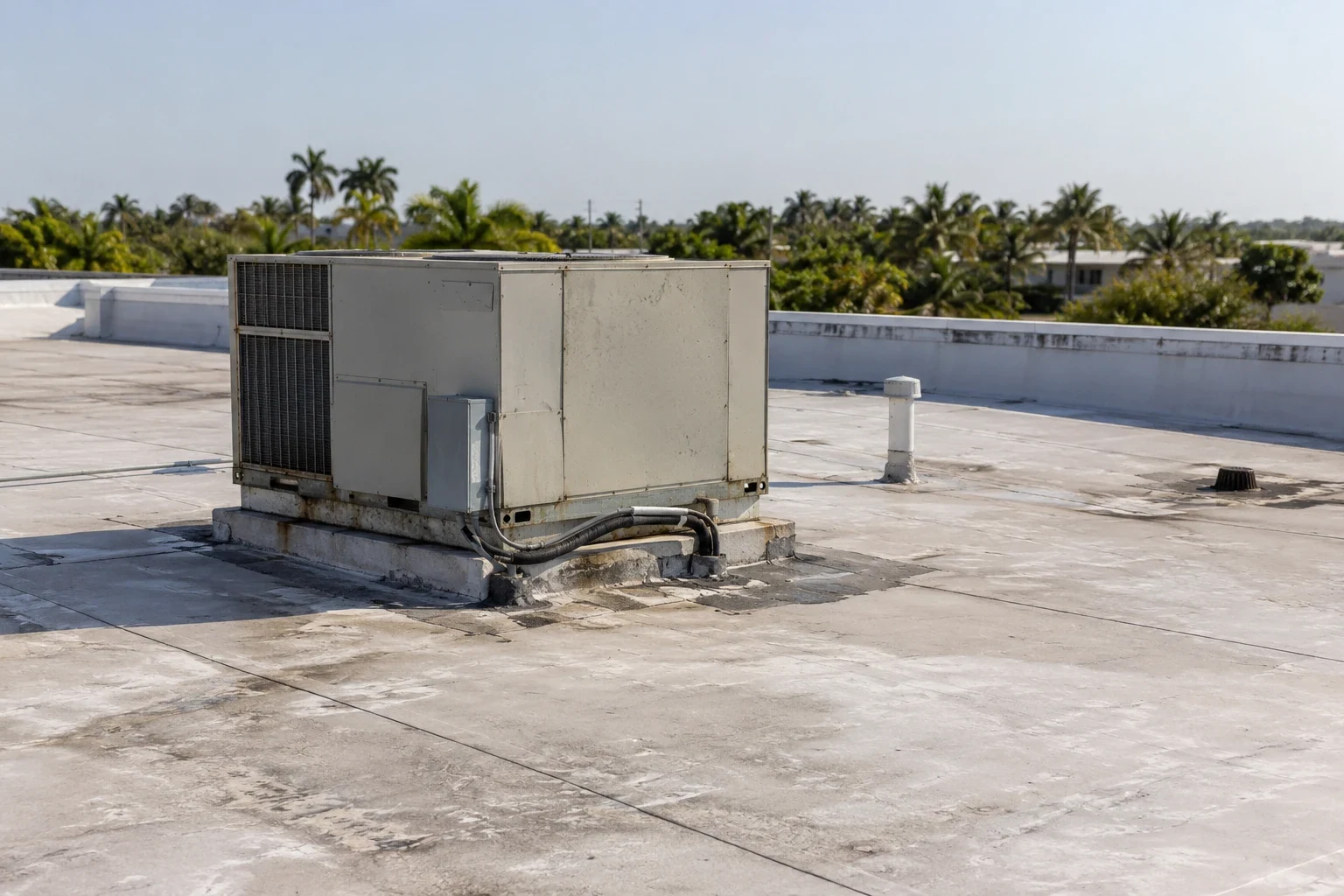
Conditions, options and next steps for commercial buildings in Fort Bend County.
Give the Owner a Usable Building Roof Record
Call to arrange an assessment. We will explain the roof findings with photos and identify the repair, maintenance and operating decisions for your property.
Call 555-555-5555 or email [email protected].
Commercial Roofing Questions
Straight answers to the questions building owners and managers ask us most often.
What should a manager send before a leak visit?
Provide interior locations, timing, earlier roof reports and recent equipment changes. Separate staff observations from confirmed findings. That information helps direct the inspection without assigning the cause prematurely.
Can one portfolio specification fit every building?
Each roof needs an assembly and operating review. A shared reporting format can help compare properties, but materials and details may differ. Jurisdiction is also checked for the actual address.
When does maintenance become a separate repair project?
The agreed visit scope sets the allowance for suitable minor work. Removal, reconstruction or drainage alterations can require another proposal. We show the finding and explain the boundary.
How should uncertain moisture be reported to the owner?
Identify the method, coverage and confirmed sample locations. Keep interpreted areas distinct from direct observations. Explain what further investigation would resolve the uncertainty.
What makes closeout useful for a future manager?
Retain a roof plan, dated detail photographs and the completed and open items. Product information supports compatible repairs. The incoming manager can see what was addressed and what still requires a decision.
Tenant Access and Equipment Responsibilities
Active entrances, delivery areas and rooms beneath the work are identified through the building team. The roof sequence includes debris handling, protection below and suitable daily closure. Different tenants may require different notices even under the same roof. We record those operating needs instead of assuming a standard repair visit can proceed in every occupied area.
Occupied-building work also coordinates ventilation and equipment service. The facility's mechanical team approves any isolation window and controls restoration, with required airflow preserved through the agreed plan. Covering a working intake is not a routine roof repair measure. Mechanical, electrical and roofing duties remain assigned where a curb or service connection involves several trades.
Local Buildings Within a Portfolio
Sugar Land Town Square brings offices, shops and hotel operations into the same mixed-use center. A manager arranging roof service there identifies the affected building contacts and entrance before scheduling work. We survey the roof sections and details, then place the measured scope beside the tenant notices and equipment requirements. The report identifies which area is ready for repair and which still needs testing or approval. That lets the manager brief the owner and coordinate the actual day's activities from one building record.
A second building in Stafford receives its own jurisdiction and assembly review. Nearby properties can differ in permit requirements, deck construction and service history. Multi-site roof programs organize those separate records so the owner can compare condition without applying one building's repair method everywhere. Priorities remain connected to actual defects and operating consequences at each property.
How a Roof Project Runs
Every roof we take on moves through the same six steps:
01
Roof Walk
We walk the whole roof and photograph the membrane, seams, flashings, drains and equipment.
02
Moisture Check
Readings and core cuts show what is wet below the surface before anyone prices a repair.
03
Written Findings
You get plain-language findings, photos and the options that fit the roof.
04
Scope and Price
One written scope covers the system, the details, drainage changes and the price.
05
Scheduled Work
Crews work around tenants, deliveries and weather, closing the roof every night.
06
Closeout
We walk the finished roof with you and hand over photos and warranty paperwork.
Routine Work and Larger Corrections
Preventive maintenance records drain obstructions, service-route wear and changing detail condition. The visit allowance identifies suitable minor work and when another scope is needed. Cleaning a strainer is different from resolving an undersized or poorly positioned outlet. Repeated maintenance observations should lead to investigation when the same problem returns.
Broad moisture, deteriorated material or recurring attachment defects can change the value of continued repair. We compare eligible restoration, retention and roof replacement using the condition findings and measured scope. The manager receives that comparison in terms the owner can assess. Roof age is part of the history where established, but it does not alone determine whether every section needs replacement.
Storm Documentation and Closeout
Regional hurricane history can prompt an inspection after significant weather, but it does not prove damage at each portfolio address. We compare current findings with earlier photographs and identify observed changes. Coverage questions stay with the insurer and policy review. Temporary protection is documented separately from permanent work, including any investigation still needed beneath the treated surface.
Closeout lists the completed repairs, any related trade item and the next condition needing attention. Photographs and product records remain with the building file. Staff can report later water timing or equipment changes using the same locations. The record allows the manager to brief the owner from evidence rather than a broad statement that the roof was fixed or that the last storm caused every new complaint.
At a managed building in First Colony, distinguish construction coordination with general contractors from a loss record supplied to insurance restoration teams. The approved repair, cost changes and unresolved investigation should remain traceable for both tasks.
Tenant reports often describe where water appeared rather than where it entered. We use the report time, weather and affected room to guide a roof inspection, then mark the openings, drains or transitions that could explain the path. Access notices and interior protection are coordinated with the manager, while each tenant impact is kept distinct in the field record. After repair, photos show what changed and which items remain open. That gives the next manager a useful handoff even if the person who first reported the leak is no longer on site.