
Richmond
Water remaining after rainfall needs a drainage explanation before it needs another surface treatment. On a Richmond commercial roof, we examine the outlet, surrounding elevations and assembly condition to define the corrective work. A blocked inlet and a deteriorated flashing can coexist, but they remain separate tasks. The manager receives photographs and a clear scope showing what the repair changes and which design questions still require review.
Richmond is the Fort Bend County seat, with the Brazos River dividing the town and US 90A running through it. US 59 serves the area south of downtown, including retail development along the corridor. We assess low-slope and metal roofs at each property rather than transferring findings from another building. For an owner also managing space in Sugar Land, TX, comparable reports retain the actual conditions at both addresses.
The Outlet and the Surface Around It
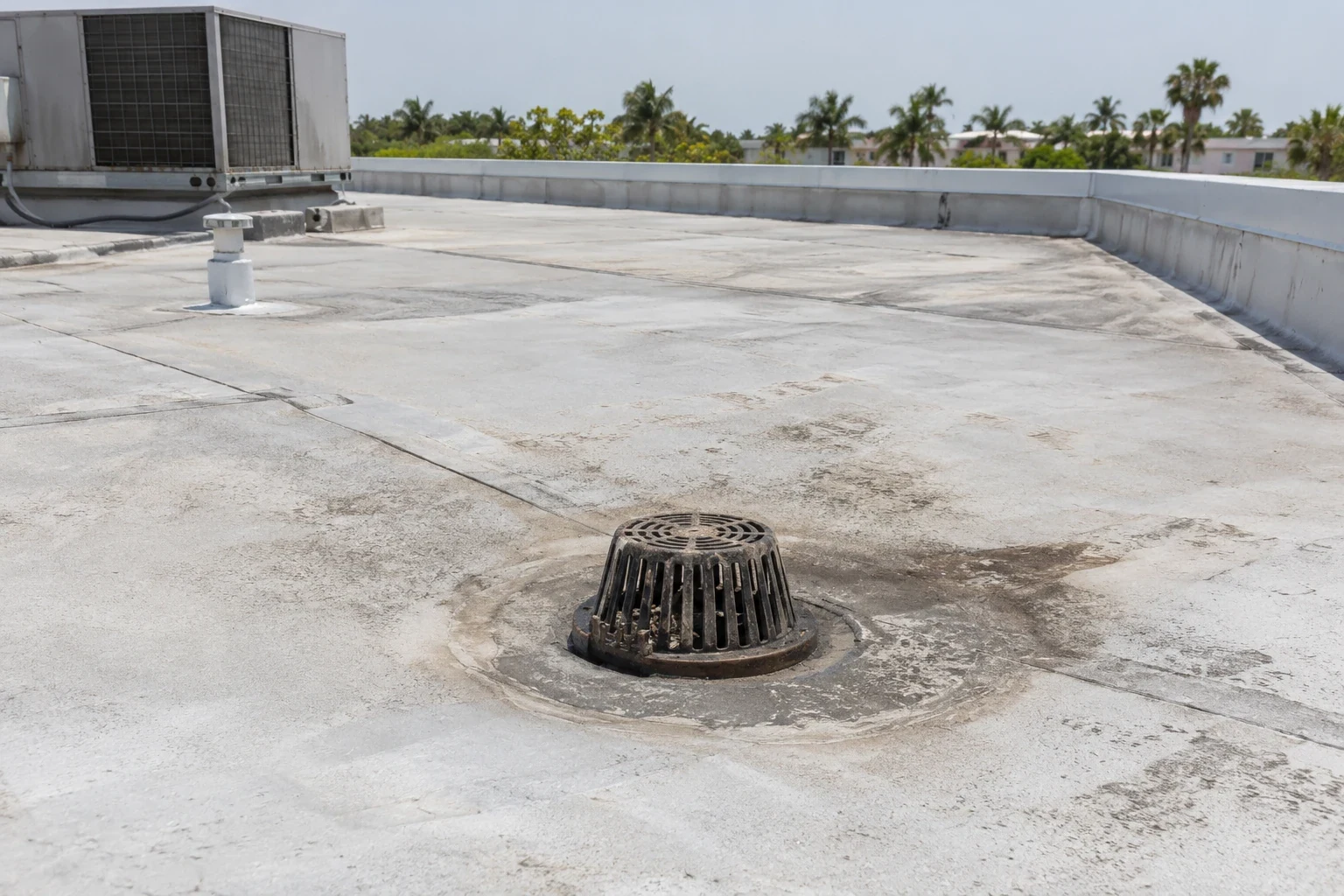
Rainwater needs a continuous route from the roof surface into the intended drainage system. Debris can restrict the inlet, while a high rim, insulation irregularity or deck deflection can leave water nearby even after cleaning. We document accessible outlet details and use elevation measurements where the path is unclear. The finding distinguishes maintenance from a surface or supporting condition requiring further investigation.
The Houston area averages about 50 inches of rain each year, with June the wettest month. For a Richmond building, we inspect the inlet, overflow provision and roof-surface route directly; regional rainfall does not establish what a particular drain can discharge. Outlet and scupper repair includes the inlet flashing and available overflow arrangement. Elevation readings can show whether water is held by a high rim or a low area away from the drain. An added drain or slope change needs the relevant plumbing and structural review before installation.
A Rain Stain and a Delayed Drip
An interior stain needs its time and location recorded together. Rain may enter at a detail and travel before becoming visible, or remain in concealed layers after the weather clears. Equipment condensate can also produce water independently of rainfall. We compare the reported room with rooftop penetrations, equipment drainage and accessible assembly details before choosing a test.
A leak-tracing assessment states the confirmed opening separately from a suspected path. Condensation requires moisture to reach a surface below its dew point, so air movement and temperatures matter when that possibility is examined. Outdoor humidity alone cannot identify the cause. The report explains what evidence supports the proposed roof repair and which mechanical or assembly question needs another check.
Occupied Retail and Public-Facing Space
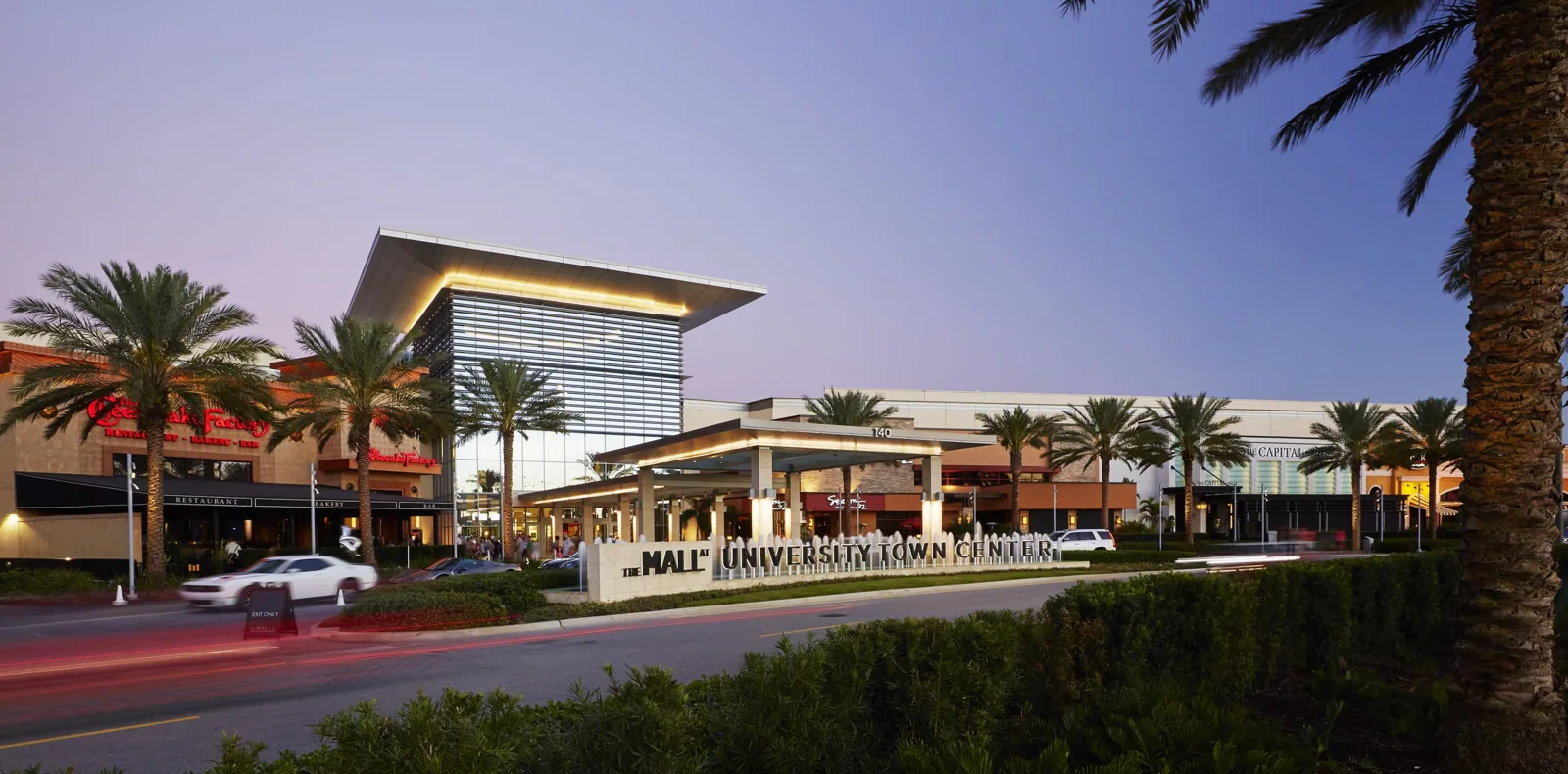
Retail premises along US 59 need a plan for customer entrances, receiving hours and the rooms below a proposed opening. Public-facing buildings also need agreed access and protective controls, with the specific operator establishing those requirements. A small roofing area may still require substantial staging and debris protection. We identify that work before comparing a localized repair with a larger scope.
A retail roof inspection inventories the equipment, wall connections and section boundaries actually present. Tenant changes can introduce altered curbs or capped penetrations, but the history is checked rather than assumed. Roof findings are located so the manager can coordinate responsibility and timing. The photographic record identifies which connection needs roofing work and which related equipment concern belongs with another trade.
Related Roofing Pages
Roof Drains and Scuppers
How the work is scoped, documented and phased on occupied Sugar Land buildings.
Commercial Roof Leak Repair
What we check on the roof, what we recommend and how the crew keeps the building open.
Shopping Center Roofing
Conditions, options and next steps for commercial buildings in Fort Bend County.
Understand the Richmond Drainage and Repair Scope
Arrange photos and a clear explanation of the outlet, moisture and assembly findings, with practical repair options for your Richmond commercial property.
Call 555-555-5555 or email [email protected].
Commercial Roofing Questions
Straight answers to the questions building owners and managers ask us most often.
Why can a clean outlet still have water around it?
The surrounding elevations or supporting assembly may keep water from reaching the inlet. We compare the outlet level with the surface and drainage path. A proposed design change needs plumbing and structural coordination before installation.
Does regional rainfall establish drain capacity?
No. Capacity depends on the actual roof area, drainage design and applicable project criteria. The Houston-area rainfall average is climate context; the inspection identifies outlet condition and any design information needed for the proposed work.
What should a manager receive when moisture boundaries remain uncertain?
A map of tested points, supported removal areas and the sections needing further investigation. The proposal states how uncertainty affects the allowance. That prevents an interpreted pattern from becoming an unexplained construction quantity.
Can a roof repair settle a wider site-water concern?
The roof scope addresses the assembly and its defined drainage connections. A confirmed site or flood-management issue may need separate design review. We identify coordination tasks rather than presenting a membrane closure as the complete solution.
The Area a Test Can Support
Moisture investigation is useful when concealed condition could change the repair quantity. A reading describes its location and needs interpretation with the materials being tested. Authorized samples identify local construction, while an infrared survey may guide further checks when the assembly and weather permit useful contrast. Temperature patterns do not automatically establish every wet layer.
We map tested points, estimated boundaries and any inaccessible sections. The removal allowance follows the supported findings, with further investigation identified where uncertainty remains. A replacement insulation detail is coordinated with the retained assembly and required supporting corrections. The manager can then explain why one section has a defined removal quantity and another remains an investigation task.
A Suitable Base for Repair or Restoration
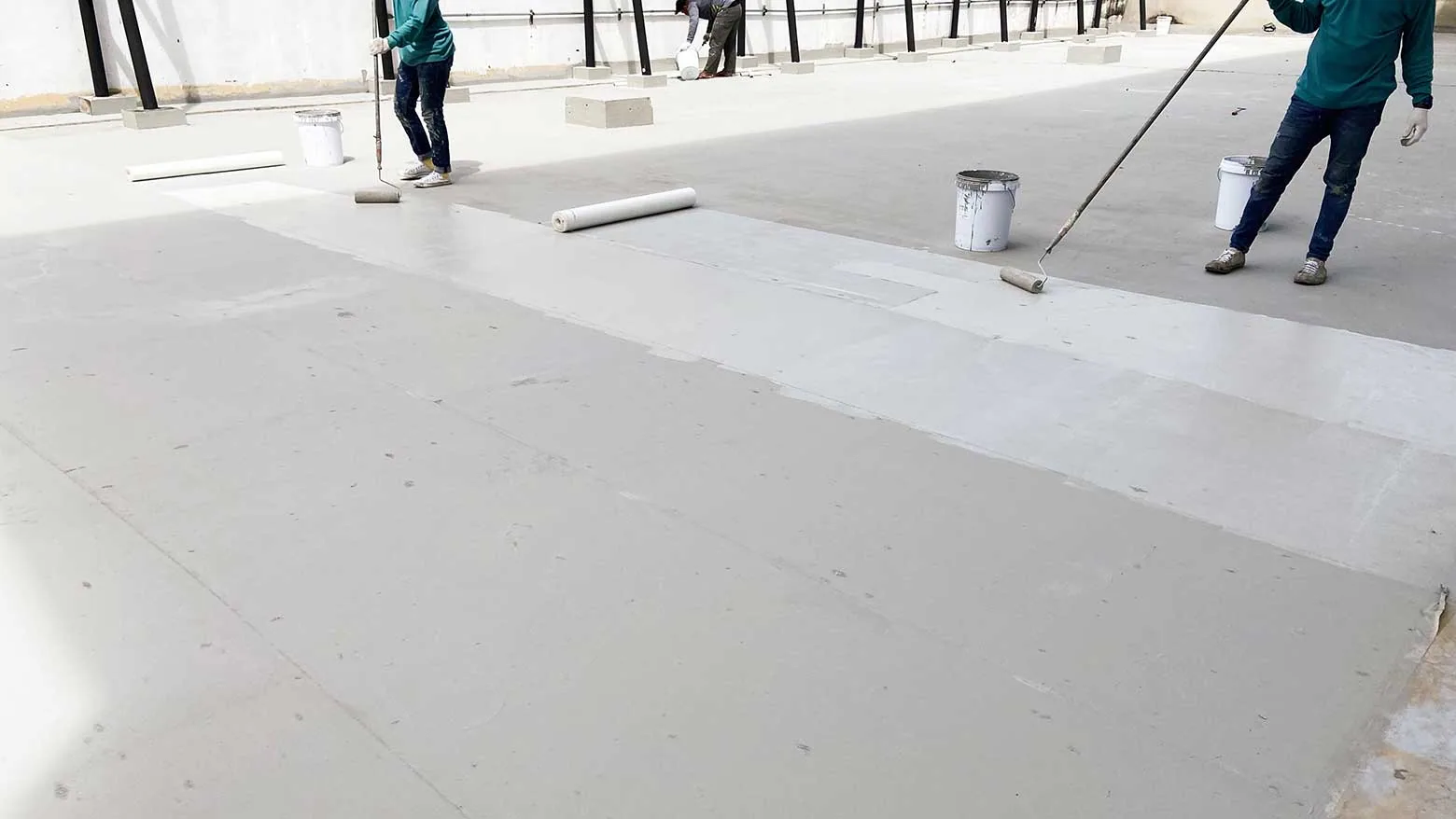
A localized defect may support repair where adjoining materials, attachment and drainage are suitable. Failed patches or wet layers within the scope need correction before the new closure is installed. Material compatibility and preparation follow the actual membrane and substrate. A repair that merely covers unsuitable material can leave the original weakness in place.
A coating option requires adequate adhesion, corrected details and suitable moisture conditions. Recover planning adds review of retained layers, structural suitability and applicable project requirements. Extensive deterioration may instead support removal and replacement. Each option states what remains, what needs rebuilding and what further evidence or design review is required before the owner commits.
Cost is separated into removal, insulation, deck corrections, detail work and access provisions. Restricted occupied hours can add repeated protective closure or material handling tasks. Product limits and substrate moisture affect the installation window. The proposal identifies the reviewing jurisdiction for the Richmond address and the applicable permit, energy and attachment requirements rather than carrying another property's approval into this work.
Completed details are photographed against the same plan so the next maintenance visit can check them directly.
How a Roof Project Runs
Every roof we take on moves through the same six steps:
01
Roof Walk
We walk the whole roof and photograph the membrane, seams, flashings, drains and equipment.
02
Moisture Check
Readings and core cuts show what is wet below the surface before anyone prices a repair.
03
Written Findings
You get plain-language findings, photos and the options that fit the roof.
04
Scope and Price
One written scope covers the system, the details, drainage changes and the price.
05
Scheduled Work
Crews work around tenants, deliveries and weather, closing the roof every night.
06
Closeout
We walk the finished roof with you and hand over photos and warranty paperwork.
A Record for River-Area Properties and Corridor Access
The Brazos River setting makes the distinction between roof drainage and wider site water management useful. A roof inspection documents the building assembly and accessible outlets; a site or flood concern may require separate design expertise. The corrective scope states those boundaries while identifying any connection that needs coordination. A repaired membrane alone does not resolve a confirmed problem elsewhere in the building drainage path.
The Grand Parkway's route through the Richmond area connects toward Sugar Land and Katy. For material deliveries, we confirm the actual property approach, staging and receiving window with management. A separate building in Rosenberg or at Katy receives its own inspection record. Urgent water entry can be reported at night or on holidays, with available crews assessing safe access, weather and possible protective measures. The visit identifies completed temporary work and the permanent follow-up still needed.
A roof report also needs to keep building drainage separate from ground-level flooding or site drainage. The Brazos River setting can make water concerns broader than the roof, and a roofing inspection does not establish site elevations or flood exposure. We record the roof's accessible outlets, flashing conditions and visible water paths, then state which items need another discipline. That boundary gives the owner a useful roof scope without presenting it as a complete property drainage assessment.