
Emergency Roof Repair
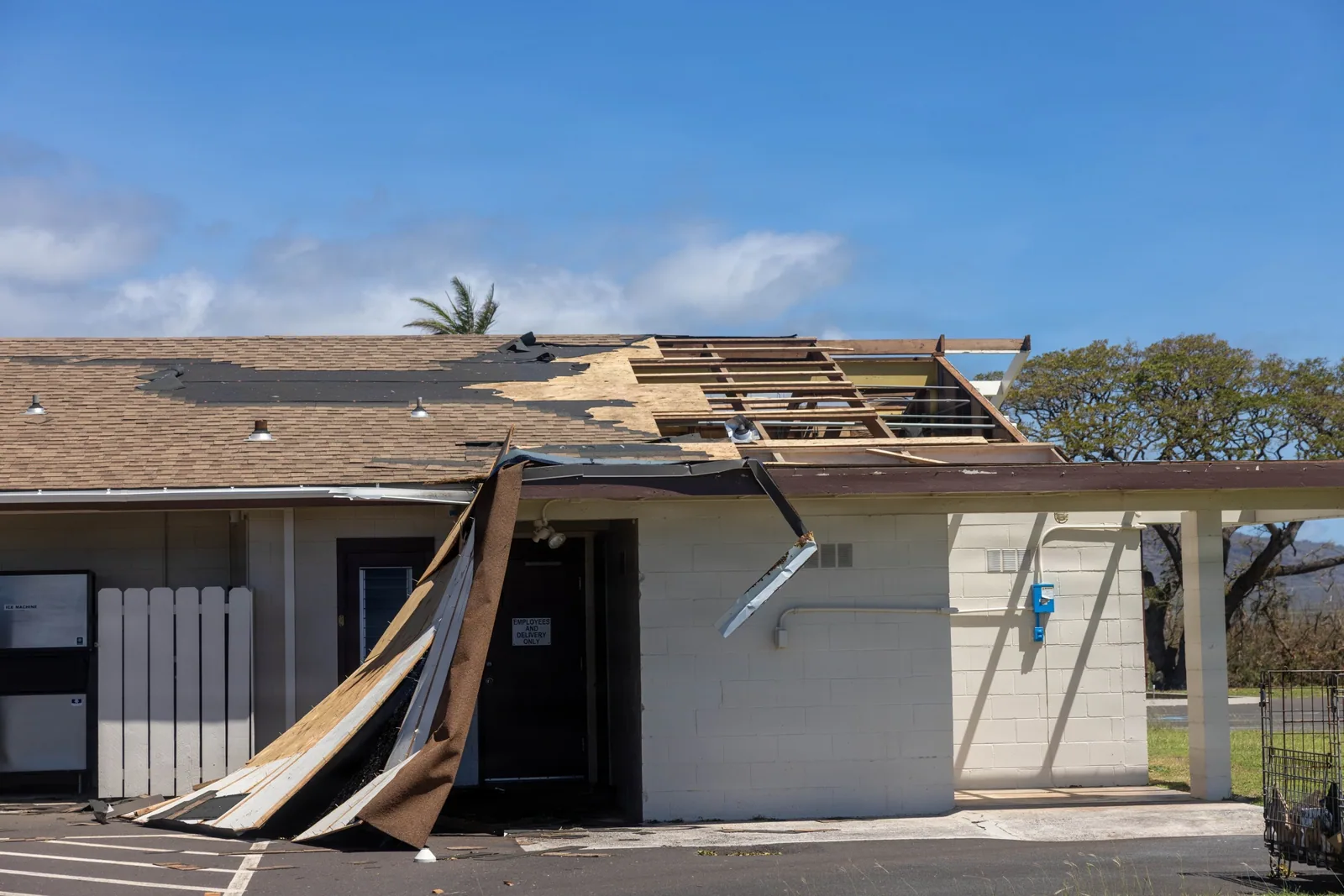
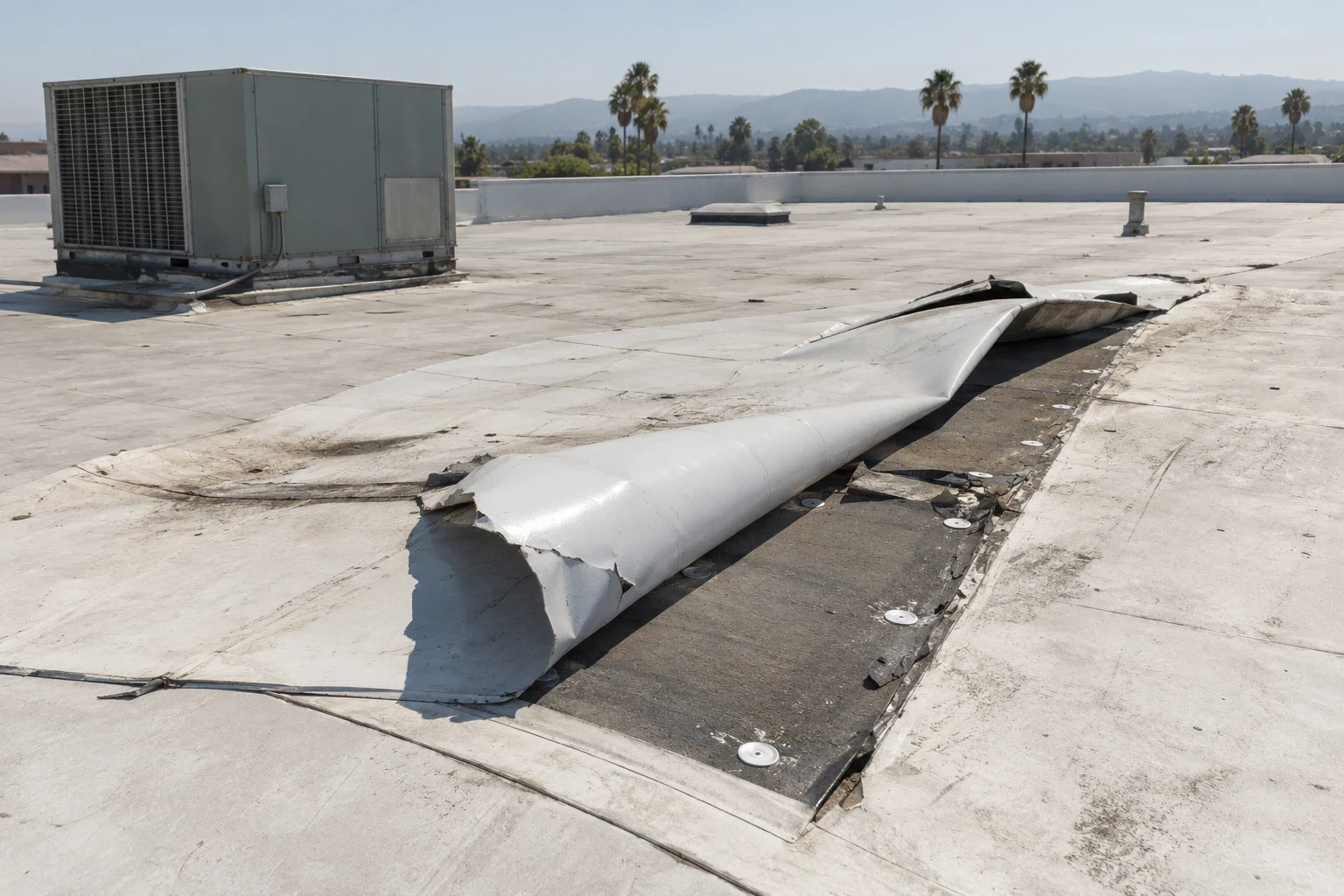
Storm damage to a commercial roof can become a water problem quickly. In Sugar Land, TX a lifted membrane or torn flashing may admit rain, but the entry point does not show how far water has traveled. Emergency repair begins with safe access and a practical plan to limit additional exposure. We document temporary protection separately from permanent correction, then explain what the assembly needs once conditions allow a closer examination.
What a Storm Does in the First Hour
Wind can lift a weak edge; if air reaches beneath a sheet, pressure may pull more material loose. Rooftop equipment can move and strain its curbs. Hail may damage older membrane or thin panels. Rain can then enter through an opening created by the event. Prolonged moisture can affect insulation, deck and interior finishes, but each condition needs inspection. Humid Gulf air can slow drying, so an opening left exposed needs prompt, safe protection. Early stabilization may limit additional exposure, while the final scope depends on the damage actually found.
The First Hours on Site
We accept emergency requests overnight, on holidays and during severe weather. A roof response still depends on safe access, weather, crew availability and the condition of the building. We confirm the roof can be approached safely, locate visible openings and choose assessment methods suitable for the conditions. Thermal work may need to wait for a dry surface and useful contrast. Temporary sheets, tarps or sealed metal can reduce water entry when their attachment and drainage path suit the damage. Photographs document conditions before and after the work, with image time and location recorded. We explain likely permanent work and next steps to the property manager. The photos also help a later repair crew understand the area examined and any limits to the first response.
Temporary Dry-In Methods
The right temporary seal depends on the roof. On low-slope membrane roofs, we can fasten sheet membrane or reinforced tarps over a torn section, with attachment selected for sound supports and expected exposure. Temporary protection can still fail and needs a monitoring plan. On metal buildings we close open panel laps and damaged ridges with sealed sheet metal. At punctures from fallen debris, a quick-set patch buys time until a proper repair can be done. Temporary protection needs attachment suited to the roof, the expected exposure and the available sound support.
Every temporary measure has a limit. A tarp is not a roof, and we record its intended use, exposure limits and return plan rather than certifying a universal safe interval. If more weather is on the way, we check the dry-in before it arrives, and we plan the permanent work for the first workable window. Roofs with a long tarp history deserve extra scrutiny, because added fasteners can create further penetrations and retained moisture may affect concealed materials. The condition beneath a temporary cover still needs inspection.
Related Roofing Pages

Sienna
How the work is scoped, documented and phased on occupied Sugar Land buildings.
Hurricane Damage Roof Repair
What we check on the roof, what we recommend and how the crew keeps the building open.
Wind Damage Roof Repair
Conditions, options and next steps for commercial buildings in Fort Bend County.
Talk to Us About Storm Damage on Your Roof
We will explain what has happened to the roof in plain terms, with photos, so you can describe the damage and the plan to the owner before the next storm arrives.
Call 555-555-5555 or email [email protected].
Commercial Roofing Questions
Straight answers to the questions building owners and managers ask us most often.
Who should I call first when the roof is leaking badly?
Call the roofer and your insurance carrier in the same hour. We assess feasible protection when safe access permits, and the carrier opens a file that will need photos of the damage before repairs change it. Tell both parties what you saw and when.
Can you work in the rain or during high wind?
Some temporary protection can go on in rain, but not in high wind or lightning. Crew safety comes first, and a tarp fastened in a gale can fail and cause more damage. When conditions allow, we move in quickly.
How long will a temporary dry-in hold?
The interval depends on the material, attachment and expected exposure; there is no universal number of days or weeks. We state the expected limit when we install it. A temporary seal left through another storm season is a risk, and we schedule the permanent repair accordingly.
Will the emergency work affect my insurance claim?
Reasonable steps to prevent further damage are generally expected by carriers, and documentation makes them easier to support. We photograph conditions before and after and keep a written log. Your policy language governs coverage, so check it with your agent.
What if the building has a manufacturer warranty on the roof?
Notify the warranty holder and read the terms before permanent work. Some warranties require that repairs be made using the manufacturer's methods and materials. Emergency requirements and notice obligations depend on the issued warranty documents, and we keep records that can show what was done.
Hurricanes, Derechos and Hail in Fort Bend County
Fort Bend County experienced historic flooding during Hurricane Harvey in August 2017. An August 26, 2017 report attributed roof loss at about 50 homes in Sienna and roof and structural damage at Ridge Point High School to a possible tornado during Harvey. Hurricane Beryl made landfall near Matagorda in July 2024 and brought 60 to 70 mph gusts across the region, with roof and structure damage reported in the Houston area. The May 2024 Houston derecho produced measured gusts up to 78 mph, with higher estimates in downtown Houston, and damaged high-rise windows. A May 2019 hail event exposed more than 50,000 homes in the Houston area to golf-ball-size hail or larger.
Those regional events provide context, not evidence about an individual building. A roof plan and material record help a responder understand access and compatible protection. Dispatch timing still depends on weather, location and crew availability. A hurricane damage repair, wind damage repair or hail damage repair starts with documenting the actual conditions and choosing safe temporary protection where needed.
Protecting What Sits Under the Roof
Hospitals and distribution buildings can have clinical rooms, equipment and stock beneath roof work. Facility staff identify where interior protection is needed, how water should be kept away from equipment and which access or noise controls apply. Power loss can affect building systems and material handling. The operator explains available power, approved access and any contingency before a work sequence is set. For clinical spaces, the facility establishes access, containment and ventilation controls for the proposed roofing method.
How a Roof Project Runs
Every roof we take on moves through the same six steps:
01
Roof Walk
We walk the whole roof and photograph the membrane, seams, flashings, drains and equipment.
02
Moisture Check
Readings and core cuts show what is wet below the surface before anyone prices a repair.
03
Written Findings
You get plain-language findings, photos and the options that fit the roof.
04
Scope and Price
One written scope covers the system, the details, drainage changes and the price.
05
Scheduled Work
Crews work around tenants, deliveries and weather, closing the roof every night.
06
Closeout
We walk the finished roof with you and hand over photos and warranty paperwork.
From Dry-In to Permanent Repair
Once the immediate exposure is addressed, the next stage is a closer assessment. We check moisture and exposed materials, then prepare a scope for the actual damage. A focused roof leak repair may address a confirmed opening, while a broader storm damage roof repair scope can require separate removal or reconstruction. Photos and reports from the emergency response can help document observed conditions for the owner and insurer.
Before permanent work, we reassess the damaged area when safe access is available. We distinguish membrane loss, displaced edge metal, punctures and interior damage, then check whether wet insulation or supporting material extends beyond the temporary closure. The permanent scope describes removal and reconstruction limits, while any structural, electrical or interior restoration question is assigned for the appropriate review. This second assessment gives the owner a sound basis for approving work beyond immediate weather protection. We record any changed conditions discovered during opening and explain the additional quantity before the work expands. Completion photos identify permanent corrections, remaining limits and return tasks. The closeout distinguishes an emergency measure from a completed repair so future maintenance does not mistake one for the other. Before permanent work changes visible conditions, the report preserves the observed damage, response time, materials placed and any access limits. The owner can keep those records with insurer requests and the roof maintenance history. They document what was observed and performed, but do not determine coverage or replace policy requirements. If later wind or rain disturbs temporary protection, the condition is recorded and the closure plan is reassessed. A return visit confirms the exposed assembly and any follow-up work.