
Commercial Roof Replacement
Wet insulation and a worn membrane can leave a Sugar Land, TX building with two different problems above the deck. Repairing the surface may stop an opening while retained moisture remains below it. Replacement gives the owner an opportunity to remove damaged layers, examine the support and correct drainage details before installing the next assembly. The decision starts with a condition review that shows what can remain, what must come out and why.
Wet Insulation and the Limits of Patching
Water in insulation can reduce thermal performance and damage materials that depend on remaining dry. A membrane repair cannot restore a deteriorated board or a corroded support. The review therefore looks beneath selected locations, records the layers and relates the findings to the wider moisture survey. Rain entry, air leakage and equipment drainage are considered separately so the owner understands how the water arrived.
Persistent low areas deserve a level check as well as a moisture check. Compression, installation irregularities, outlet elevations and supporting conditions can each affect drainage. An infrared and core-cut moisture survey helps identify suspect areas under suitable conditions, with samples confirming the assembly at selected points. The replacement scope combines that evidence with membrane condition, attachment, deck observations and the intended service life. It records the limits of the inspection rather than treating one scan as a complete diagnosis.
Signs a Roof Has Reached Replacement
Property managers usually see the symptoms long before anyone sees the cause. The pattern matters more than any single stain, because replacement is a conclusion drawn from several signs read together.
- Stains that return on dry days and need investigation for retained water, condensation or equipment drainage.
- Membrane gone brittle, chalky or cracked at laps and corners after years of heat aging.
- Seams that open again within a season of being repaired.
- A soft area underfoot that requires restricted access and examination of the insulation and support.
- Ponding that lingers a day or two after rain, with dirt rings marking where the water sits.
Repair history is part of the evidence. Repeated failures at one detail call for a review of the repair method, movement, material compatibility and the surrounding assembly. Where the pattern is less clear, a hands-on commercial roof inspection compares repairable defects with conditions that support replacement before money goes into either path.
The Tear-Off and the New Assembly
Replacement starts with removing the layers identified in the approved scope, then looking hard at the deck. Corroded steel, loose fasteners and rotted nailers are corrected before anything new goes down, because a new roof cannot hold a fastener in a deck that will not hold it. Dry, sound insulation can sometimes stay if the project requirements and selected assembly permit it. Wet board is hauled out, not covered.
The new assembly is chosen for the building and its heat load. A white single-ply such as TPO or PVC can reduce absorbed solar heat compared with a darker surface, while grease or chemical exposure requires review of the specific membrane and the substances involved. Manufacturer compatibility information informs that choice. Modified bitumen and built-up systems remain sensible where foot traffic or complicated details call for them. Whatever the choice, we add an air barrier and a cover board where the assembly needs them, and every curb, drain and edge is flashed as its own detail instead of an afterthought.
Related Roofing Pages
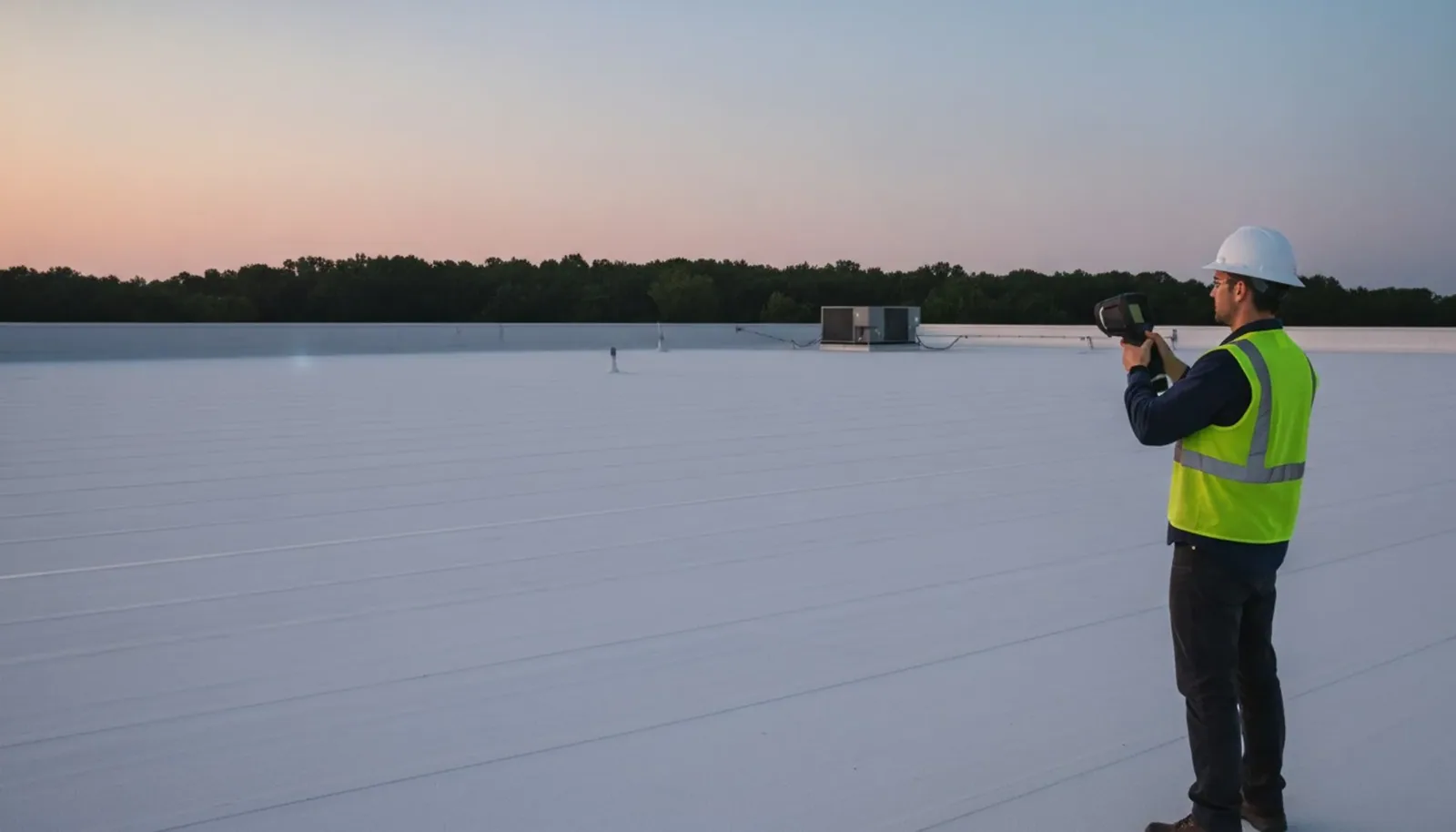
Infrared Roof Moisture Surveys
How the work is scoped, documented and phased on occupied Sugar Land buildings.
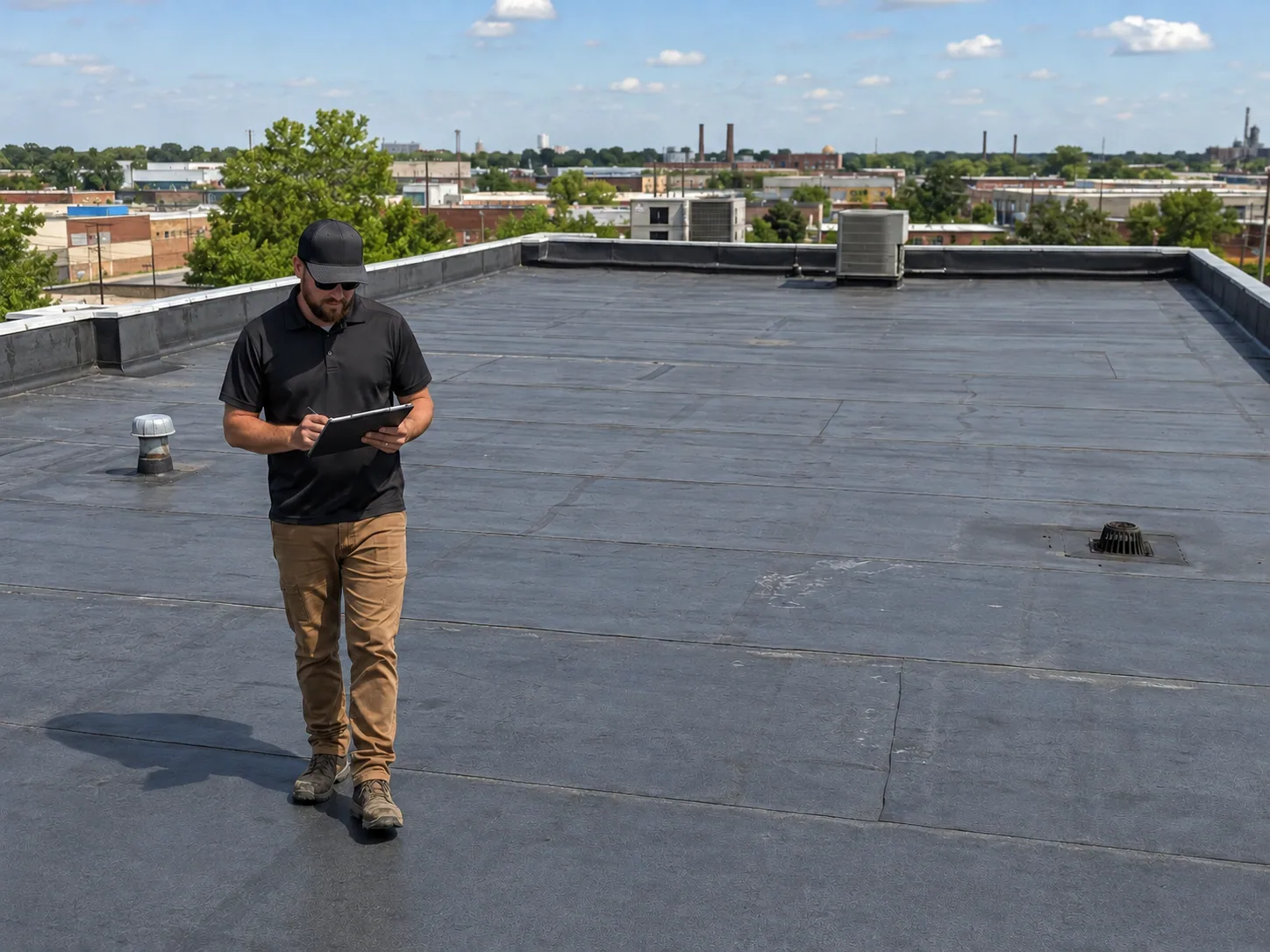
Commercial Roof Inspections
What we check on the roof, what we recommend and how the crew keeps the building open.
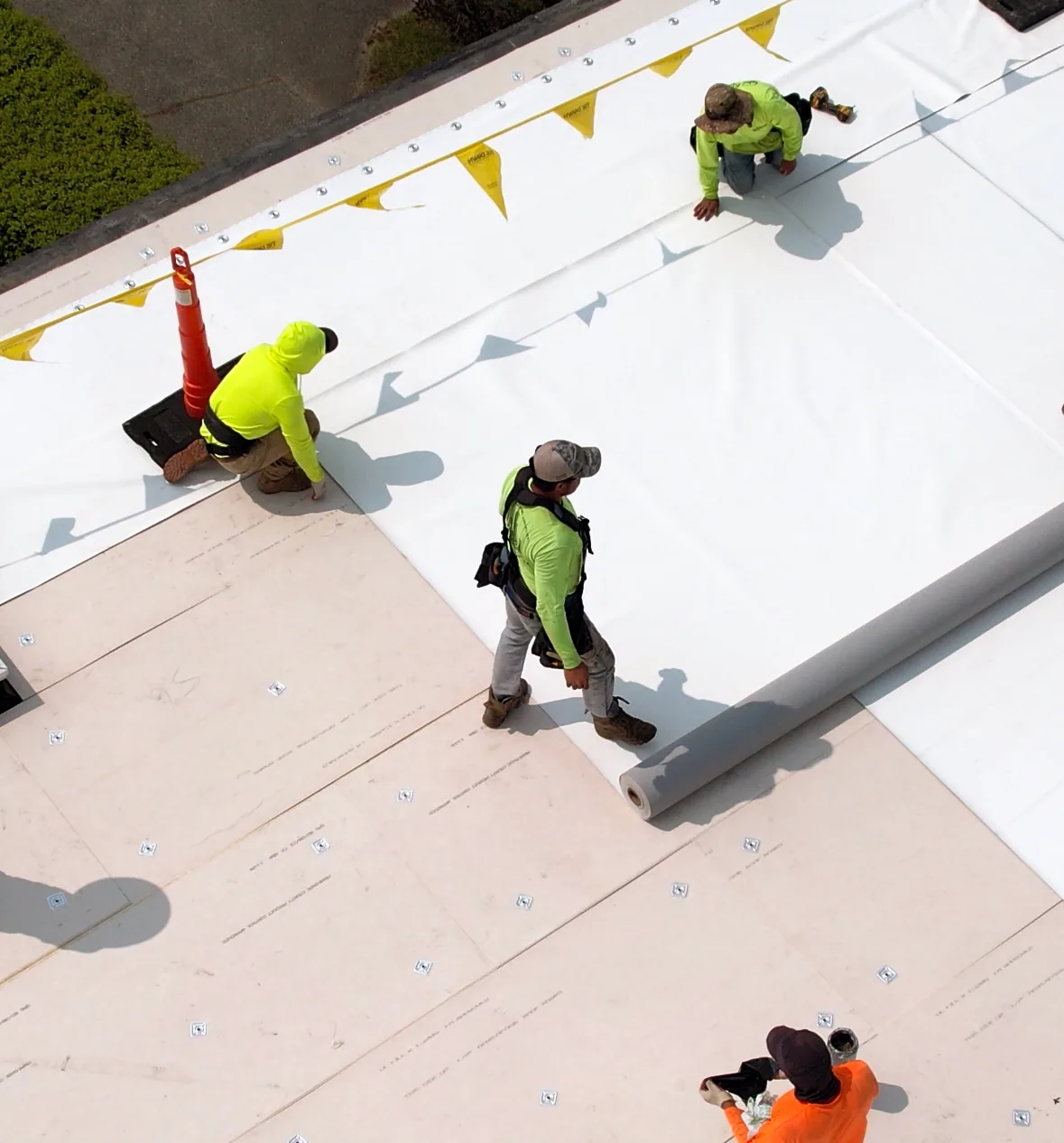
TPO Commercial Roofing
Conditions, options and next steps for commercial buildings in Fort Bend County.
Get a Plain-Language Read of Your Roof
We will walk the roof, explain what is happening in plain terms, and send photos so you can walk the owner through the findings with confidence.
Call 555-555-5555 or email [email protected].
Commercial Roofing Questions
Straight answers to the questions building owners and managers ask us most often.
How do I know whether the roof needs replacement or only repair?
Use the combined condition findings. Moisture extent, membrane wear, attachment, deck condition and repair history inform the comparison. Survey indications need appropriate confirmation; a few samples describe those locations. The owner receives the reasoning and limits of each proposed option.
Can the new roof go over the old one?
A recover over the existing roof needs a dry, suitable assembly, sound support, compatible attachment and compliance with the project requirements. Layer count, existing weight and drainage also matter. The inspection records the conditions that permit or rule out that option.
How much of the roof is open during tear-off?
The daily removal area is limited by safe working conditions and the closure plan. Forecast changes can stop tear-off before more material is removed. Temporary tie-ins and protection measures are checked each shift; the plan also accounts for an interruption before the intended closure is complete.
Does the 2024 code adoption change a replacement in Sugar Land?
The City of Sugar Land has adopted the 2024 International Building Code, Energy Conservation Code and Existing Building Code, and a replacement permit is reviewed under them. Energy and wind uplift details are the usual points of review, so we confirm them with the building department before the scope is final. Stafford, Missouri City and Richmond adopt their own editions, so the building's address matters.
What happens when a heavy Gulf storm hits a brand new roof?
Compare drainage behavior with the design and report any interior entry promptly. Photographs of standing water, its location and the time since rainfall help direct the inspection. A blocked outlet, low area or damaged detail needs examination before a corrective scope is selected.
Drain Capacity and Storm Rain
The Houston area collects about 50 inches of rain a year, with June the wettest month, so a replacement is as much a drainage project as a membrane project. Drain and overflow design follows the project rainfall criteria, outlet arrangement and supporting conditions. Tapered insulation can improve flow within an approved assembly, but a supporting defect needs its own resolution. Hurricane Harvey in 2017 and Beryl in 2024 provide regional storm context; the inspection establishes the condition of this roof.
Wind is the other half of the design. Beryl pushed gusts of 60 to 70 mph across the region, and the May 2024 derecho blew out windows in downtown Houston, so edge metal, perimeter attachment and fastener patterns follow the project uplift design. Corners and perimeters require their specified attachment and edge details, with installation records available for later review. A roof with chronic standing water gets the same attention that our ponding water repair work gives, except that a full replacement may permit a redesigned drainage layout after structural and plumbing conditions are checked.
Working Around Tenants and Operations
Warehouse operations in Sugar Land Business Park and office occupants at Town Square bring different access needs to a replacement. Loading doors, air intakes, tenant hours and material staging are recorded before tear-off begins. The daily opening limit accounts for the forecast, crew capacity and temporary closure method. A changing forecast can reduce the area opened or postpone removal.
Occupied building reroofing also requires protection below the work, a contact for urgent tenant concerns and coordination with building engineering. Temporary tie-ins are inspected at the end of the shift. The manager receives a notice when access, equipment operation or the next work area changes, so a roofing decision does not reach tenants as an unexpected interruption.
How a Roof Project Runs
Every roof we take on moves through the same six steps:
01
Roof Walk
We walk the whole roof and photograph the membrane, seams, flashings, drains and equipment.
02
Moisture Check
Readings and core cuts show what is wet below the surface before anyone prices a repair.
03
Written Findings
You get plain-language findings, photos and the options that fit the roof.
04
Scope and Price
One written scope covers the system, the details, drainage changes and the price.
05
Scheduled Work
Crews work around tenants, deliveries and weather, closing the roof every night.
06
Closeout
We walk the finished roof with you and hand over photos and warranty paperwork.
The First Seasons After Installation
A new roof is not finished when the crew leaves. Debris collects at drains, other trades add penetrations, and heat works on every sealed detail. Set a follow-up visit once significant rainfall has tested the outlets, then compare the details after the roof has passed through a hot season. Photographs identify changed conditions that need attention. The photo record we leave with the owner, showing each detail as built, becomes the baseline for later inspections, and our roof condition reports pick up from it.