
About Commercial Roofing Sugar Land
Commercial roofing for Sugar Land and Fort Bend County, TX.
A roof repair should address the mechanism admitting water and the construction damaged by it. Closing an opening without examining wet board, movement or drainage can leave part of the problem active. Commercial Roofing Sugar Land works on commercial properties in Sugar Land, TX, with that physical explanation at the center of the assessment. We show owners and managers what the findings support, what needs further examination and how the work can proceed above occupied space. The photographs provide a clear basis for discussing the next step.
How We Approach a Commercial Roof
Physical Findings and Diagnostic Questions
Findings first
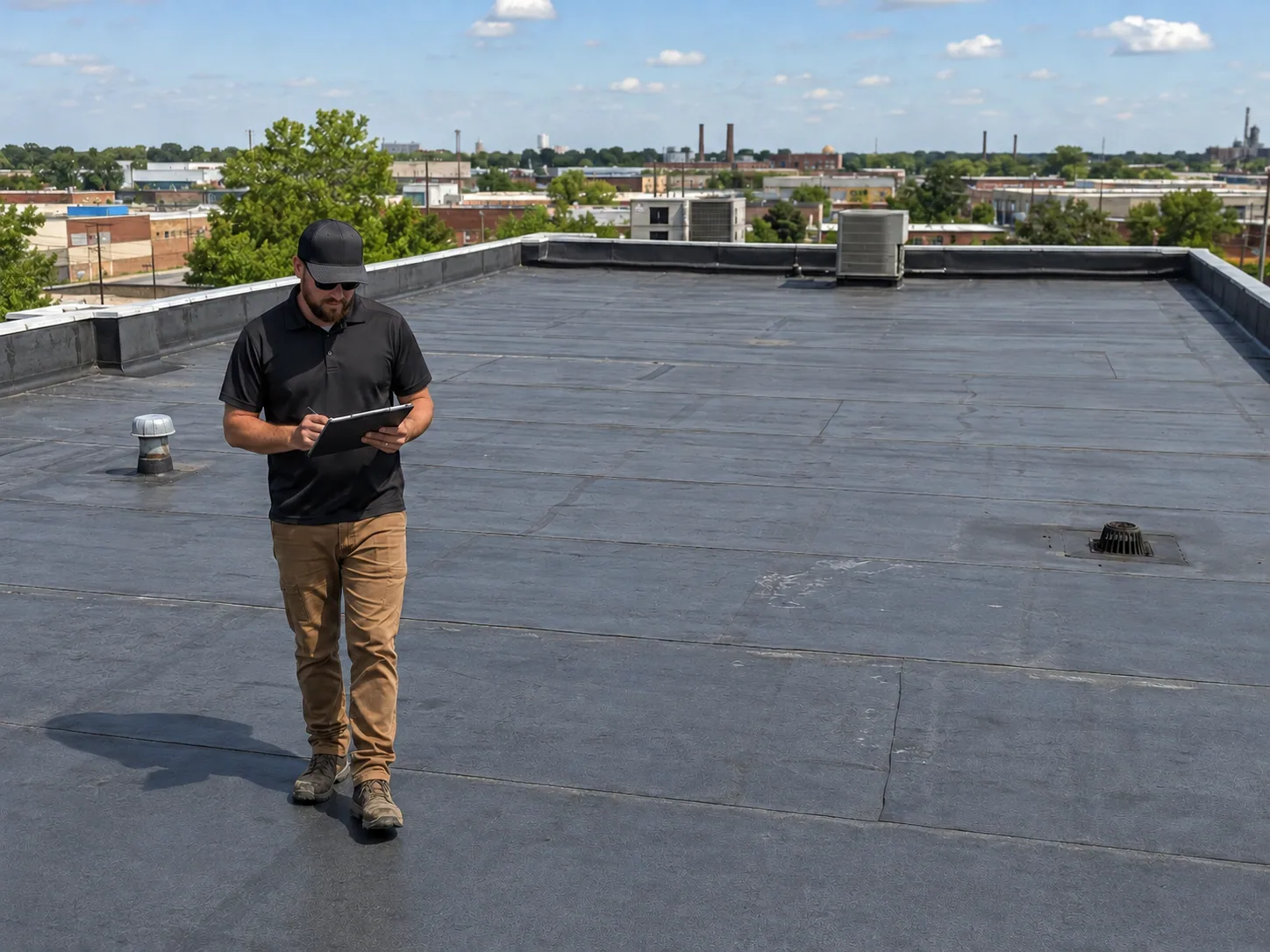
A hands-on examination looks at the sheet, seams, flashing, outlets and accessible attachment. Interior symptoms are related to roof sections and equipment rather than treated as a complete diagnosis. We record the reported timing and compare it with rainfall, mechanical operation and accessible construction. A focused leak investigation can then select checks that answer a specific remaining question. The manager receives the observed condition separately from an uncertain cause.
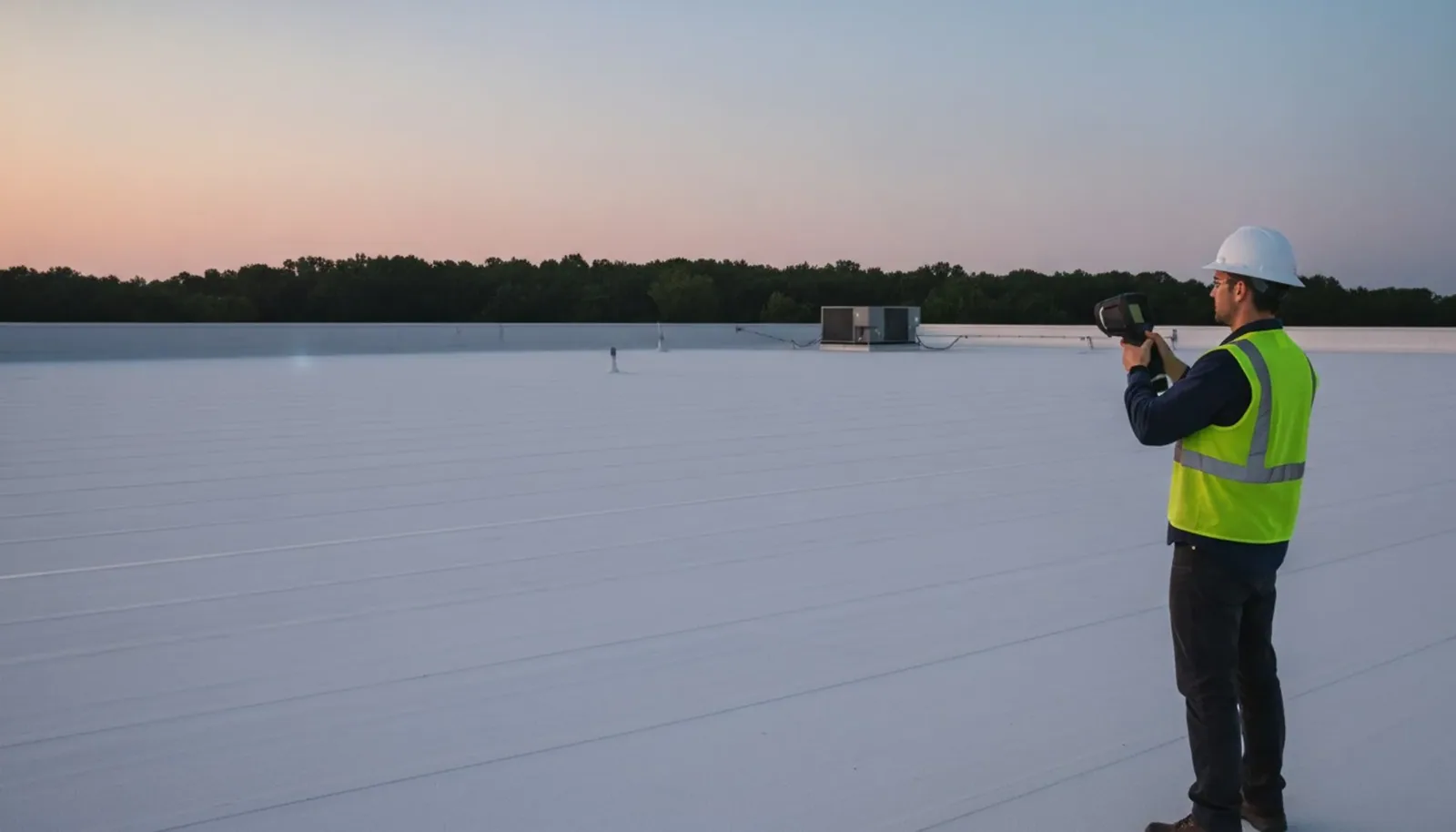
Drone views can help examine accessible surface patterns and roof geometry without replacing close detail checks. Infrared observations can guide moisture investigation when conditions permit useful temperature contrast. Physical samples or openings confirm local layer condition where needed. A thermal image alone cannot establish when water entered or why it remains. We explain the limits of the examination so the proposed correction does not rely on information the roof has not yet supplied.
Moisture, Heat and the Complete Enclosure
The whole assembly
Rain can enter at a weak connection while equipment drainage produces another nearby symptom. Possible condensation requires examination of temperatures, air paths and vapor conditions rather than a diagnosis based only on outdoor humidity. We compare those mechanisms when the evidence overlaps. Wet insulation establishes a condition requiring assessment, not automatically one cause. The report identifies the work intended to stop the supported mechanism and related questions that need another trade or enclosure review.
Sugar Land recorded a 109 F high during August 2023. Heat exposure makes the condition of sheet, accessories and earlier repairs relevant to direct examination. Reflectivity, insulation and air control influence heat transfer in different ways. We explain those contributors when an owner considers an assembly change. A light-colored surface can alter absorbed solar energy without resolving an air leak or deficient mechanical operation below.
Repair Boundaries and Assembly Options
Options in writing
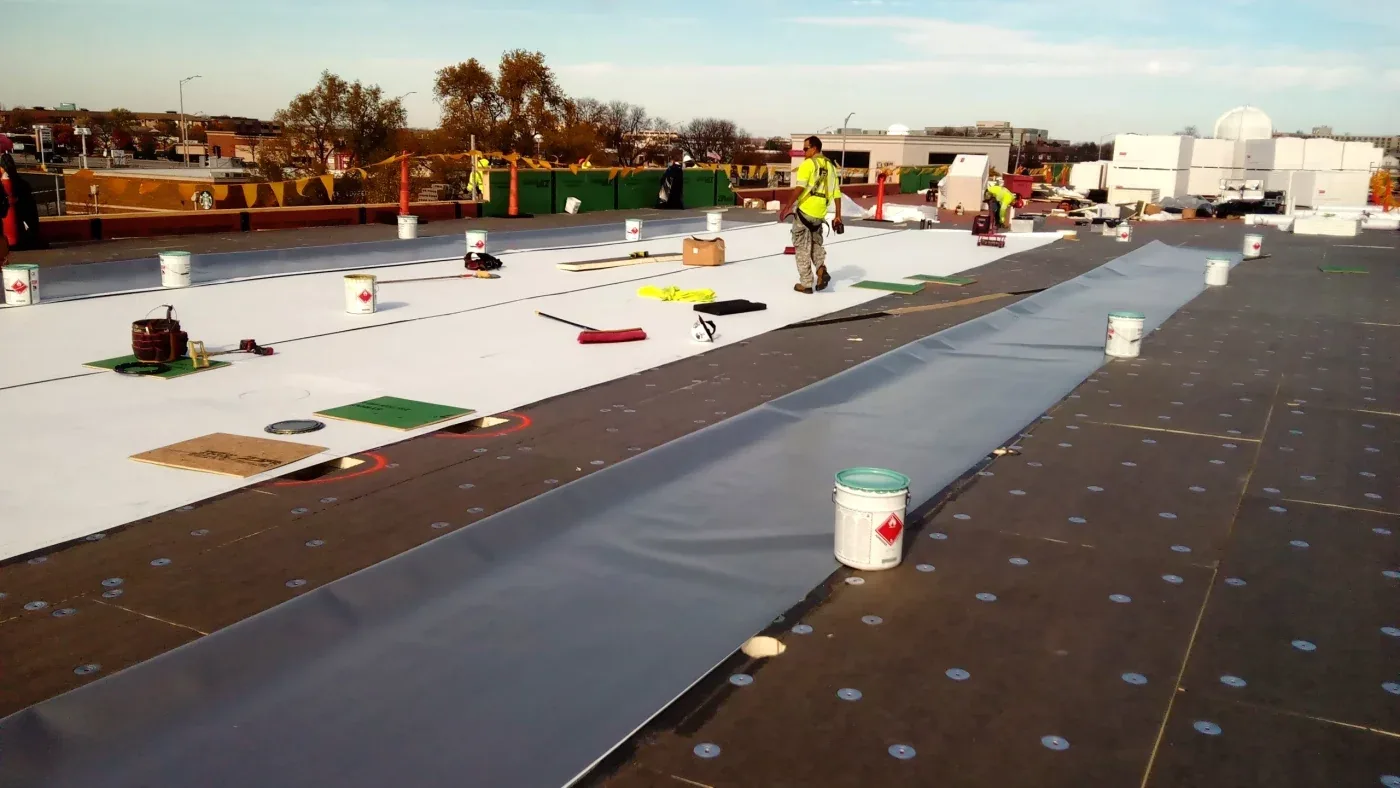
Local repair remains a practical choice where surrounding materials and construction support a suitable permanent detail. Damaged board, loose support or deteriorated attachment can extend that boundary beyond the visible opening. A permanent roof repair includes the layers and connected detail required by the findings. The owner sees photographs explaining removal rather than an unexplained allowance. New conditions exposed during work are recorded before the opening is enlarged.
Restoration needs compatible preparation and an appropriate adhesion assessment. Recover keeps existing layers and adds construction, so moisture, weight, support, attachment and applicable project requirements need review. Replacement allows more direct access but changes removal extent and interior exposure. We assess the proposed TPO assembly or other system against those complete conditions. Added insulation is also compared with the available height at walls, curbs and outlets before a material arrangement is selected.
Commercial Uses and Local Work Planning
Sugar Land and Fort Bend County
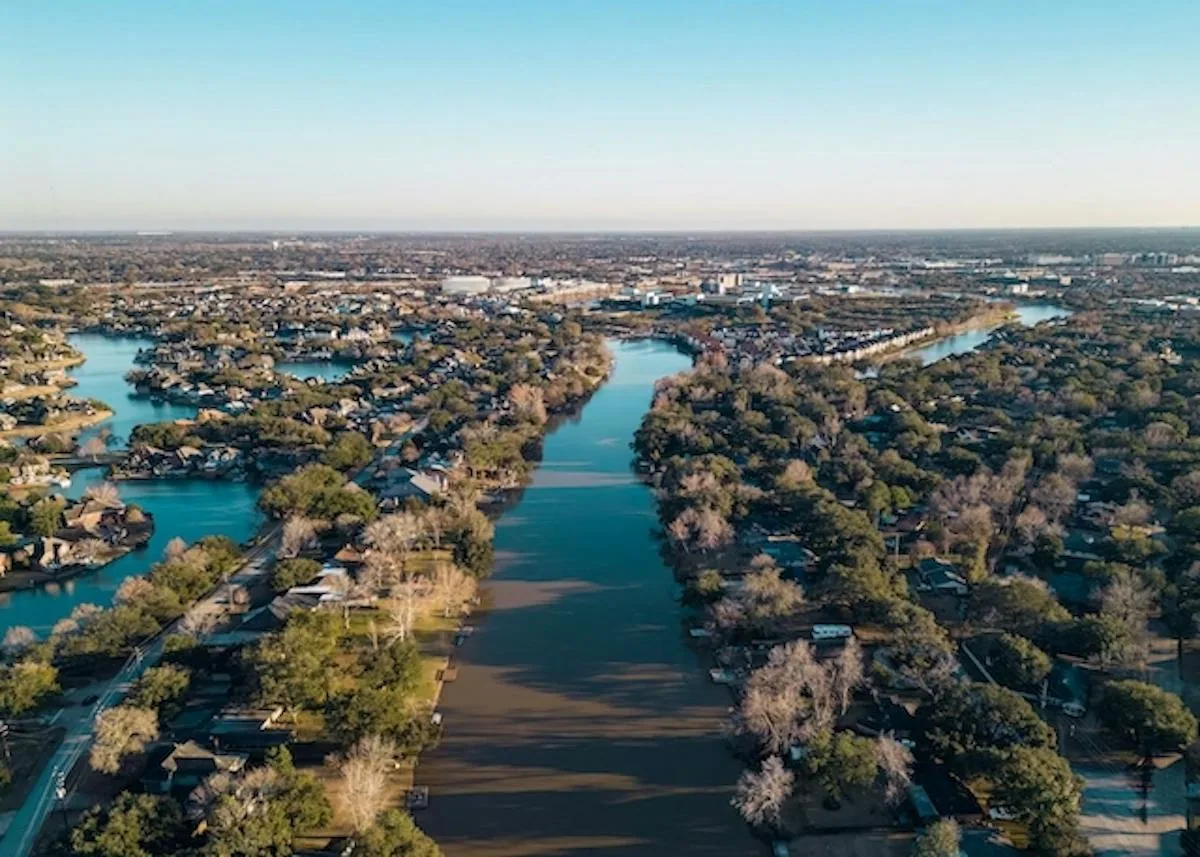
Town Square combines shops, offices and hotel activity within Sugar Land's commercial setting. For a property there, intake locations, tenant entrances and operating hours are mapped before work begins. A roof opening above a stock room needs different protection from one above occupied guest or office space. The manager identifies those areas with us. The plan relates each phase to the specific room below and the route available for materials.
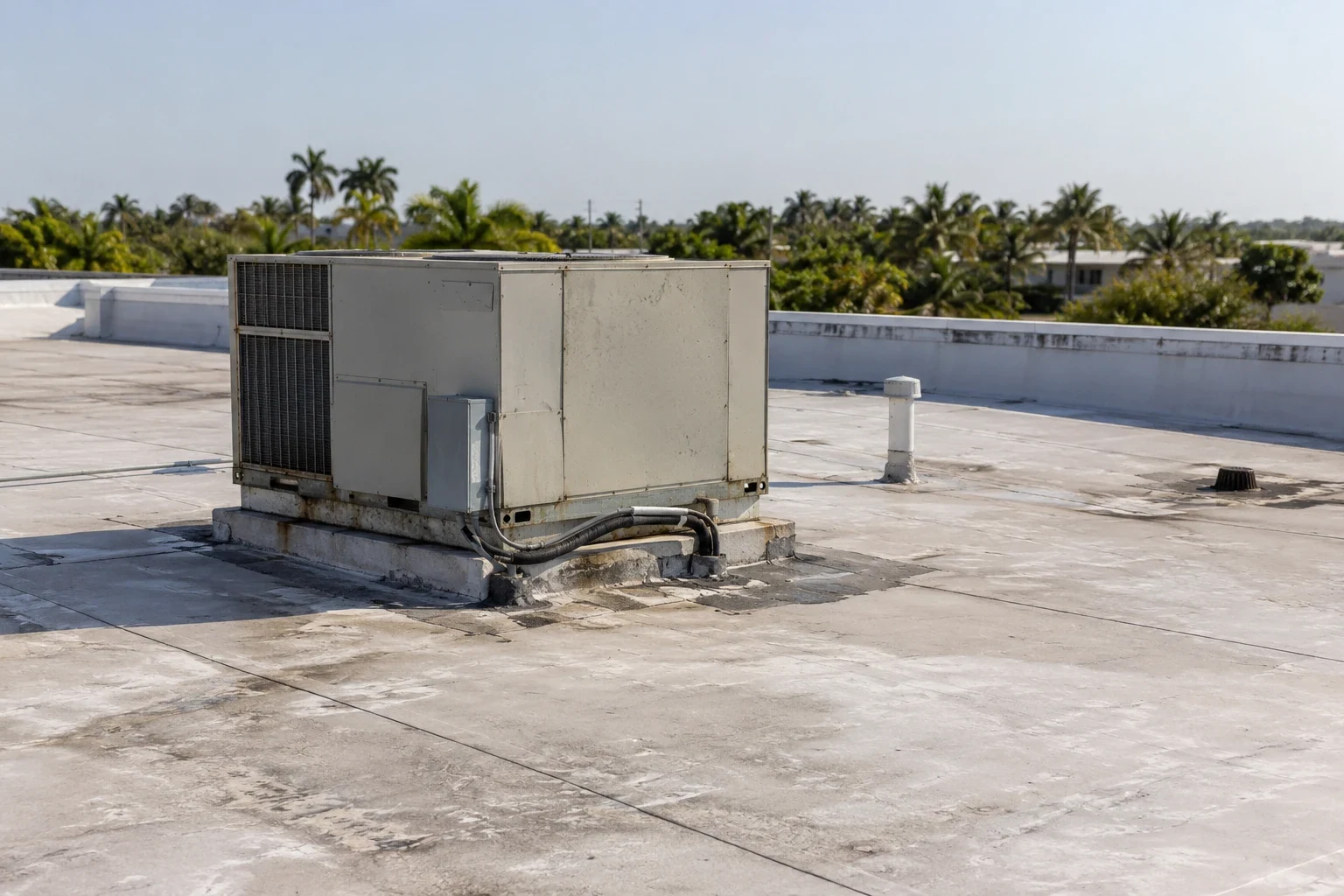
Stafford adds industrial and commercial activity along US 59 and US 90A. At a distribution property, loading and delivery routes affect staging and removal. Process equipment or exhaust can introduce another material compatibility question. We assess the actual substance and operating conditions rather than relying on a broad membrane-family claim. Equipment and roofing tasks are coordinated so the corrected weather connection remains suitable after service work resumes.
Occupied Phases and Immediate Protection
The daily opening is set by forecast conditions, protection requirements and the construction that can be closed within the phase. We agree access, intake controls and affected areas with the facility before removal. Noise, dust and application exposure may limit the suitable work period. An unused room does not automatically resolve restrictions imposed by adjacent operations. The manager receives changes promptly when newly exposed construction affects the planned sequence.
Emergency assistance is available during overnight periods, weekends and holidays. Safe access and actual damage govern the immediate measures practical at the building. Temporary protection can reduce entry while permanent materials or suitable conditions are being established. We describe its limits and record what remains to be completed. The finished correction receives its own material and detail record rather than being confused with the interim measure.
Owner Explanations and Completion Records
A condition report with clear locations helps an owner compare priorities and work proposals. It identifies confirmed defects, examination limits and the reason for each corrective task. Cost drivers such as removal depth, support work, altered drainage and equipment movement are explained through the physical scope. Operating restrictions are presented alongside those construction items. The manager can brief the owner using the roof findings instead of interpreting a collection of unexplained photos.
Completion records retain repaired locations, materials and photographs of the finished connections. Outstanding items involving another trade remain identified. Issued warranty terms govern coverage and applicable repair notices, while insurance decisions remain subject to their separate review. Our condition evidence supports those discussions without predicting their outcome. Preventive visits can then compare drains, details and service routes with the completed work and identify changes before the record becomes outdated.
Commercial Roofing Questions
What does the first examination establish?
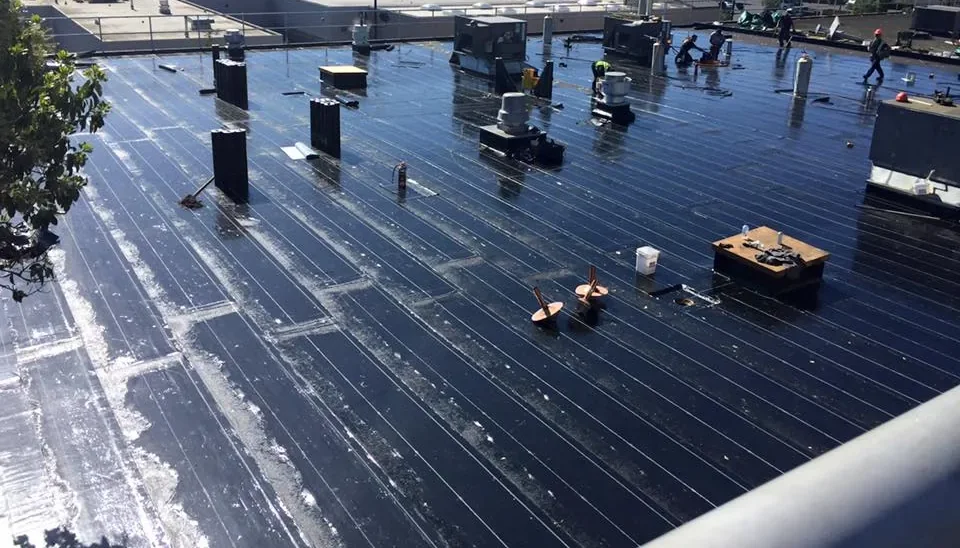
It records accessible sheet, detail, drainage and layer findings, then identifies questions requiring further checks. Interior symptoms and operation are compared with those observations. The proposed correction follows the evidence available.
Why discuss an equipment task during a roof assessment?
Movement, drainage or discharge from equipment can keep damaging the connection. Roofing may correct the weather seal while another task addresses that continuing mechanism. We identify the work boundaries together.
How do you explain an opening that becomes wider during work?
Newly exposed moisture or deteriorated construction is photographed and related to the revised removal boundary. The manager receives the reason before the phase expands. Protection and closure remain part of that decision.
Can a repair plan also support a later replacement decision?
Its measurements, product identification and condition record provide useful inputs. Later findings still need comparison with the current roof. The older record is a baseline rather than proof that conditions have remained unchanged.
What makes the final roof record useful to another manager?
Locations, material details and completion photographs show the correction performed. Known limits and outstanding other-trade items remain visible. Future symptoms can be compared with that record without assuming an undocumented history.
Your Roof Explained Through Its Actual Condition
Call to discuss the property and arrange a measured assessment. We will explain the photos, corrective choices and practical work requirements so you can brief the owner.
Call 555-555-5555 or email [email protected].