
Warehouse Roofing
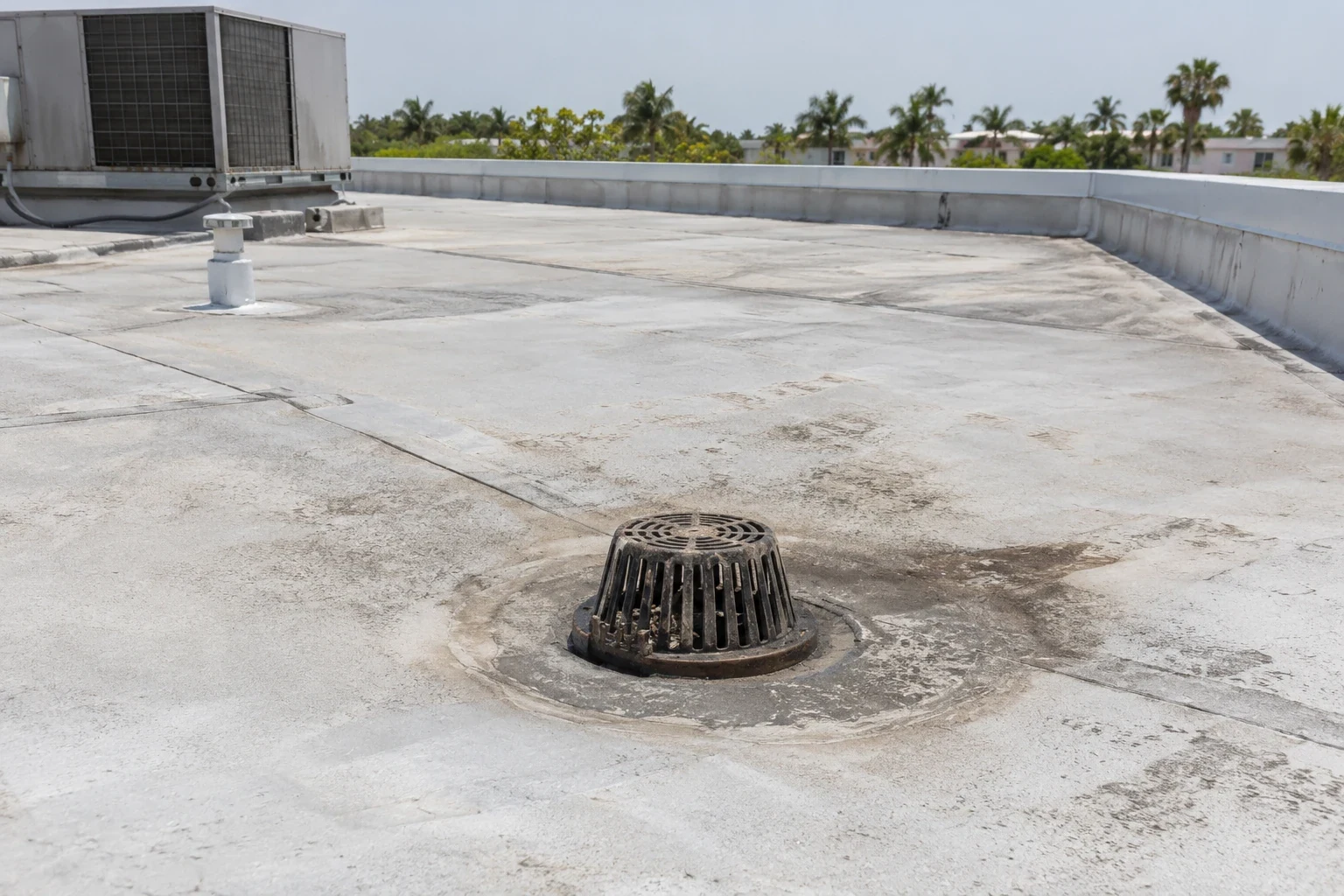
Water held beside a warehouse drain exposes nearby seams for longer than water moving toward an outlet. In Sugar Land, TX, heavy rain and hot roof surfaces make that drainage defect worth investigating before another patch is placed. A property manager may notice a stain above a storage aisle, a dirt ring on the membrane or damp insulation near the sump. We compare those symptoms with outlet condition, roof levels and the assembly beneath the surface. The explanation starts with the physical defect, then shows what a repair can reasonably correct.
Outlet Elevations and Retained Water
A strainer can look clear from a distance while packaging material blocks the opening beneath it. An outlet can also sit above the surrounding surface, leaving a shallow pool that routine cleaning cannot remove. We examine the drain bowl, adjacent seams, overflow provisions and visible discharge arrangement. Water marks are photographed against the roof plan so repeated pooling can be compared after rainfall. Plumbing or supporting conditions may need review before a larger drainage alteration is proposed.
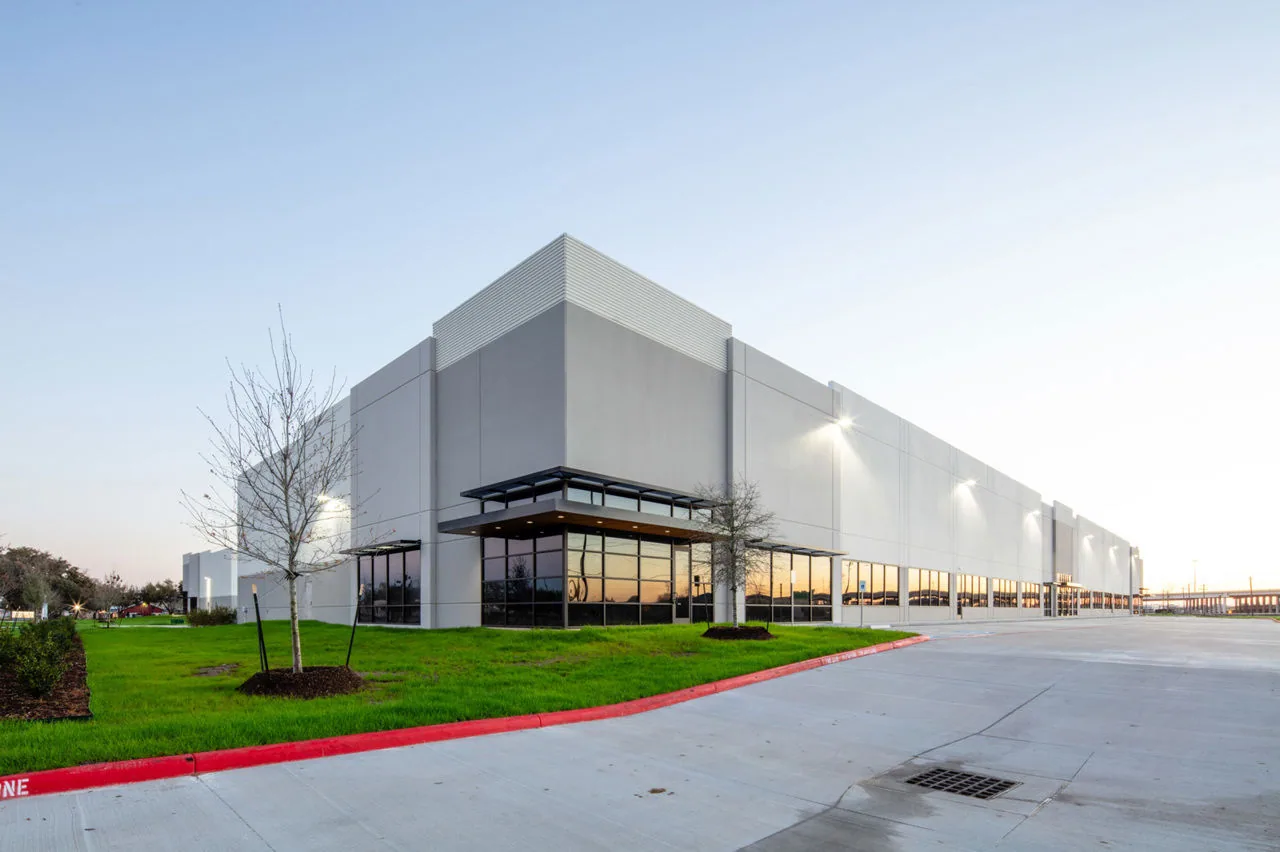
Sugar Land Business Park includes warehouse and distribution space, where loading and stock protection affect access to the roof. At a building there, we coordinate outlet inspection with the manager rather than assume every bay has the same drainage boundary. A tenant wall below does not establish where surface water divides above. Drain and scupper correction follows measured levels and the actual outlet arrangement, with responsibility for downstream piping identified in the scope.
Nearby Stafford adds cross-dock and front-load warehouse development, including Stafford Logistics Park. Those descriptions concern building use, not the material or condition of an individual roof. Inspection still establishes which outlets serve each section and where water can accumulate. For a manager comparing properties in both cities, the drainage photographs should be labeled by building and outlet, while permitting questions follow the actual address.
Moisture Beneath an Intact Surface
A smooth membrane does not establish that the insulation below is dry. Rain may have entered through an earlier opening, or water may travel from equipment or an adjacent wall. Humid air can also produce condensation where it reaches a surface below its dew point, but humidity alone does not identify that cause. The investigation checks interior timing, equipment drainage and accessible roof defects together. That distinction prevents a surface patch from being presented as a remedy for a different moisture mechanism.
Appropriate moisture measurements and an infrared investigation help choose locations for authorized samples. Thermal patterns indicate differences in temperature; they are not a map of confirmed saturation by themselves. Cores show local membrane layers, board thickness and sampled moisture conditions. We relate those observations to the surrounding readings and state where inaccessible areas limit the conclusion. Wet or deteriorated material needs its own correction rather than being concealed beneath a new finish.
Repair Extent and Assembly Suitability
A separated lap with suitable surrounding material may support a localized repair. Repeated openings, incompatible patches or widespread damaged insulation require a broader comparison. We identify the existing membrane before choosing primers, patch sheets or weld methods, then examine the substrate needed to support them. A coating requires compatible material, preparation and adhesion evidence. A recover also requires review of retained layers, added weight, attachment and applicable project requirements.
The manager receives the repair boundary and the reason for it. A distribution building may prioritize protection over an active picking aisle, while a production building adds exhaust and process restrictions. Those operating differences affect phasing without changing what makes a substrate suitable. Replacement becomes a stronger option where local repairs leave unresolved deterioration or an unsuitable assembly. The comparison includes inspection limits so the owner can distinguish a measured finding from a condition that remains uncertain.
Related Roofing Pages
Sugar Land Business Park
How the work is scoped, documented and phased on occupied Sugar Land buildings.
Roof Drains and Scuppers
What we check on the roof, what we recommend and how the crew keeps the building open.

Stafford
Conditions, options and next steps for commercial buildings in Fort Bend County.
A Clear Explanation of the Warehouse Roof
Call for an inspection with photos and plain explanations of moisture, drainage and repair choices, so you can brief the owner on the physical problem.
Call 555-555-5555 or email [email protected].
Commercial Roofing Questions
Straight answers to the questions building owners and managers ask us most often.
Does a dirt ring mean the warehouse drain is too small?
The ring establishes where water remained, not why. Debris, outlet elevation, surface geometry and piping capacity need separate checks. We record the drainage path before deciding whether cleaning, roof work or a plumbing review is appropriate.
Can inventory remain under the section being repaired?
Occupancy is reviewed against the task. A small surface repair may require limited protection, while removal above sensitive stock can require relocation or a closed aisle. The operator receives the planned restrictions before work starts.
Why investigate a damp aisle after several dry days?
Retained rainwater, equipment drainage and condensation can each produce delayed symptoms. We compare the timing with roof defects and operating conditions. A dry-day drip alone cannot establish which mechanism is responsible.
Would a reflective coating correct wet insulation?
A reflective finish changes the surface, not the condition of deteriorated layers below. Moisture extent and substrate suitability must be assessed first. Damaged material and drainage defects require correction before a compatible coating is considered.
What makes a warehouse reroof cost more than an isolated patch?
Removal depth, damaged support, drainage changes, attachment requirements and access all increase the scope. Interior protection and stock movement also affect timing. We show those drivers with photographs so the owner understands what the added work addresses.
Surface Aging and Service Routes
Heat exposure changes the demands on a warehouse roof even without an active leak. Sugar Land recorded a high of 109 F in August 2023, but air temperature is not the measured surface temperature of a particular membrane. We inspect for cracking, displaced flashing and deteriorated sealant, especially near equipment and existing repairs. Surface color and reflectivity affect absorbed sunlight; insulation and the complete assembly influence heat transfer indoors. Selecting a lighter finish still requires compatibility and assembly review.
Service traffic creates a different wear pattern. Paths between a hatch, condenser and exhaust fan deserve examination for punctures and compressed board. Suitable walkway protection must fit the chosen system and remain clear of drainage paths. Around the US 59 corridor, delivery access can also constrain where material is hoisted and stored. A written work sequence identifies the route, loading restrictions and interior areas needing protection before materials arrive.
Stock Protection During Removal
Opening a warehouse roof creates exposure above goods that may not tolerate dust or water. The daily removal area is set against the forecast, protection method and the time needed for closure. Stock below may need relocation or shielding, with the operator approving any aisle restrictions. Roof loading and temporary material storage follow the approved plan. An unexpected deck defect can change the sequence, so the manager needs a contact and a decision path before tear-off starts.
Temporary tie-ins and repaired details are photographed at the end of the shift. After heavy rainfall, drainage behavior is checked against the observed pre-work condition rather than judged only by an absence of complaints. Emergency calls can be made through nights and holidays, with safe access and practical protection assessed for the circumstances. The final record identifies installed materials, unresolved items and locations to revisit. That gives the owner an explanation of both the completed work and its limits.
Warehouse work has to protect stored goods as well as the roof opening. We locate racks and inventory beneath the repair area, agree on interior covers and keep removed materials controlled during handling. The roof walk checks the suspected water path, nearby seams and drains, with the reported location compared against the actual slope and outlet route. If the water has affected insulation, the removal boundary is supported by readings or selected openings. Closeout documents the repaired area and any remaining interior cleanup or stock review assigned to operations.
How a Roof Project Runs
Every roof we take on moves through the same six steps:
01
Roof Walk
We walk the whole roof and photograph the membrane, seams, flashings, drains and equipment.
02
Moisture Check
Readings and core cuts show what is wet below the surface before anyone prices a repair.
03
Written Findings
You get plain-language findings, photos and the options that fit the roof.
04
Scope and Price
One written scope covers the system, the details, drainage changes and the price.
05
Scheduled Work
Crews work around tenants, deliveries and weather, closing the roof every night.
06
Closeout
We walk the finished roof with you and hand over photos and warranty paperwork.