
Hail Damage Roof Repair
A dent in a metal accessory can show that an impact occurred without establishing whether the nearby membrane leaks. A small split in another area may be more important to water control even when it is difficult to see from the ground. Hail damage roof repair in Sugar Land, TX examines those conditions separately. We document observed marks and defects, then explain suitable repair based on their function and the retained assembly.
Regional hail reports provide weather context rather than a map of damage at each building. The roof material, impact condition and connection details influence what the inspection finds. We compare the property evidence with earlier records where available. The owner receives a measured scope that distinguishes verified openings, suspect areas and appearance concerns instead of assigning the same replacement decision to every marked surface.
Impact Observations Across the Roof
We locate visible marks on metal, membrane and exposed accessories, pairing close photographs with roof-plan references. Different materials can respond differently to the same event. A dent can remain water-shedding, while a damaged seal or split can create an entry route. The report identifies the observed effect rather than using mark count alone as a repair quantity. Where cleaning is needed to examine a suspect mark, the method suits the material and preserves useful evidence. The manager receives the finding before any reconstruction conceals it, with its location available for an insurer or another technical reviewer.
Roof inspection considers seams, flashing and earlier patches along with the open field. Some defects need close examination or suitable testing before their significance is assigned. Inaccessible areas remain within the stated limits. The report does not infer that an uninspected roof section has the same condition as the nearest visible accessory.
Membrane Condition and Functional Defects
Cracks, punctures and exposed reinforcement are examined in the context of the actual sheet. Aging, earlier treatment and local geometry can affect the available repair surface. We identify the membrane before specifying a compatible bond or weld. A white sheet or patch does not establish one chemistry or one joining method.
Puncture repair includes enough sound material to create a suitable connection. Where the damaged area cannot support that bond, removal reaches a supported boundary. The estimate explains why the scope differs from the visible opening. It also records any uncertainty about damage origin rather than assigning all cracking discovered during the visit to hail.
Metal Details and Equipment Interfaces
Metal components are checked for changes in attachment, joints, finish and water-shedding function. A distorted section may need reconstruction even where it remains attached. Other dents may be appearance observations without a verified water route. We document those distinctions so the owner can understand which work corrects a functional problem.
Perimeter metal repair evaluates the connection beneath the exposed surface where needed. Equipment covers, fins or panels belong to the appropriate service trade. Roofing addresses the compatible curb and flashing interface. A completed roof patch does not establish acceptance of a damaged rooftop unit, and the report keeps those responsibilities separate.
Related Roofing Pages
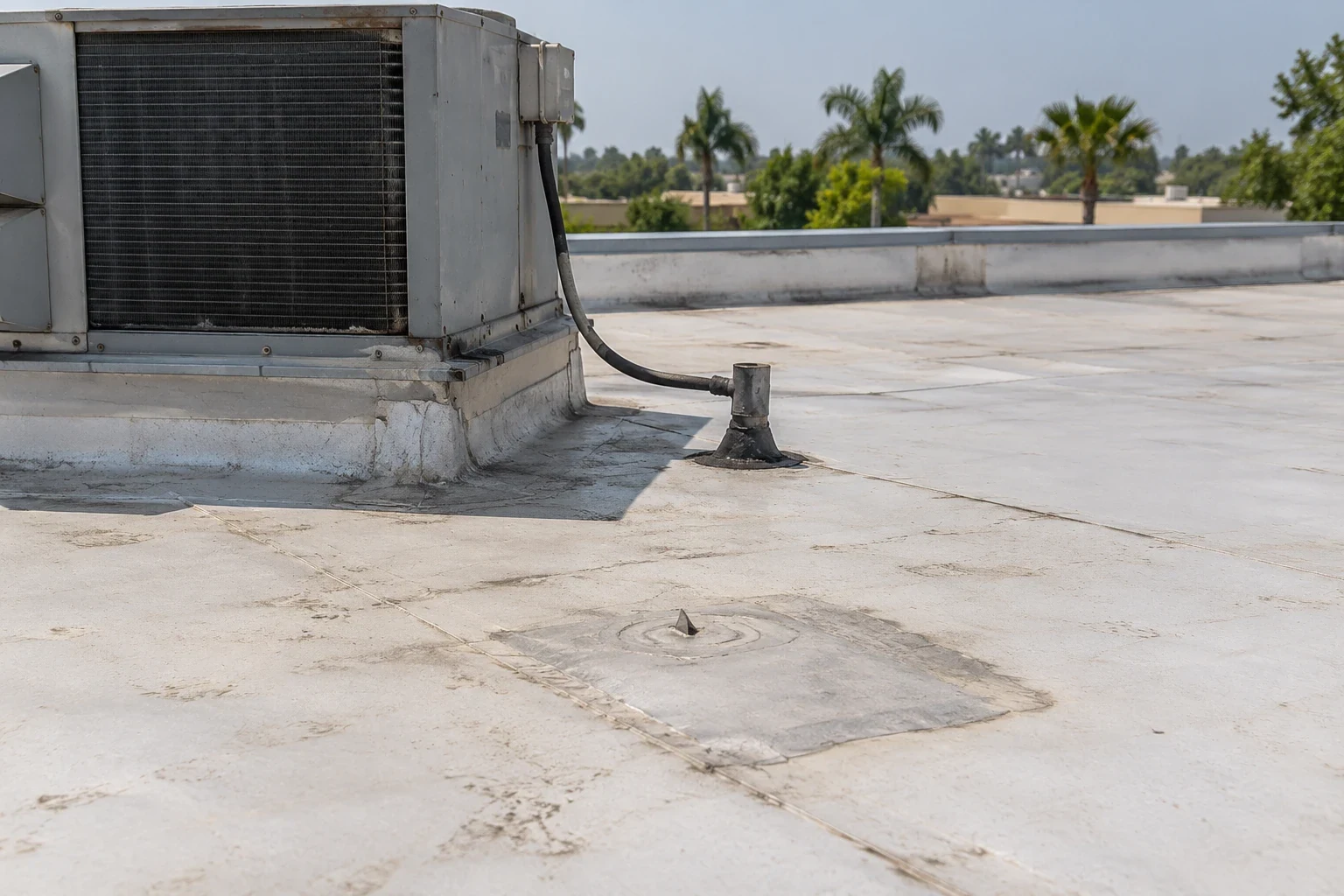
Roof Membrane Puncture Repair
How the work is scoped, documented and phased on occupied Sugar Land buildings.
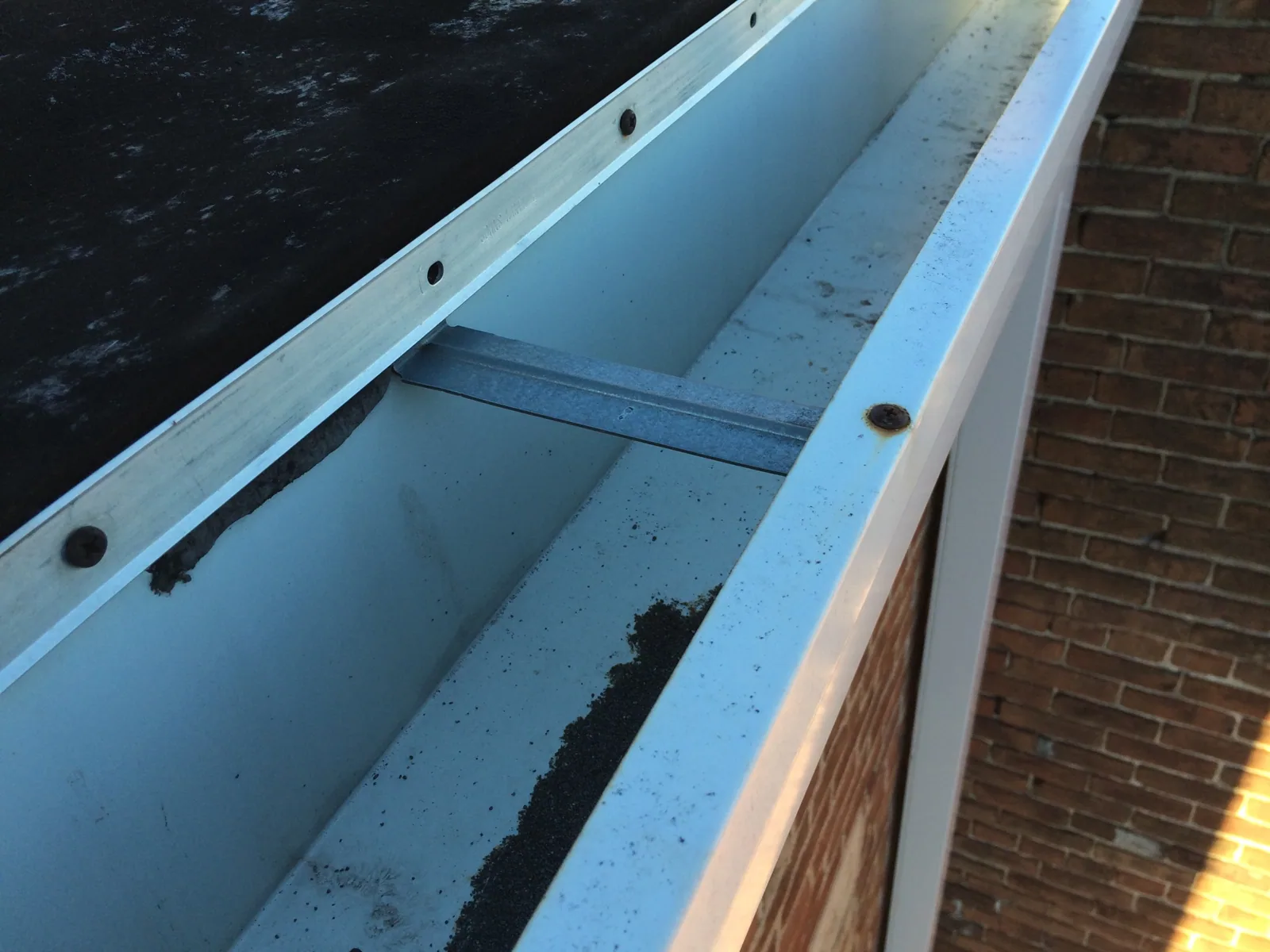
Edge Metal, Coping and Gutters
What we check on the roof, what we recommend and how the crew keeps the building open.
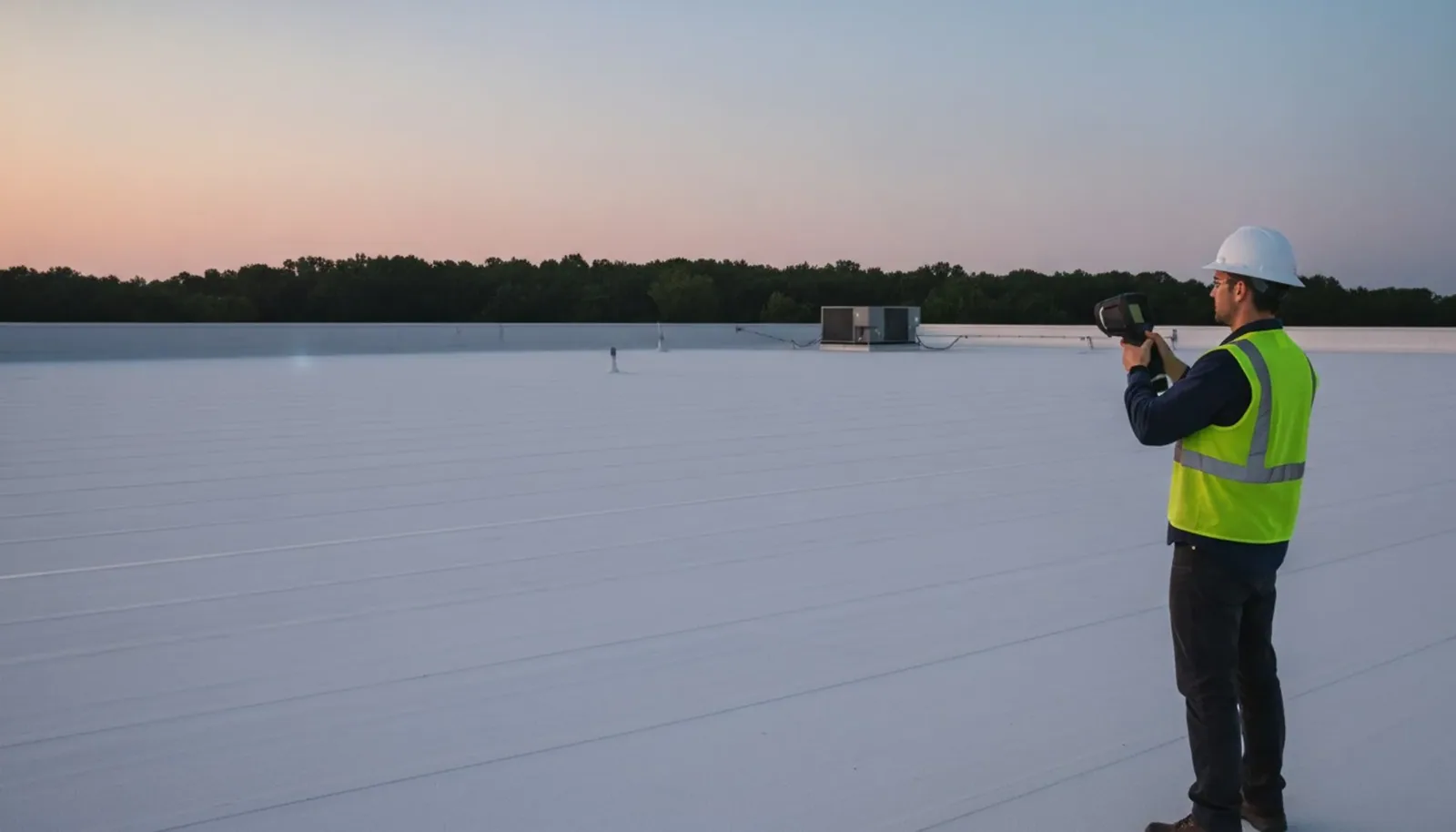
Infrared Roof Moisture Surveys
Conditions, options and next steps for commercial buildings in Fort Bend County.
Separate the Impact Marks From the Roof Repair Needs
Call for a documented assessment. We will explain functional defects, moisture and repair findings with photos so the owner can review a suitable hail-related scope.
Call 555-555-5555 or email [email protected].
Commercial Roofing Questions
Straight answers to the questions building owners and managers ask us most often.
Does every hail dent require a roofing repair?
The component's function and condition need evaluation. Some marks affect appearance while others alter joints, finish or water control. The report distinguishes those findings.
Can regional hail size establish what hit our roof?
A regional report supplies context rather than a property measurement. Building observations and dated records support the assessment. The specific impact history may remain uncertain.
Does a membrane rating prove the roof is undamaged?
Ratings describe performance under stated test conditions. The installed roof still needs inspection after a reported event. Attachment, details and actual exposure can differ.
How is a small opening evaluated for concealed water?
Interior reports, suitable testing and selected samples inform extent. Findings remain tied to their locations and limits. The removal boundary is checked as materials are exposed.
When should replacement be compared with repair?
Broad defects, unsuitable retained material or extensive moisture can change repair value. The comparison uses complete measured scopes. Hail marks alone do not establish the decision.
Moisture Beneath an Impact Opening
If an opening admitted water, its visible size does not establish the affected insulation extent. Interior reports and suitable tests help investigate that question. Samples record their layers and local moisture condition. Additional evidence informs the surrounding boundary rather than a presumption that everything outside the hole remained dry.
An infrared moisture survey can guide selected confirmation under useful construction and weather conditions. Thermal patterns can have causes other than water, including surface and equipment differences. The report distinguishes verified moisture from interpreted extent. Removal limits are checked during exposure, with changed findings documented before affected reconstruction is completed.
Event Records and Cause Limits
The Houston-area May 2019 hail history provides one regional reference for owners reviewing older records. It does not establish impact size or roof damage at a Sugar Land property. We use dates, property photographs and any prior assessment to organize the actual building timeline. A current mark can remain undated if the available evidence cannot connect it to one event.
Claim documentation preserves the observed condition and the supported technical scope. Coverage review and policy interpretation remain with the appropriate insurance professional and insurer. Missing earlier photographs are stated as a limitation. The repair recommendation follows functional findings rather than being enlarged to match a presumed coverage outcome.
How a Roof Project Runs
Every roof we take on moves through the same six steps:
01
Roof Walk
We walk the whole roof and photograph the membrane, seams, flashings, drains and equipment.
02
Moisture Check
Readings and core cuts show what is wet below the surface before anyone prices a repair.
03
Written Findings
You get plain-language findings, photos and the options that fit the roof.
04
Scope and Price
One written scope covers the system, the details, drainage changes and the price.
05
Scheduled Work
Crews work around tenants, deliveries and weather, closing the roof every night.
06
Closeout
We walk the finished roof with you and hand over photos and warranty paperwork.
Compatible Repair and Broader Options
A local roof repair can be suitable where sound material and attachment support it. Scattered or broad defects may require a different scope if preparation, moisture or retained condition makes isolated patches less useful. The report explains that comparison in terms of measured areas and reconstruction needs. Building floor area is not used as the damaged roof quantity.
Replacement is evaluated where the condition justifies it, without treating the presence of hail marks as an automatic answer. Product and warranty information can contain relevant requirements specific to the issued documents. The owner receives those limits alongside the observed condition. A material rating alone does not establish that this roof is undamaged or that every mark requires removal.
Regional Work Planning and Follow-Up
At First Colony's retail setting near I-69/US 59 and SH 6, the building team identifies a suitable service entrance and delivery route before repair materials arrive. Roof assessment and reconstruction are coordinated with the actual occupied spaces below. We agree on debris handling and daily closure for the selected work area. Mechanical restrictions are approved by the responsible facility team rather than imposed through arbitrary intake covering.
A Stafford commercial property receives its own work window and jurisdiction review. The repair record locates the completed details and any item still assigned to another trade. Maintenance compares later observations with those photographs and product records. New equipment activity or weather is documented separately, helping the manager evaluate a future complaint without assuming every later defect belongs to the same hail event.
Where examination finds a separated weather connection, include its flashing repair with the confirmed damage scope. The Stafford service area still needs a particular address and roof record. The regional hail report dates the investigation; the observed construction supports each proposed correction.
Hail assessment separates impact marks from defects that affect water shedding or system integrity. We map representative areas, inspect penetrations and edges, and look for cuts, fractures or displaced components consistent with the reported event. A dent in metal or a surface mark on a membrane does not alone establish a leak. Where the roof assembly or policy process requires more evidence, photos, measurements and selected tests document the basis for the repair boundary. The resulting scope identifies immediate protection, permanent corrections and any area that remains under observation.