
Roof Flashing Failure Repair
A flashing can separate at a corner while the main roof sheet remains sound. Water enters behind the transition, follows a concealed route and appears inside well away from the opening. Roof flashing failure repair in Sugar Land, TX examines that connection and the movement affecting it. We document the defect, investigate the retained materials and explain the reconstruction needed for a suitable detail.
Flashing is not one interchangeable material applied wherever the field membrane stops. Walls, pipes, curbs and edge conditions have different geometry and exposure. The repair follows the actual roof system and the component it connects to. The owner receives photographs showing the water-control boundary and any related trade work outside the membrane repair. The estimate also identifies the proposed opening and daily closure, allowing the manager to review both the permanent detail and the sequence needed to construct it over occupied space.
Termination and the Upper Water Route
The upper edge of flashing needs a suitable termination within the specified assembly. We examine attachment, counterflashing where present and the wall or component above it. Water can enter an upper joint and pass behind otherwise intact roof flashing. That route needs investigation before a surface bead is selected as the entire repair.
Leak investigation compares interior timing with those observed connections. A stain beside a wall does not establish whether the opening belongs to roofing, masonry, glazing or equipment. The report identifies the verified defect and any unresolved interface. This keeps the owner from receiving a roof patch that leaves the actual upper source outside every assigned scope.
Corners and Recurring Movement
A corner changes the direction and restraint of the roof detail. Movement can concentrate there when the assembly lacks the required support or allowance. We inspect open seams, strained material and earlier patches, then compare them with the surrounding geometry. A recurring opening may need reconstruction rather than another small patch over the same stressed point.
Compatible penetration and curb flashing uses the selected system's preparation and forming methods. Product instructions govern how accessories connect to the retained membrane. A flexible material does not mean every unsupported gap can be bridged. The repair identifies where sound substrate and suitable termination must be restored before the flashing is installed.
Pipe Boots and Service Supports
Pipes can move or operate at temperatures relevant to flashing selection. We identify their function through the building team and inspect the upper closure, surrounding membrane and support. A loose service line cannot rely on the roof boot to carry its load. The appropriate trade evaluates that condition before the roofing transition is rebuilt.
Service support work coordinates structural, mechanical, electrical and roofing duties where applicable. Equipment movement and line routing are resolved through the agreed plan. New penetrations receive a suitable detail for the actual roof rather than a boot chosen only by approximate diameter. Photographs locate the completed connection and any related component still awaiting its assigned repair.
Related Roofing Pages
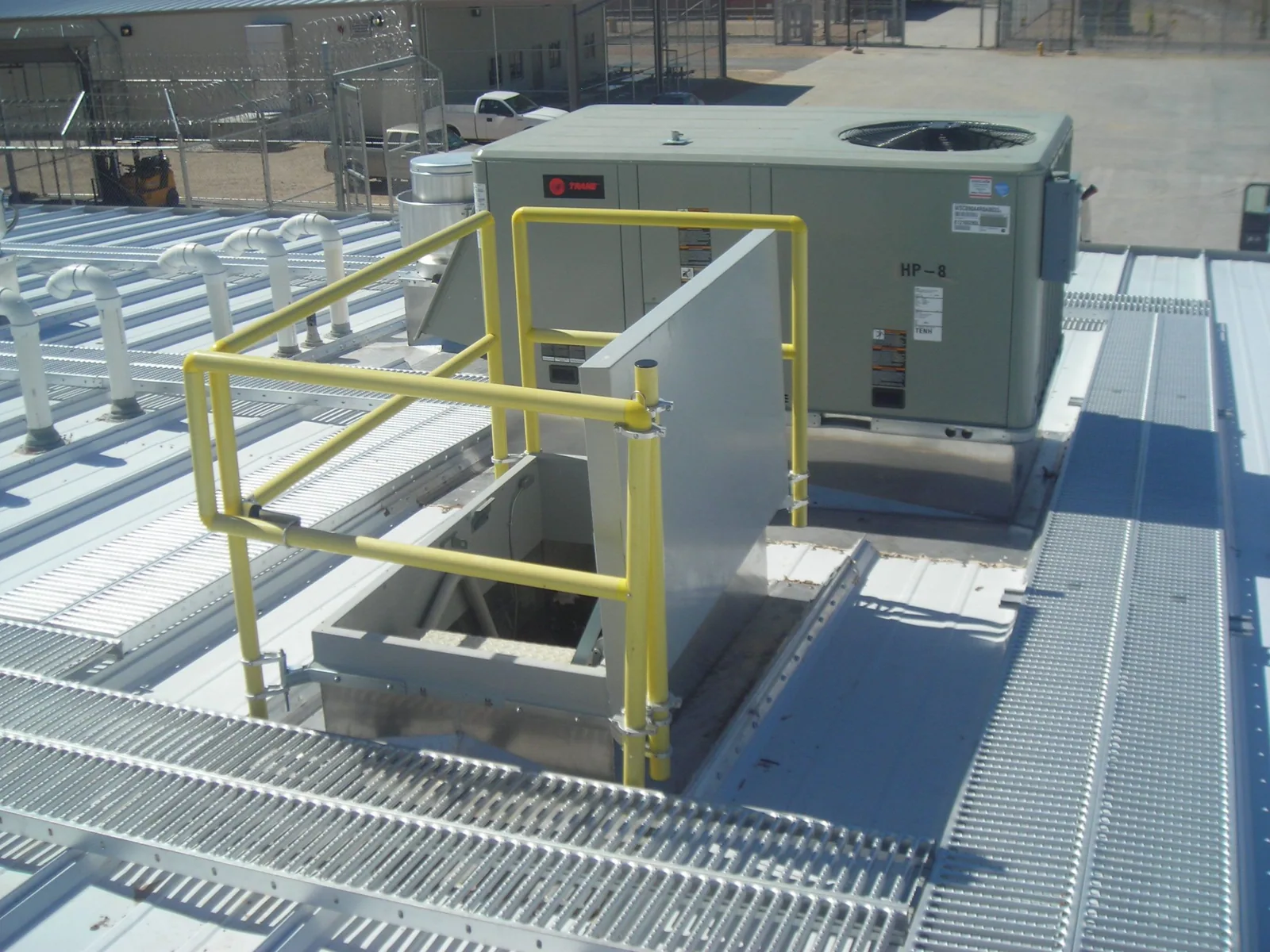
Rooftop Equipment Curbs and Supports
How the work is scoped, documented and phased on occupied Sugar Land buildings.
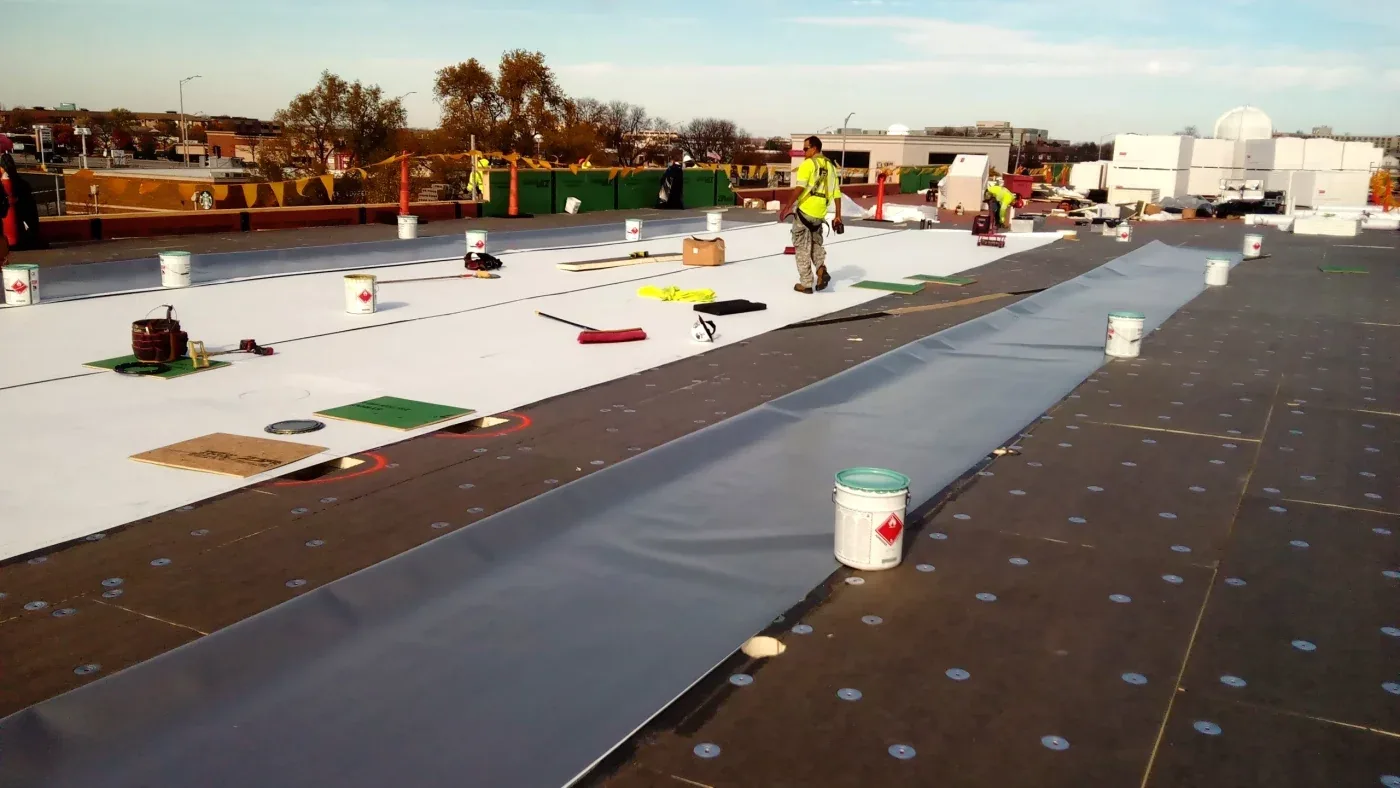
Commercial Roof Repair
What we check on the roof, what we recommend and how the crew keeps the building open.
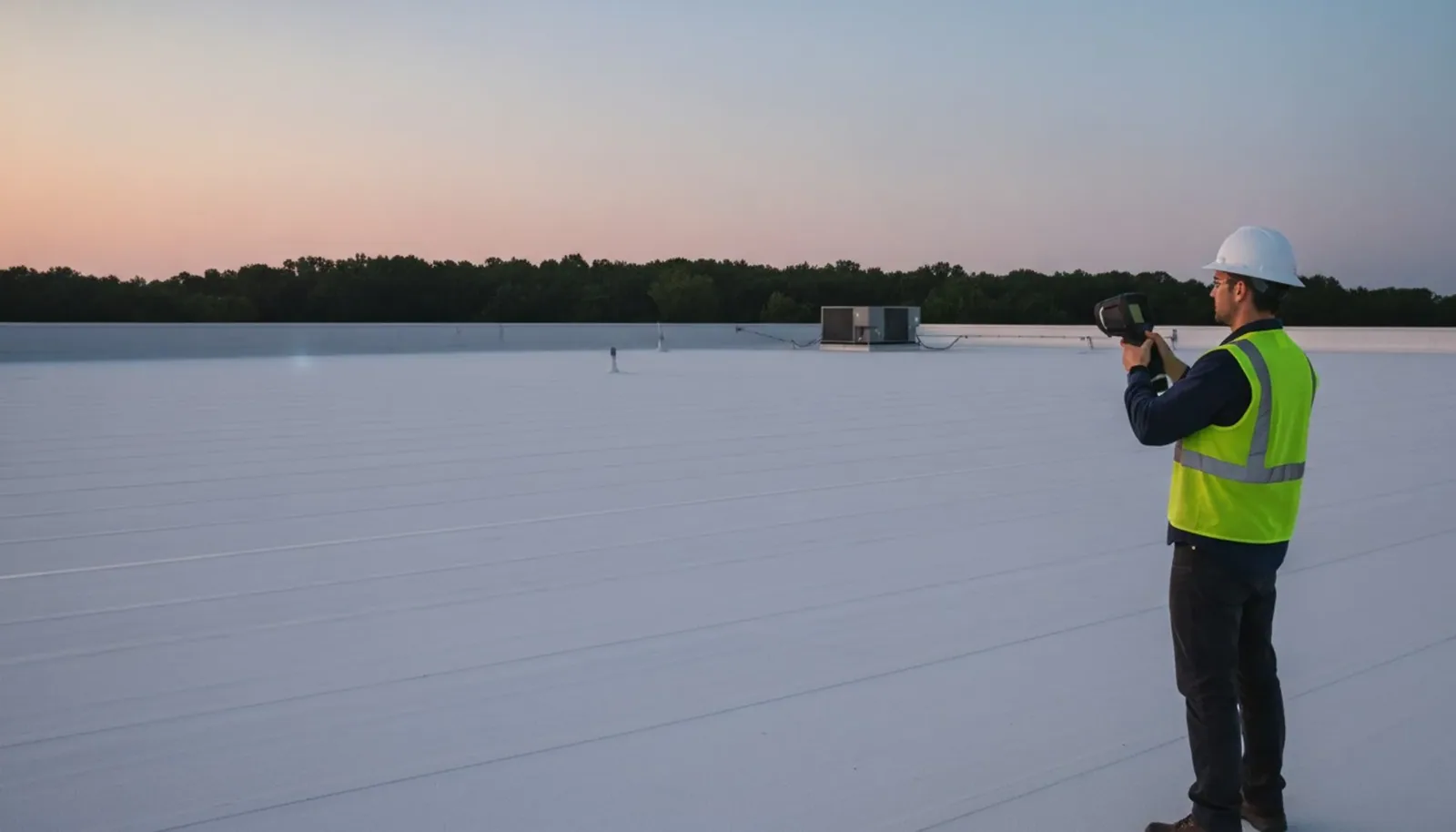
Infrared Roof Moisture Surveys
Conditions, options and next steps for commercial buildings in Fort Bend County.
Find the Failed Connection Before Rebuilding the Flashing
Call for a roof detail assessment. We will explain the water route, movement and retained-material findings with photos and identify suitable repair work.
Call 555-555-5555 or email [email protected].
Commercial Roofing Questions
Straight answers to the questions building owners and managers ask us most often.
Can sealant correct every failed flashing?
The detail and source need inspection first. Missing support, movement or an upper water route can require reconstruction or another trade. Sealant is selected where the suitable detail calls for it.
Why can water appear far from the flashing opening?
Concealed layers and building geometry can carry it before it reaches the interior. Timing and mapped observations help connect the route. The stain alone does not locate the entry point.
Does a recurring corner opening require a larger patch?
The movement and support need evaluation before patch size is chosen. A rebuilt detail may be necessary. The scope explains the cause supported by the findings.
Who repairs a service line that strains a boot?
The assigned equipment or support trade evaluates its component. Roofing rebuilds the compatible water-control interface. The work sequence coordinates both responsibilities.
What should be kept for the next inspection?
Retain location photographs, material information and any unresolved trade item. Record later equipment or service changes. The manager can then compare new conditions with the completed detail.
Materials and Preparation at the Bond
Thermoplastic, elastomeric and asphalt-based roofs use different connection methods. Earlier coatings or residue can also change the surface available for repair. We identify those conditions before specifying cleaning, primer, adhesive or welding. Where deteriorated material cannot provide a suitable connection, removal reaches a supported boundary instead of forcing another product onto the remaining surface.
Membrane reconstruction includes the surrounding area needed for a sound flashing bond. Actual substrate temperature, moisture and weather are checked against the selected instructions. Daylight is not a universal adhesive cure requirement. The work plan includes the necessary preparation and interval so a short operating window does not lead to an unsuitable connection hidden beneath the finished detail.
Water Beneath the Failed Transition
A small flashing opening can admit water beyond its visible edges. We investigate suspect insulation and supporting layers where their condition affects the scope. Samples establish findings at specific locations. The surrounding removal extent uses appropriate additional evidence and remains subject to checking during exposure.
An infrared moisture survey can guide selected confirmation when the roof and weather provide useful contrast. Surface differences or equipment can produce other patterns, so thermal images are not moisture proof on their own. The report explains verified wet material and interpreted boundaries. If the opened assembly differs from the preliminary findings, the owner receives photographs and a revised reconstruction explanation.
How a Roof Project Runs
Every roof we take on moves through the same six steps:
01
Roof Walk
We walk the whole roof and photograph the membrane, seams, flashings, drains and equipment.
02
Moisture Check
Readings and core cuts show what is wet below the surface before anyone prices a repair.
03
Written Findings
You get plain-language findings, photos and the options that fit the roof.
04
Scope and Price
One written scope covers the system, the details, drainage changes and the price.
05
Scheduled Work
Crews work around tenants, deliveries and weather, closing the roof every night.
06
Closeout
We walk the finished roof with you and hand over photos and warranty paperwork.
Perimeter Metal and Drainage Connections
A wall cap or edge-metal assembly can conceal part of the flashing attachment. We examine accessible support and identify where opening is needed to understand the failed connection. Perimeter repair coordinates the metal, membrane and underlying blocking. Replacing the outer cap cannot resolve unsuitable support below it.
At a drain or scupper, the detail also connects to the water-discharge path. Outlet work separates the membrane connection from downstream piping or capacity concerns. An intact bowl can remain restricted below the roof, and coating a nearby surface does not clear it. The repair scope states those responsibilities so the completed flashing is not mistaken for acceptance of the entire drainage system.
Local Access and Follow-Up Records
At Sugar Land Town Square, shops, offices and hotel operations can require different notices beneath a flashing repair. The building team identifies the affected entrance or room and the operating window before a wall or curb detail is opened. We plan unloading, debris handling and suitable closure with those requirements. Work near ventilation follows the facility's approved mechanical controls.
For a First Colony property, the repair record locates each transition and gives the manager photographs for later comparison. Service routes and equipment changes are noted because they can affect the rebuilt connection. Maintenance checks look for movement, residue and changed drainage alongside the earlier work. A later complaint is investigated from that history rather than treated automatically as failure of the last patch.
A junction can meet a damaged field seam or adjoining punctured membrane. Examine both before selecting the preparation boundary. At a First Colony building, put the measured correction and its supporting material on the same detail reference used for the initial finding.
A rebuilt flashing is inspected where it meets the field membrane, wall or curb, because water can bypass a sound-looking face through an incomplete termination. We document the substrate condition, fastening and tie-in width before closing the detail. If adjoining cladding or equipment work limits access, the remaining interface is listed for coordination instead of being hidden beneath a surface bead. At a separate South Houston property, the roof record needs its own edge, wall and curb observations before flashing work is scoped.