
Commercial Roof Seam Repair
An open channel in a roof seam can admit water while the sheet on either side remains intact. A patch may close that opening briefly, but the failure can return if contamination or detail movement was never addressed. Commercial roof seam repair in Sugar Land, TX examines both the bond and the condition around it. We explain the observed failure and select a connection method compatible with the retained assembly.
A seam repair is not one procedure applied to every commercial roof. Thermoplastic welds, elastomeric tape or adhesive connections and asphalt-sheet laps have different requirements. Earlier coatings and weathering can change the preparation available on an aged surface. The owner receives a scope tied to those findings rather than a repair selected solely because the opening looks small.
Material Identification and Repair History
Available product records and inspection help identify the membrane and earlier treatments. Color alone cannot distinguish every white sheet or coating. The repair history may reveal a material change at a patch or addition. We record that difference before choosing cleaning, primer, welding or another joining method.
Roof inspection also examines adjoining flashing and attachment. A visible seam opening may be part of a broader strained connection rather than an isolated bond defect. Where identification remains uncertain, the proposal states what testing or removal is needed to establish a suitable detail. Another incompatible layer is not selected simply to avoid answering that question. Where a trial repair is used to check preparation, its location and method are recorded before field work is extended. The results inform that particular connection. They do not excuse different preparation elsewhere, so the work plan identifies which areas share the tested conditions and which require another evaluation.
Heat-Welded Connections
For a compatible thermoplastic roof, preparation and field welding follow the selected product instructions. Trial welds help establish settings for the actual material and conditions. Roof temperature, contamination and weather can affect the process. Settings from an earlier job are not treated as proof of a suitable connection here.
TPO and other thermoplastic sheets still differ in their specific repair requirements. Aged material can need approved cleaning or another method, and deteriorated areas may require removal. After the appropriate cooling interval, checks identify channels or incomplete connections requiring correction. The record locates those checks and repairs so closeout provides evidence beyond a seam that merely appears continuous.
Tape, Adhesive and Asphalt Laps
EPDM seam work uses the compatible system's joining method, with preparation and primer requirements checked for the retained surface. Moisture, dust and previous treatments can interfere with adhesion. The product's application and cure conditions govern the work rather than a general rule that sunlight alone makes a bond suitable.
Asphalt-based lap repair likewise follows the identified sheet and approved connection method. Deteriorated reinforcement or an unsuitable supporting layer can change the removal boundary. The scope explains which materials can remain and where reconstruction is needed. A surface coating cannot substitute for rebuilding a lap that lacks a suitable bond or support beneath it.
Related Roofing Pages
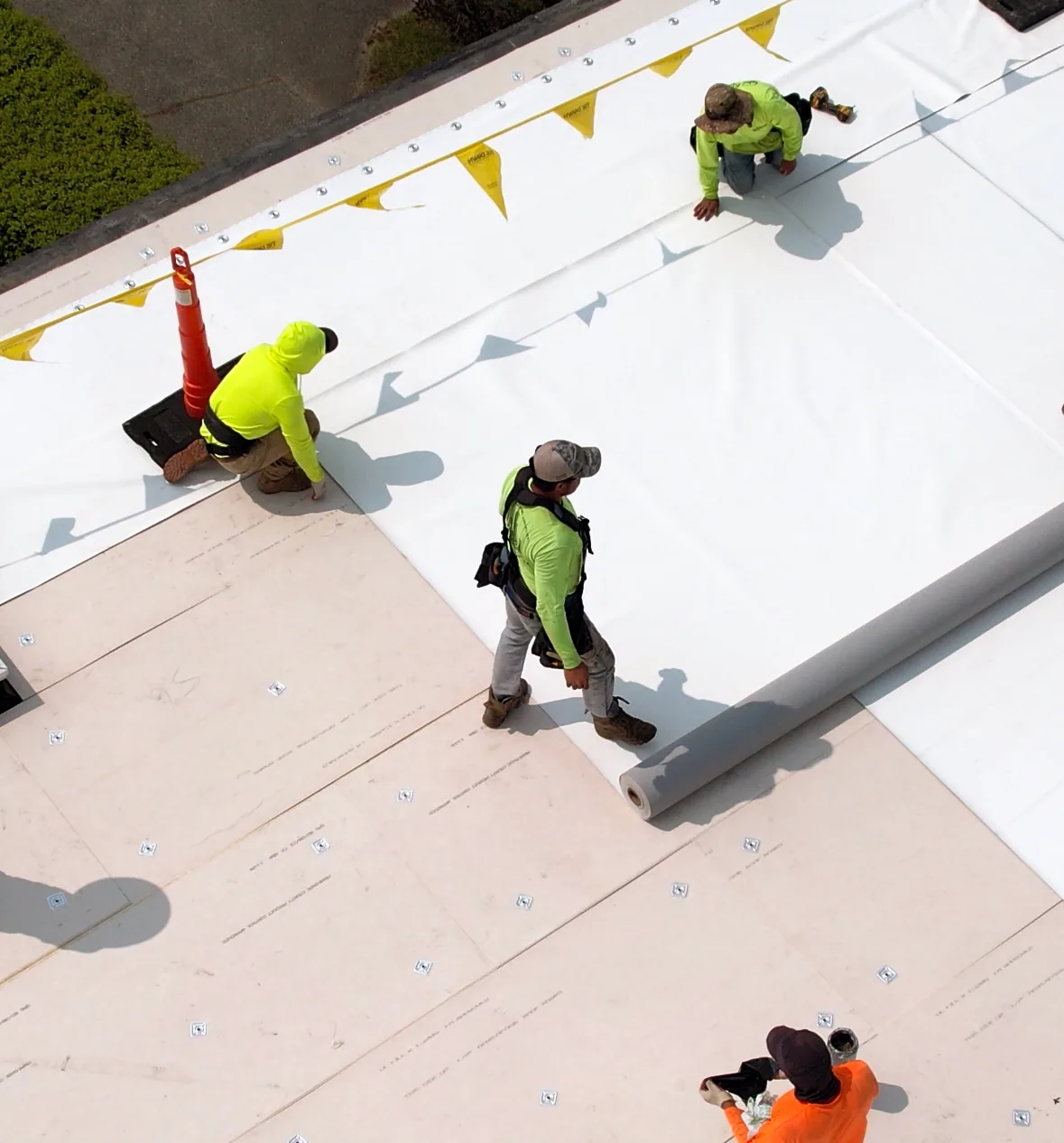
TPO Commercial Roofing
How the work is scoped, documented and phased on occupied Sugar Land buildings.
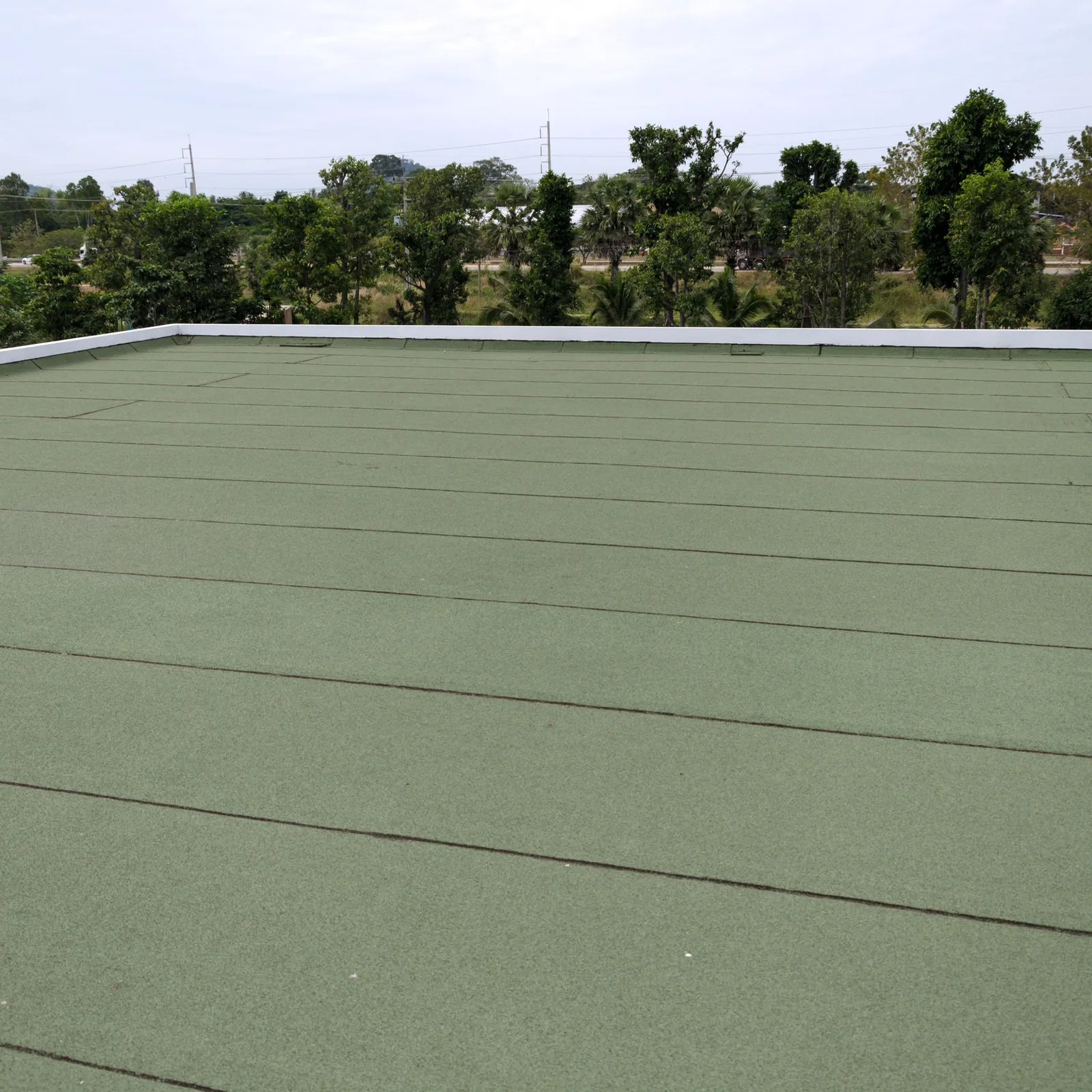
EPDM Commercial Roofing
What we check on the roof, what we recommend and how the crew keeps the building open.
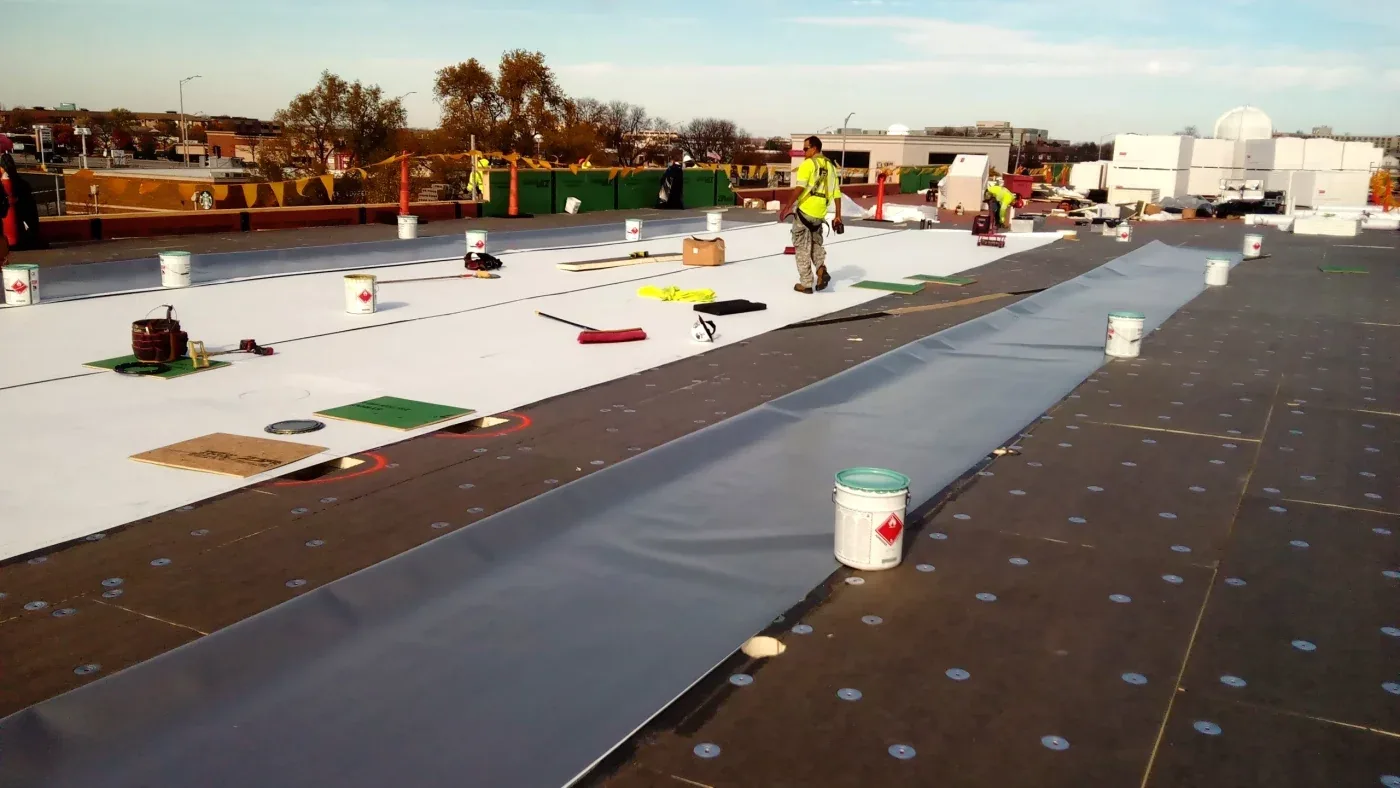
Commercial Roof Repair
Conditions, options and next steps for commercial buildings in Fort Bend County.
Identify the Bond and the Detail Behind the Opening
Call for a seam assessment. We will explain membrane, movement and moisture findings with photos and identify a suitable repair scope for the owner.
Call 555-555-5555 or email [email protected].
Commercial Roofing Questions
Straight answers to the questions building owners and managers ask us most often.
Can every white membrane receive the same welded patch?
The material and surface condition need identification first. Products and earlier treatments can differ. Preparation and joining follow the compatible repair system.
What makes a seam opening recur?
Movement, preparation or unsuitable retained material can contribute. The observed connection and surrounding detail need investigation. We address the supported cause rather than increasing patch size without explanation.
Does a seam repair dry the insulation beneath it?
Closing the entry point does not establish that retained layers are dry. Suitable testing evaluates suspect moisture. The removal scope follows those findings.
Can a coating replace a failed seam bond?
The seam needs its appropriate compatible repair first. Coating eligibility requires additional condition and adhesion review. A film over an open connection is not equivalent to reconstruction.
What evidence should remain after the work?
Keep material identification, relevant preparation and seam checks, and detail photographs. Record any unresolved supporting concern. Later inspections can compare the connection with that evidence.
Recurring Strain and Attachment
A seam can open where the sheet is pulled by movement at a wall, curb or attachment line. We compare the location of recurring defects with the surrounding geometry and earlier repairs. The observation may justify investigation of restraint or supporting conditions. It does not establish a structural cause without the appropriate evidence and review.
Detail reconstruction addresses confirmed conditions rather than repeatedly patching the same channel. If the retained sheet or attachment cannot support the proposed connection, removal extends to a sound boundary. Structural or equipment questions go to their assigned reviewers. The owner sees those responsibilities before a seam patch is presented as correction of a broader movement problem.
Concealed Water and Removal Extent
The water entering a seam can spread beyond its visible length. We compare interior timing with the opening and investigate suspect layers where their condition changes the scope. Samples record local findings, while suitable additional methods help estimate affected extent. A dry sample does not establish that every adjoining section remains usable.
An infrared moisture survey can guide confirmation under useful construction and weather conditions. Temperature patterns can also come from shading, equipment or layer differences. The report keeps interpretation distinct from verified moisture. Exposed conditions are checked during removal, with a revised explanation provided before affected reconstruction if the actual assembly differs from the preliminary findings.
How a Roof Project Runs
Every roof we take on moves through the same six steps:
01
Roof Walk
We walk the whole roof and photograph the membrane, seams, flashings, drains and equipment.
02
Moisture Check
Readings and core cuts show what is wet below the surface before anyone prices a repair.
03
Written Findings
You get plain-language findings, photos and the options that fit the roof.
04
Scope and Price
One written scope covers the system, the details, drainage changes and the price.
05
Scheduled Work
Crews work around tenants, deliveries and weather, closing the roof every night.
06
Closeout
We walk the finished roof with you and hand over photos and warranty paperwork.
Work Areas and Local Coordination
Sugar Land Town Square combines office, retail and hotel activity, so seam repairs may require notices to different building contacts. The manager identifies the occupied spaces below the planned opening and the route for material delivery. We agree on debris handling and suitable closure before beginning. The work plan also coordinates any equipment operating restriction through the responsible facility team.
At a Stafford commercial property, the same technical report format can carry its own access plan and jurisdiction check. The team identifies the actual service routes and repair locations before scheduling work. A short operating window must still allow suitable preparation and product-required intervals. If those conditions cannot be achieved, timing or method is revised rather than rushing a bond to fit the calendar.
Extent of Work and Follow-Up
Several isolated openings may be repairable when surrounding material remains suitable. Broad deterioration, repeated failures or extensive wet layers can justify comparison with roof replacement. The estimate identifies measured repair boundaries and the condition behind them. Membrane age is useful history where documented, but it does not alone determine the suitability of every seam.
Maintenance after repair checks the completed connection, drains and nearby equipment routes. Closeout retains product information, preparation observations and location photographs. A later opening is compared with that record before its cause is assigned. This helps the manager distinguish a new damaged area from recurrence at a detail that needs another level of investigation.
Where the examination also finds a puncture or an affected flashing junction, price its complete correction separately. At a Missouri City property, preserve the location and joining method for each defect. The owner can then reconcile the accepted work with the final photographs.
A failed seam is examined past the visible split so the repair reaches material that can form a sound bond or weld. We identify the membrane family, check contamination and moisture, and inspect how the seam terminates at nearby curbs or edges. Prior patches may hide a wider separation and need removal to expose the connection. Repair width and preparation follow the actual system and product requirements. After joining, we inspect the completed seam and photograph its tie-in, then record any adjacent section that needs separate testing or replacement.