
Roof Insurance Claim Assistance
A roof claim becomes difficult to evaluate when photographs show a damaged sheet but omit its location and the layers beneath it. The insurer cannot connect the close-up to the repair area, and the owner cannot tell whether the proposed removal follows observed moisture or an assumption. Roof insurance claim assistance in Sugar Land, TX organizes those technical findings into a readable record. We document conditions, explain repair boundaries and provide supporting photographs for the owner's insurance discussion.
The roof assessment and the coverage decision answer different questions. Our work identifies observed damage, suitable repairs and uncertainties requiring further investigation. The policy and insurer's review determine coverage. We keep those responsibilities clear so the manager can brief the owner without treating a roofing recommendation as an interpretation of insurance terms.
The Condition Before the Event
Earlier photographs and maintenance records give the current findings a baseline. A termination already open during a previous inspection is different evidence from a newly torn detail beside an intact earlier photograph. We compare the same location where records permit and identify missing or unclear views. The absence of an earlier complaint does not establish that the roof had no defects.
Hurricane Beryl's July 2024 regional history and Hurricane Ike's September 2008 impact can help place a reported event in time. They do not establish wind at one property or explain every condition found afterward. We avoid assigning a storm cause solely from those regional records. Where a manager reports a recent change, the assessment records the report separately from the conditions verified during inspection.
Photographs With a Working Location
A useful photograph set begins with orientation. We identify the roof area, equipment or wall reference and then record the detail at closer range. Interior stains receive room or suite locations, with timing notes supplied by the building team. These references allow a reviewer to connect the observed water with roof investigation without assuming the ceiling stain lies directly beneath the entry point.
The roof condition report distinguishes visible openings, material displacement and suspect moisture. Captions explain what is shown and what remains uncertain. A dark surface mark is not labeled concealed water unless testing supports that conclusion. If the relevant detail becomes inaccessible or is repaired before inspection, the report states that limit instead of reconstructing a condition that was not observed.
Moisture Extent and Removal Limits
A puncture can be small while the wetted area below is larger. Water can follow insulation joints or a deck profile before appearing inside, so a repair boundary based only on the hole can omit affected material. We select suitable testing methods and record sampled layers, location and condition. The findings then inform the removal scope and identify any area requiring further investigation.
An infrared moisture investigation requires suitable weather and a roof assembly capable of producing useful thermal contrast. Patterns guide selected confirmatory testing rather than serving as proof of moisture by themselves. Samples establish conditions at the openings; the surrounding extent is interpreted from the combined evidence. The report preserves that distinction so an estimate does not present unsampled areas as directly verified.
Related Roofing Pages
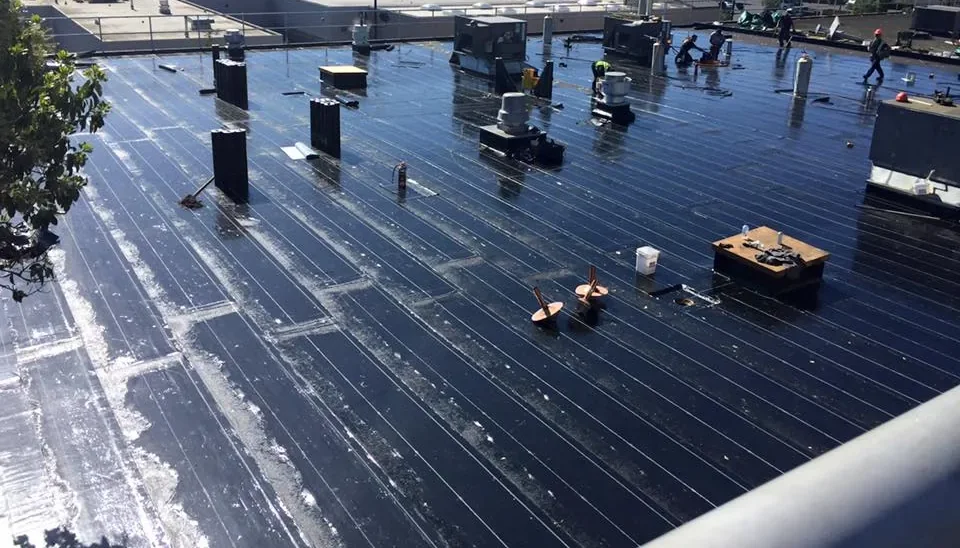
Roof Condition Reports
How the work is scoped, documented and phased on occupied Sugar Land buildings.
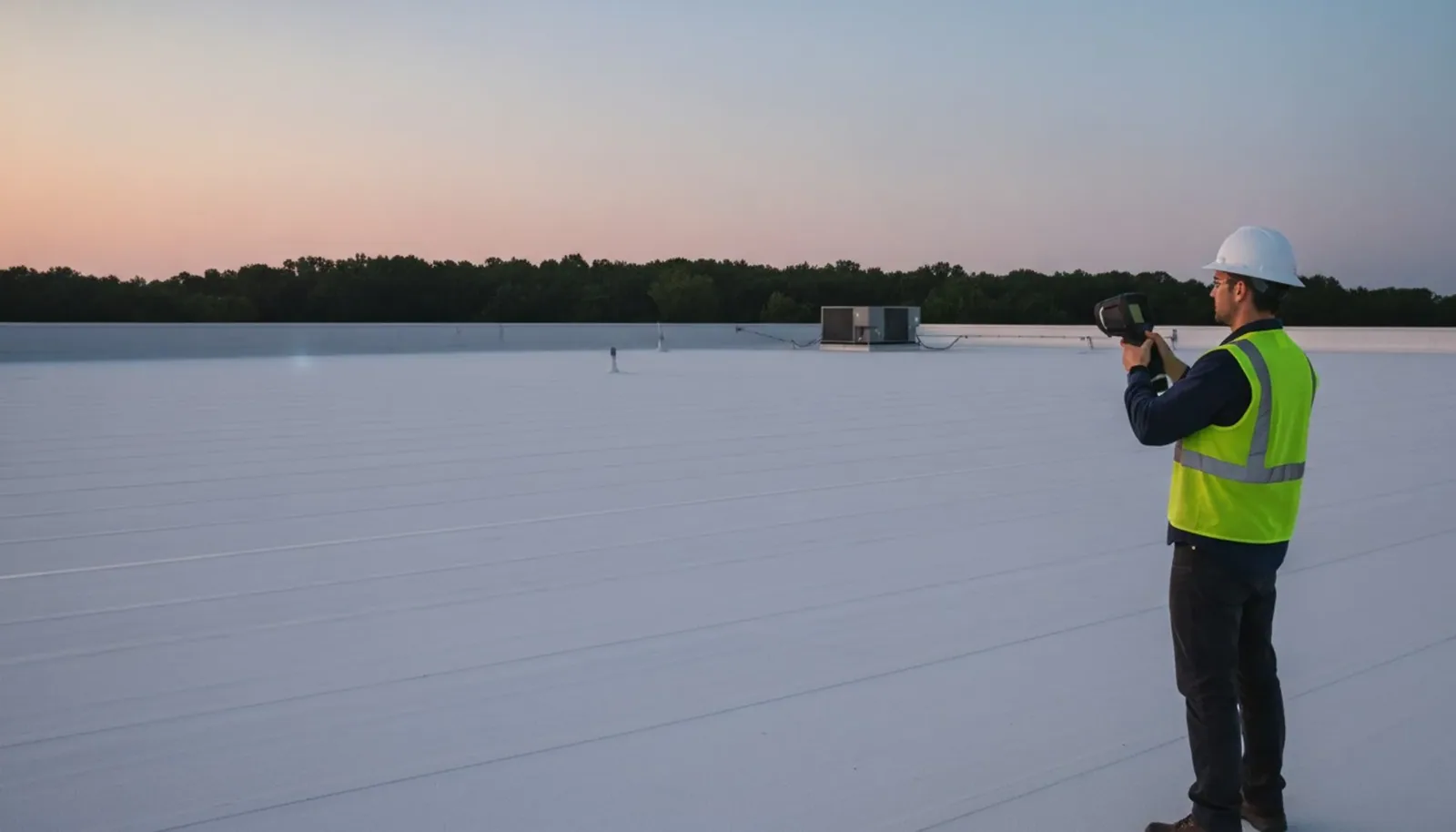
Infrared Roof Moisture Surveys
What we check on the roof, what we recommend and how the crew keeps the building open.
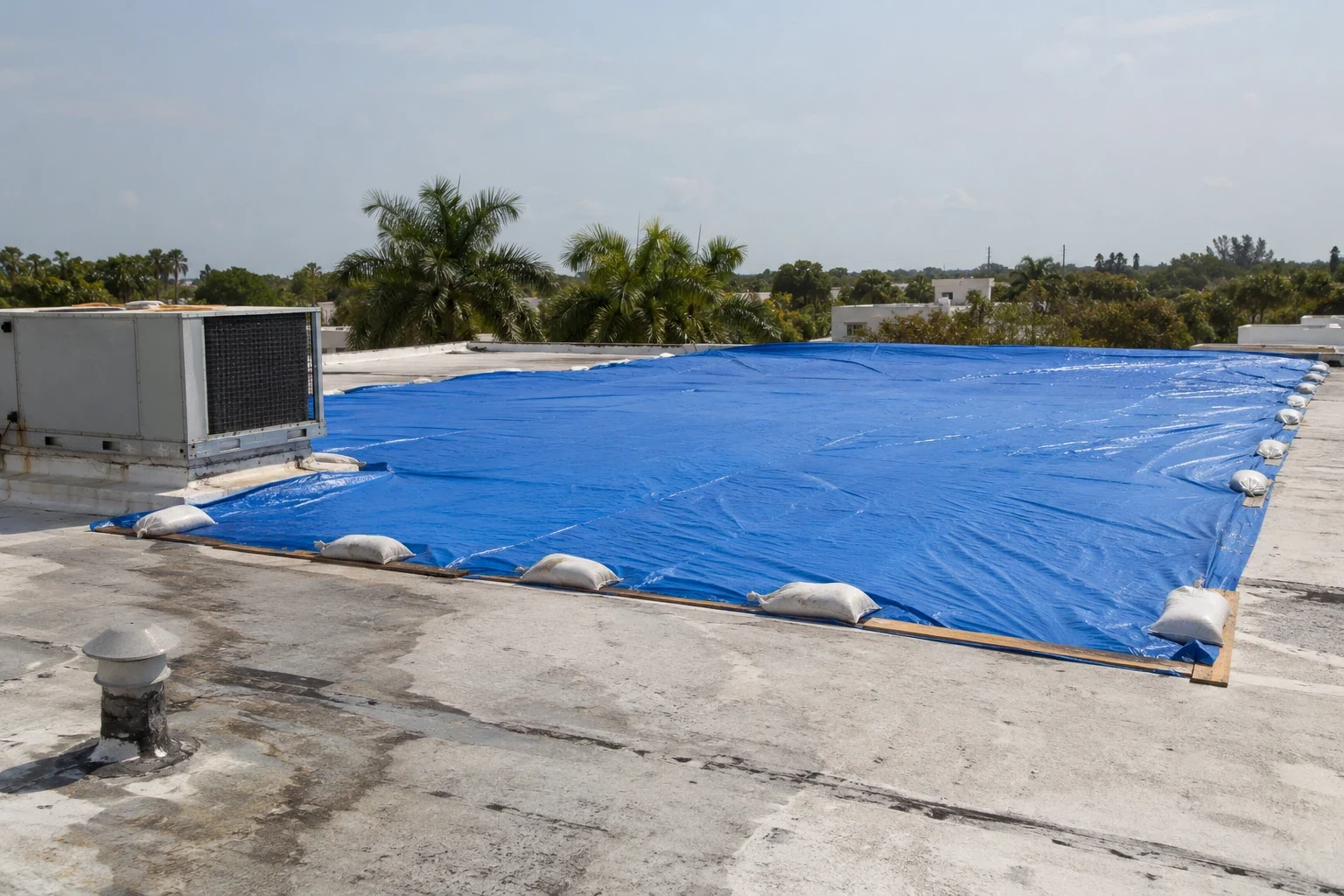
Emergency Roof Repair
Conditions, options and next steps for commercial buildings in Fort Bend County.
Make the Roof Evidence Easy to Explain
Call to arrange a documented assessment. We will explain the roof findings with photos and prepare a clear repair scope for the owner and insurer to review.
Call 555-555-5555 or email [email protected].
Commercial Roofing Questions
Straight answers to the questions building owners and managers ask us most often.
Who interprets the policy for a roof claim?
The appropriate insurance professional addresses policy interpretation and the insurer reviews coverage. Our contribution is the documented roof condition and supported repair scope. Technical findings remain separate from a coverage conclusion.
What should a manager preserve before a visit?
Keep earlier roof reports, dated storm photographs, interior water locations and records of temporary work. Note who observed each condition and when. Avoid presenting a reported condition as something the roof inspector personally verified.
Can an estimate use the building floor area?
Roof quantities require measurement of the roof and its details. Floor area can differ because of stories, overhangs and separate sections. Published property figures provide context rather than a repair quantity.
What happens if an adjuster requests another test?
We identify the technical question and choose a suitable method if further investigation is warranted. Access, weather and sampling locations are agreed before work. The resulting report states what the test established and its limits.
How are pre-existing defects handled?
Earlier defects are documented alongside new observations. The report explains the evidence for any distinction and leaves uncertain causes unassigned. Repair recommendations can address both while keeping their records clear.
Temporary Work in the Claim Record
Initial work may protect occupied space before a full removal scope is ready. The record identifies the defect treated, material used, attachment method and date, together with photographs available before the work. Where access or weather limits documentation, we explain the missing evidence. Suitable temporary protection is chosen for the conditions and does not automatically establish that the underlying roof remains serviceable.
Our emergency roof repair documentation also identifies follow-up needs. A temporary patch may conceal a torn surface that later requires removal, moisture investigation and rebuilding. We separate that stabilization cost from the proposed permanent scope. The manager can then explain the sequence and preserve the relationship between the observed defect and the work performed.
A Repair Scope That Can Be Compared
The estimate names the roof material, detail, removal area and proposed reconstruction. Wet insulation replacement, flashing work and edge attachment are listed according to the findings rather than folded into an unexplained allowance. Quantities come from roof measurements and documented detail counts. A building's published floor area does not establish its roof area or the extent of storm damage.
For permanent storm repairs, the scope identifies retained materials and conditions that could change the work after exposure. If deck deterioration is found, the owner receives the appropriate revised scope before affected reconstruction proceeds. Options for broader replacement are explained through roof condition and repair value. The presence of a claim does not make replacement technically necessary on every damaged roof.
How a Roof Project Runs
Every roof we take on moves through the same six steps:
01
Roof Walk
We walk the whole roof and photograph the membrane, seams, flashings, drains and equipment.
02
Moisture Check
Readings and core cuts show what is wet below the surface before anyone prices a repair.
03
Written Findings
You get plain-language findings, photos and the options that fit the roof.
04
Scope and Price
One written scope covers the system, the details, drainage changes and the price.
05
Scheduled Work
Crews work around tenants, deliveries and weather, closing the roof every night.
06
Closeout
We walk the finished roof with you and hand over photos and warranty paperwork.
Property Operations and Jurisdiction
A property at Sugar Land Town Square may have shops, offices and hotel operations requiring different notices below the work. We identify those constraints through the manager, rather than inferring them from the district's mixed-use description. The estimate explains access, occupied-area protection and relevant equipment coordination. Those requirements affect the construction sequence and should remain visible when proposals are compared.
An owner with another address in Stafford needs that building evaluated separately. Jurisdiction, roof assembly, access and operating restrictions can differ across nearby properties. The project team confirms applicable permit requirements and any inspections associated with the proposed work. A regional portfolio report can organize the evidence, but it should preserve individual building records rather than applying one damage scope to every address. For a claim involving a South Houston property, tie photographs and repair quantities to its own roof areas.
Questions From the Insurer
An insurer may ask for additional photographs, measurements or clarification of a repair detail. We respond with the available technical evidence and identify any new site work needed to answer the question. If a requested conclusion exceeds what the inspection established, the response explains the limit. Documentation remains tied to observed conditions rather than adjusted to achieve a preferred coverage outcome.
Selected drone views can show a broad damage pattern when flight conditions and authorization permit. Close inspection and testing remain necessary for questions the aerial images cannot answer. Owners comparing work across properties can also organize the records through a multi-site roof program. The repair, claim correspondence and maintenance history remain distinct parts of each building's file.
A clear packet helps the owner keep the roofing evidence organized while the claim process continues. It can include dated photographs, marked roof locations, moisture findings, temporary protection and a scope separated by repair task. We identify observations and repair recommendations without deciding coverage or the amount an insurer will approve. The owner can then compare the field record with questions from the carrier and request additional inspection where a specific condition remains unresolved.