
Roof Asset Management
A patched seam may stop admitting rain while wet insulation remains beneath the repair. That distinction matters when a Sugar Land, TX property manager updates the roof record: completed work and the condition of the assembly are separate entries. Roof asset management keeps both connected to the right building and roof area. The owner can see what changed, what still needs investigation and how the next expenditure relates to the physical condition above the tenants.
One Building, Several Roof Areas
The inventory starts with the roof as it exists. Additions, different roof elevations and separate tenant areas can create several assemblies above one address. Each area receives a reference on the plan, with the observed membrane, drainage direction, access point and available installation information. A drawing date is recorded as a drawing date until the installation history is confirmed.
Buildings in First Colony may be managed within a larger commercial portfolio, but the district name does not establish their construction. A roof inspection establishes the visible condition and identifies the information needed about concealed layers. The inventory attaches warranty documents, prior repair descriptions and equipment changes to that roof area. Missing documents are listed so an owner can request them without confusing an unknown installation date with an old roof.
A History of Actual Changes
A condition history follows the same locations over time. Photographs before and after a repair show the detail and enough surrounding roof to locate it again. The entry records the repair material, method, date and any temporary measure still in place. If a seam reopens, the earlier record helps distinguish a new defect from the continuation of an unresolved problem.
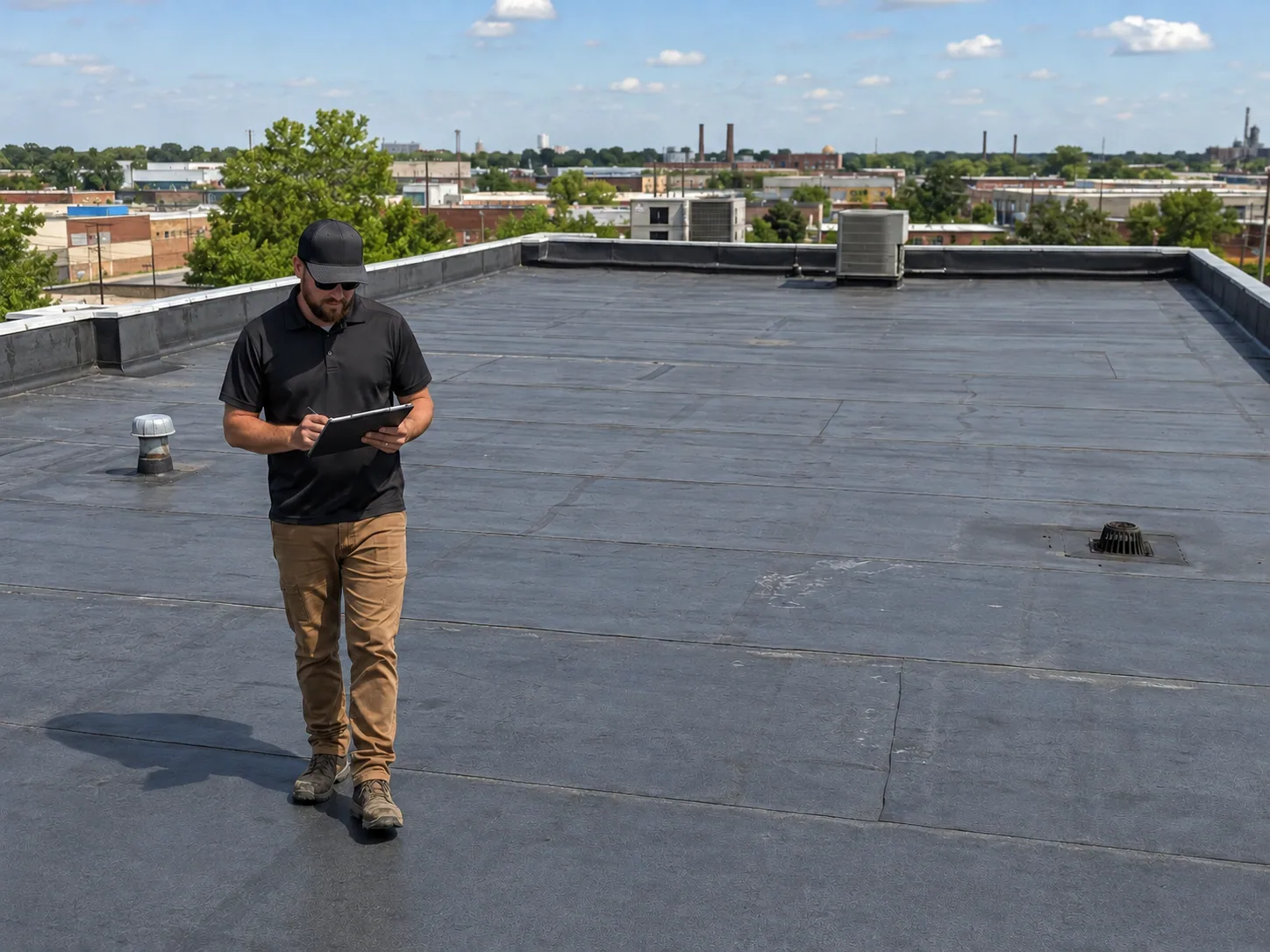
Roof condition reports add observations about membrane wear, flashing condition, drainage and moisture investigation. The manager can compare those findings with the prior inspection rather than relying on a general rating. A new thermal pattern, for example, calls for interpretation and suitable confirmation; it is not automatically entered as failed insulation. The history stays useful because it separates observed conditions, confirmed findings and work that has actually been completed.
A useful record separates the first observation from later interpretation. The entry notes the date, roof area, weather context, interior symptom, photographs and action taken. If testing later confirms wet insulation or a failed flashing, that conclusion is added with its evidence instead of replacing the earlier note. This chronology helps a manager distinguish a recurring defect from a new leak nearby. It also gives a future inspection a precise starting point, especially after staff, tenants or service vendors change.
A manager can also preserve the distinction between a temporary safeguard and a completed repair. The record states whether an opening was covered, sealed permanently, or left pending a return visit. Follow-up after rainfall or a controlled test is assigned a date and result. This prevents a short-term response from disappearing into the same status as a verified correction.
Maintenance That Addresses the Cause
Maintenance tasks should follow a physical finding. Debris at a strainer calls for safe removal and a check of the outlet. A low area that continues to hold water after cleaning needs measured levels and further review. Repeatedly clearing a drain will not correct an outlet elevation problem, just as adding sealant will not correct every movement problem at a curb.
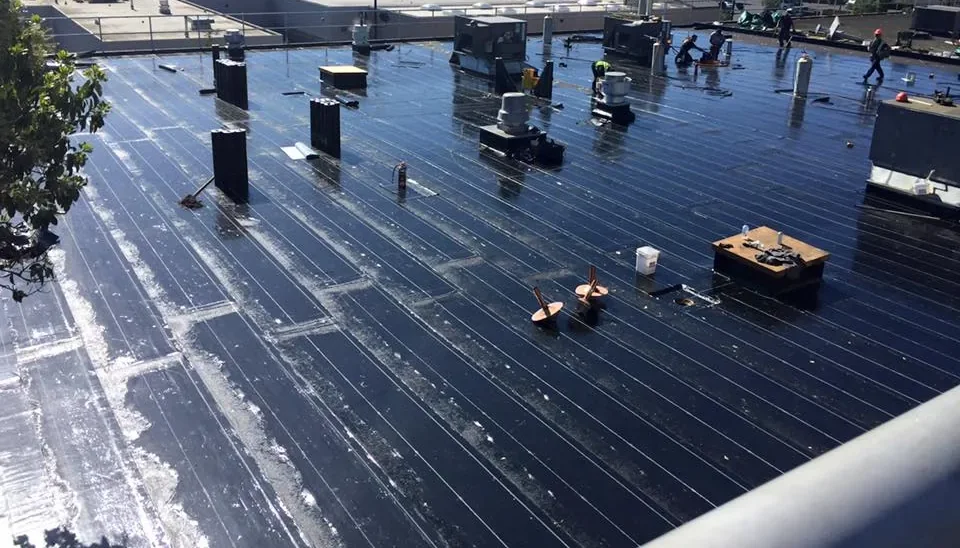
Preventive roof maintenance uses the asset record to identify the details due for attention and the access required. Drainage items can lead to roof drain and scupper work when the findings support a repair or redesign. Each task has a responsible contact and completion evidence. The next visit checks whether the intended result occurred, rather than assuming the work order alone proves that water now leaves the roof correctly.
Related Roofing Pages

First Colony
How the work is scoped, documented and phased on occupied Sugar Land buildings.
Commercial Roof Inspections
What we check on the roof, what we recommend and how the crew keeps the building open.
Roof Condition Reports
Conditions, options and next steps for commercial buildings in Fort Bend County.
Put the Roof History to Work
Request an asset review that connects roof-area photographs, maintenance records and current findings, so you can explain the next decision to the owner.
Call 555-555-5555 or email [email protected].
Commercial Roofing Questions
Straight answers to the questions building owners and managers ask us most often.
What information belongs in the first roof inventory?
Identify each roof area, the observed system, access and drainage arrangements, then attach available installation and repair documents. Record uncertainty explicitly. A missing invoice should remain an information gap rather than becoming an assumed installation date.
How do roof repairs change the asset record?
Add the location, method, material and completion date with photographs. Note any temporary protection or follow-up needed. The repaired detail and the surrounding assembly may have different conditions, so their status is kept separate.
Can maintenance planning use a thermal image alone?
Thermal patterns help direct an investigation under suitable conditions. Confirmation and assembly information are needed before suspected moisture becomes a removal scope. The record states the method, survey conditions and limits of the findings.
How should an owner track warranty-related tasks?
Keep the actual documents with the roof area and identify their notice, maintenance and alteration requirements. Roof warranty management links those tasks to the record; coverage decisions remain with the issuer under the applicable terms.
What makes a portfolio priority understandable?
The finding, its likely consequence and the proposed response should be visible together. State what needs attention, why its timing matters and which unresolved questions could change the recommendation. A numerical score is useful only with that explanation.
Moisture Findings in the Assembly
In Sugar Land, humid air and air-conditioned interiors make assembly details worth examining when water appears without recent rainfall. Condensation requires moisture to reach a surface below its dew point. Retained rainwater and an equipment condensate problem can also produce delayed drips, so the asset record includes timing and mechanical observations alongside the roof findings.
Testing is selected for the suspected mechanism and the roof construction. Sample locations describe the layers found there; a wider investigation may be needed to estimate the extent of retained moisture. The record explains those limits and preserves the results for future decisions. A proposed air-barrier correction, insulation removal or membrane repair should follow the confirmed cause, with any mechanical or design work identified before the owner approves a roofing-only scope.
The Same Evidence Across the Portfolio
For an owner with properties in Sugar Land and Stafford, a consistent inventory makes comparison possible without treating the buildings as identical. Each report keeps the address, roof areas, use and access restrictions attached to the findings. A warehouse drainage defect and an office flashing defect may receive different priorities because their consequences differ. The reason for each priority is recorded in plain terms.
Multi-site roof programs use those records to group inspections or suitable maintenance while preserving building-specific requirements. A contractor should still confirm local approval requirements and the selected assembly for each project. Common scheduling can simplify coordination; it does not make one roof detail suitable for every address. The owner sees which tasks can be grouped and which need their own investigation or specialist review.
How a Roof Project Runs
Every roof we take on moves through the same six steps:
01
Roof Walk
We walk the whole roof and photograph the membrane, seams, flashings, drains and equipment.
02
Moisture Check
Readings and core cuts show what is wet below the surface before anyone prices a repair.
03
Written Findings
You get plain-language findings, photos and the options that fit the roof.
04
Scope and Price
One written scope covers the system, the details, drainage changes and the price.
05
Scheduled Work
Crews work around tenants, deliveries and weather, closing the roof every night.
06
Closeout
We walk the finished roof with you and hand over photos and warranty paperwork.
The Next Decision and Its Basis
The asset history informs roof capital planning by showing recurring repairs, unresolved moisture and changes in the membrane or support. Those findings help compare a focused repair with a larger project. An installation date alone cannot establish remaining performance, and one dry sample cannot approve an entire recover.
A useful plan identifies the proposed action, its condition basis and the information still needed. It also sets a review trigger: a changed leak pattern, added rooftop equipment or an inspection finding may bring a decision forward. The manager can explain why an expenditure is recommended now and what is expected from it. When the work is complete, the same record captures the new assembly and provides the starting point for its maintenance.
Equipment changes receive their own entry before installation. The proposed support, penetrations and service route are checked against the roof assembly, and structural or manufacturer review is requested where needed. Completion photographs show the new details and any nearby repairs. That sequence gives the next maintenance visit a reliable starting point, even when a different vendor installed the unit.