
Acrylic Roof Coatings
An acrylic coating can wash or distort before it has developed the required resistance to weather. A dry-looking surface early in the day may still lack the cure needed before an afternoon shower. Acrylic roof coatings in Sugar Land, TX therefore begin with the retained roof and a workable application window. We explain preparation, repairs and the selected product's conditions before the field coating is scheduled.
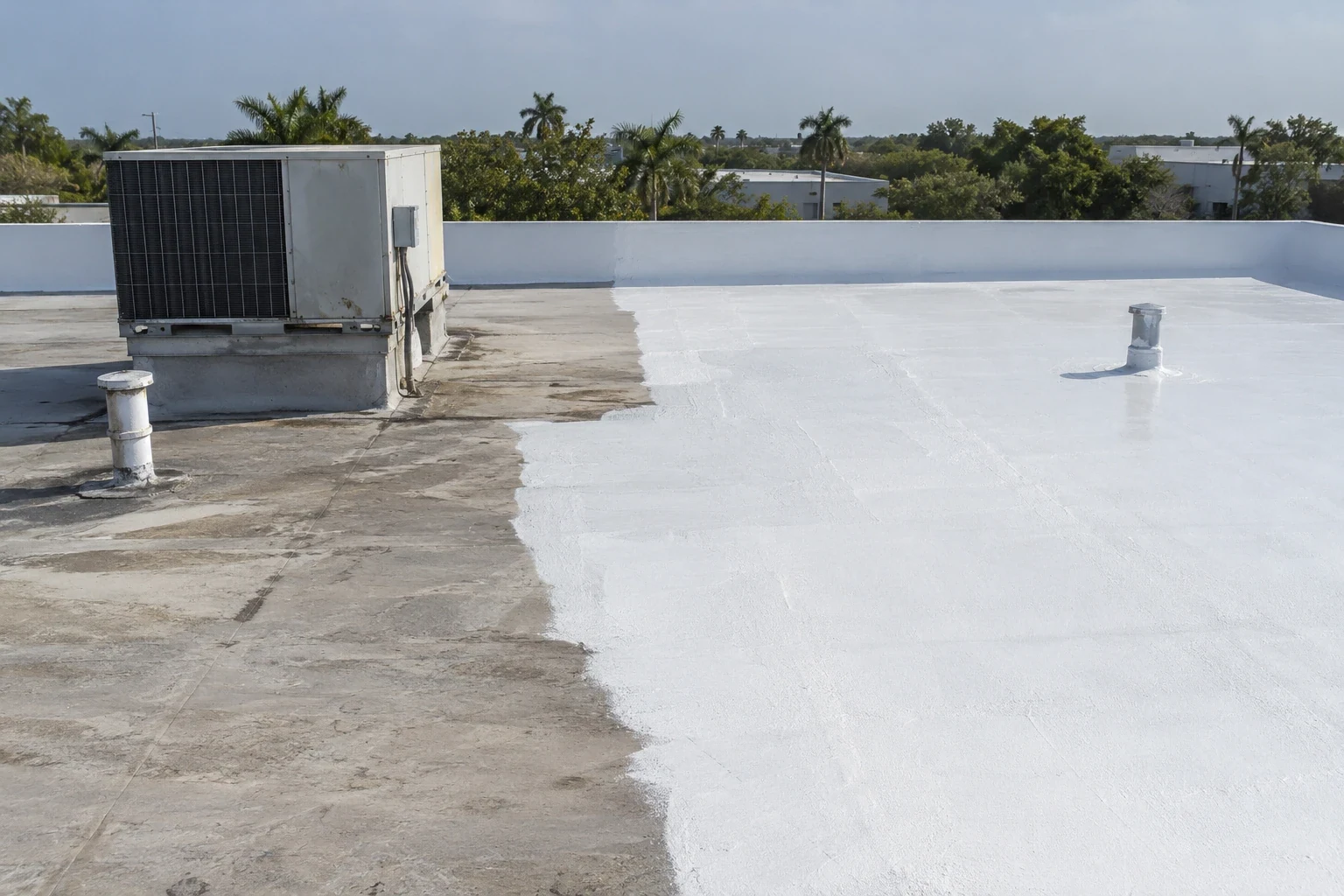
A reflective acrylic finish can protect a suitable roof according to its approved use. It does not repair wet insulation, reconnect failed attachment or redesign drainage. Those conditions remain part of the roof assessment. The owner receives a restoration scope identifying what will be corrected and what the coating contributes, rather than a promise that a new white surface resolves every defect below it.
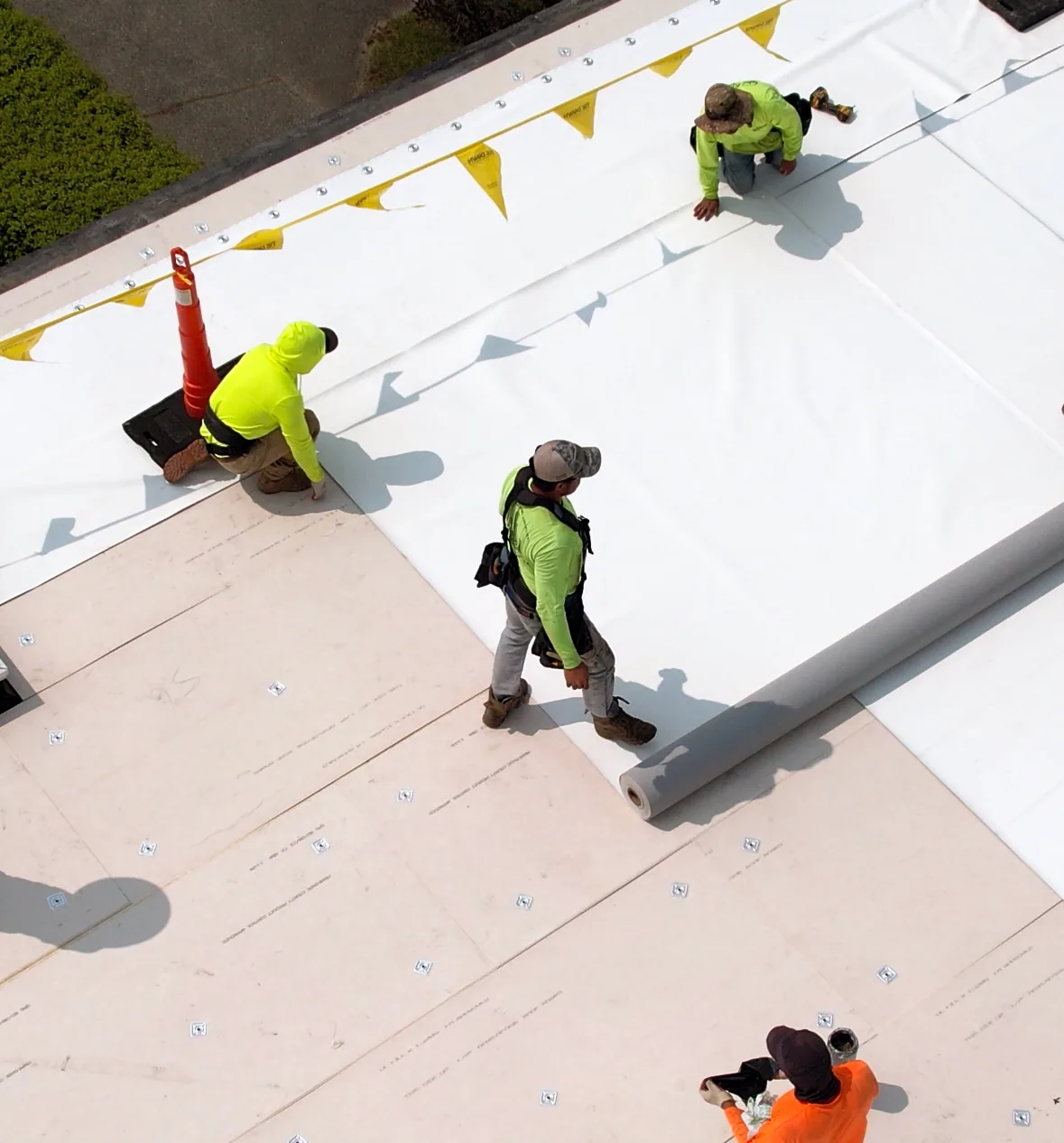
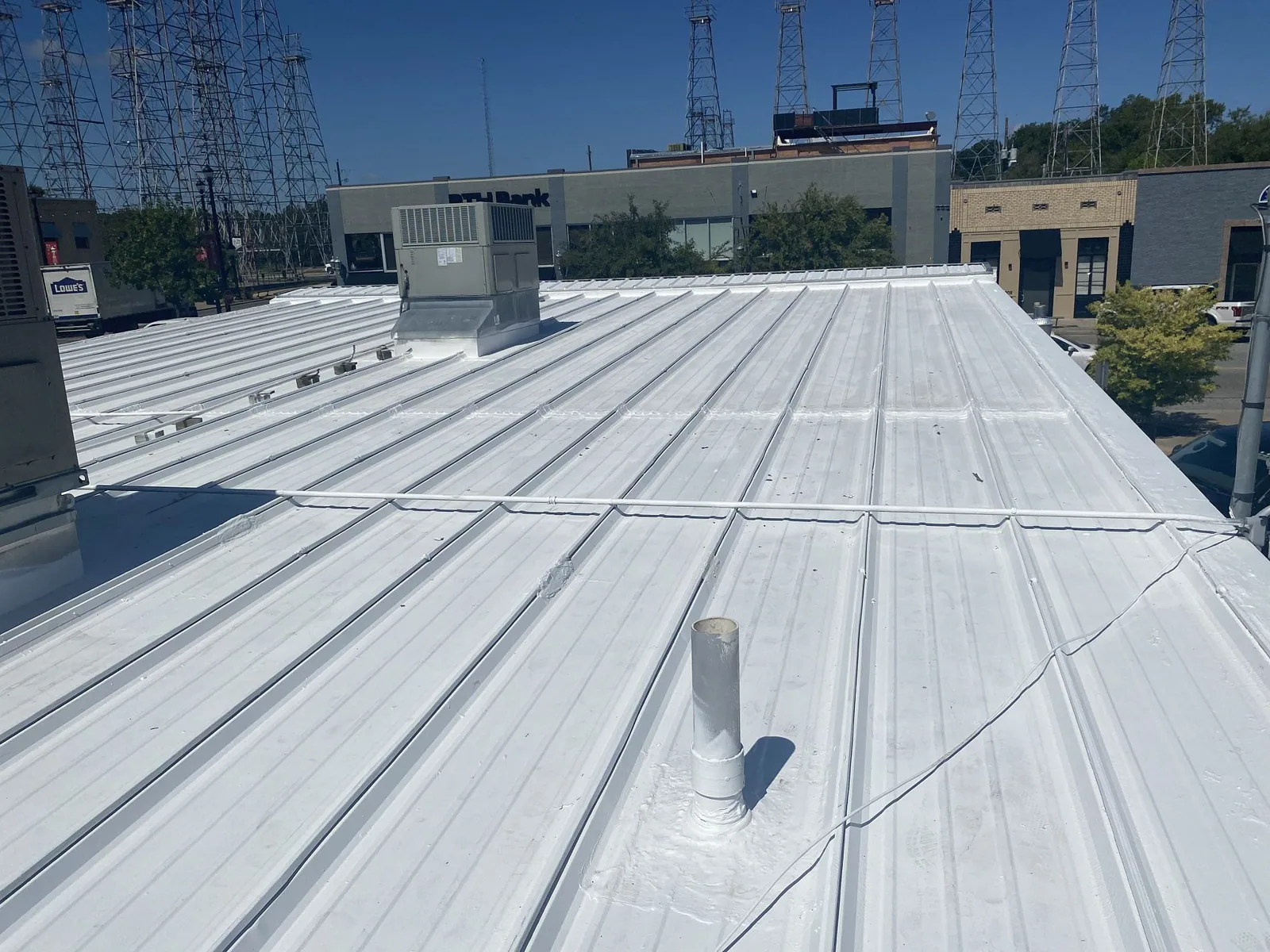
Compare an acrylic proposal with a silicone coating option using the actual substrate and exposure limits. Where another assembly is needed, TPO construction includes its own supporting layers and connections. The owner should compare complete preparation and finished details for each route.
The Retained Surface and Its History
Previous coatings, residue and weathering affect the surface available for a new bond. We identify the retained materials and inspect where preparation may differ across the roof. Cleaning methods must suit the substrate and existing details. An aggressive wash can create a new water route if weak laps or flashings are not addressed first.
Adhesion tests follow the selected preparation and product instructions at representative locations. A successful patch does not establish that every earlier coating is compatible or that the same cleaning result was obtained elsewhere. Roof restoration planning records those findings and any changed preparation. The manager can then compare proposals that include tested work rather than assuming all surface-cleaning allowances provide the same result.
Moisture Within the Roof
We investigate suspect concealed moisture before coating is proposed over the existing assembly. Interior reports, visible defects and suitable testing help focus that investigation. Selected samples establish their local layer condition. Unsampled areas remain interpreted from the combined evidence rather than declared dry because one nearby opening was dry.
An infrared survey with confirmation can guide the assessment under suitable construction and weather conditions. Thermal contrast does not establish water by itself, and the report preserves that limit. Wet or otherwise unsuitable materials receive a supported removal scope. If the resulting repair becomes extensive, the owner can compare restoration with replacement using the actual condition and quantities.
Ponding and Product Limits
Many acrylic roof coatings require reliable drainage and have product-specific restrictions on prolonged standing water. We check the selected instructions rather than assigning identical limits to every formulation. Persistent retention also needs investigation of the roof's geometry and outlets. Choosing a coating with a different water-exposure limit cannot settle the underlying drainage question.
Drain and scupper work distinguishes accessible obstructions from changes in capacity or outlet arrangement. A clear bowl does not establish the condition of the pipe below. A low area can require measured elevations and appropriate review before correction. The restoration scope separates those tasks so the owner understands whether the proposal addresses the water path or only the field surface.
Related Roofing Pages
Silicone Roof Coatings
How the work is scoped, documented and phased on occupied Sugar Land buildings.
TPO Commercial Roofing
What we check on the roof, what we recommend and how the crew keeps the building open.
Roof Coating and Restoration
Conditions, options and next steps for commercial buildings in Fort Bend County.
Choose the Coating With Its Preparation and Cure Plan
Call for a restoration assessment. We will explain adhesion, moisture and drainage findings with photos so the owner can review a suitable acrylic coating scope.
Call 555-555-5555 or email [email protected].
Commercial Roofing Questions
Straight answers to the questions building owners and managers ask us most often.
Can acrylic coating be applied whenever the roof looks dry?
Surface appearance does not establish all application conditions. The selected instructions govern moisture, temperature and cure requirements. We check the roof and forecast before work proceeds.
Will acrylic tolerate every ponding condition?
Limits differ by product, and many require reliable drainage. The source of retained water needs evaluation. A coating specification does not replace a drainage or structural review.
Can one adhesion patch approve the whole roof?
A patch establishes local performance under its test conditions. Representative variations and preparation quality still need consideration. The report identifies where further work or testing is warranted.
What happens if rain interrupts curing?
The affected finish is assessed before more coating is applied. Preparation or removal may be needed according to the product requirements. The manager receives the revised sequence rather than an assumption that recoating alone is sufficient.
How should a later recoat be planned?
Review surface condition, compatibility, repair needs and drainage first. Keep product and application records available. The new scope follows the retained finish and current findings rather than repeating the original liquid quantity.
Detail Repairs Before the Field Finish
Open seams, damaged flashing and loose terminations receive compatible repair before coating. Reinforcement is applied where the selected system specifies it, with suitable preparation and thickness. Fabric within liquid coating is not a substitute for missing support or an unresolved moving joint. A connection that repeatedly opens needs its cause evaluated before another layer is added.
Penetration repairs also identify upper equipment or frame leaks that lie outside the roof finish. The coating around a curb cannot repair a defective panel above it. Roofing and related trade responsibilities are stated in the scope. Photographs show the completed detail work before a uniform field finish makes the repair boundaries difficult to recognize.
Application Window and Cure
Water-based acrylic products need the environmental and substrate conditions stated in their instructions. Temperature, humidity, dew point, surface moisture and forecast influence whether the planned application can proceed. The roof surface is checked rather than inferred from an air-temperature reading. Shade and earlier rainfall can create differences between work areas on the same building.
The sequence allows the required cure and recoat intervals. Thickness measurements and material usage are recorded, with wet-film checks or other verification as specified. Applying a heavy coat too quickly is not a reliable way to replace the planned sequence. If weather interrupts the work, the affected finish is evaluated before another coat is applied. The manager receives the changed plan and the reason for it.
How a Roof Project Runs
Every roof we take on moves through the same six steps:
01
Roof Walk
We walk the whole roof and photograph the membrane, seams, flashings, drains and equipment.
02
Moisture Check
Readings and core cuts show what is wet below the surface before anyone prices a repair.
03
Written Findings
You get plain-language findings, photos and the options that fit the roof.
04
Scope and Price
One written scope covers the system, the details, drainage changes and the price.
05
Scheduled Work
Crews work around tenants, deliveries and weather, closing the roof every night.
06
Closeout
We walk the finished roof with you and hand over photos and warranty paperwork.
Reflectivity and Future Surface Care
Product ratings describe tested reflectance and emittance characteristics. Those values can support comparison, including the rated aged surface where available. A bright finish does not establish a specific utility saving because insulation, air leakage and operation also affect building energy use. Any supported prediction needs the relevant building analysis rather than a conversion from color alone.
Cool roof evaluation places the finish within the complete assembly. Later cleaning follows product instructions so an appearance concern does not lead to abrasion or damage at seams. Equipment traffic and residue sources receive attention during maintenance. Surface discoloration, coating wear and a functional leak are recorded separately because they can require different responses.
Work Areas, Ventilation and Delivery Routes
First Colony includes commercial retail around its mall and Town Square. For a coating project serving occupied space, arrange roof access and material movement with management before application begins. Identify entrances, parked vehicles and the equipment that draws air near the work. The selected application method and forecast determine the control measures, especially if spray equipment is proposed.
Greatwood lies south of I-69/US 59, which forms its northern boundary. A project there needs a delivery route and staging position confirmed with the property contact, with materials ready for the planned weather window. Ventilation changes are managed by the facility team under an approved operating plan. Occupied work planning connects those arrangements with daily notifications and the response to a weather interruption.
Acrylic restoration requires a substrate that is clean, sound and suitable for adhesion, plus drying conditions that allow the coating to form its intended film. We inspect moisture, existing finish and repaired details before setting the application sequence. A low area that retains water may need a drainage correction rather than additional coating passes. Test patches help confirm adhesion on representative surfaces, and the project plan accounts for weather exposure between coats. Closeout notes the completed areas and any surface condition that should be checked on the next maintenance visit.