
Hospitality Groups
A water complaint in a guest room can begin at a roof detail several spaces away. Water follows a concealed route, while the hotel's response must address the occupied room before the roof source is confirmed. Commercial roofing for Sugar Land hospitality groups combines that immediate operating question with a documented roof investigation. We explain the verified findings and coordinate suitable work with the property's management and engineering team.
The repair needs a clear boundary between roofing and building services. Equipment drainage, frame joints and condensation under suitable conditions can resemble membrane leakage. We investigate those possibilities instead of selecting a patch solely above the complaint. Photos and location references give the manager a usable explanation for the owner and the teams responsible for follow-up.
Guest-Room Reports and Concealed Routes
Staff record the room, water location, timing and conditions reported by the occupant. We compare those observations with roof sections, accessible flashing and equipment. Water after rain may remain within insulation or another concealed layer before it reaches the room. Dry-day water can also come from equipment condensate, so timing is treated as a clue rather than a complete diagnosis.
Roof leak investigation locates confirmed defects and records uncertainty where another test or trade is needed. A stain photograph belongs beside the roof finding that explains it, when that connection has been established. The report does not treat every water complaint at the property as one source. That distinction helps the engineering team prioritize the correct follow-up while the manager addresses the room operation.
Equipment and Ventilation Duties
The hotel's engineering team identifies units, intake locations and spaces affected by equipment restrictions. Roofing materials and methods inform the proposed work sequence, but the facility approves any operating isolation. Required airflow and restoration to service remain part of the coordinated plan. An active intake is not covered arbitrarily to make work at a nearby curb easier.
Equipment curb and support repairs assign mechanical, electrical, structural and roofing responsibilities where needed. Water from an upper panel or condensate arrangement belongs to its appropriate service scope. Roof flashing addresses the compatible transition at the membrane. The work record preserves those duties so the property can track completion across the involved teams.
Moisture Beneath the Guest Areas
Concealed water can extend beyond a visible opening, and repeated patches may leave affected insulation in place. We investigate suspect extent when it changes removal or retention. Samples describe their layers and local condition, while other suitable evidence supports the surrounding interpretation. The report identifies what was directly verified and what remains uncertain.
An infrared moisture survey may guide confirmatory testing where weather and construction provide useful contrast. Equipment, shade and material variation can produce other patterns. Removal limits follow the combined findings and may change when work exposes the assembly. The manager receives photographs and a revised explanation before those changed conditions become an unexplained increase in the reconstruction scope.
Related Roofing Pages
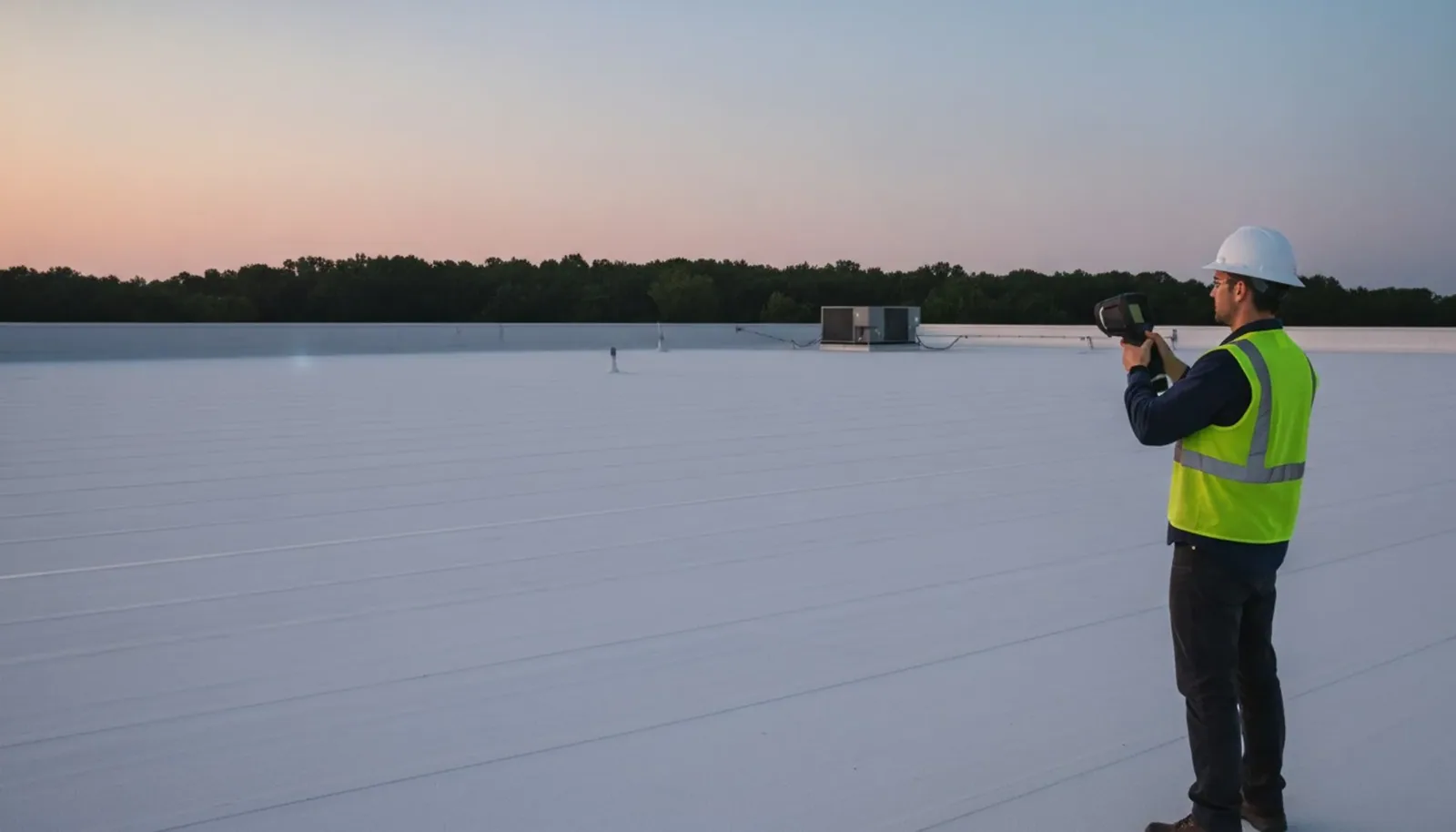
Infrared Roof Moisture Surveys
How the work is scoped, documented and phased on occupied Sugar Land buildings.
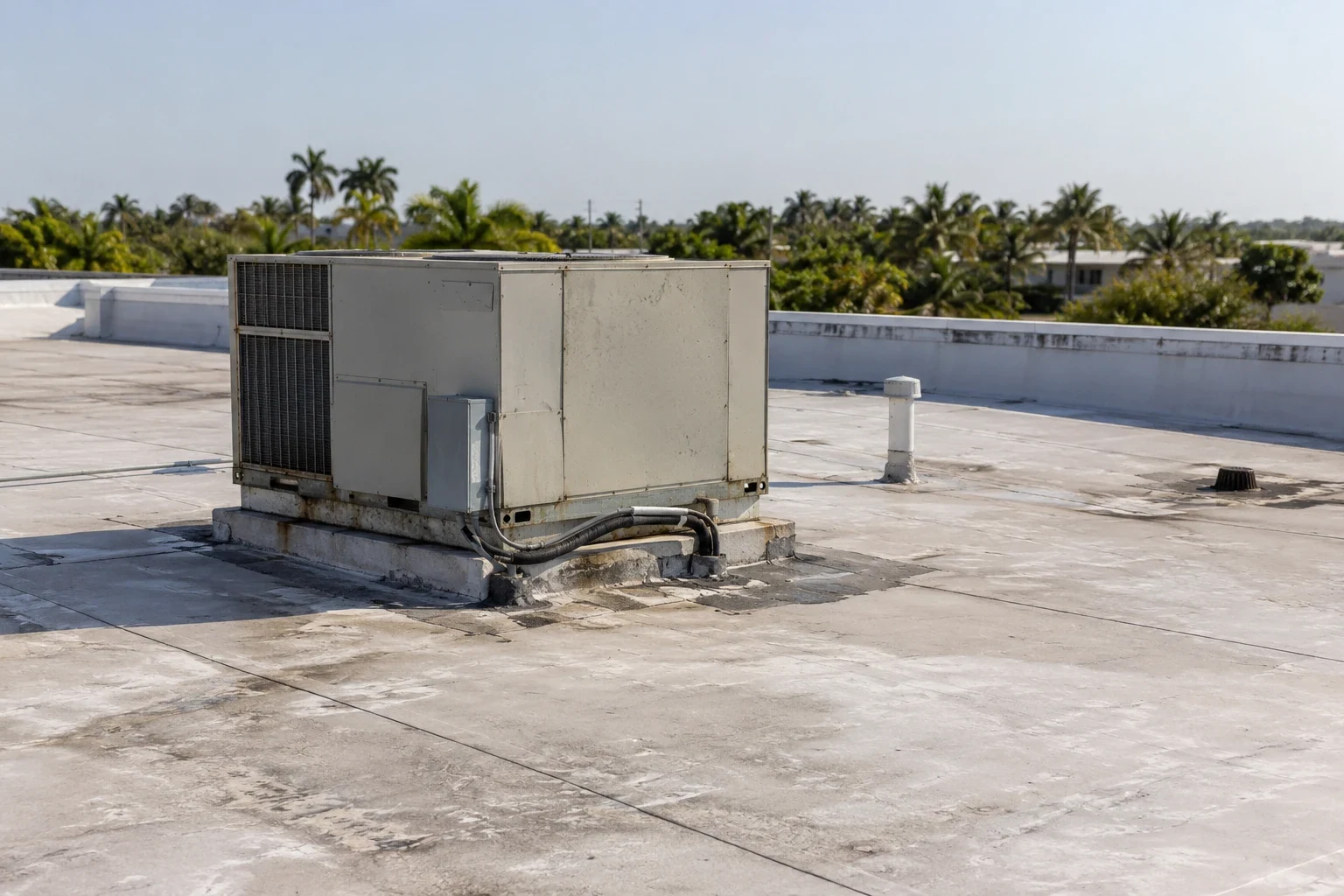
Occupied-Building Reroofing
What we check on the roof, what we recommend and how the crew keeps the building open.
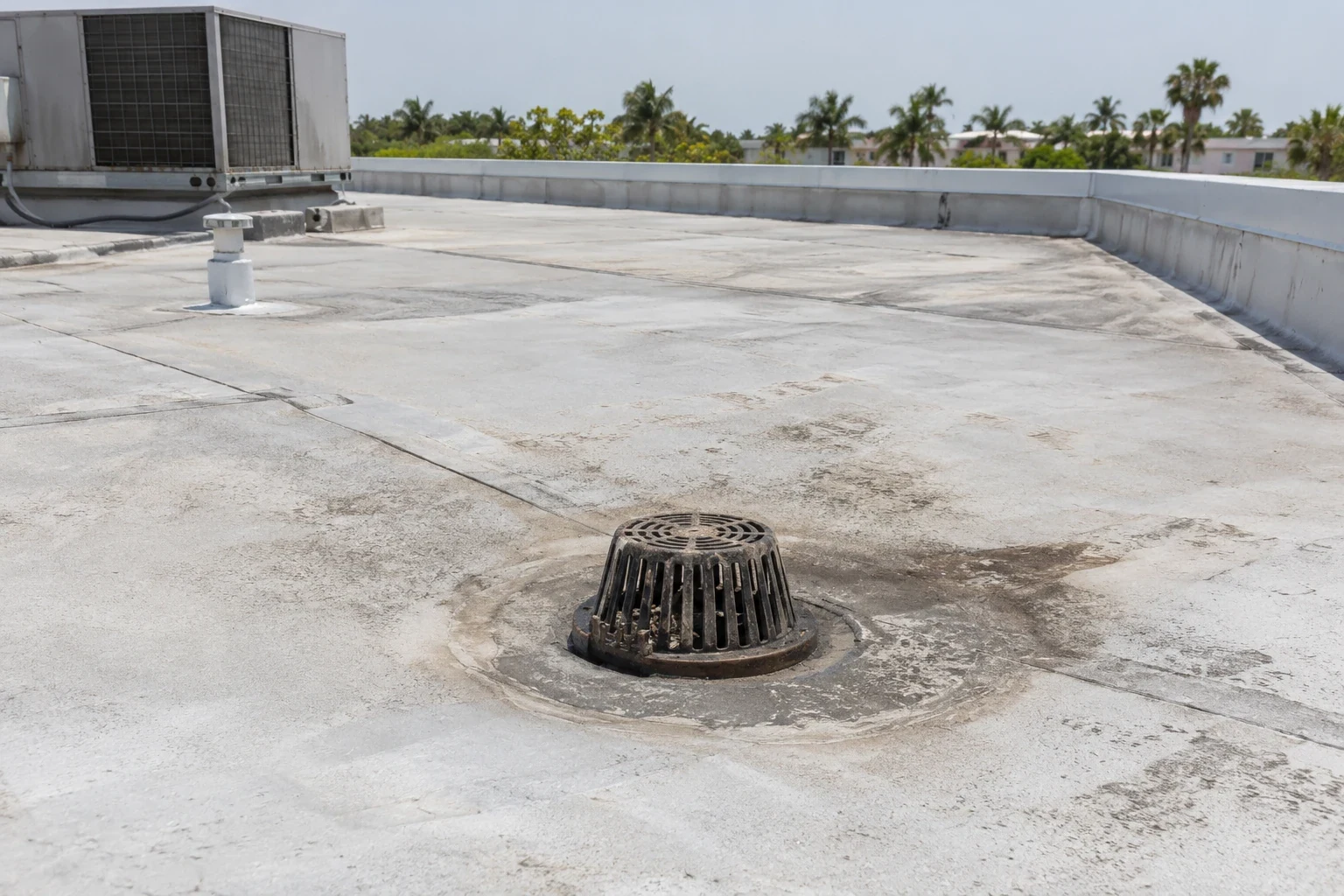
Roof Drains and Scuppers
Conditions, options and next steps for commercial buildings in Fort Bend County.
Explain the Roof Work to the Property Team and Owner
Call for a hospitality roof assessment. We will document water routes, moisture and equipment findings with photos and identify a suitable sequence for the building.
Call 555-555-5555 or email [email protected].
Commercial Roofing Questions
Straight answers to the questions building owners and managers ask us most often.
Can a guest-room stain identify the roof entry point?
Water can travel through concealed routes before reaching the room. Interior timing and roof observations need comparison. The report identifies the source only where evidence supports it.
Who approves ventilation restrictions during repair?
The facility's engineering and mechanical teams approve the operating plan. Roofing describes the work and materials near the equipment. Required airflow and restoration are coordinated before the restriction begins.
Can repairs be scheduled from occupancy percentage alone?
Actual rooms, events, service routes and equipment needs shape the work window. Product and weather requirements also apply. The agreed sequence uses those conditions together.
How is a broader removal area explained?
Photographs and testing show the condition behind the scope. Sampled findings are separated from interpreted extent. Exposed differences are reviewed before affected reconstruction proceeds.
What helps a hospitality group compare properties?
Use consistent reporting with separate roof sections, findings and operating plans. Keep quantities and open items attached to each address. The group can then compare supported needs without assuming identical assemblies.
Roof Areas and Operating Windows
The property team identifies guest areas, meeting spaces, entrances and service routes affected by the work. We plan deliveries, debris handling and protection below around those verified requirements. A quiet period in one part of the hotel may coincide with active operations elsewhere. The site plan therefore identifies the actual work area and its notification process rather than relying on a general occupancy schedule.
Occupied-building reroofing limits exposure to areas that can receive suitable daily closure. Product application and cure requirements remain relevant during a short work window. If conditions change, the sequence is reassessed with management and engineering. The plan identifies who approves a restriction and who confirms restoration before the affected area returns to its agreed operating condition.
Town Square and Regional Hotel Access
Sugar Land Town Square includes a hotel alongside its offices, shops and public spaces. A roofing delivery in that setting needs an agreed unloading location and route to the building, with the property team identifying affected entrances. The work plan carries those logistics into the estimate. Neighboring uses and events can influence the approved window, so notices are coordinated with the responsible building contacts.
Westchase also contains hotel and office activity in the regional market. For a hospitality group managing properties in both settings, a common report format can show separate access plans and equipment responsibilities. The field team records actual service routes and roof sections at each hotel. That makes the comparison useful for the group while letting each property operate under its own approved work sequence.
How a Roof Project Runs
Every roof we take on moves through the same six steps:
01
Roof Walk
We walk the whole roof and photograph the membrane, seams, flashings, drains and equipment.
02
Moisture Check
Readings and core cuts show what is wet below the surface before anyone prices a repair.
03
Written Findings
You get plain-language findings, photos and the options that fit the roof.
04
Scope and Price
One written scope covers the system, the details, drainage changes and the price.
05
Scheduled Work
Crews work around tenants, deliveries and weather, closing the roof every night.
06
Closeout
We walk the finished roof with you and hand over photos and warranty paperwork.
Drainage and Surface Selection
Drainage inspection checks accessible outlets and the path through low areas. A strainer obstruction differs from inadequate slope or a concealed piping restriction. Those questions receive a cause-based scope. The roof material's exposure limit does not establish drainage capacity or structural adequacy beneath retained water.
Reflective roof options can be compared where suitable for the assembly. Surface ratings do not predict a specific utility saving without a supported building analysis. Moisture control also depends on insulation, air leakage and interior operation. We explain those relationships so material selection fits the roof's conditions rather than being based only on color or the hospitality category.
Repair Value and Maintenance Evidence
Local repair can be appropriate where surrounding material and attachment remain suitable. Broad moisture or recurring defects can justify comparing restoration or replacement through complete scopes. The owner sees removal, preparation, details and operating requirements together. A building construction date does not establish the current roof's age, so available roof records are used in the condition comparison.
Closeout retains installed products, completed detail photographs and any related trade item still pending. Maintenance visits check service routes, drains and repaired connections against that record. The property team reports later equipment changes or water timing with specific locations. This preserves an explanation the next manager can use instead of making every new complaint restart the roof investigation from scratch.
For work in Sugar Land Town Square, give property management the repaired-detail references needed for later service calls. A general contractor handling other improvements also needs notice of connections that must remain accessible for roofing completion.
Guest areas and service spaces can impose different noise, access and odor controls. Before work, we coordinate room availability, loading access and any ventilation measures for the selected materials. The opening sequence is tied to a closure method and weather conditions, not only to a room schedule. We identify any alternate access needed to inspect the roof without disrupting a guest route. A report separates the completed roofing repair from interior finish work and mechanical follow-up, allowing operations to coordinate the full return to service. A hospitality property in South Houston needs a separate record of the repaired detail and affected rooms.