
Mission Bend
A membrane repair beside a busy equipment route needs to withstand the service activity that follows it. For a Mission Bend commercial property, we inspect worn paths and nearby connections before defining the closure. The work addresses the damaged material and any support or traffic condition contributing to the defect. Photographs give the manager a clear explanation of the repair area and the additional task needed to protect it.
Mission Bend spans Fort Bend and Harris counties around SH 6, northwest of Sugar Land, TX. Its neighborhood commercial setting includes retail, schools and medical offices along that route. We assess low-slope and metal roofs at the individual property, recording the installed assembly and occupied areas below. The parcel address also establishes which authority reviews the proposed work.
Repeated Access Around Curbs and Piping
Equipment servicing can concentrate foot traffic near seams, supports and penetrations. The inspection records scuffing, cuts and displaced protective material where found. A pipe support resting incorrectly on the roof may also rub or obstruct drainage. Those conditions receive their own locations on the plan so the repair scope can address both the membrane and the way the equipment is accessed.
Rooftop support corrections need compatibility with the assembly and the actual load arrangement. Added equipment can require structural review, while a service-route change may need a suitable protective surface. We coordinate the mechanical task with its flashing or support detail before installation. That gives the manager a practical follow-up for the equipment trade as well as the roofing work completed.
A Damp Layer With Several Possible Paths
Moisture under an intact-looking surface can come from earlier rain entry, equipment drainage or condensation. Condensation requires moist air to reach a surface below its dew point, with air paths and assembly temperature affecting where that occurs. Outdoor humidity alone cannot settle the cause. We review reported timing, indoor observations and equipment operation alongside accessible construction.
A hands-on roof inspection identifies the visible details and helps select further investigation. Authorized samples describe local layer condition. A thermal survey can show differences worth testing when conditions allow useful contrast, but those patterns require interpretation and suitable confirmation. The manager receives the distinction between confirmed damage, a suspected area and a section still outside the testing coverage.
For a neighborhood retail or medical building along SH 6, the useful starting point is the reported room and the roof details directly above it. Water can travel along a deck or insulation layer before appearing inside, while an equipment condensate line can create a separate symptom. We compare the timing with rainfall and system operation, then document the likely route and remaining uncertainty. That distinction matters when a small ceiling stain sits far from the actual roof opening.
Bonding at a Sun-Exposed Repair
Surface heating can reveal weak adhesion at an older patch or a joint repaired with unsuitable material. We examine the lifted edge, underlying substrate and movement expected at the detail. The correction may need removal of earlier compound and rebuilding of the connection rather than another covering layer. Preparation requirements are stated for the selected repair product and installed membrane.
For a medical office building, product use and interior protection are coordinated with the operator. Retail and school properties also need confirmed work windows and receiving arrangements. The crew selects the removal area to fit the agreed access period and the closure method prepared for it. Photographs document protection and completion so the owner can distinguish finished work from a temporary measure awaiting return.
Related Roofing Pages
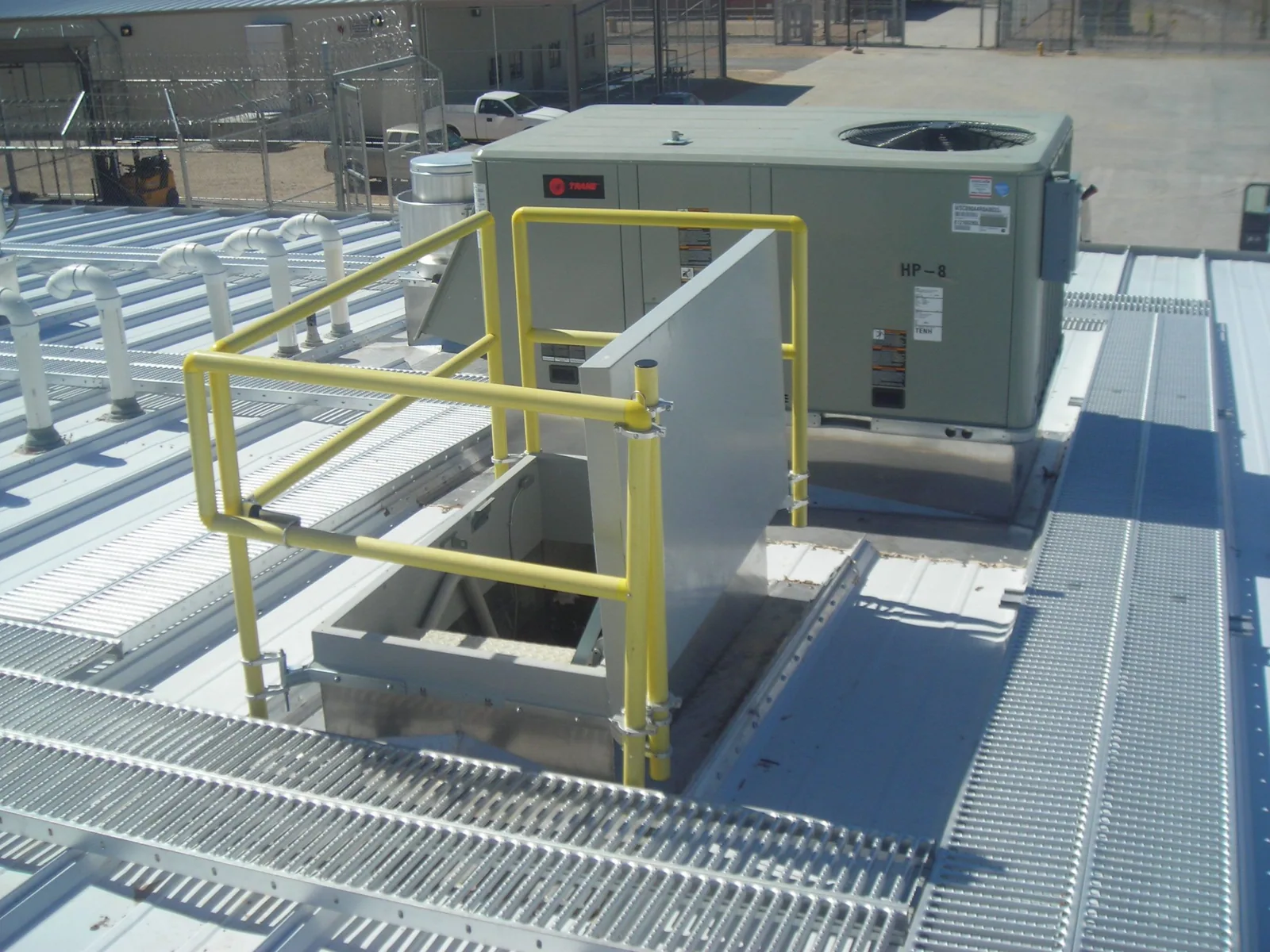
Rooftop Equipment Curbs and Supports
How the work is scoped, documented and phased on occupied Sugar Land buildings.
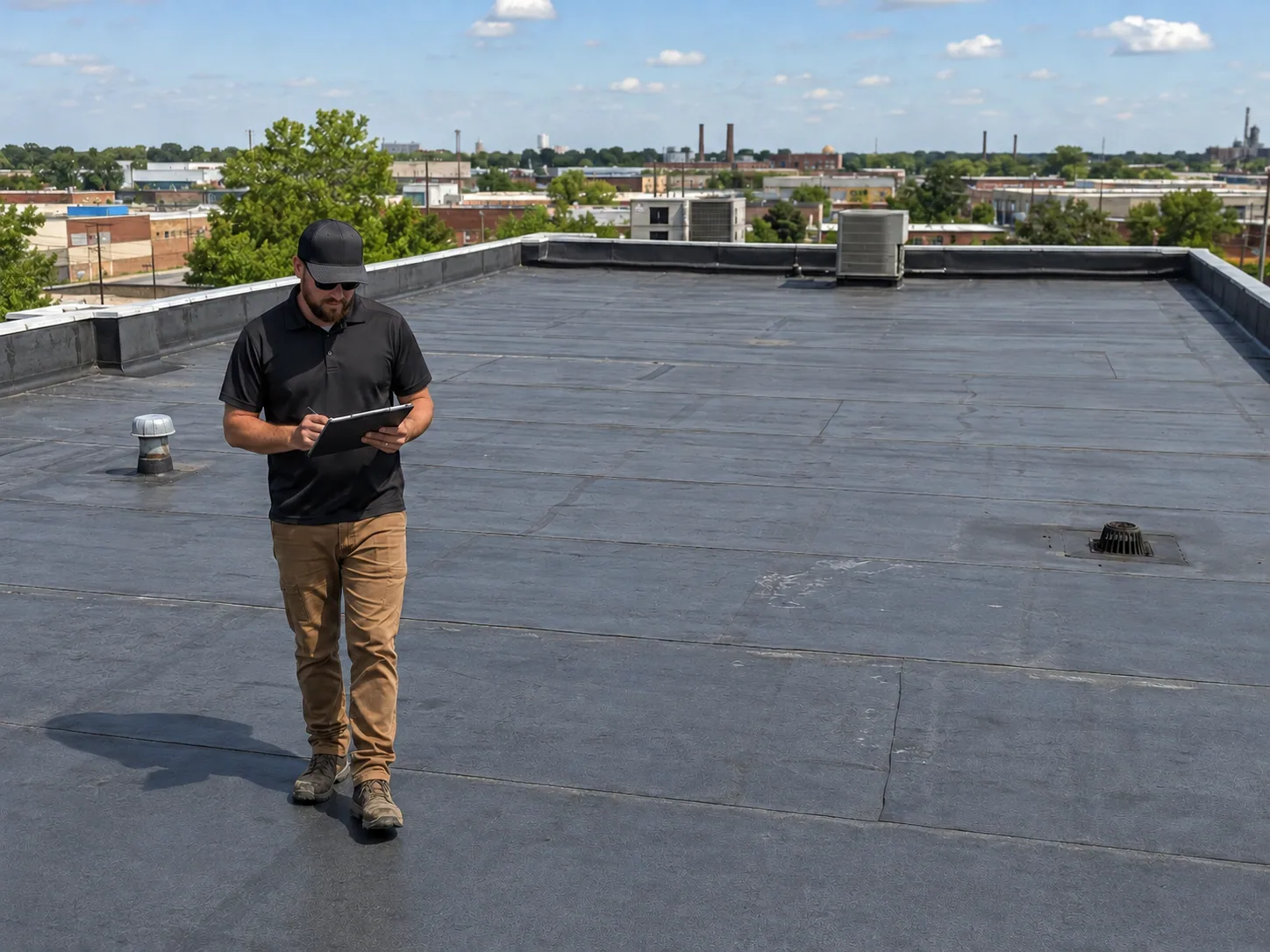
Commercial Roof Inspections
What we check on the roof, what we recommend and how the crew keeps the building open.
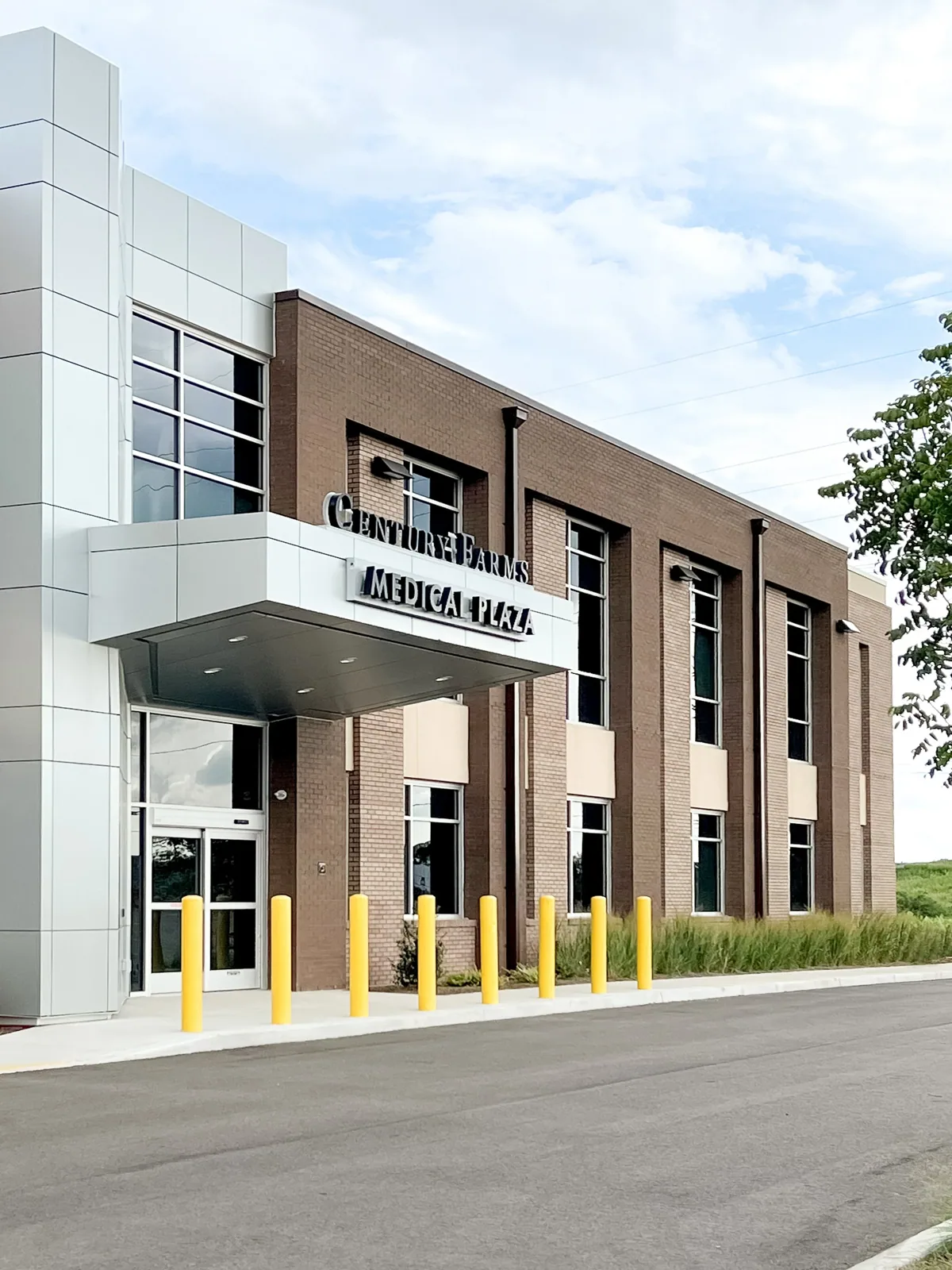
Medical Office Roofing
Conditions, options and next steps for commercial buildings in Fort Bend County.
Understand the Mission Bend Repair Boundary
Arrange photos and an explanation of the moisture, equipment access and drainage findings, with practical work options for your Mission Bend property.
Call 555-555-5555 or email [email protected].
Commercial Roofing Questions
Straight answers to the questions building owners and managers ask us most often.
What should a repair address beside an equipment service path?
Correct the damaged membrane and examine any support or access condition contributing to it. Suitable protection may be needed for recurring traffic. We identify the mechanical coordination and the roofing closure as separate tasks where appropriate.
Can water beneath an intact membrane be condensation?
It is possible when moisture reaches a surface below its dew point. Retained rainwater and equipment drainage must also be examined. The investigation uses actual timing, assembly and operating conditions before choosing the correction.
Why can water remain after the strainer is cleared?
The surrounding surface may not lead effectively to the inlet, or the supporting assembly may create a low area. We examine elevations and the drainage path. Design changes need the appropriate plumbing and structural review.
Which jurisdiction reviews a Mission Bend re-roof?
The parcel address and proposed scope establish the reviewing authority and applicable requirements. We confirm them before finalizing the assembly. A permit from another city or property cannot establish approval for this work.
A Low Area That Returns After Cleaning
Drain cleaning addresses an obstruction but does not establish the shape of the surface around it. We compare standing-water locations with the inlet elevation and the route across the roof. Insulation irregularities, accumulated repair material or deck deflection can contribute to a low area. The investigation identifies which condition is supported and which needs additional measurement or specialist review.
For ponding-water repairs, changes to outlets or slope require review of plumbing and structural requirements. The proposal separates cleaning, flashing correction and design changes. It also identifies accessible overflow provisions and any information still needed from the building team. That keeps a drainage repair from becoming an unreviewed change in discharge or loading.
The Same Condition Basis for Every Option
A localized opening can support repair where adjoining materials, attachment and drainage are suitable. Unsuitable wet layers are corrected within a defined scope. The proposal describes the repair boundary and selected materials, with uncertainty identified where wider conditions remain untested. A larger removal is supported by the broader findings rather than inferred from the first damp sample.
A restoration treatment needs a compatible substrate and adequate adhesion along with corrected defects. Recover planning also reviews retained layers, loading and applicable assembly requirements. Extensive deterioration may support replacement instead. Each option states what remains, what changes and what further review is needed before installation, making the owner's comparison about the actual roof condition.
Cost reflects removal depth, insulation corrections, rebuilt curbs and edges, access equipment and protection below. Restricted hours or limited staging can affect handling and repeated closure tasks. The work schedule also follows substrate moisture and product application limits. Those provisions are identified before final pricing so the owner can see how the sequence and material quantities contribute to the scope.
The owner also receives the assumptions behind each allowance. An inaccessible section or missing installation record remains identified, with the next useful check stated before that uncertainty becomes a construction quantity.
How a Roof Project Runs
Every roof we take on moves through the same six steps:
01
Roof Walk
We walk the whole roof and photograph the membrane, seams, flashings, drains and equipment.
02
Moisture Check
Readings and core cuts show what is wet below the surface before anyone prices a repair.
03
Written Findings
You get plain-language findings, photos and the options that fit the roof.
04
Scope and Price
One written scope covers the system, the details, drainage changes and the price.
05
Scheduled Work
Crews work around tenants, deliveries and weather, closing the roof every night.
06
Closeout
We walk the finished roof with you and hand over photos and warranty paperwork.
SH 6 Access and the Property's Work Window
SH 6 connects Mission Bend north toward the Energy Corridor at I-10, and the Mission Bend Park and Ride is part of its transport setting. For a roof project, the actual entrance, material route and permitted staging position are established with management. Nearby transit activity may be relevant to pedestrian protection, but the work plan follows the conditions at the property. Receiving hours and occupied spaces define practical delivery windows.
A separate roof in the Energy Corridor or at a property in Meadows Place needs its own findings and project review. At Mission Bend, the repair history ties completed work to mapped locations and records remaining equipment concerns. Emergency intake accepts water-entry reports during nights and holidays. Available crews assess safe access and weather before attempting protection, with temporary measures and permanent return tasks recorded separately.
Work near an occupied storefront or office needs clear separation between the roofing zone and people entering the building. The site contact identifies pedestrian paths, delivery periods and any rooms that cannot be interrupted. We set a daily limit based on the protection that can be completed before the crew leaves and the forecast allows. The closeout note distinguishes a permanent repair from temporary weather protection, with a return visit listed when verification remains necessary.