
Sika Sarnafil Roofing
A puncture beside an equipment walkway can admit rain through a PVC membrane without producing an obvious surface split elsewhere. The repair needs to close that opening and examine the board beneath the damaged area. For Sika Sarnafil roofing in Sugar Land, TX, we relate the visible damage to service traffic, surrounding seams and concealed moisture. Photos explain the correction and any wider investigation needed. The manager can then address the immediate water path and the activity that may damage it again.
Equipment Access and Recurring Surface Damage
Service tools, loose parts and repeated foot traffic can damage a membrane near operating equipment. We inspect the approach to the unit and the condition of any designated walkway. Protection must allow access to the service points while leaving drains and critical connections observable. Placing another protective layer over damaged sheet is not a permanent repair. The opening is assessed first, then the route is considered with the equipment's actual maintenance needs.
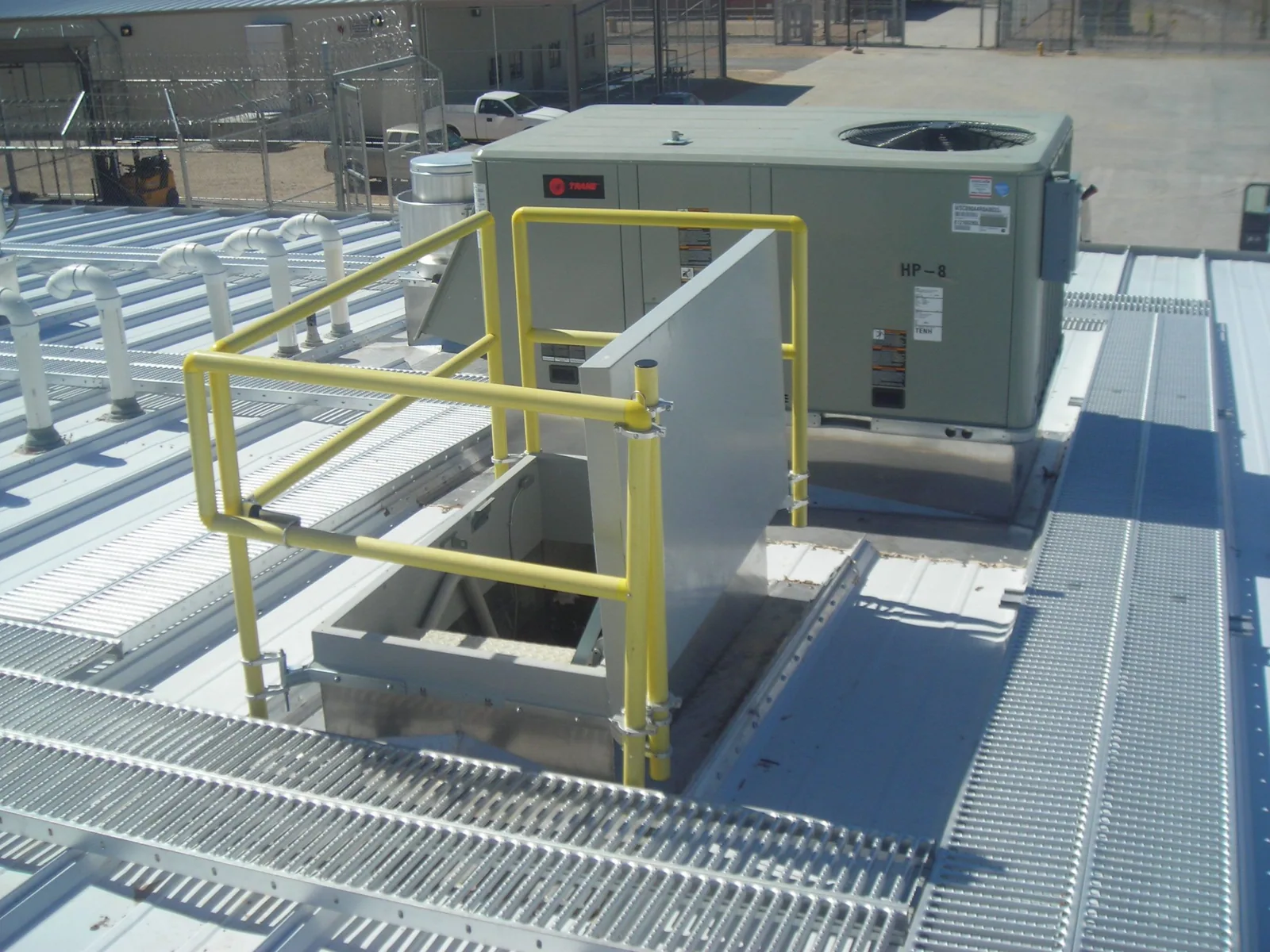
Curbs and supports also concentrate traffic near transitions that need careful examination. We look for displaced accessories, cracked older repairs and openings beneath loose components. Equipment curb and support corrections can involve coordination with mechanical work. The plan identifies which trade controls a disconnected unit and when its operation can resume. That prevents a suitable membrane detail from being altered immediately by unfinished equipment work.
Sarnafil and Sikaplan PVC Identification
Sika offers Sarnafil and Sikaplan PVC roofing membranes for different assembly arrangements. Available records and field markings establish the product selected for an existing roof. We inspect prior repair materials as well as the original sheet. A white appearance alone does not settle the formulation or accessory requirements. The proposed procedure follows guidance for the identified material and actual surface condition.
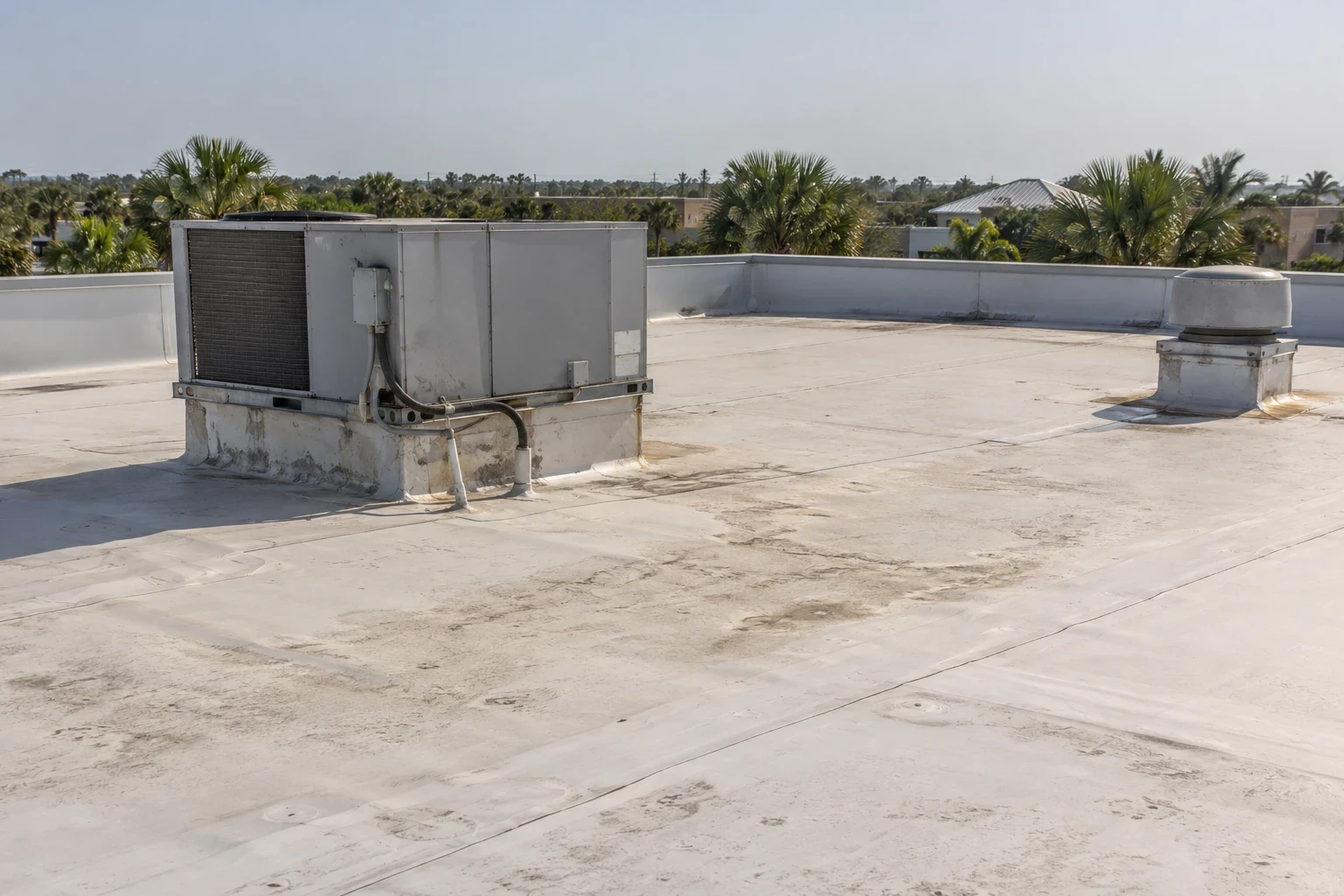
Thermoplastic connections require suitable preparation and welding conditions. Surface contamination and aging can affect a new connection, so the repair includes the specified checks rather than relying on appearance alone. A portfolio containing Duro-Last PVC roofing or GAF single-ply assemblies still needs separate product records. We explain similarities in the physical investigation while retaining the material-specific procedures. A manufacturer's name is useful identification, but it does not replace the construction findings.
Thermoplastic sheet can look similar across products while requiring different repair accessories or preparation. We verify the membrane identity from available markings and records, then examine whether heat, prior coatings or surface contamination have changed the repair area. A test weld may be appropriate when the existing surface or connection is uncertain. Its result applies to the tested conditions, not automatically to every roof area. The final repair detail is selected only after the field sheet and surrounding layers can support a sound connection.
A repair boundary should include material that can form a dependable connection, not a fixed distance from the puncture. We inspect the sheet around the opening and the supporting layer beneath it, then explain why the selected edge was chosen. If deterioration continues beyond that boundary, the removal area is adjusted before permanent material is installed. The owner receives photographs of the evidence and the finished tie-in.
Town Square Tenants and Westchase Offices
Office, retail and hotel uses at Sugar Land Town Square can have different access hours and equipment demands. For work there, the affected roof area is related to the rooms below before removal starts. A hotel intake or office ventilation opening requires coordination suited to that operation. Town Square tenant access and transport through the US 59 setting are agreed with the property manager. The roof scope includes that operating plan rather than leaving tenant protection to the work day.
For a Westchase office property, Beltway 8 and Westpark access affects delivery routing and work access. We coordinate roof entry with the building's own security and service procedures. Interior protection is assigned to the spaces beneath each phase. Temperature-sensitive rooms may require different work timing from common areas. A phased reroof above occupied rooms keeps those differences visible in the proposed sequence. If the portfolio includes South Houston, test the retained sheet there before matching a repair method.
Related Roofing Pages
Rooftop Equipment Curbs and Supports
How the work is scoped, documented and phased on occupied Sugar Land buildings.
Duro-Last Roofing
What we check on the roof, what we recommend and how the crew keeps the building open.
GAF Commercial Roofing
Conditions, options and next steps for commercial buildings in Fort Bend County.
PVC Findings You Can Explain to the Owner
Call for a careful Sika Sarnafil roof assessment. We will show the seam, traffic and moisture findings and explain practical permanent work choices.
Call 555-555-5555 or email [email protected].
Commercial Roofing Questions
Straight answers to the questions building owners and managers ask us most often.
Why inspect the service route after a PVC puncture?
Repeated traffic or dropped materials can damage a repaired area again. We examine the route and protection alongside the sheet opening. A maintenance access correction may be useful in addition to the permanent patch.
Can Sarnafil and Sikaplan repair materials be chosen by color?
Records and qualified identification establish the product. Appearance cannot resolve its formulation or exact accessory requirements. We select the repair after identifying the sheet and examining its surface.
What determines how far a puncture repair must extend?
The suitable connection area and underlying layer condition determine the boundary. Moisture or deteriorated board can require wider work than the opening suggests. The manager receives photographs explaining that extent.
Does high outdoor humidity prove condensation beneath the membrane?
Humidity is only one part of the enclosure conditions. Air leakage, temperatures, vapor control and construction evidence need examination. We distinguish that investigation from an established rain-entry defect.
How is occupied office work phased above sensitive rooms?
The roof area is matched to the rooms and their operating requirements. Access, intake controls and daily protection are agreed before removal. Unexpected findings are communicated before the opening expands.
Lap Examination and Patch Boundaries
The sheet surrounding a puncture needs sufficient suitable material for the proposed connection. We examine the damage edge, adjacent seam and any material embedded beneath an old patch. A qualified test at the prepared location can help assess the proposed welding procedure. Test results concern the examined location and conditions. The repair boundary is adjusted where the surface cannot support a suitable connection or the underlying construction requires removal.
A seam intersection or a patch beside a curb can create several connections within a small area. Those junctions receive examination after completion as well as during preparation. We record the finished detail from enough positions to show its relationship to the original opening. A later inspector can then identify the corrected area without removing sound work merely to find it. New symptoms are compared with that record before the same defect is assumed to have returned.
Moisture Extent and Enclosure Conditions
Wet board below a puncture may extend beyond its visible size. Selected examination points establish the accessible layer condition and help define removal. A thermal survey can guide those points when conditions permit a useful result. It cannot establish the full cause from a color pattern alone. We compare the construction findings with rain timing, equipment operation and the affected interior spaces.
Gulf moisture and conditioned interiors can create enclosure questions where air leakage, surface temperatures and vapor conditions interact. Those conditions need examination before condensation is identified as the cause. The roof recommendation states what is established and what still requires another assessment. Removing wet insulation without addressing continuing entry or air movement may leave the mechanism active. The manager receives the physical explanation rather than a blanket diagnosis based on humidity.
How a Roof Project Runs
Every roof we take on moves through the same six steps:
01
Roof Walk
We walk the whole roof and photograph the membrane, seams, flashings, drains and equipment.
02
Moisture Check
Readings and core cuts show what is wet below the surface before anyone prices a repair.
03
Written Findings
You get plain-language findings, photos and the options that fit the roof.
04
Scope and Price
One written scope covers the system, the details, drainage changes and the price.
05
Scheduled Work
Crews work around tenants, deliveries and weather, closing the roof every night.
06
Closeout
We walk the finished roof with you and hand over photos and warranty paperwork.
Retained Assembly and Permanent Work Planning
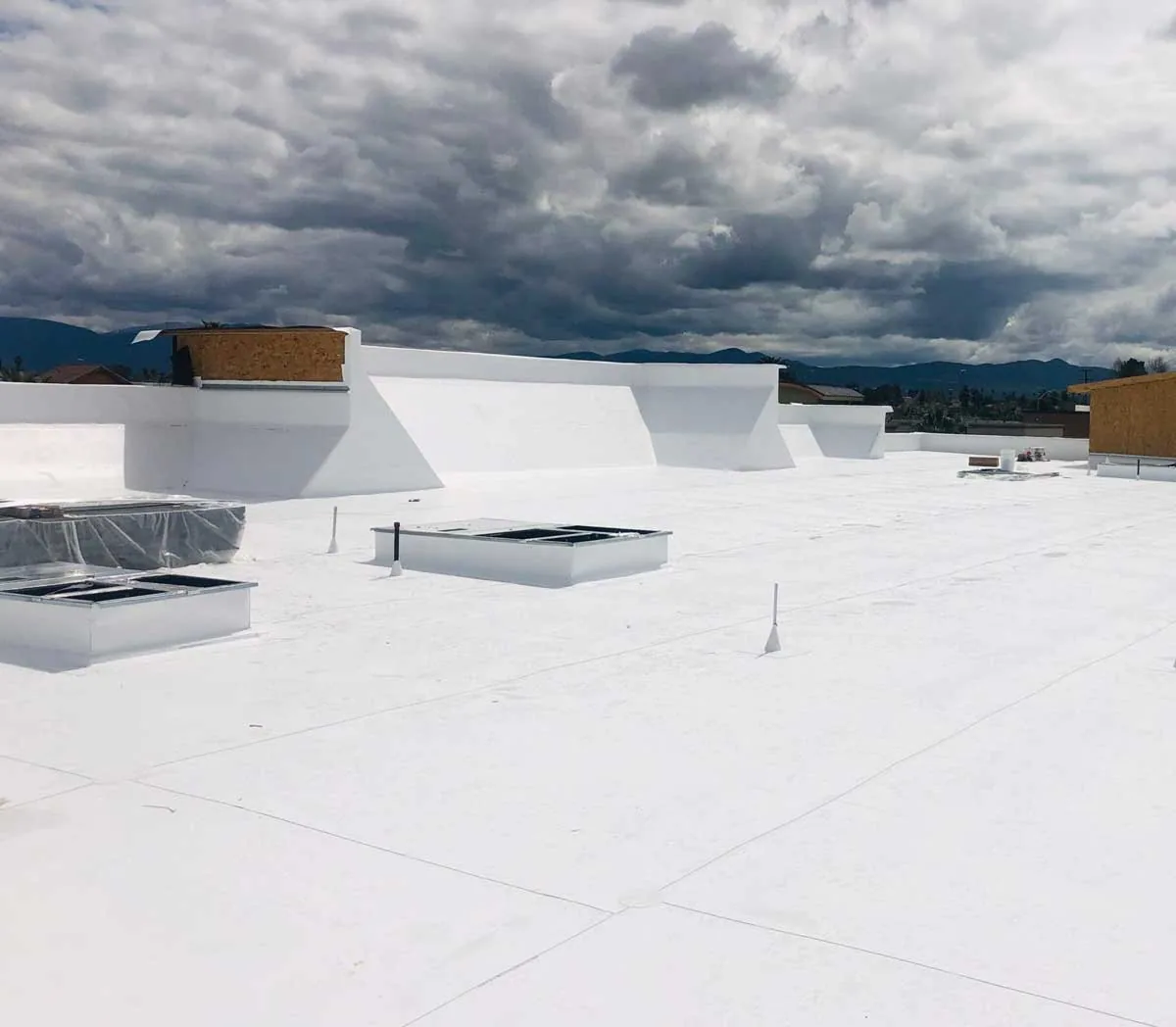
A sound surrounding sheet can allow a focused repair, while wider deterioration may justify a broader option. Recover proposals require review of retained moisture, assembly layers, support and attachment. New insulation also changes the height available at curbs and walls. We measure those details before developing the proposed arrangement. The cost comparison includes correction of damaged construction instead of treating membrane coverage as the entire job.
Application conditions and the forecast govern the day's opening and closing sequence. We explain where a temporary measure can reduce immediate water entry and what remains for permanent work. Assistance is available after normal working hours and throughout holiday periods, subject to safe access and actual conditions. Completion records include the product, repaired location and remaining questions. Issued warranty provisions are reviewed separately for notice and repair requirements relevant to the owner.