
Tornado Damage Roof Repair
Severe localized wind can damage a roof and its supporting interfaces in different ways across one building. One section loses metal, another has a torn sheet and a third remains inaccessible because its condition is uncertain. Tornado damage roof repair in Sugar Land, TX begins with the authorized assessment area and the reviews needed for entry. We record roof findings and explain the reconstruction questions that must be resolved.
The roof scope is part of a broader building response when supporting construction or equipment is affected. A roofing inspection does not accept structural capacity or establish authority to reopen restricted areas. Those decisions belong to the responsible teams. Our report identifies damaged materials, suitable repair boundaries and the evidence still needed before the assembly can be rebuilt.
Localized Weather and Property Records
The possible tornado event in Sienna dates to August 26, 2017, during Harvey. It is a local point of comparison, not evidence about another property's roof or exact wind. The current building assessment still requires its own photographs, observations and authorized access.
Earlier property photographs can show whether a roof connection changed, while missing views leave the condition uncertain. Earlier inspection images can show whether a connection changed, while missing views remain an uncertainty. Storm repair planning follows that evidence rather than assigning every existing open joint to the most recent severe-weather report. This helps the owner understand both the supported findings and the limits of causation.
Entry Restrictions and Initial Protection
The building team identifies the area permitted for assessment and the current utility or access controls. Loose debris, damaged lines and uncertain roof support can limit the route to the work. Appropriate structural or equipment review precedes activities where those questions remain unresolved. Available access is not proof that the entire roof can be entered.
Temporary roof protection is considered only where suitable attachment, support and drainage can be established. Its weather-protection role has defined limits and is recorded. A tarp or patch cannot accept damaged framing or make a restricted building ready for use. The owner sees the follow-up needed before stabilization becomes permanent reconstruction.
Roof Attachment and Damaged Substrates
We inspect displaced panels, torn membrane and changed perimeter connections within the authorized area. The visible surface may not show the condition of blocking, deck or concealed fasteners. Where those components affect reconstruction, selected opening or the appropriate review is needed. The scope does not rely on adding fasteners to whatever material remains after the event.
Attachment reconstruction follows the selected assembly and project design requirements. Sound connection boundaries are identified before new material is installed. Edge and coping work integrates the exposed metal with its supporting and flashing details. Any unresolved deck or framing item stays assigned to its reviewer rather than being hidden beneath a new membrane.
Related Roofing Pages
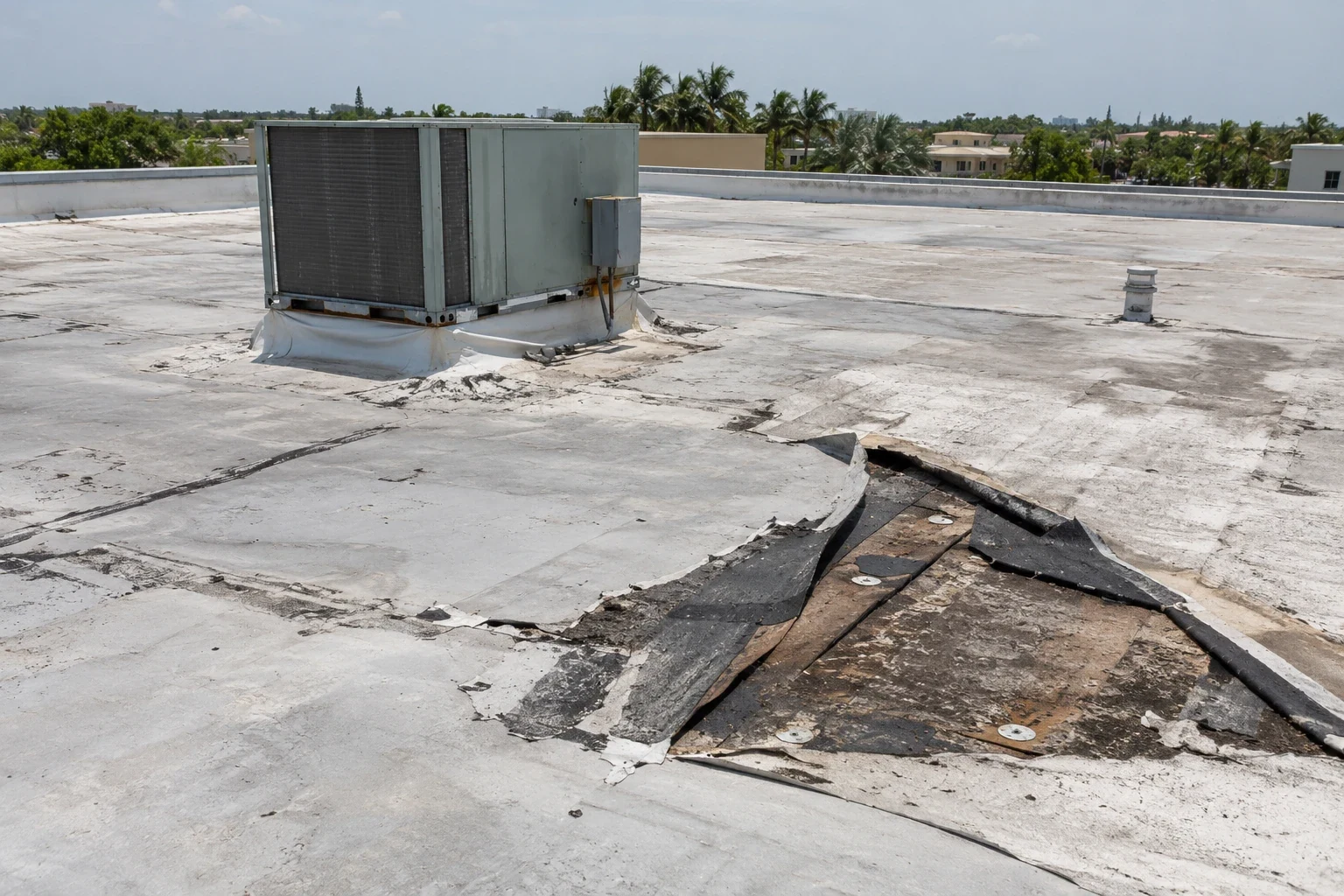
Storm Damage Roof Repair
How the work is scoped, documented and phased on occupied Sugar Land buildings.
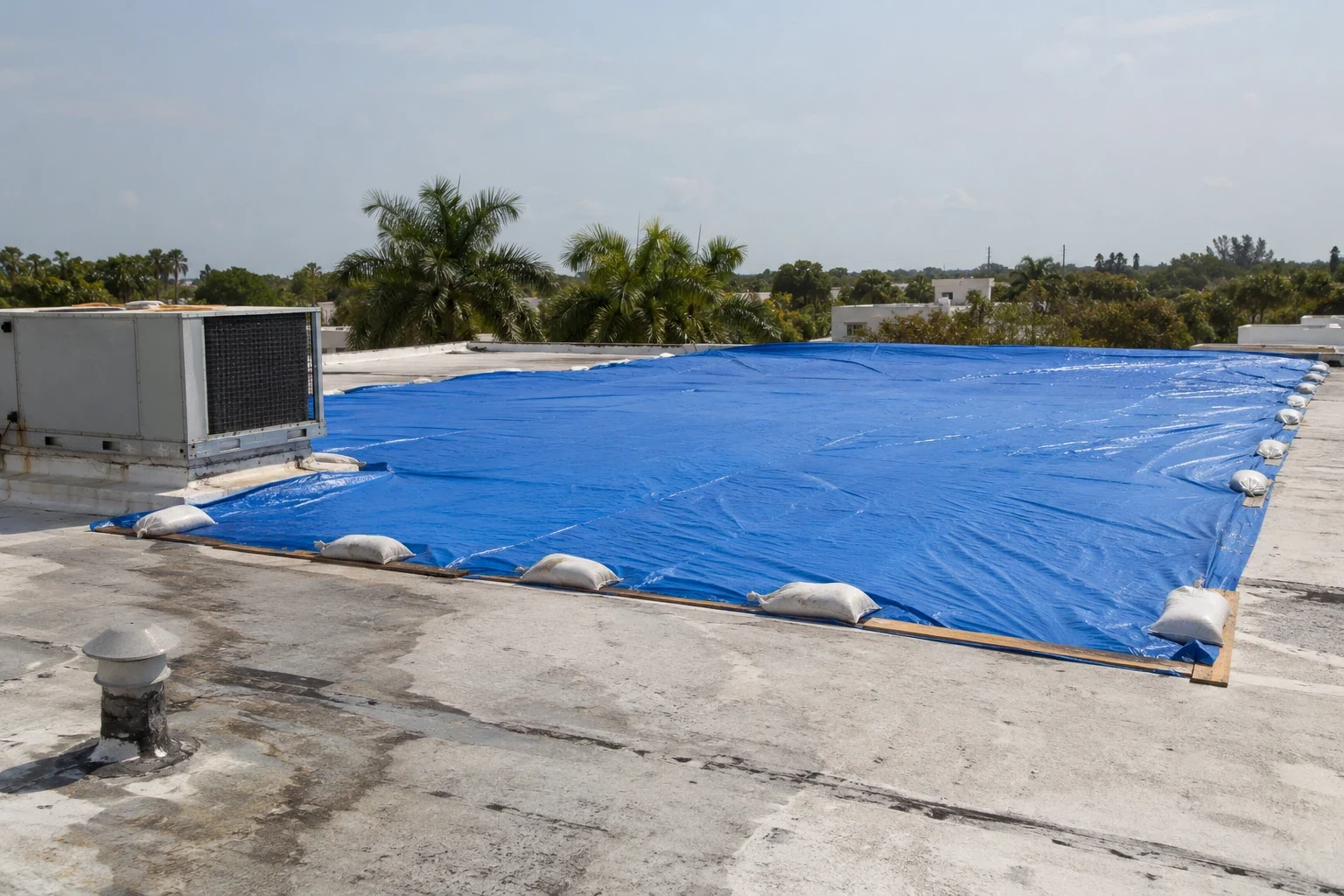
Emergency Roof Repair
What we check on the roof, what we recommend and how the crew keeps the building open.
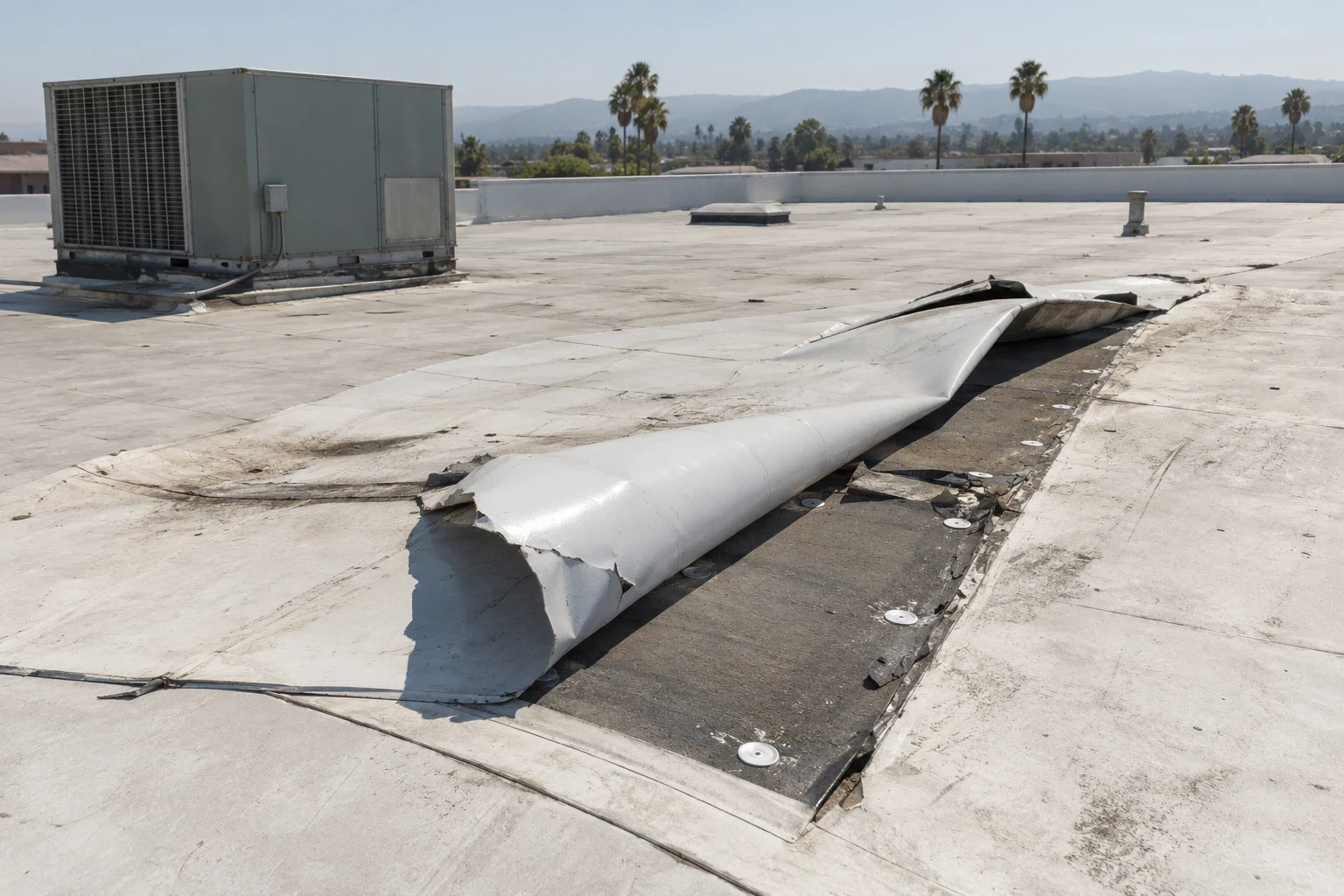
Wind Damage Roof Repair
Conditions, options and next steps for commercial buildings in Fort Bend County.
Define the Authorized Area and Reconstruction Questions
Call to discuss the property and response requirements. We will document the accessible roof findings and explain the repair and related reviews needed for owner consideration.
Call 555-555-5555 or email [email protected].
Commercial Roofing Questions
Straight answers to the questions building owners and managers ask us most often.
Can your roof visit establish that the building can reopen?
Reopening and structural acceptance belong to the responsible authorities and qualified teams. Roofing works within authorized access and documents its assigned assembly. The report identifies unresolved conditions outside that scope.
Does a nearby tornado report prove damage at our property?
The report establishes event context. Property observations and dated records are needed to evaluate the building. Cause may remain uncertain where that evidence is incomplete.
Can temporary covering be attached to any remaining component?
Support, attachment and drainage must be suitable for the method. Uncertain components need evaluation before use. Temporary protection has limits distinct from permanent reconstruction.
How are damaged equipment and roofing coordinated?
Assign each component to its appropriate trade before movement or service restoration. Roofing addresses compatible flashing and membrane details. The operating sequence follows the facility-approved plan.
What happens when removal reveals more damage?
The exposed condition is recorded and its effect on reconstruction is explained. The revised scope receives the required review before affected work continues. Final quantities remain connected to that evidence.
Debris Damage and Equipment Components
A debris opening can affect membrane, insulation and adjacent equipment. We photograph its location and the surrounding material without assigning an impact source that was not observed. A small tear can need a larger repair if the retained sheet or underlying layers cannot support a suitable connection. Material identification guides the chosen repair method.
Puncture reconstruction addresses the roof layers within its scope. Equipment panels, lines and supports require their assigned mechanical, electrical or structural teams. Roofing coordinates the water-control interface rather than treating a completed patch as proof that the unit above it is usable. Responsibilities are agreed before components are moved or restored to service.
Water Extent Within the Assembly
Rain through the damaged section can travel beneath adjoining material before reaching the interior. We compare room locations and timing with roof observations, then choose suitable investigation methods. Samples document local layers and moisture. The wider boundary relies on the combined evidence and remains subject to checking as materials are removed.
An infrared investigation can guide selected confirmation when construction and weather produce useful contrast. Damage or material variation can limit that interpretation. The report distinguishes observed sample condition from estimated suspect extent. Changed exposed findings are photographed and explained before affected reconstruction proceeds, preserving the reason for the final removal quantity.
How a Roof Project Runs
Every roof we take on moves through the same six steps:
01
Roof Walk
We walk the whole roof and photograph the membrane, seams, flashings, drains and equipment.
02
Moisture Check
Readings and core cuts show what is wet below the surface before anyone prices a repair.
03
Written Findings
You get plain-language findings, photos and the options that fit the roof.
04
Scope and Price
One written scope covers the system, the details, drainage changes and the price.
05
Scheduled Work
Crews work around tenants, deliveries and weather, closing the roof every night.
06
Closeout
We walk the finished roof with you and hand over photos and warranty paperwork.
Work Windows Around Regional Sites
Sienna's commercial activity along Sienna Parkway and the Fort Bend Parkway corridor provides a practical setting for delivery and access planning. The property team identifies the usable entrance, affected occupied spaces and current response restrictions. Roof deliveries and debris routes are arranged within that authorized plan. Nearby storm history does not replace the actual site's operating information.
At a Missouri City property, the team agrees on its own address-based jurisdiction review and work sequence. Occupied reconstruction also coordinates ventilation and other equipment through the facility's responsible teams. Any isolation window includes required airflow and restoration considerations. An operating intake is not covered arbitrarily near the repair, and restricted routes are not reopened merely because roofing material has been delivered.
Permanent Scope and Closeout
Localized work may be suitable once supporting conditions and retained materials are established. Broad displacement, extensive moisture or unsuitable attachment can require comparison with larger replacement. The estimate uses measured roof sections and details. It identifies the review or additional access needed where a reconstruction boundary remains uncertain. Sections not yet examined keep their own status in the report. The owner can see which quantities are supported now and which depend on a later authorized assessment or exposed condition.
The roof record preserves earlier and current photographs, completed materials and any related trade item still pending. Coverage questions stay with the insurer and policy process, separate from the technical recommendation. Closeout does not accept the whole building simply because the roof work is complete. The manager receives a clear account of the reconstructed assembly and the conditions still awaiting their assigned decision.
An assessment in Rosenberg requires the subject roof's observed condition and authorized access. Retain the earlier comparison where available and identify unexamined sections. A regional event description helps establish when to investigate; it does not replace the construction evidence needed to select the reconstruction boundary.
Following a tornado report, we survey edges, rooftop equipment, penetrations and the interior for signs of movement or water entry. The event itself does not establish that every visible defect was caused by the storm, so photographs separate fresh displacement from earlier deterioration where the evidence allows. Temporary protection is described as a short-term measure with a follow-up scope. Any structural movement or unsafe access is referred for the appropriate assessment before roofing work proceeds.