
Self-Storage Roofing
A deteriorated washer at a metal-roof screw can admit rain through a very small opening. Water may then follow the panel or support before dripping into a storage unit, making the interior symptom larger than the visible defect. On self-storage in Sugar Land, TX, we examine fasteners, laps and adjacent details before choosing a repair extent. The actual roof material is identified first; a storage address does not establish a metal assembly. The manager receives photos connecting the observed defect with the affected unit.
Screw Heads, Washers and Panel Holes
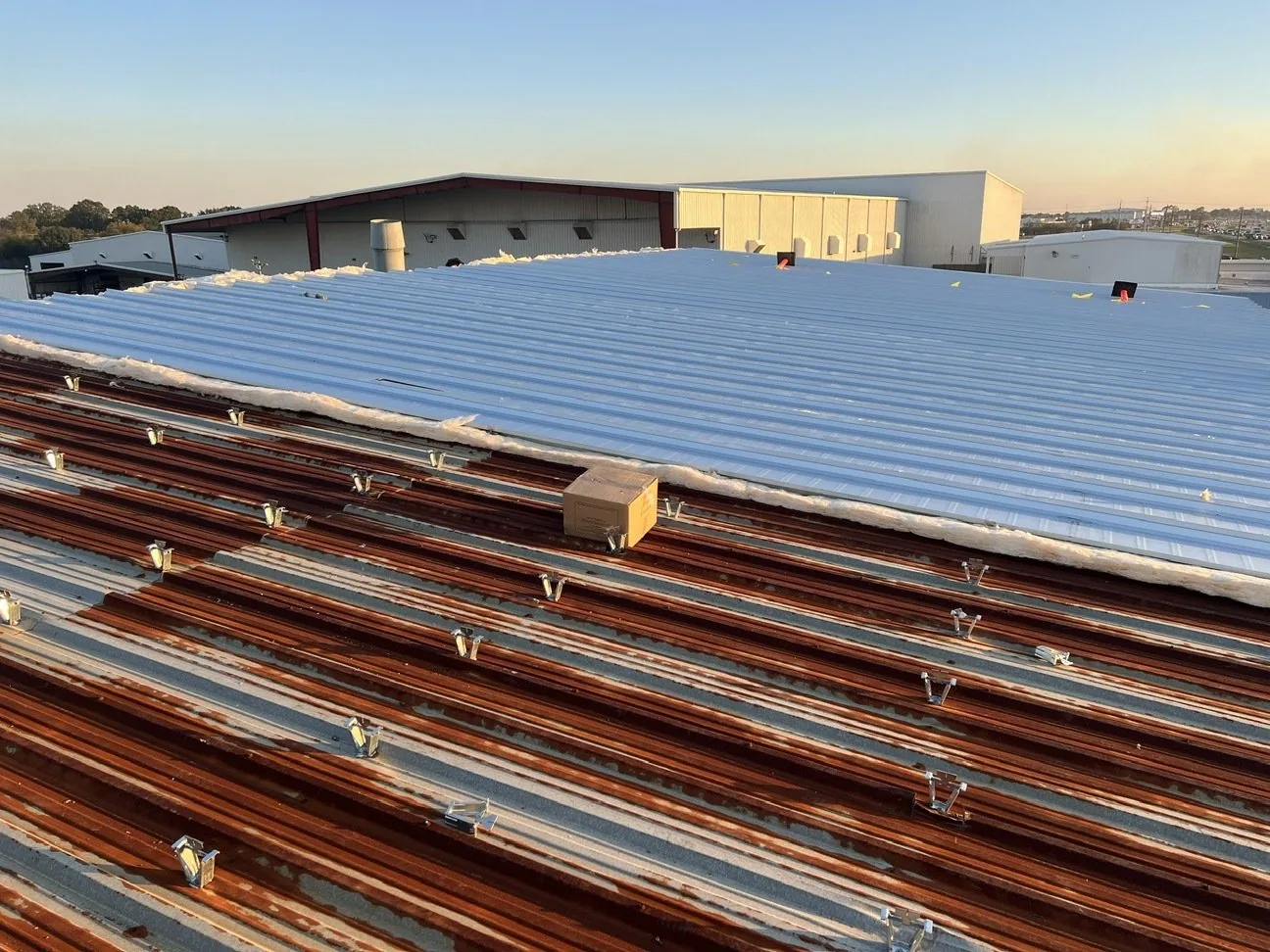
On an exposed-fastener roof, panel movement and washer deterioration can affect the seal at individual screws. A screw standing proud may reflect lost grip, movement or a previous incorrect installation. We inspect representative areas and record patterns before tightening or replacing fasteners. Over-tightening can damage a washer or distort the panel. A larger screw is not an automatic remedy where the support or hole condition is unsuitable.
The correction follows the identified assembly and attachment requirements. Rusted support, enlarged holes or loose panel sections may need more work than resealing heads. A metal retrofit assembly requires its own structural and attachment review. Adding new material cannot restore unsuitable framing beneath it. Photos distinguish isolated defects from a recurring pattern so the owner understands why the proposed work reaches beyond a handful of screws.
The sample coverage is stated in the report. A close photo of one defective washer describes that location; wider conclusions need enough examination to establish whether the defect repeats across the relevant panel lines.
Laps, Closures and Door-Head Details
Panel laps and end closures deserve inspection where water changes direction. Wind-driven rain may reach a joint differently from water flowing down the surface. We examine accessible sealant, closures and transitions without assuming one open screw explains every unit complaint. Door-head flashing and gutters can create a separate water route. The inspection compares those details with the actual interior marks.
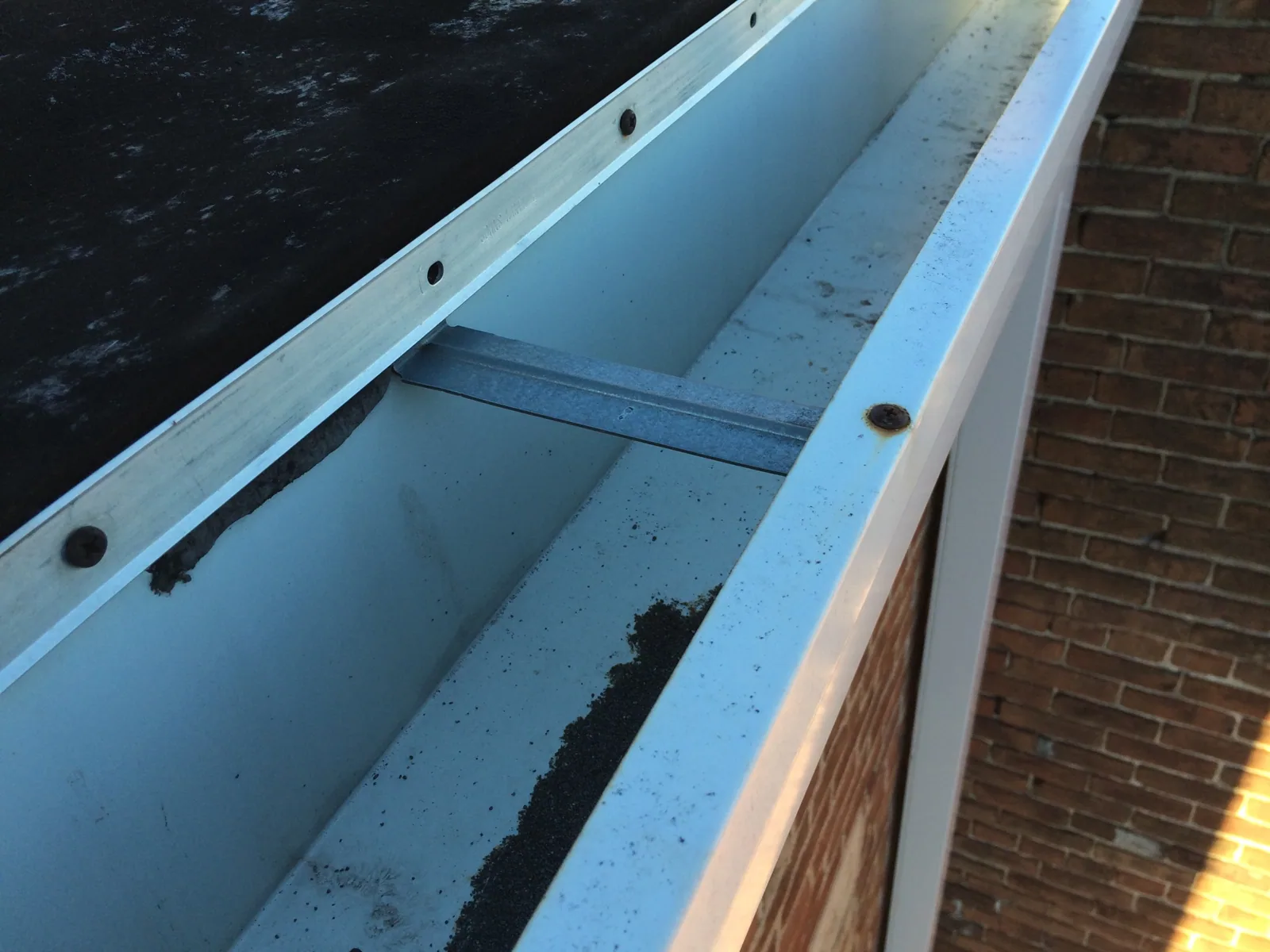
A gutter obstruction can affect access and runoff without proving a roof-field failure. We record debris, outlet condition and staining before cleaning where safe. Edge and gutter repair may include damaged support or unsuitable connections as well as the visible metal. Outlet changes need assessment of where water will discharge. The customer route below is considered before a drip or overflow is redirected toward another entrance.
Unit Reports and Stored Contents
A customer may discover water well after the event that introduced it. Management records the unit, visible location and available timing without inventing an entry date. Roof findings are compared with those observations and recent weather. Condensation, wall entry and equipment drainage are considered where relevant. The contents of a unit may affect the urgency and protection required, but do not establish the water's cause.
An unconditioned metal surface can receive condensation when moist air contacts a cold enough panel. That possibility depends on temperature, ventilation and the actual enclosure, not simply the presence of Gulf humidity. We inspect both sides where access permits and compare the surface details. A warehouse moisture investigation has similar mechanism questions, while storage requires coordination of individual unit access. The report identifies observations supporting the correction and those still needing examination.
Related Roofing Pages
Metal Roof Retrofit
How the work is scoped, documented and phased on occupied Sugar Land buildings.
Edge Metal, Coping and Gutters
What we check on the roof, what we recommend and how the crew keeps the building open.
Warehouse Roofing
Conditions, options and next steps for commercial buildings in Fort Bend County.
The Storage Roof Defect Shown Clearly
Call for an assessment with photos of seams, fasteners and water paths. We will explain the corrective choices and access limits so you can brief the owner.
Call 555-555-5555 or email [email protected].
Commercial Roofing Questions
Straight answers to the questions building owners and managers ask us most often.
Can every loose screw simply be tightened?
The washer, hole and support must be checked first. Tightening can damage the seal or fail where grip is already lost. We assess the pattern and suitable correction before changing the fasteners.
Does water in an unconditioned unit mean the panel has a hole?
Rain entry is one possibility. Condensation and wall details may also contribute under suitable conditions. We compare interior timing and temperature observations with accessible roof defects before assigning a cause.
Would a coating correct corroded support beneath metal panels?
A coating affects the surface, not the strength of damaged support. The construction needs review and correction before a restoration or retrofit is proposed. Suitable framing cannot be assumed from a clean panel appearance.
How is unit access handled during a localized repair?
Management identifies the affected doors, customer routes and protection needed. A limited zone may remain workable while another aisle stays open. The proposed task determines the restriction, not simply the facility's open status.
What should management retain after a fastener repair?
The building and panel location, observed defect, material used and completion photos. A later inspection can compare the same area rather than guessing which screws changed. Unresolved support or enclosure issues are recorded separately.
Drive Aisles and Regional Routes
Stafford lies along US 59 and US 90A, providing access context for nearby commercial properties. A self-storage facility still needs its own gate, drive aisle and loading restrictions reviewed. Roofing deliveries can block several unit doors even when the roof task is localized. The manager identifies customer access that must remain available. Staging is then placed according to the actual site rather than the apparent open area in a parking lot.
Meadows Place is also on the US 59 corridor near Beltway 8. A building there has its own jurisdiction and operating conditions. Travel routes do not identify its roof assembly or condition. Where several storage buildings are managed together, each receives separate detail and repair locations. A flex building in the same portfolio may need different tenant and equipment controls.
Coating, Retrofit and Damaged Construction
A sound panel surface with suitable joints may be considered for restoration after preparation and adhesion are assessed. Coating needs compatibility with the substrate and a defined treatment of seams and fasteners. It cannot be expected to correct a loose panel or deteriorated support. Ponding limits and performance claims follow the selected product rather than its generic chemistry. The work comparison separates surface protection from construction requiring replacement.
A retrofit retains weight and adds a new assembly, so structure, attachment and retained condition need review. Wet insulation, corroded panels or damaged framing may require removal or correction first. Drainage and headroom at transitions are also checked. Localized repairs may remain reasonable where defects are limited and surrounding material is suitable. The owner receives the physical reasons for the chosen boundary instead of a proposal based only on how many buildings occupy the site.
How a Roof Project Runs
Every roof we take on moves through the same six steps:
01
Roof Walk
We walk the whole roof and photograph the membrane, seams, flashings, drains and equipment.
02
Moisture Check
Readings and core cuts show what is wet below the surface before anyone prices a repair.
03
Written Findings
You get plain-language findings, photos and the options that fit the roof.
04
Scope and Price
One written scope covers the system, the details, drainage changes and the price.
05
Scheduled Work
Crews work around tenants, deliveries and weather, closing the roof every night.
06
Closeout
We walk the finished roof with you and hand over photos and warranty paperwork.
Customer Access and Completed Repairs
Work is divided into areas the manager can coordinate with unit users. Some phases require access restrictions or contents protection even where the facility stays open. The opening size depends on weather and the method available for closure. Newly exposed damaged construction is assessed before removal expands. The manager approves changed restrictions and tells affected customers through the facility's normal process.
Completion photos show corrected laps, replaced fasteners and altered edge details at identified buildings. Any unresolved enclosure or other-trade item remains in the record. Emergency calls are accepted during nights and holidays, with safe approach and practical interim protection assessed for the situation. Permanent repair follows suitable material and surface conditions. Cost is influenced by support damage, access restrictions, preparation and detail count, each explained beside the observed defect.
Self-storage work also requires a clear plan for what sits below the repair. We identify occupied units, customer paths and any unit access that should remain available, then confirm how debris and dust will be controlled. Roof penetrations serving ventilation or security equipment are recorded separately from the membrane defect. If a leak has affected stored contents, the report marks the building area and the condition observed without extending that finding to other units. The completed repair record helps management address tenant follow-up and track the next inspection.