
Versico Commercial Roofing
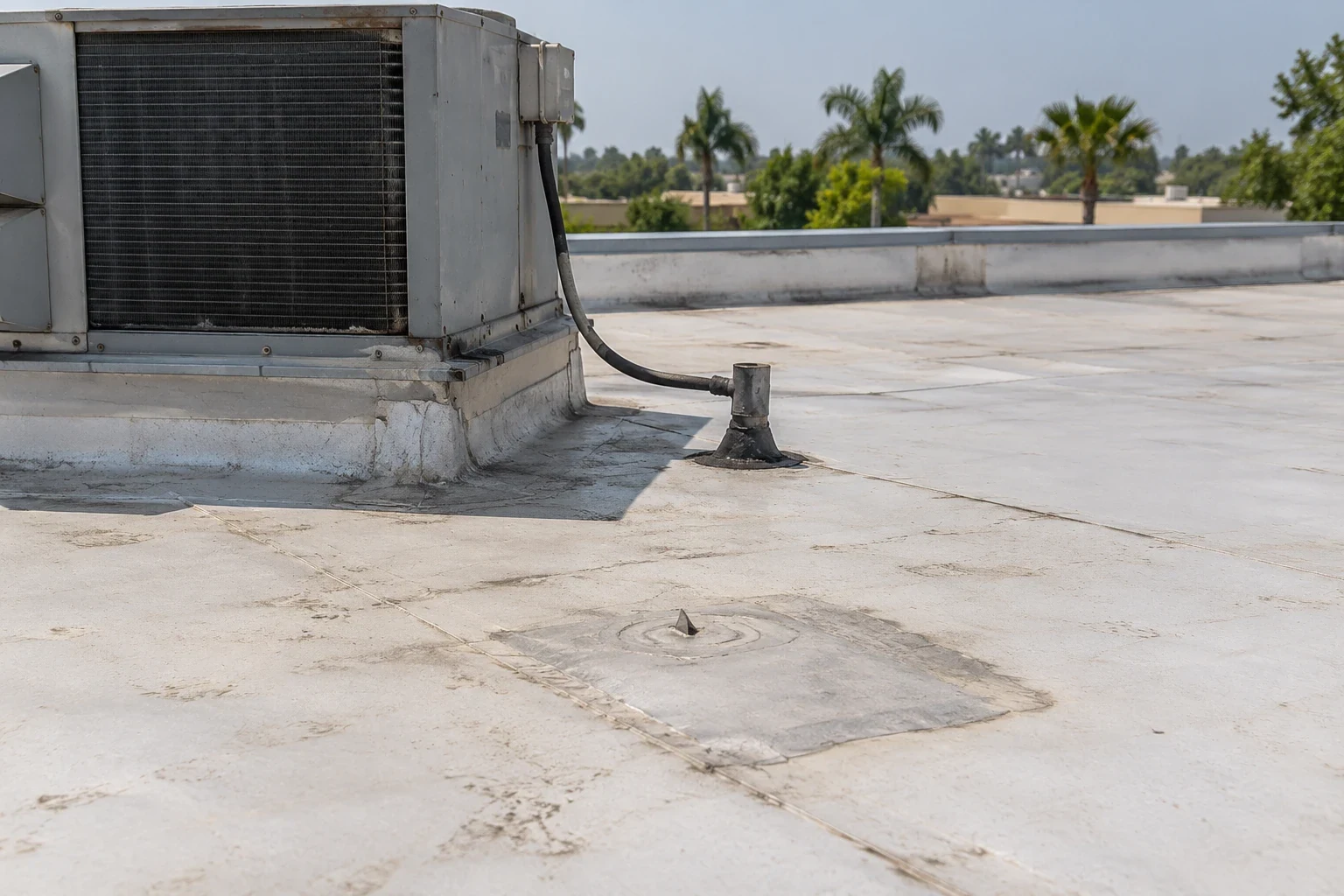
A raised fastening point can strain a Versico sheet and create a small opening around a larger attachment problem. Covering the spot without examining the connection leaves that movement active beneath the patch. Our Versico roof assessment in Sugar Land, TX, examines the membrane and accessible fastening construction together. The findings explain whether a local correction can remain limited or needs broader support work. Photos give the manager a clear way to relate that hidden cause to the visible repair.
Fastener Movement and Deck Connection
A fastener moving upward may reflect an installation issue, deteriorated support or movement elsewhere in the assembly. We examine the exposed location and accessible surrounding construction before choosing the repair. The condition of the deck matters because another fastener cannot simply be assumed to obtain a suitable connection nearby. Where capacity or assembly design is uncertain, the proposed work needs the appropriate assessment. The roof record distinguishes the observed movement from an unconfirmed cause.
A loose plate can also leave abrasion or a strained area around its position. We inspect the sheet beyond the immediate opening and identify any damaged board beneath it. A puncture correction with supporting layer review addresses that complete local condition. Repeated movement in several locations may justify a wider attachment investigation. The manager receives the pattern of findings rather than a scope that treats each raised spot as unrelated.
EPDM, TPO, PVC and Fleece-Backed Choices
Versico offers EPDM, TPO and PVC membranes, including fleece-backed roofing. The repair method depends on the identified product, its existing condition and the exposed detail. We compare field markings and records with the materials present at prior repairs. An older patch may conceal the original sheet or connect unlike surfaces. Permanent preparation and accessories are chosen for the actual membrane rather than its appearance.
EPDM connections and thermoplastic welding require different materials and working procedures. An identified Carlisle assembly or Sika PVC roof elsewhere in a portfolio is maintained with its own requirements. We keep the material records separate while explaining the common physical questions of support and moisture. That helps the manager compare condition without merging the repair procedures. Product guidance remains tied to the exact proposed component.
The membrane family influences how a repair joins to the field, but it does not answer whether the retained substrate is ready. We identify the exposed sheet, examine the seam or attachment detail and look for contamination, aging or prior repair material at the connection. A test weld or adhesion check is limited to the prepared sample area. The result informs the proposed method but does not establish the condition of every roof section. We record those boundaries so the owner understands what has been confirmed before work proceeds.
Educational Buildings and Airport Operations
The University of Houston at Sugar Land includes Brazos Hall and a College of Technology building. For an occupied education property, roof access and examination need coordination with teaching and building services. Spaces beneath sampling points are identified before the work begins. Intakes, rooftop equipment and permitted routes are mapped with the facility. A phased opening should reflect the room's actual operation as well as the roof construction.
Sugar Land Regional Airport adds terminal and hangar activity to the local commercial setting, but those buildings remain separate from a manufacturer or distributor's roof scope. At any aviation property, controlled access and equipment movements can affect material delivery and staging. We establish the approved route with the operator rather than treating an open paved area as available storage. Work beside doors or active equipment receives its own coordination. A separate project in First Colony receives its own access plan, roof findings and material sequence before installation.
Stafford industrial properties add delivery and loading constraints to this planning. A roof staging area needs separation from the active vehicle route. We review the agreed storage position and the hours available for material movement with management before the phase is finalized.
Related Roofing Pages
Roof Membrane Puncture Repair
How the work is scoped, documented and phased on occupied Sugar Land buildings.
Carlisle SynTec Roofing
What we check on the roof, what we recommend and how the crew keeps the building open.
Sika Sarnafil Roofing
Conditions, options and next steps for commercial buildings in Fort Bend County.
Versico Condition Findings in Plain Language
Call for a careful examination of sheet, attachment and concealed layers. We will explain the repair options through photos suited to an owner briefing.
Call 555-555-5555 or email [email protected].
Commercial Roofing Questions
Straight answers to the questions building owners and managers ask us most often.
What can cause a raised roof fastening point?
Possible causes include a deficient connection, movement or deteriorated support. The visible position alone cannot identify which applies. We examine accessible construction before defining the permanent correction.
Should several raised spots be repaired separately?
Their pattern may justify a broader attachment investigation. We map the locations and compare the surrounding layers. The scope addresses the condition found rather than assuming each opening has an unrelated cause.
Does fleece backing remove the need to assess the retained roof?
Retained layers still need suitable condition, support and attachment for the proposed assembly. Moisture and clearance questions remain relevant. We explain those requirements before a recover is selected.
How does a new insulation thickness affect existing curbs?
It changes the available height at roof-to-curb transitions. We measure the details and review the proposed arrangement. Curb or flashing changes may be needed alongside the new layers.
Which records help a future investigation of recurring movement?
Keep the repair positions, accessible support findings, selected materials and completion photographs. A later inspection can compare new movement with the corrected locations. Outstanding design or other-trade questions should remain in that record.
Support Deterioration and Moisture Confirmation
Damp layers can lose suitability beneath a membrane that remains visually intact. We select examination points using accessible defects, readings and the available roof history. Physical openings expose the local layer order and condition. Their results are interpreted with the wider observations rather than extended automatically to every section. The removal boundary is explained through the actual damaged material found.
A moisture examination supported by samples can assist where thermal conditions and access permit it. Different construction or equipment can also produce temperature contrasts. Rain entry, equipment drainage and enclosure moisture are considered separately where the evidence warrants them. The owner receives the supported diagnosis and the unresolved questions. That prevents wet insulation from being treated as proof of one cause before the mechanism has been examined.
Heat Exposure and Detail Clearances
Sugar Land's hot conditions make sheet condition, accessory aging and enclosure performance relevant to an assembly decision. We examine hardened repairs, strained connections and exposed residue directly. Surface reflectivity can alter absorbed solar energy, while insulation and air control influence heat transfer through the roof. Those contributors are explained individually. A product choice should address the building's measured needs instead of promising an indoor outcome from membrane color alone.
New insulation can leave less clearance at curbs, walls and thresholds. We measure those dimensions before recommending a recover or replacement arrangement. Drainage also needs review where added layers would change the approach to an outlet. A Telfair commercial property may require coordination with temperature-sensitive operations during those changes. The work plan identifies the affected equipment and rooms before an opening is scheduled.
How a Roof Project Runs
Every roof we take on moves through the same six steps:
01
Roof Walk
We walk the whole roof and photograph the membrane, seams, flashings, drains and equipment.
02
Moisture Check
Readings and core cuts show what is wet below the surface before anyone prices a repair.
03
Written Findings
You get plain-language findings, photos and the options that fit the roof.
04
Scope and Price
One written scope covers the system, the details, drainage changes and the price.
05
Scheduled Work
Crews work around tenants, deliveries and weather, closing the roof every night.
06
Closeout
We walk the finished roof with you and hand over photos and warranty paperwork.
Permanent Correction and Follow-Up Records
Local repair can be suitable where the surrounding membrane, layers and attachment permit it. Coating needs appropriate substrate preparation and adhesion assessment. Recover keeps old construction and adds weight, so its feasibility includes structure, moisture and applicable project requirements. Replacement allows more direct examination but changes the extent of removal and interior exposure. The manager sees how those physical differences affect cost and scheduling.
We limit daily removal to an area with a practical closing plan for the forecast and operating restrictions. Newly exposed damage is recorded before the work area expands. Emergency calls are accepted through overnight shifts and holidays, with immediate measures selected for the property's safe accessible conditions. Completion photographs identify the corrected connection and materials. Issued warranty terms are reviewed for applicable notices and repair provisions, and remaining other-trade items stay clearly identified.