
School Roofing
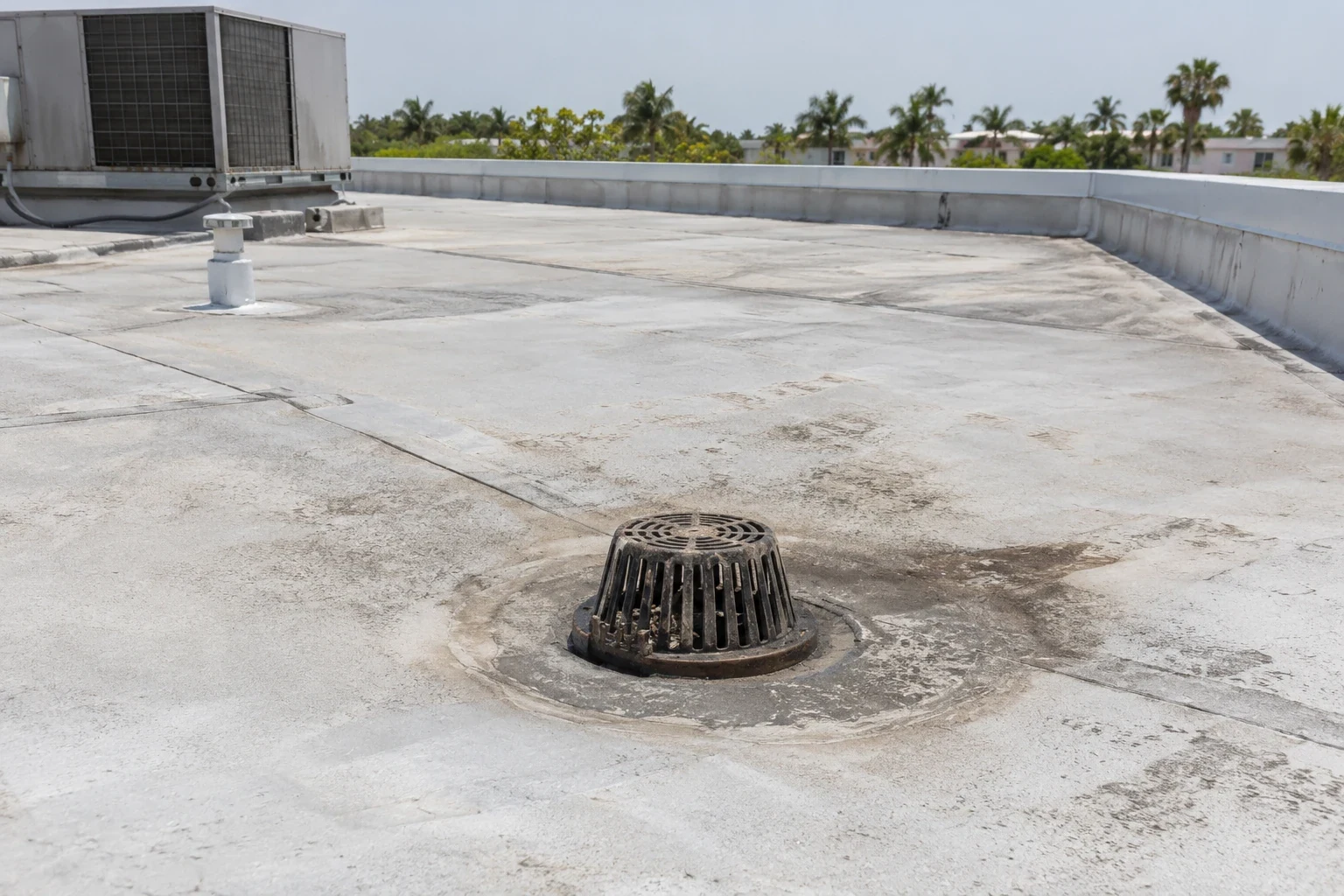
A blocked outlet beside a school roof junction can keep rain against the flashing after the storm has passed. A classroom stain may then recur even when the weather is clear, because water remains in concealed layers. On a school in Sugar Land, TX, we examine drainage and moisture extent before treating the symptom with another patch. Equipment drainage and possible condensation remain separate possibilities. The facilities manager receives an explanation of the physical finding and the rooms affected by the corrective work.
Connected Wings and Separate Drainage Areas
A classroom wing, gym and covered walkway may look connected from the ground while their roofs drain independently. We identify the actual section boundaries and outlets, including places where a taller wall changes the surface geometry. Interior room numbers are added to the inspection sketch without being treated as entry points. That lets the school compare a leak complaint with roof conditions in the adjoining wing. Accessible wall and flashing details are examined wherever water could cross a junction.
Cleaning a strainer is useful when obstruction causes the problem. It does not correct an outlet above the surrounding surface, an unsuitable overflow arrangement or a low area caused by supporting conditions. School roof drainage work may therefore require measurements and plumbing review beyond debris removal. The manager sees the reason for each proposed change. A photograph after cleaning records the outlet condition, while a later rain check evaluates whether the intended correction was effective.
Storm History and Current Building Evidence
Ridge Point High School in Sienna sustained roof and structural damage during an August 2017 Harvey-period storm. That event belongs to the named school and date; it does not establish current damage at another campus. For a post-storm inspection, displaced components, openings and interior entry are recorded from the actual property. Earlier photographs and maintenance records help assess timing where they exist. Weather history directs questions without substituting for building evidence.
Telfair is zoned to Fort Bend ISD campuses, including Clements High School. Local school relationships help establish who coordinates access, but do not identify the roof material or its age. We use each facility's records and accessible assembly to resolve those questions. A recently renovated interior can still sit beneath a different roof history. The inspection keeps known installation dates separate from the condition found on the day.
Humidity, Cooling and Sampled Moisture
Classrooms, kitchens and gyms may operate at different temperatures and schedules. Those differences can affect moisture movement through an assembly, particularly where air sealing is interrupted. Condensation is possible when moist air reaches a sufficiently cold surface, but a delayed stain does not prove that mechanism. Rain retained in insulation and mechanical condensate need examination too. We compare room observations, equipment operation and accessible membrane defects before selecting further tests.
A thermal survey under suitable conditions identifies temperature variation to investigate. Selected physical samples document local layers and moisture; they do not automatically describe an entire wing. Surveying suspect insulation also requires an approved cut location and compatible immediate closure. Sampling above food preparation or sensitive teaching equipment needs appropriate protection. The school receives the confirmed findings, accessible coverage and questions still unresolved.
Related Roofing Pages
A School Roof Explanation for the Facilities Team
Call for photos and clear findings on water, layers and repair choices. We will help you explain the physical problem and campus restrictions to the decision makers.
Call 555-555-5555 or email [email protected].
Commercial Roofing Questions
Straight answers to the questions building owners and managers ask us most often.
Why does a classroom drip continue after the drain is cleaned?
Water may remain in layers, or the outlet may not be the only defect. Flashing, surface levels and equipment drainage need examination. We compare the corrected outlet with the continuing symptom before defining another repair.
Can a summer break be used for full roof removal?
Only after campus use and the work sequence are reviewed. Summer activity can keep rooms, gyms or entrances occupied. The phase must also fit weather, protection and closure requirements.
What does a school board need to understand a larger scope?
Photos, confirmed layer condition, repair history and an explanation of each proposed correction. We distinguish drainage or support work from membrane replacement. Inspection limits and untested areas remain visible in the comparison.
Does regional storm damage mean every campus needs replacement?
Storm exposure calls for inspection, not a uniform replacement decision. Each roof's observed damage, layers and support establish its corrective needs. Reported regional winds do not prove damage at an individual school.
How are rooms protected during a moisture sample?
The location, room use and immediate patching method are approved before the opening. Sensitive areas may need containment or a different sampling position. The sample result describes that location and is compared with wider survey evidence.
Detail Repairs and Larger Assembly Work
An open lap or damaged pipe flashing can remain a localized repair where surrounding material is suitable. Repeated failure prompts a review of movement, patch compatibility and the underlying layers. Coating needs appropriate preparation, adhesion and substrate condition. Recover requires checks of retained layers, added load, attachment and applicable project requirements. The school should understand what each option corrects before choosing a surface treatment for a wider assembly problem.
A higher-education building faces similar physical questions, while its occupancy and funding timetable may differ. A public administration building likewise needs a scope that separates measured deterioration from assumptions about age. For the school, photographs of affected details and sampled board explain the proposed removal limit. Supporting damage or revised drainage can increase the task beyond membrane work. Those additional decisions are shown in the comparison presented to the owner or district.
Activities, Work Zones and Protected Rooms
A school holiday is not proof that a campus is empty. Athletics, maintenance, childcare and administrative activity may continue while classes pause. The facilities team identifies occupied rooms and routes that need protection during roof work. Noise and dust controls are reviewed against the actual removal and installation method. Where a phase requires a closed space, that restriction is agreed before roofing materials arrive.
Each opening area is limited by the weather outlook and practical closure method. A change in conditions can shorten the day's task or delay removal. Exposed support is assessed before new layers conceal it, with unexpected damage reported promptly. Intakes are reviewed with the facility before adhesives or dusty work occur nearby. School staff receive the active work location, protected route and contact for changes so the roof plan remains connected to campus operations.
How a Roof Project Runs
Every roof we take on moves through the same six steps:
01
Roof Walk
We walk the whole roof and photograph the membrane, seams, flashings, drains and equipment.
02
Moisture Check
Readings and core cuts show what is wet below the surface before anyone prices a repair.
03
Written Findings
You get plain-language findings, photos and the options that fit the roof.
04
Scope and Price
One written scope covers the system, the details, drainage changes and the price.
05
Scheduled Work
Crews work around tenants, deliveries and weather, closing the roof every night.
06
Closeout
We walk the finished roof with you and hand over photos and warranty paperwork.
Repair Records and Recurring Symptoms
A repeated stain needs comparison with the prior repair, not automatic renewal of the same patch. We retain photographs of the original defect, material used and corrected junction. Subsequent inspection checks movement, drainage and any equipment changes near that location. Emergency assistance is available outside school hours, including holidays, with safe access and feasible protection assessed for the conditions. The permanent scope follows the findings rather than the urgency alone.
Cost drivers include damaged layers, support correction, restricted work windows and protection below the opening. A campus program can compare those drivers by building and wing instead of treating all roof sections alike. The record should also identify unresolved mechanical or enclosure work. That allows a board or facilities director to understand why a dry surface at completion does not resolve every possible moisture source. The manager receives a clear account of completed work and the follow-up it requires.
At a school, the roof work plan accounts for arrival and dismissal, outdoor activities and access to classrooms or kitchens. Facilities staff confirm the building, affected rooms and any dates that limit lifts or deliveries. We identify the daily removal boundary and confirm it can be closed safely before the crew opens the assembly. A repair record uses building and roof-area labels rather than a general campus note. If hidden damage changes quantities, photos and a written explanation go to the facilities contact before the work area expands.