
Johns Manville Roofing
A depressed insulation joint can leave water standing beside a Johns Manville membrane connection. Repairing the connection without examining the board and drainage leaves the reason for repeated exposure unresolved. Our assessment of Johns Manville roofing in Sugar Land, TX, starts with that relationship between surface condition and underlying construction. We show the manager where water remains, what the layers reveal and which correction addresses each finding. The proposed work can then be explained as a physical repair rather than a choice of brand alone.
Board Condition Beneath the Sheet
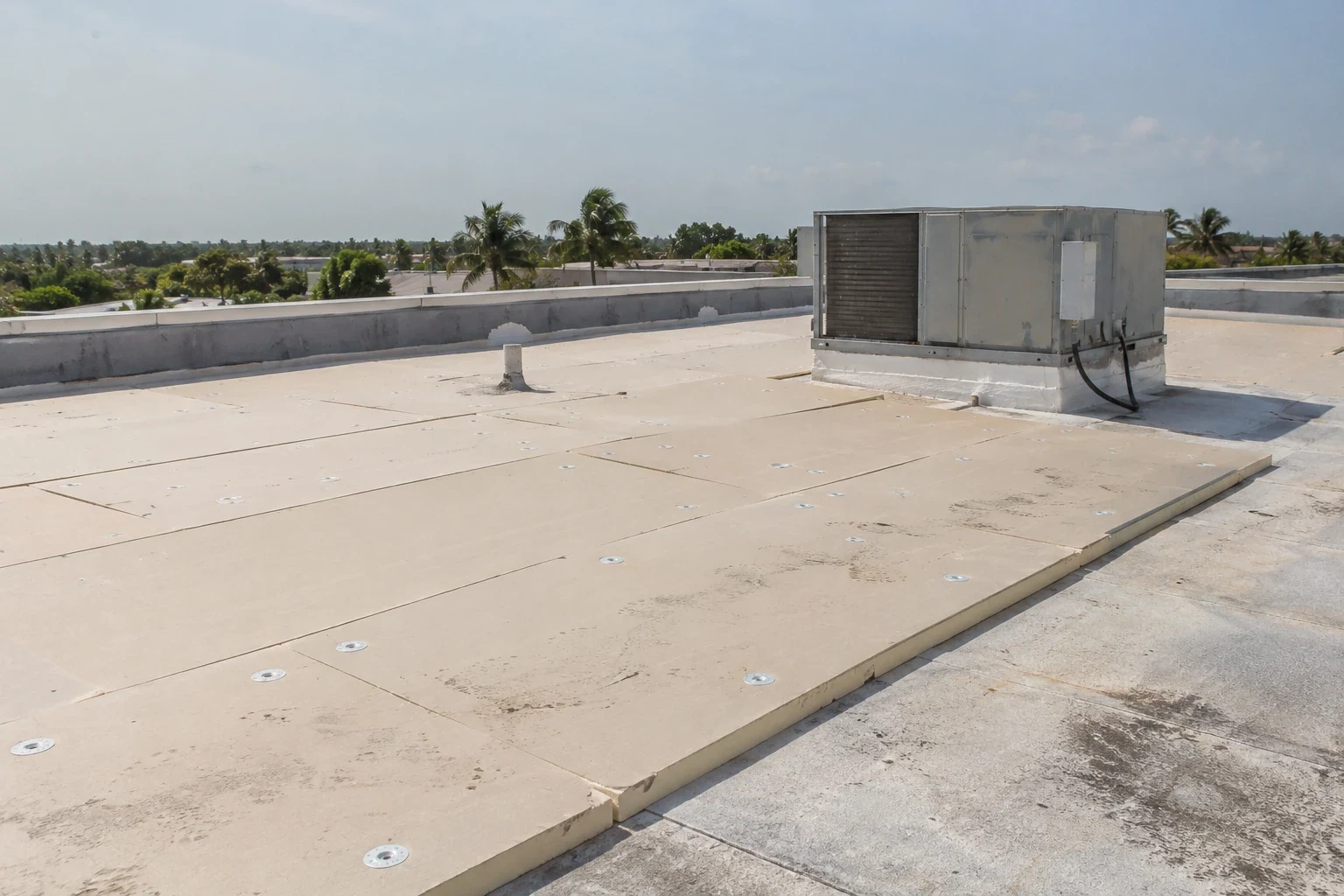
A crushed or deteriorated board changes the support available to a surface repair. We examine accessible construction and choose confirmation points where readings or visible movement suggest a concealed problem. The opening records layer order, attachment and the actual condition found. A discolored layer does not by itself establish how long moisture has been present. Its suitability to remain is assessed against the proposed repair and assembly requirements.
Joint patterns can also help distinguish a support issue from a membrane-only defect. Raised edges, depressions and fastener movement are mapped before the surface is covered. The correction may include board replacement, support work or a revised attachment detail. Insulation and cover board work is measured against the available curb and wall heights. The manager receives the reason those construction items belong in the roof scope.
Single-Ply and Bituminous Product Selection
Johns Manville supplies TPO, PVC and EPDM single-ply membranes as well as bituminous roofing. A layered bituminous assembly and a single sheet use different repair materials and connection methods. The original records and accessible field evidence identify which system is present. We also examine whether prior work introduced another material. The selected permanent procedure must account for the exposed surface and the product requirements.
A proposed new system is considered with the deck, attachment, insulation and perimeter details. A comparison with GAF commercial systems may involve different product families, while Soprema roofing assemblies also require their own component choices. We explain the practical differences relevant to the actual building. The decision is not made by treating a membrane name as a complete assembly specification. Measured condition and operating constraints remain part of the choice.
Selection begins with the retained assembly, not a catalog comparison in isolation. We identify the field sheet or bituminous surface, available insulation records, attachment method and condition of the supporting deck. At a transition between systems, the connection detail may govern more than the field material. Product components are checked for compatibility with that exact substrate and exposure. The written scope explains preparation, tie-in and any layer that must be removed, so the proposed repair can be reviewed as a complete construction detail.
Removal planning also accounts for where the open work can be safely closed that day. The exposed area is limited to the preparation and permanent tie-in that can be completed under suitable conditions. If the substrate differs from the expected assembly, photographs and measurements support a pause and revised scope. That protects the building while keeping the eventual product choice linked to verified construction.
Stafford Logistics and Telfair Occupancy
Stafford's US 59 and US 90A connections support industrial and commercial activity near Sugar Land. For an occupied logistics property in Stafford, the roofing phase needs an agreed route for deliveries and equipment. Loading access, roof access and the work perimeter are considered together. Roof materials are placed where they will not block the approved movement of vehicles. Interior protection is identified by the room or operation beneath the opening.
Telfair's University Boulevard setting includes technical and commercial activity. A property in Telfair may have occupied spaces with temperature and air-quality requirements that affect work hours. We map intakes and equipment before selecting preparation or removal methods. Product application conditions are checked against the actual weather and substrate. That coordination helps prevent an otherwise suitable roof repair from disrupting the operation it is meant to protect.
Related Roofing Pages
Roof Insulation and Cover Board
How the work is scoped, documented and phased on occupied Sugar Land buildings.
GAF Commercial Roofing
What we check on the roof, what we recommend and how the crew keeps the building open.
Soprema Commercial Roofing
Conditions, options and next steps for commercial buildings in Fort Bend County.
A Clear Assessment of the Johns Manville Roof
Call to examine the membrane and layers together. We will turn the condition photos into a practical explanation of repair limits, moisture findings and work choices.
Call 555-555-5555 or email [email protected].
Commercial Roofing Questions
Straight answers to the questions building owners and managers ask us most often.
Why can a low board joint change a seam repair?
The depressed area can prolong water exposure and may reflect damaged support. We examine the board as well as the connection. Repairing both can be necessary where the underlying condition prevents a suitable surface correction.
Which Johns Manville membrane is suitable for our existing assembly?
We first establish the existing product and construction. Product compatibility, attachment, details and operating conditions narrow the permanent options. A brand match alone does not establish a suitable repair material.
Does insulation discoloration prove a roof leak?
Discoloration requires further examination. Rain entry, equipment drainage and possible enclosure moisture mechanisms are considered separately. Physical confirmation and the pattern of symptoms support the diagnosis.
How are delivery areas protected during logistics roof work?
The phase includes agreed staging and vehicle routes, with overhead and interior protection where needed. We coordinate the affected loading area before removal. Changes in the opening size are communicated before work expands.
What belongs in a comparison between recover and replacement?
Include retained layer condition, support, weight, attachment and available detail heights. Removal adds an opportunity to examine construction but changes exposure and sequencing. We explain those differences with the actual roof findings.
Outlet Connections and Persistent Wetting
A membrane can be intact beside an outlet whose connection has loosened. We inspect the sheet-to-drain detail, accessible drain components and the low area approaching the outlet. Debris restriction and an elevation problem are different findings. Removing material from a drain basket cannot correct a depressed supporting layer elsewhere. The report identifies the physical boundary between roofing, plumbing and support work.
Standing water also increases the time a weak seam or flashing remains exposed after rainfall. Its location is photographed, and drainage performance is considered with the available geometry. Drain and scupper corrections are proposed only after the observed limitation is understood. Overflow arrangements and downstream conditions may require additional review. The owner sees what a surface repair will resolve and what requires another part of the building to be corrected.
Heat Transfer and Moisture Mechanisms
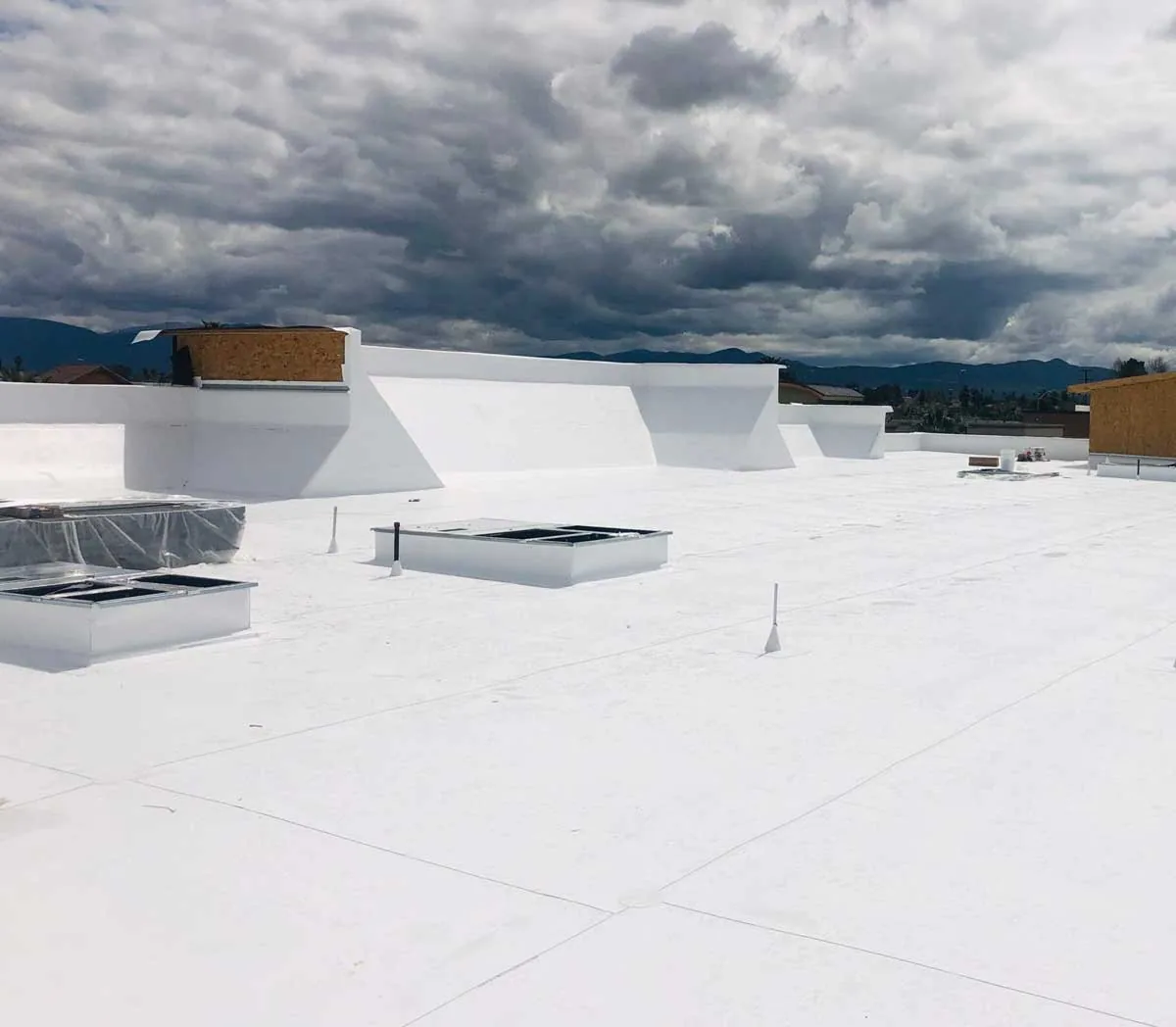
Sugar Land's hot conditions make roof surface condition and enclosure performance related but separate questions. A reflective sheet reduces absorbed solar energy compared with a darker surface under comparable exposure. Insulation, air movement and mechanical operation also influence the temperature below. We assess those contributors before recommending an energy-related change. The explanation distinguishes a membrane upgrade from a correction to a leaking air barrier or deficient insulation.
Concealed moisture may follow rain entry or develop through an enclosure mechanism where temperatures and vapor conditions permit it. An indoor symptom alone cannot choose between those possibilities. We compare weather timing, room operation and physical construction with selected examination points. Wet insulation is treated as a finding needing cause assessment, not a complete diagnosis. A repair plan that omits the continuing moisture mechanism can leave the owner with recurring damage beneath a new surface.
How a Roof Project Runs
Every roof we take on moves through the same six steps:
01
Roof Walk
We walk the whole roof and photograph the membrane, seams, flashings, drains and equipment.
02
Moisture Check
Readings and core cuts show what is wet below the surface before anyone prices a repair.
03
Written Findings
You get plain-language findings, photos and the options that fit the roof.
04
Scope and Price
One written scope covers the system, the details, drainage changes and the price.
05
Scheduled Work
Crews work around tenants, deliveries and weather, closing the roof every night.
06
Closeout
We walk the finished roof with you and hand over photos and warranty paperwork.
Retained Layers and Phased Removal
A recover keeps existing construction in place and adds another assembly. Its feasibility therefore involves moisture, layer limits, structural capacity and attachment suitability. Detail heights are measured before adding insulation or sheet thickness. Replacement may permit more direct examination but requires a safe plan for exposed interior areas. We describe those scope differences beside the condition photographs so the manager can explain the cost drivers.
Work phases are limited to an area that can be protected under the expected conditions. Damp layers discovered during removal are recorded before additional construction is opened. Emergency assistance remains available through overnight periods and holiday closures, with temporary protection selected for accessible conditions. Permanent work receives its own material and completion record. Warranty notices and permitted repair procedures are checked against the issued terms rather than assumed from the manufacturer's name.